
The Opening: Half of Failed Go-Lives Die in Data
Half of failed WMS go-lives die in data migration. A legacy system running 10 years accumulates 120,000 item master records — 30% of them dirty. That's the industry average, not an outlier. Duplicate codes, missing barcodes, chaotic units of measure, zombie items… feed that into a new system and the WMS strategy engine is built on sand. This article covers the field method for item master cleanup.
The Core Framework: Five Points
1. Survey First: Run a Data-Quality Report
Before touching anything, quantify the problem: total item count, duplication rate (same name/spec under different codes), missing critical fields (barcode, spec, UOM), and the share of zombie items with zero movements in 2 years. Only with the report does management grasp the scale — and only then does cleanup get resourcing.
Experience values: legacy systems over 5 years old typically show 10–20% duplication and ~15% missing barcodes.
2. The Four-Step Cleanup: Deduplicate, Complete, Standardize, Freeze
- Deduplicate: merge same-item-multiple-code cases. Define the uniqueness rule first (e.g., "same spec plus same vendor equals one item"), merge by the rule, and keep merge logs for traceability.
- Complete: fill critical fields — barcode, spec, ABC class. Missing barcodes mean physical labeling on the floor; it's manual labor, no way around it.
- Standardize: unify units of measure (mixed case/each/piece usage is a classic trap) and naming conventions (lock formats like "carton-3ply-40x30x20").
- Freeze: lock new-item creation in the legacy system; all new items go through the new process. Cleaning while new dirty data flows in never ends.
3. Inventory Data: Count First, Migrate Second
Book inventory and physical stock differ by at least 3–5%. Run a full physical count before migration; SKUs with variances over 5% get deep investigation — either the books are wrong or stock walked away. Migrate with variances intact and day-one reconciliation fails, destroying trust instantly.
4. Migration Strategy: Full Masters, Open Transactions Only
Masters load in full, once, plus a delta top-up before go-live; transaction data migrates open documents only (unfinished receipts, open shipments, in-transit quantities). Historical documents stay queryable in the legacy system — keep a read-only legacy environment for at least a year for history lookups and audits.
5. Validate: Three-Way Match, Under 1% Variance to Pass
After migration, sample 5% of SKUs for a three-way match: legacy book balance, new-system balance, physical count. Under 1% variance passes; otherwise roll back and reload. Sample all A-items plus spot-checks on B/C items — one wrong A-item costs more than a hundred wrong C-items.
Cleanup Results
| Metric | Before | After | |---|---|---| | Total items | 120,000 (incl. duplicates/zombies) | 99,000 | | Duplicate/zombie items | 21,000 | 0 | | Missing-barcode rate | 18% | 2% | | UOM chaos | 3 units mixed | Unified to 1 |
Field Case: The 120,000-SKU Cleanup Campaign
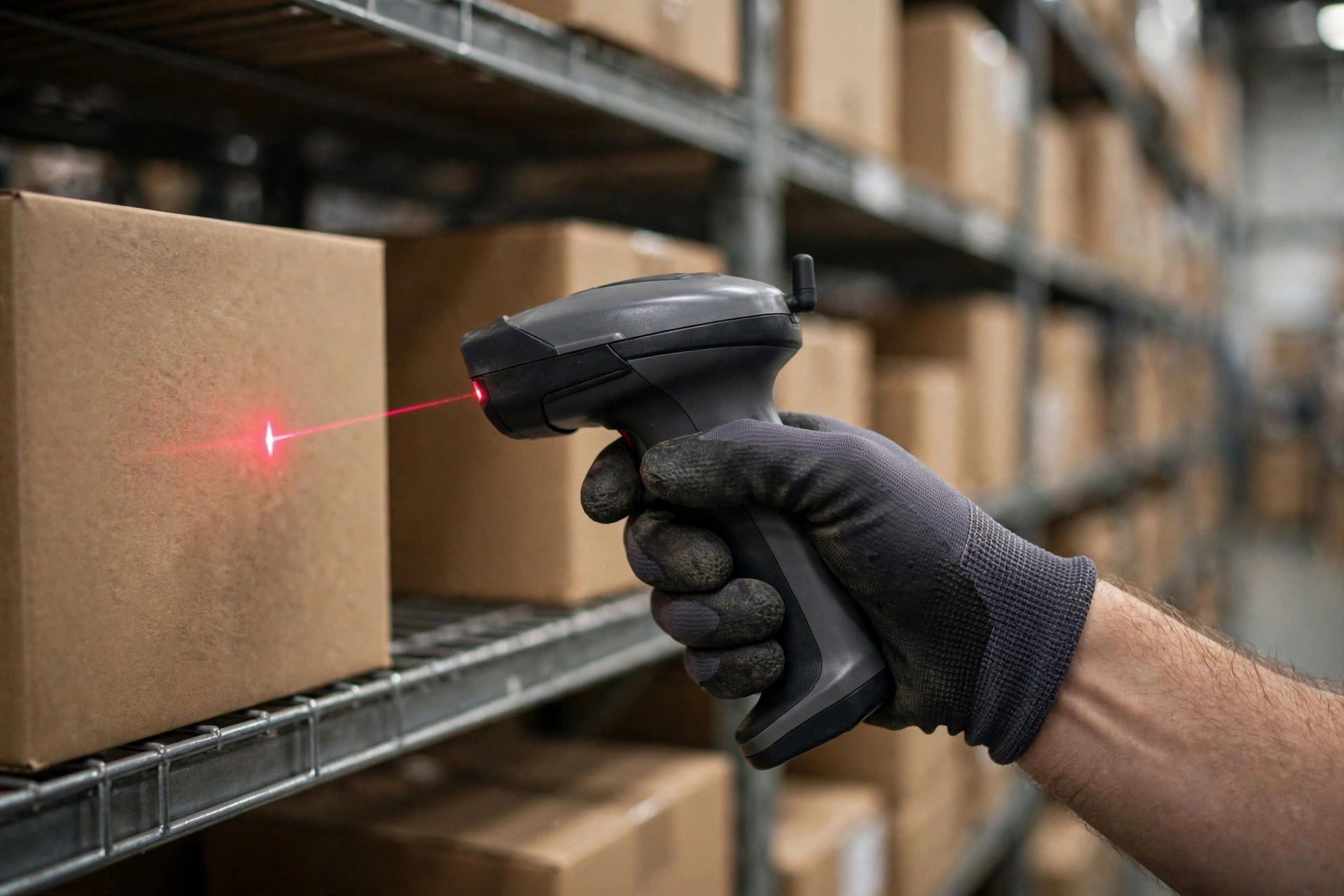
A manufacturer: 120,000 SKUs, two staff plus one consultant, six weeks. They eliminated 21,000 duplicate and zombie items, cut the missing-barcode rate from 18% to 2%, and physically labeled 15,000 units. After the WMS went live, the strategy engine (ABC slotting, replenishment proposals) produced trustworthy results for the first time. The project manager's verdict: "Those six weeks of cleanup were the best-spent six weeks of the project."
Pitfalls to Avoid
- Don't let operations "keep editing" past the freeze. Extending the freeze lets new dirty data bury the cleanup. The freeze is a red line with management backing.
- Cleanup rules need dual sign-off from business and IT. Merge rules and naming conventions must carry business sign-off — otherwise post-launch "that's not my item" disputes never end.
- Keep the legacy read-only environment at least a year. History lookups, financial audits, and dispute tracing all depend on it; shutting it down early digs your own hole.
The Cleanup War Room: People and Cadence
Data cleanup is a business job, not an IT job. Three roles in the war room:
- Business reps (2–3): define merge rules, identify zombie items, sign naming conventions. Without business sign-off, cleanup results get overturned at launch.
- IT (1–2): run data-quality reports, load data, build validation scripts.
- Consultant (0–1): brings the methodology — someone who's seen ten warehouses knows exactly where it breaks.
Cadence: 15-minute daily standups, and a Friday cleanup report (volume cleaned, remaining, blockers). Six weeks is typical; past eight means scope creep — cut scope and protect A-items and critical fields first, the long tail can wait.
Remember: new-item creation freezes in the legacy system during cleanup, and operations will complain. That's pressure the project sponsor must absorb. Fold on it, and the cleanup was for nothing.
Zombie Items: Identification and Disposition
Don't rush to delete zombie items (zero movements in 2 years) — classify first:
| Type | Identification | Disposition | |---|---|---| | Slow-moving | No movement in 2 years but linked to open/WIP orders | Freeze new creation, let it die naturally | | Obsolete | Product discontinued, no linked documents | Scrap process with finance reserve | | Returnable | Vendor accepts returns | Return to vendor, recover cash | | Mis-created | Created by error, never used | Freeze with a note — never delete (audit trail) |
Note: deleting items is irreversible in most ERPs and auditors will ask. The rule is "freeze, don't delete" — frozen items sit out all transactions while the record lives forever. Scrapping runs through finance with reserves; large amounts need management approval, not a solo IT decision.
Cleared zombie items free visible floor space overnight — photograph it for management, and the next budget conversation gets much easier.
The Takeaway
The item-master cleanup formula: quantify with a survey → deduplicate, complete, standardize, freeze → count before migrating inventory → open transactions only → three-way match under 1%. Data is the WMS foundation; without a solid foundation, every strategy above it is a castle in the air. Six weeks of cleanup buys one successful go-live.