The Opening: AI Is Hot, but the Math Must Work
"Should our warehouse do AI?" — I've fielded that question at least twenty times this past year. My reply is always three questions back: what specific problem does it solve? What's the investment? How fast does it pay back? Can't answer those — don't talk about large language models yet. Warehouses are cost centers; every AI project must survive an ROI interrogation. Below are four scenarios I've seen genuinely work, with honest math.
The Four Scenarios: Approach, Investment, Payback
Scenario 1: AI Demand Forecasting
Covered in detail in this series' demand-forecasting article. Investment $300K–$800K (data governance plus model implementation); core gains are 2–3 points off the stockout rate and faster inventory turns. Payback: 8–14 months. Best for operations with 1,000+ SKUs and clear seasonality.
Scenario 2: Vision-Based Counting and QC
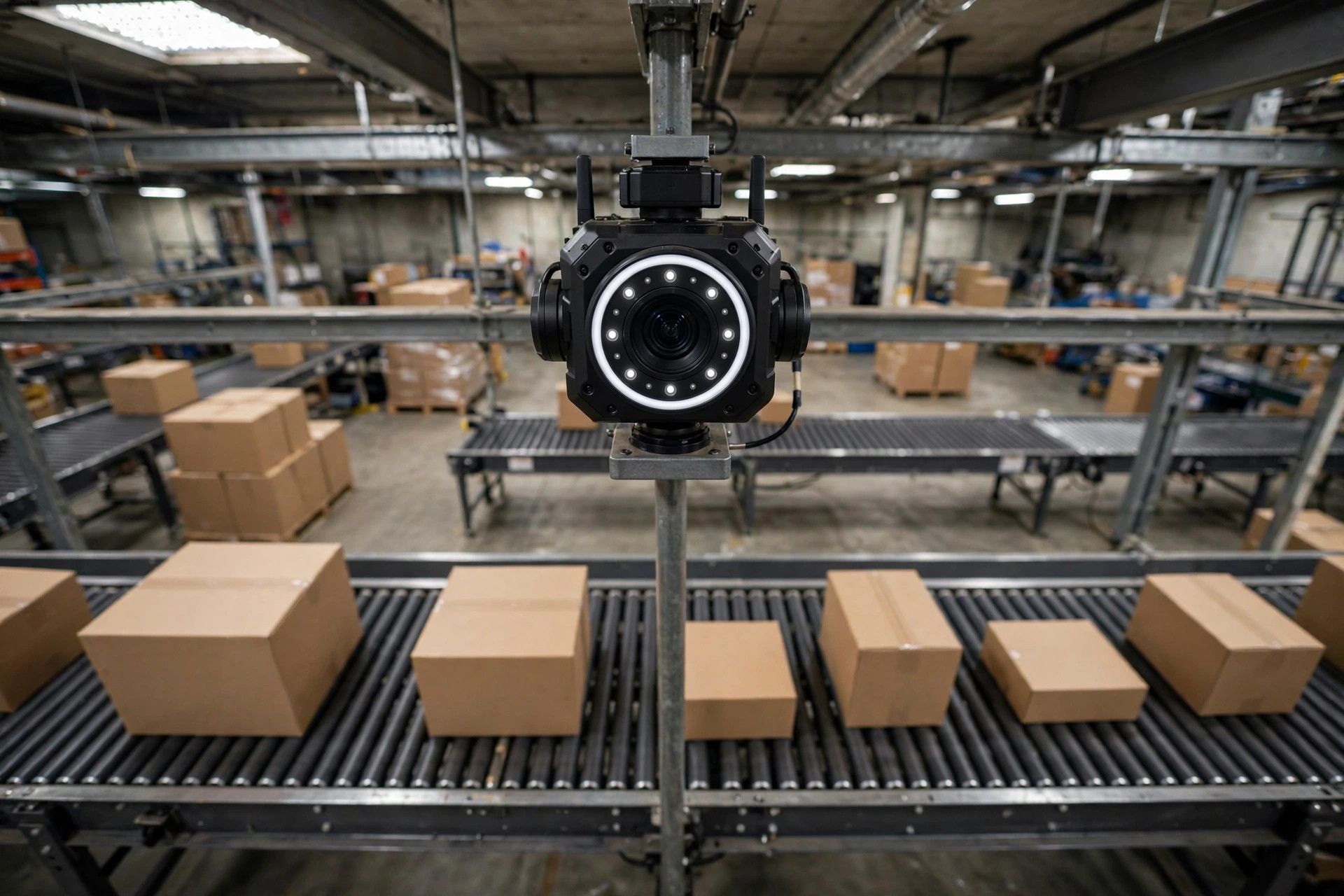
Fixed cameras plus patrol AGVs for location audits and anomaly detection (see the vision AI article). Investment $500K–$1.2M; payoff is 99%+ inventory accuracy and 80% less count labor. Payback: 10–16 months. Best for warehouses stuck below 97% inventory accuracy.
Scenario 3: Smart Scheduling and Labor Forecasting
Forecast labor demand 14 days out from historical order volume and auto-generate shift plans. One 3PL cut scheduling variance from ±20% to ±8% and peak-season temp spend by 25%. The smallest ticket: $200K–$400K, payback in 6–10 months. Best for operations with volatile labor needs and heavy temp usage.
Scenario 4: Slotting Optimization
Dynamic ABC analysis plus affinity analysis (SKUs frequently ordered together sit in adjacent locations), with quarterly re-slotting recommendations. Measured pick-travel reductions of 15–25%. Investment $150K–$300K, the fastest payback at 4–8 months. Best for stable SKU assortments where picking dominates labor.
At a Glance
| Scenario | Investment | Core gain | Payback | |---|---|---|---| | Demand forecasting | $300K–$800K | Stockout −2–3 pts, turns +0.8 | 8–14 months | | Vision counting/QC | $500K–$1.2M | Accuracy 99%+, count labor −80% | 10–16 months | | Smart scheduling | $200K–$400K | Variance ±8%, temp spend −25% | 6–10 months | | Slotting | $150K–$300K | Pick travel −15–25% | 4–8 months |
Field Case: Two-Year Rollout, $4M Annualized Return
A general-merchandise warehouse in eastern China deployed all four over two years: year one, slotting and smart scheduling (cheap, fast payback — building credibility); year two, demand forecasting and vision. Annualized return came to roughly $4M, mostly from recovered sales on fewer stockouts and lower overtime.
The sequence is worth copying: easy wins first, then cash the credibility in for bigger bets.
Pitfalls to Avoid
- Don't book all "labor savings" as headcount cuts. Warehouses rarely actually cut staff — count overtime reduction, fewer temps, and capacity gains first. Those are the certain returns.
- Fix the data foundation first. Missing history and messy masters mean the first three months of any AI project are data repair — budget for it instead of letting the project "unexpectedly" slip.
- Land one scenario before starting the next. Four parallel rollouts will drown both IT and operations. One win gives the team the feel and the method; the rest is replication.
The ROI Worksheet: Five Steps to a Clear Number
The ROI that management actually reads fits on one page:
- List benefits (three buckets): direct (lower overtime, fewer temps), indirect (recovered sales from fewer stockouts), strategic (customer satisfaction — don't monetize yet).
- List costs: software/hardware, implementation, data-governance labor, annual operations.
- Set the baseline: the 3-month pre-launch average of every metric, in writing, so nobody argues afterward.
- Compute payback: average monthly net gain = monthly benefit − amortized monthly cost; payback months = total investment ÷ monthly net gain.
- Write performance clauses: tie vendor payments to outcomes — missed core metrics discount the final payment. Vendors willing to sign usually have solid proposals.
Small template, big effect: the exercise itself is a business review. Many warehouses discover mid-worksheet that their real bottleneck isn't something AI can fix — that's worth the price of admission too.
Cautionary Tales: Where AI Projects Go to Die
I've watched three AI projects die — different deaths, same three root causes:
- Bad data, forced through. Half the history missing, masters a mess, vendor says "launch now, fix data later." Models output nonsense daily; operations abandons them in three months. Diagnosis: nobody read the data-quality report before kickoff.
- No business owner. IT leads, business "cooperates" — cooperation meaning no investment. The model launches, nobody uses it, it's retired in six months. Diagnosis: no business owner's name and KPI on the charter.
- Boiling the ocean. Four scenarios at once drown IT and operations alike; each gets a shallow attempt. Diagnosis: no discipline of "land one scenario before starting the next."
Three root causes, one prescription: data first, business-led, single-point breakthrough. The prescription is cheap — what's expensive is committing to it before kickoff.
The Takeaway
Four warehouse AI scenarios that hold up: demand forecasting, vision counting, smart scheduling, slotting — $150K to $1.2M invested, 4–16 month payback. Suggested order: slotting → scheduling → forecasting → vision. Once the math is clear, AI stops being a concept and becomes profit.