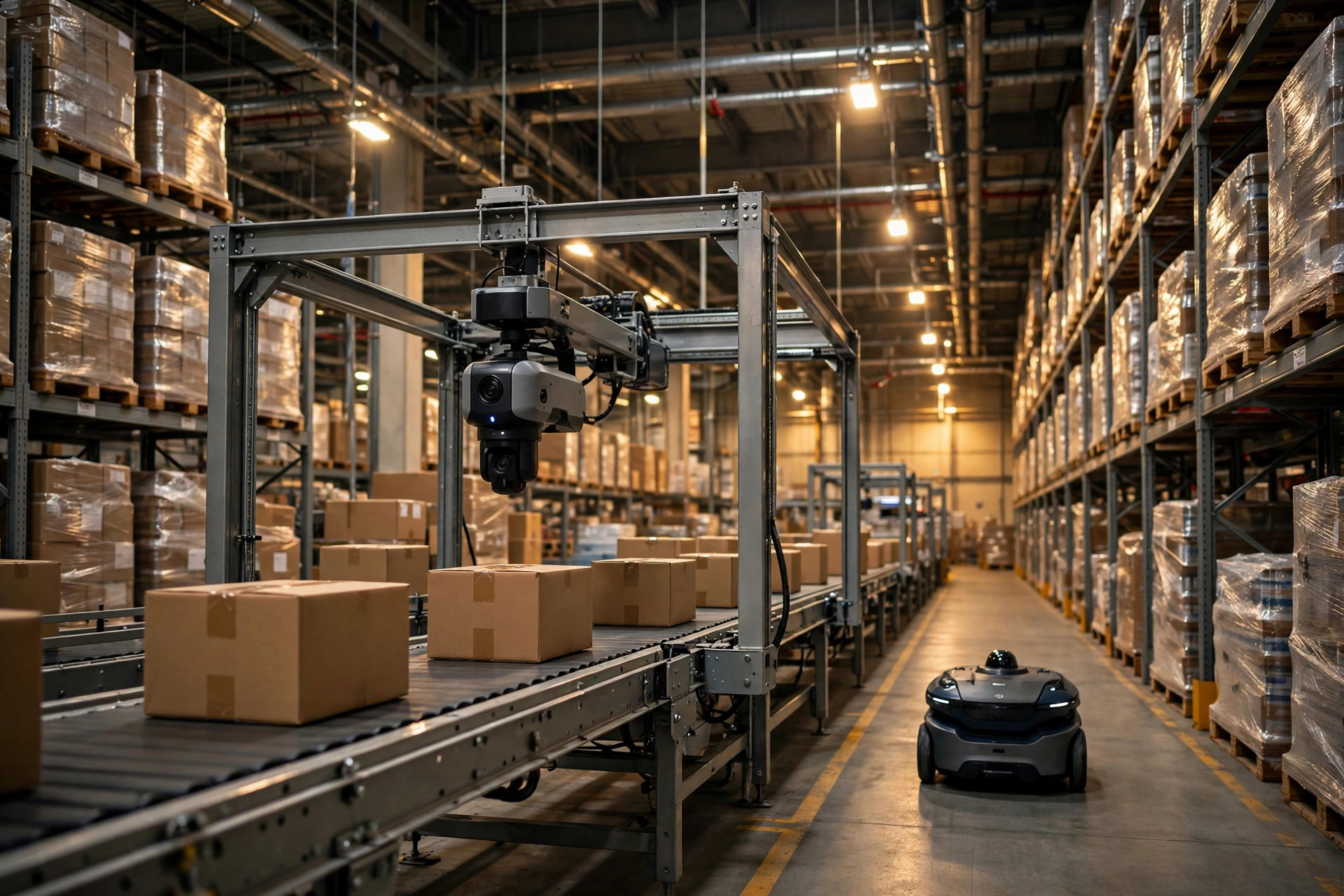
Last year I sat in on a pitch for an AI visual-inspection system at a 3PL in Fresno. The quote was $280,000. The CTO turned to me and asked if it was worth it.
My answer: don't sign yet.
Not because the vendor was bad, but because the 3PL hadn't thought through its own side of the equation: what problem it was actually solving, whether its data was ready, and who would maintain the thing after go-live. In my twenty years in warehousing, I've watched too much money go out the door on AI that never got used. This article lays out the buy-vs-build math, a vendor scorecard I actually use with clients, and three real-world cautionary tales.
How the Math Really Works
Here's my verdict up front: if your annual IT budget is under $500,000, building your own AI is basically setting money on fire. Don't take my word for it — run the numbers.
Building a production-grade warehouse AI feature (visual inspection, intelligent wave planning, anomaly alerts) really costs this: one ML engineer ($180K–$250K salary) plus one data engineer ($150K–$200K), plus GPU or cloud spend ($30K–$80K per year), plus labeled data (outsourced labeling runs $0.50–$2.00 per item, and a reliable inspection model needs at least 50,000–100,000 labeled samples). Year one alone costs $400K–$600K before you've shipped anything, and that doesn't count 6–12 months of trial and error. The killer is attrition: mid-size warehouses can't retain ML talent. Your lead engineer leaves, nobody can tune the model, and it's dead within three months.
Buying off the shelf? It looks expensive on paper: SaaS at $80K–$200K per year in subscription fees, or $150K–$400K for a fixed project. But the vendor absorbs the labeling, training, and iteration. You pay annually, and if it doesn't work out, you simply don't renew. The risk is contained.
So when is building worth it? I only recognize three cases. First, your scenario is so unusual that no commercial product exists — say, a peculiar sortation logic for a specialized cold-chain facility. Second, you already have a mature engineering team and ML is just one piece of the puzzle. Third, AI is your core competency, not a cost-saving tool — for example, you're building a 3PL technology platform where the algorithm is the product. Outside of these three, buy.
Five Questions to Answer Before You Talk to Vendors
Most selection failures aren't about misunderstanding AI. They're about not understanding yourself. Before signing anything, write the answers to these five questions on paper:
Question one: what exactly are you solving, in measurable terms? "Improve efficiency" is not an answer. "Cut outbound audit labor from $24,000 a month to $10,000" is. Vendors dread clients who say "you figure it out," because acceptance criteria always end in a fight.
Question two: is your data ready? AI eats data. Visual inspection needs historical photos of defective units. Intelligent scheduling needs at least a year of order-wave history. The worst case I ever saw: a company signed the contract, then discovered the warehouse had never retained historical WMS data. The vendor asked for data; they had nothing. Do a data inventory before you sign: what data you need, how much you have, its quality, and whether you can export it.
Question three: who uses it, and who owns it? Will floor supervisors actually use it? When the model flags a good unit as defective, who's responsible? If you don't resolve these organizational questions, the best technology in the world won't land. Involve end users during the POC — don't wait until go-live to train them.
Question four: how long can you wait? Off-the-shelf SaaS typically goes live in 4–8 weeks. Customized projects take 3–6 months. Building in-house takes 9–18 months. Can your business wait? Everyone I've seen still wrestling with AI three months before peak season has regretted it.
Question five: what happens when you're locked in? The vendor's model is a black box, your data sits on their cloud, and one day they raise prices 50%. Can you afford to switch? The contract must spell out data ownership, export formats, and a transition period after termination. This one carries the heaviest weight in the scorecard below.
The Vendor Scorecard (Steal This)
This is the actual scorecard I use with clients. Score each dimension 1–5, apply the weights, total out of 100. Below 65: eliminate. 65–80: negotiable. Above 80: proceed to POC.
| Dimension | Weight | What a 5 looks like | What a 1 looks like |
|---|---|---|---|
| Industry fit | 25% | 3+ live deployments at similar warehouses/3PLs; speaks your operational language | All case studies are retail or manufacturing; warehousing is an afterthought |
| Data requirements | 20% | Tells you exactly what data, what volume, and helps with the data inventory | "The more data the better," no concrete standards |
| Delivery and integration | 15% | Standard APIs, integrates with mainstream WMS platforms, live in 4–8 weeks | Wants you to modify your WMS; timeline is vague |
| TCO transparency | 15% | Itemized quote: subscription, implementation, overage fees, escalation clauses | First-year price only; renewal "to be discussed" |
| Exit terms and data ownership | 15% | Contract states data is yours, exportable, 90-day transition after termination | Vendor owns the data; termination means deletion |
| Support and iteration | 10% | Dedicated customer success manager, quarterly model updates | Goes dark after the sale; upgrades cost extra |
One tip for scoring: make vendors answer in writing. Don't trust verbal promises. What a salesperson says as "we can do all that" has a way of shrinking once you ask them to put it in the contract — nine times out of ten.
Three Real Cautionary Tales (Brands Anonymized)
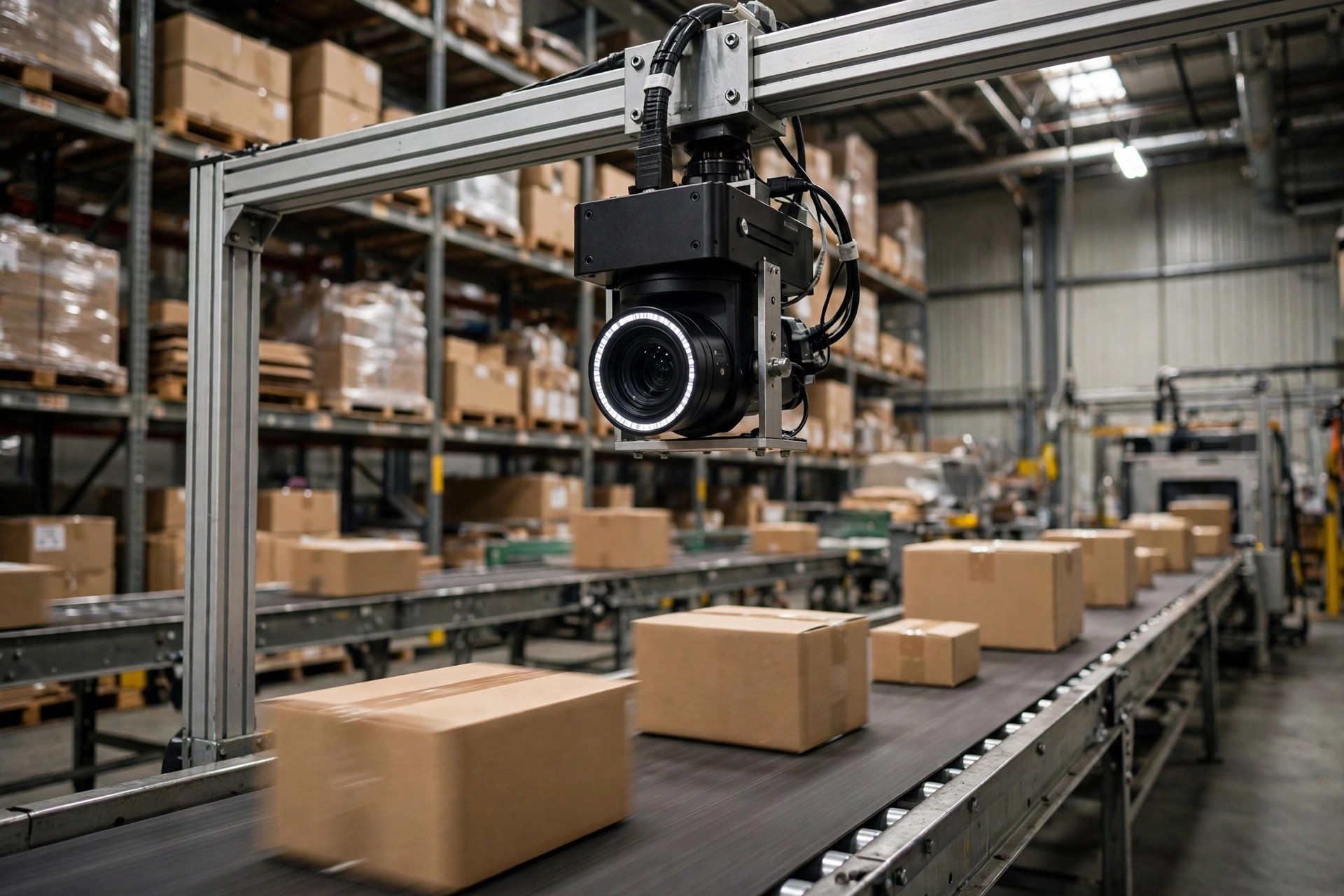
Trap one: a $280,000 visual-inspection system, defeated by lighting. That's the Fresno 3PL from the opening. The vendor's demo was gorgeous — 99.2% accuracy. First week of the on-site POC, accuracy dropped to 81%. Why? The demo ran under the vendor's lab lighting. The actual warehouse mixed high-bay lights with daylight, and every shadow shift blinded the model. The fix — dedicated lighting plus re-labeling — would cost another $90,000. The 3PL killed the project and wrote off the $280,000 deposit. Lesson: the POC must run in your real environment, under your real lighting, on your real products. Lab numbers don't count.
Trap two: an intelligent scheduling system, defeated by veteran workers. An e-commerce warehouse in Southern California spent $160,000 on AI scheduling. The algorithm's shifts genuinely saved 12% on labor versus manual planning. But veteran staff rejected it — "a machine scheduled my shifts, so why can't I have weekends off?" Turnover rose 8 points in three months, and the labor savings evaporated into recruiting and training costs. The system was shelved; scheduling went back to supervisors. Lesson: AI changes how people work. Involve floor staff during the POC and leave room for human override. Technical problems are solvable; people problems aren't.
Trap three: a "money-saving" in-house build that burned $700,000. A mid-size 3PL with a technical CTO decided building beat buying and staffed a four-person team for demand forecasting. Eighteen months and $700,000 later (salaries plus cloud), the model's accuracy still lagged commercial products by five points. Then the lead ML engineer got poached by a big tech firm, and the project died outright. They went back to buying off the shelf — another $220,000. Lesson: building in-house doesn't save money; it converts a predictable procurement cost into an unpredictable R&D burn. Unless AI is your core business, don't touch it.
Three Things You Can Do Tomorrow
If you're considering AI for your warehouse, don't rush to meet vendors. Do these three things first:
First, take a week to quantify your single most painful process: current headcount, current cost, current error rate. If you can't write down that number, you haven't thought it through, and any vendor meeting will end with them leading you by the nose.
Second, inventory your data. Ask IT to pull a year of order history, inspection records, and equipment logs. Check the volume, the completeness of fields, and whether it's usable. This is the foundation of selection — build on sand and everything collapses.
Third, take the scorecard above, invite three vendors, and give each four weeks for a POC capped at $10K–$20K. One hard rule: a POC that doesn't run in your real warehouse environment doesn't count.
AI genuinely creates value in warehouses — visual inspection, intelligent waving, anomaly alerts. I've seen the ROI go positive in all three. But the value only belongs to those who've done the thinking. Every vendor's slide deck looks great. Your warehouse is the only exam room that matters.