Vision AI for Returns Grading: Worth the Money?
A veteran inspector glances at a returned sneaker, flips it over, and calls the grade in ten seconds. Vision AI wants to automate those ten seconds — but bolting a camera over a conveyor is the easy part. Here's a twenty-year warehouse operator's take on grading standards, camera and lighting selection, accuracy testing, and whether the math actually works.
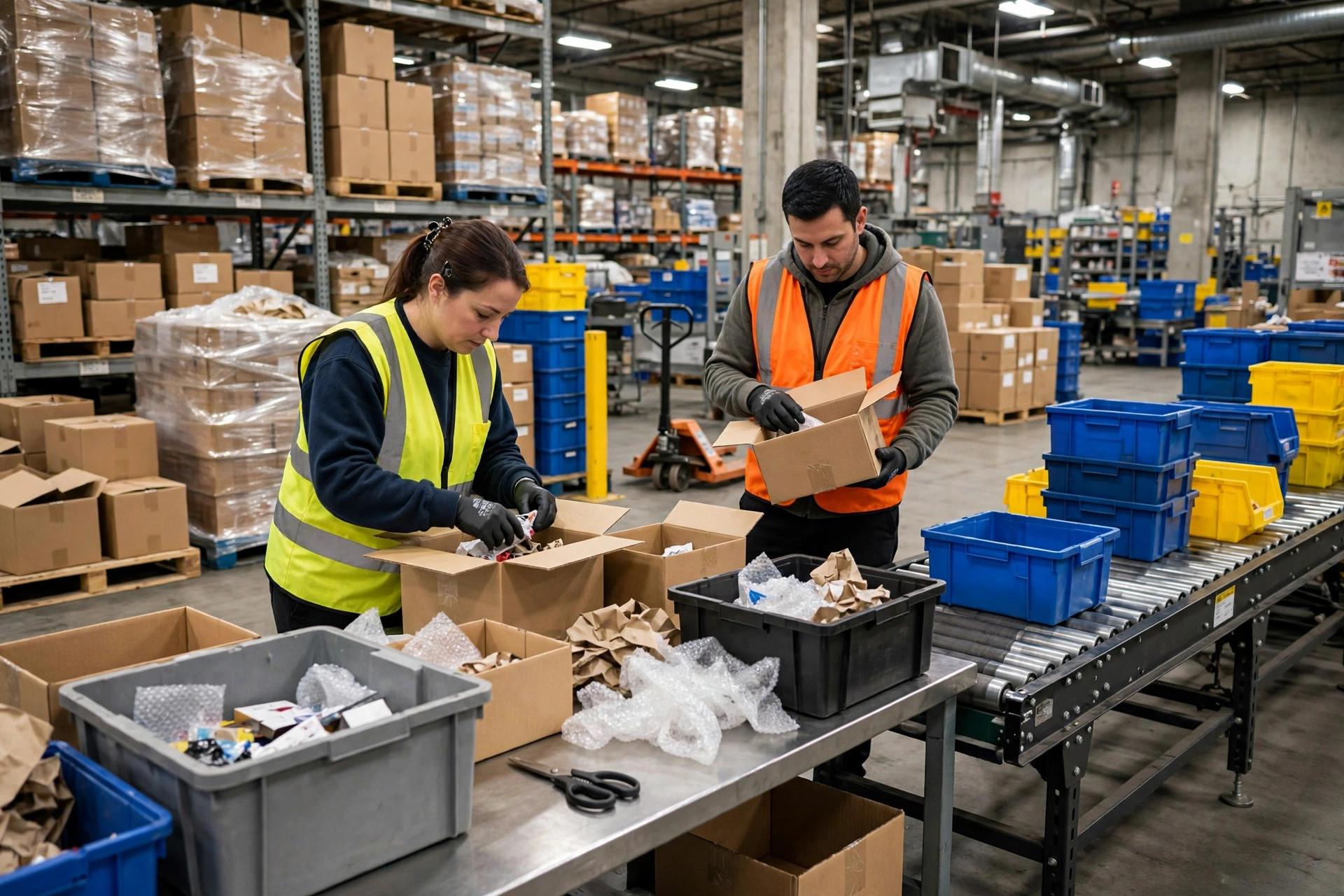
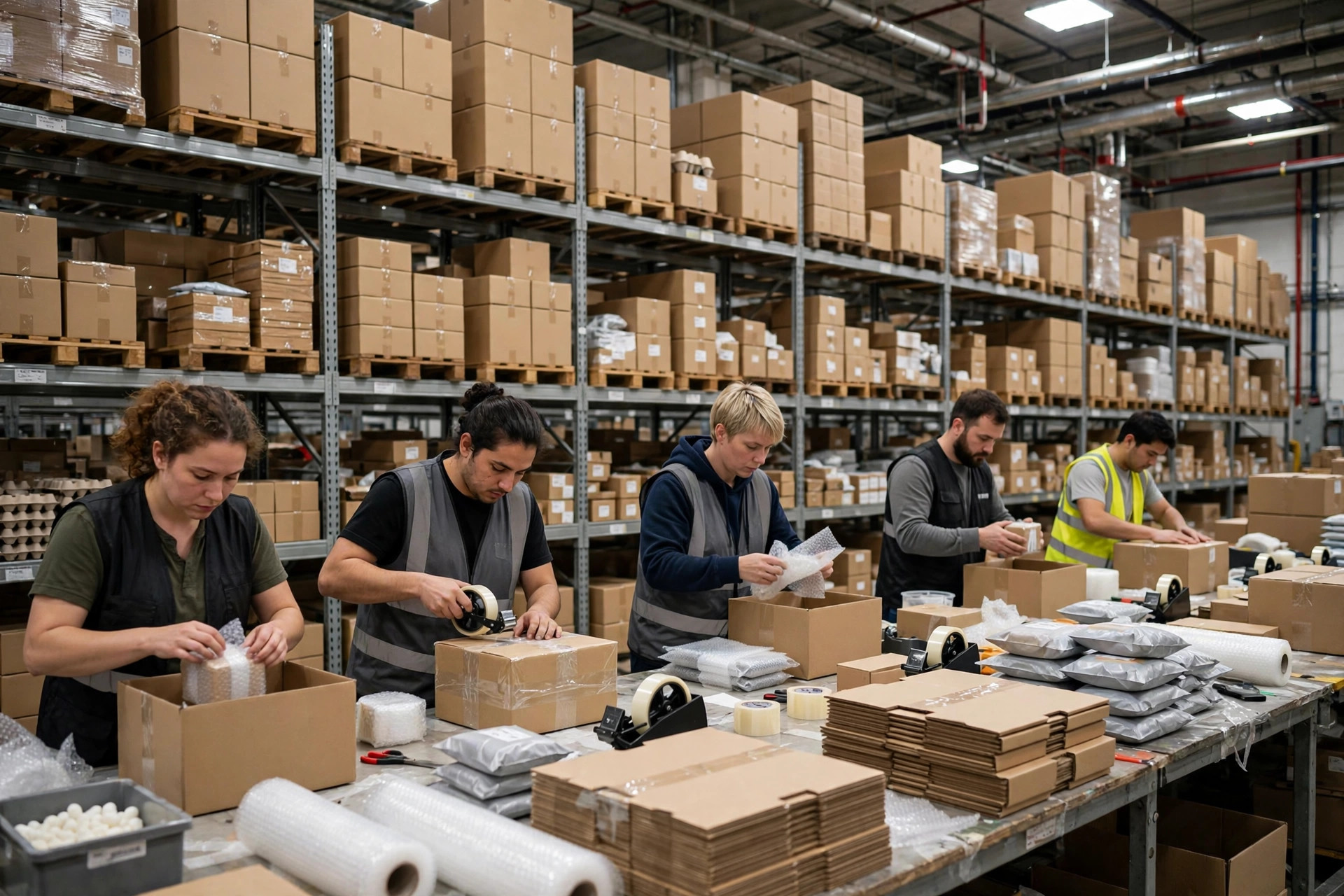
Last November I walked a 3PL in Ontario that handles apparel returns. Peak season: 12,000 returns a day, 22 inspectors flipping garments one by one — and smelling them. Yes, smelling. A jacket that reeks of perfume goes straight to Grade C. The owner pointed at the row of people and asked, "Lao Mi, is there an AI that can see for them?" I didn't answer on the spot. On the drive home I kept running the numbers, and I'm writing them down here so you don't have to learn them from a vendor's demo video.
If your warehouse processes fewer than 2,000 returns a day, don't touch it. The volume can't feed the model, and a $15K–$30K single-station investment never pays back. Above 5,000 returns a day, with a real "refurbish and resell" path for graded goods, it's worth a serious pilot — footwear, apparel, 3C accessories, and small appliances are the sweet spot.
Forget AI for a Minute — Write the Grading Standard First
This is where 90% of warehouses trip on step one: they try to teach AI before their own people agree on what a grade means. AI learns "how humans judge." If three humans give three different answers, the model learns soup.
The grading table has to be written down and taped to the wall. In the operations I've seen run well, returned-goods condition comes in four grades, and the more specific the definitions, the better:
- Grade A (resellable as new): Tags attached, no signs of wear, no odor, packaging reusable as-is. Photographed and returned straight to prime inventory.
- Grade B (minor flaws, needs work): Tags missing, light wrinkling or dust — sellable at full price or a small discount after basic cleaning or repackaging.
- Grade C (visible wear): Stains, abrasion, odor. Clearance or discount channels only, or strip it for parts.
- Grade D (scrap): Damaged, missing components, hygiene issues. Straight to destruction or recycling.
Note who this table is for: humans, not the AI. Run your manual team on it for two to four weeks first, and track grading time per unit and dispute rates. If three veteran inspectors can't agree on the same batch at least 90% of the time, the standard isn't detailed enough — fix the standard before you buy AI. A model's ceiling is the consistency of its human labels — that sentence is worth money.
And get the manual grading SOP running smoothly first: scan, unbox, inspect, assign a disposition code — time every step. Most operations I see run 8–15 seconds per unit manually. AI's job isn't to replace those ten seconds; it's to compress the "looking" step to under a second while humans handle review and exceptions. Automating a messy process just gives you automated mess.
The Camera and the Lights Matter More Than the Algorithm
Vendors spend 80% of the demo on the algorithm and 20% on hardware. In real deployments it's the reverse: about 70% of vision-inspection performance comes down to lighting and cameras; the algorithm is the other 30%. Bad lighting means wrinkles and stains are invisible in the image, and no algorithm on earth recovers what the sensor never captured.
A few selection rules, each one paid for with a scar:
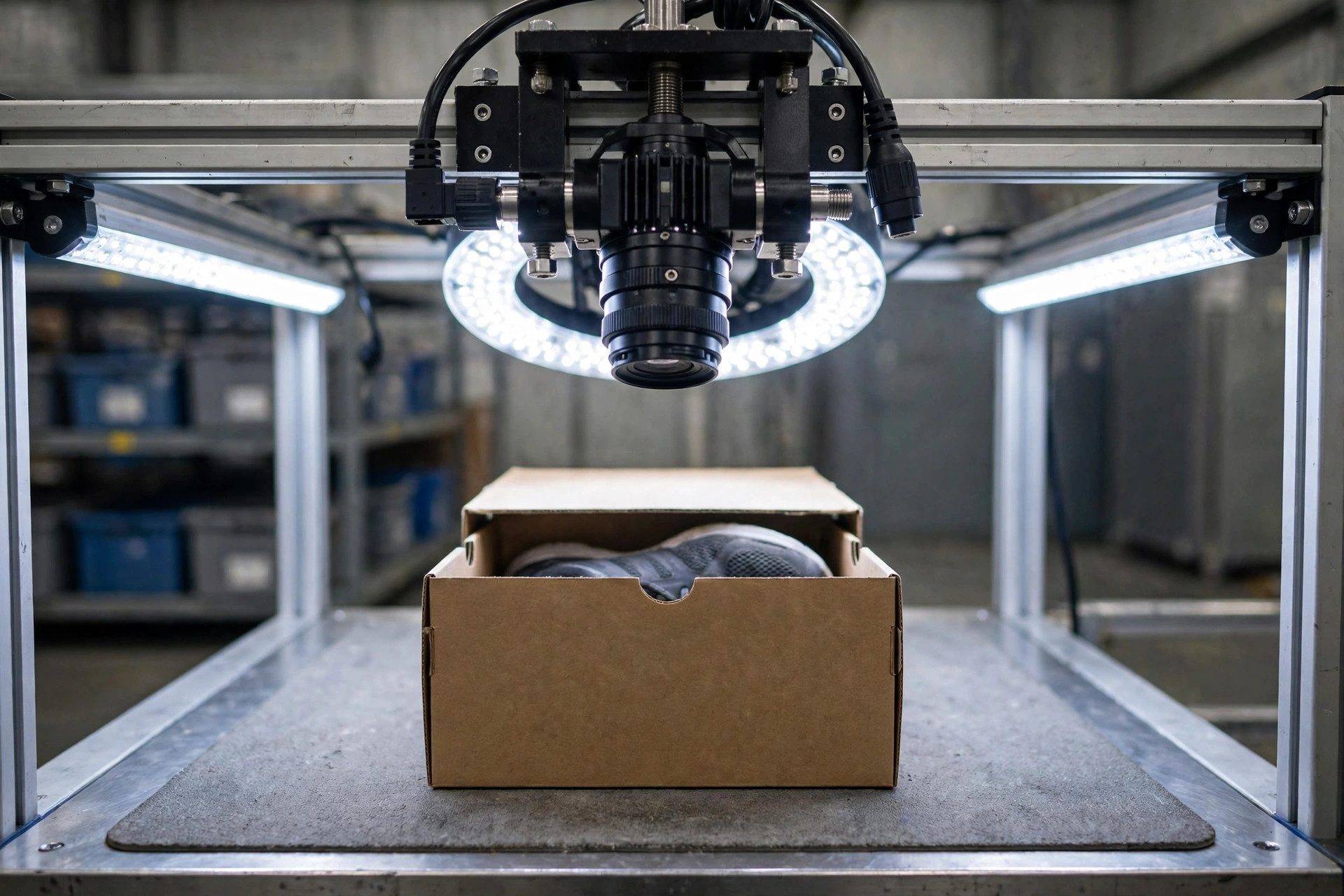
Lighting comes first. Returns inspection typically uses dome lights or large-area diffuse illumination to kill shadows and reflections. Never light the station with bare warehouse fluorescents overhead — metal zippers and plastic packaging will blow out into white blobs. Keep color temperature consistent; daylight-balanced light around 5500K is the common choice, and the whole station should use exactly one light source type.
Don't chase megapixels; buy enough. Grading condition doesn't require seeing individual fibers. A 12–20 megapixel industrial camera covers the vast majority of categories. What matters is shutter speed and triggering: on a moving conveyor you need at least 1/500s or everything smears. On a fixed manual station, a foot pedal or photoelectric trigger keeps costs way down.
Decide up front how many faces to shoot. Footwear needs at least four views (both sides, toe, sole); apparel needs front and back plus details (collar, cuffs); small appliances need the exterior plus an accessories check. View count drives station takt time and camera count directly — four views means four cameras or one camera and four rotations, a 3x cost difference. For a pilot I recommend a fixed station with manual flipping and one or two cameras.
Pilot category shortlist, easiest first: footwear > apparel > bags and luggage > 3C accessories > small appliances. The common thread: defects that live on the surface — stains, abrasion, deformation — things a camera can see. Hold off on soft irregular items and anything where the defect is smell or feel. Vision AI is blind to "smells wrong" and "doesn't bounce back."
Where the Money Goes, and How the Math Works
A single-station pilot, in my experience, typically lands at $15K–$30K: one or two industrial cameras plus lenses ($3K–$8K), lighting and mounting ($2K–$5K), an industrial PC or edge compute box ($1.5K–$3K), software licensing or per-unit pricing (the big variable — $5K–$15K a year; check current vendor quotes), and installation plus labeling of the first 3,000–5,000 training images (don't underestimate this one; two to four weeks of work).
The payback comes from three places. First, labor speed: AI pre-grading plus human review takes per-unit handling from 10 seconds down to 3–4. A warehouse doing 8,000 returns a day can cut inspection headcount from 20 to 8–10, and the annual labor savings alone cover the investment.
Second, Grade A recovery rate: under peak pressure, human inspectors "kill rather than risk" — plenty of Grade B goods get dumped into Grade C clearance, losing 30–50% of value per unit. Consistent AI grading can lift A/B recovery by 5–10 points, and that money is often bigger than the labor savings.
Third, disputes and chargebacks. Photograph every unit. When a customer claims "I sent it back in perfect condition," you pull up the photo and the argument ends. 3PLs get evidence for their brand clients, too.
How to test accuracy — don't trust the vendor's slides. I only accept one pilot acceptance method: prepare 500–1,000 units spanning all four grades, have your expert inspectors blind-grade and seal the answers, run the AI, and compare. Watch two numbers closely: the error rate at the B/C boundary (the hardest call, and where the most money sits) and the Grade D miss rate (scrap leaking back into prime inventory is a disaster). Overall accuracy above 92%, with above 85% at the B/C boundary, is my bar for production — tested on your own goods, not the vendor's sample library.
Plugging It Into Your Returns Flow and WMS
An AI grade that never reaches the system is a party trick. The standard integration runs in five steps:
- The return is scanned in and the WMS creates a returns task tied to the RMA number.
- The inspection station photographs the unit; the AI returns a grade and confidence score within 1–2 seconds.
- Anything above the confidence threshold (say 95%) flows through; anything below goes to a human review screen — keep the human review station, it's your safety valve.
- The grade is written to the WMS disposition field, and photos are archived by RMA number (90 days is usually enough; check your brand agreements).
- The WMS auto-routes by disposition: Grade A back to prime locations, Grade B to the refurb area, Grade C to clearance, Grade D to destruction.
Two things to confirm on the WMS side: whether the disposition field can expand to four grades (plenty of legacy systems only have "good/bad" — that needs a change), and whether photo storage can keep up (8,000 units a day at four photos each is nearly a million images a month — price the object storage into the business case).
Three Things You Can Do Tomorrow
Don't call a vendor yet. Do these three first:
- Pull three months of returns data and look at your A/B/C/D mix and where Grade B goods actually went. If Grade B is under 15% of volume, AI has little room to add value.
- Photograph 200 units with a phone at the inspection table and have three veteran inspectors grade them independently. If the three-way agreement rate is under 90%, standardize the humans first.
- Run the math: average inspector hourly wage × headcount × a year, versus a $20K–$30K pilot. If payback stretches past 18 months, wait.
Vision AI for returns grading isn't snake oil — but it's a scale business. Enough volume, the right categories, and standards first: that's a money printer. Missing any one of the three, and it's an expensive decoration gathering dust in the corner of your warehouse.