Picking Your First AI Pilot in the Warehouse: A Low-Risk, High-Visibility Checklist
In early 2024, a 3PL owner in Ontario, California, slid an invoice across the table at me: $87,000. Not for equipment. Not for labor. For a "warehouse AI platform" that, six months after go-live, had produced exactly one artifact — a dashboard nobody opened. The vendor had sold him the future. What he actually needed was a camera.
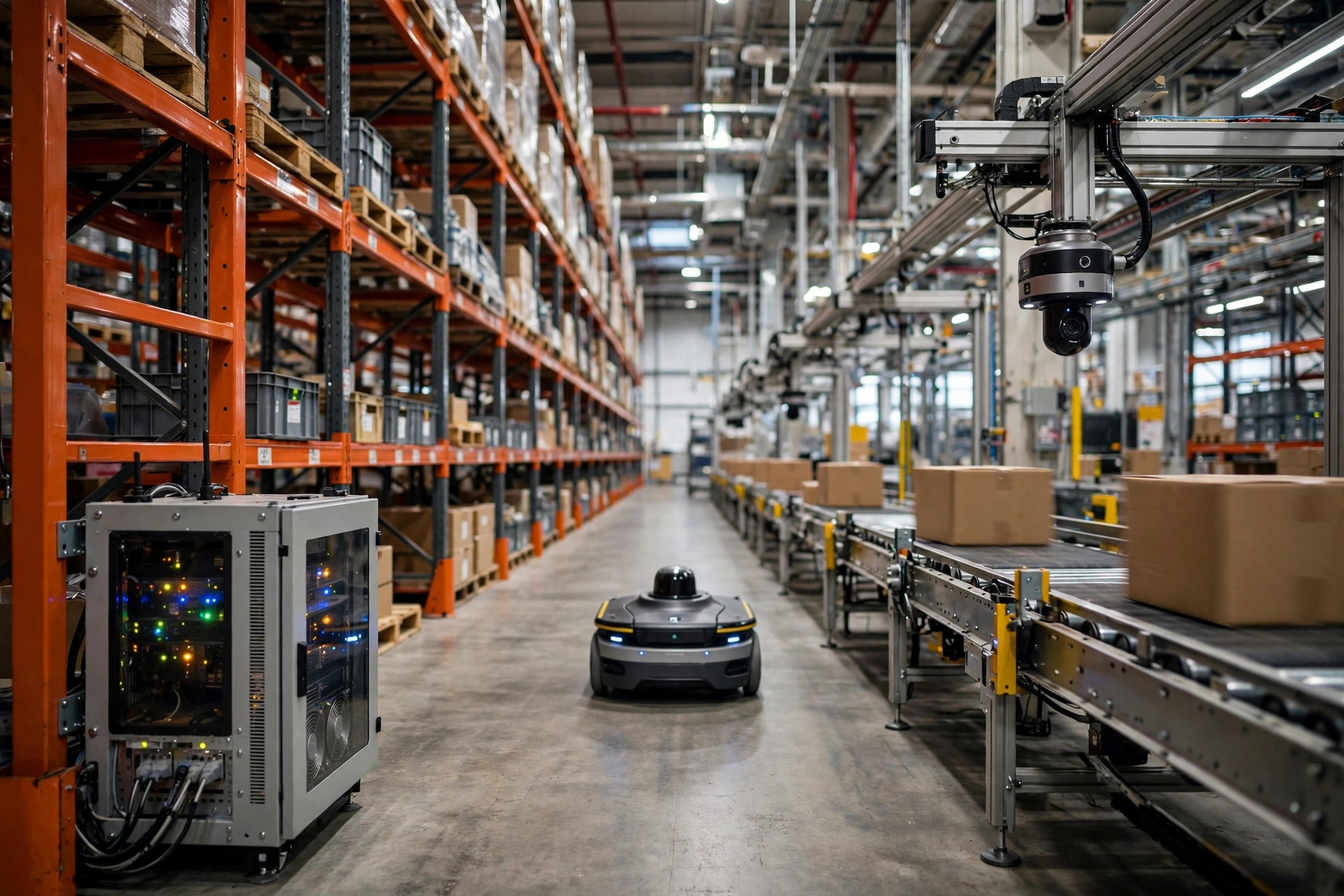
That's the whole thesis of this piece: your first AI pilot should be boring. Not a digital twin of your 400,000-square-foot building. Not a platform. One specific pain, one measurable outcome, and a 60-day window where you can kill it cheaply if it doesn't work.
Four Candidates, Ranked by Boringness
Most AI pitches aimed at warehouses fall into four buckets. Here's how they really stack up after you've watched a few of them live.
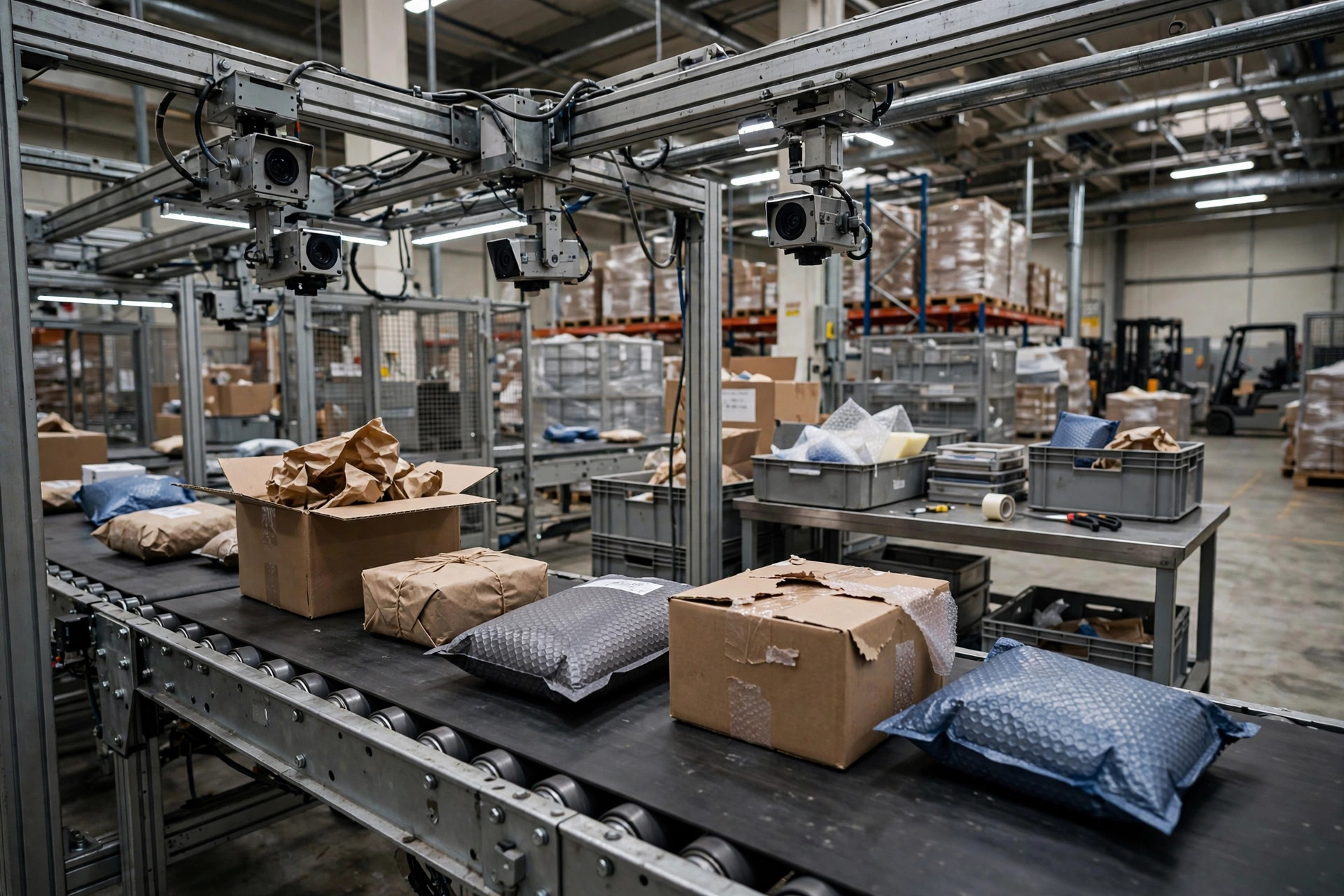
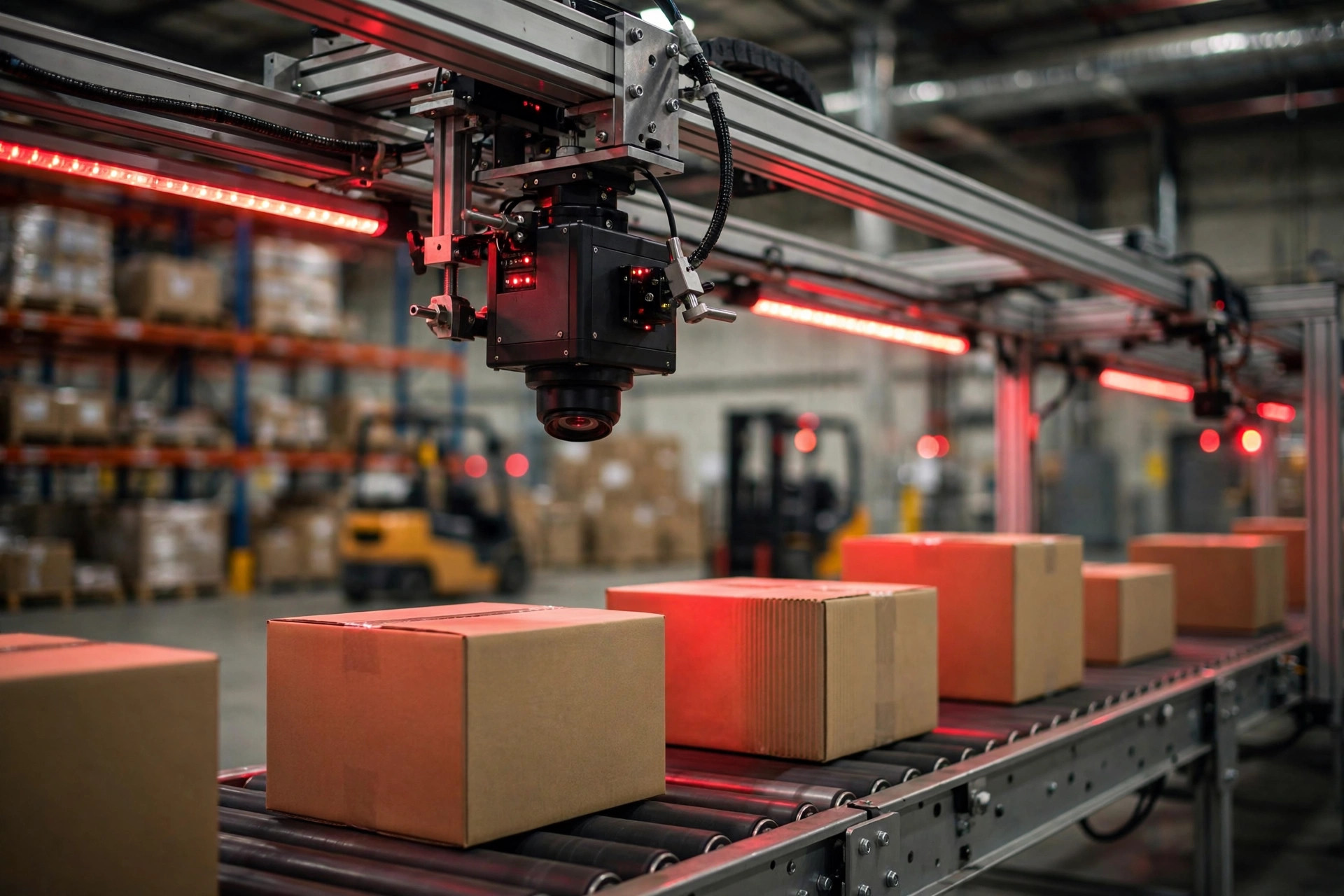
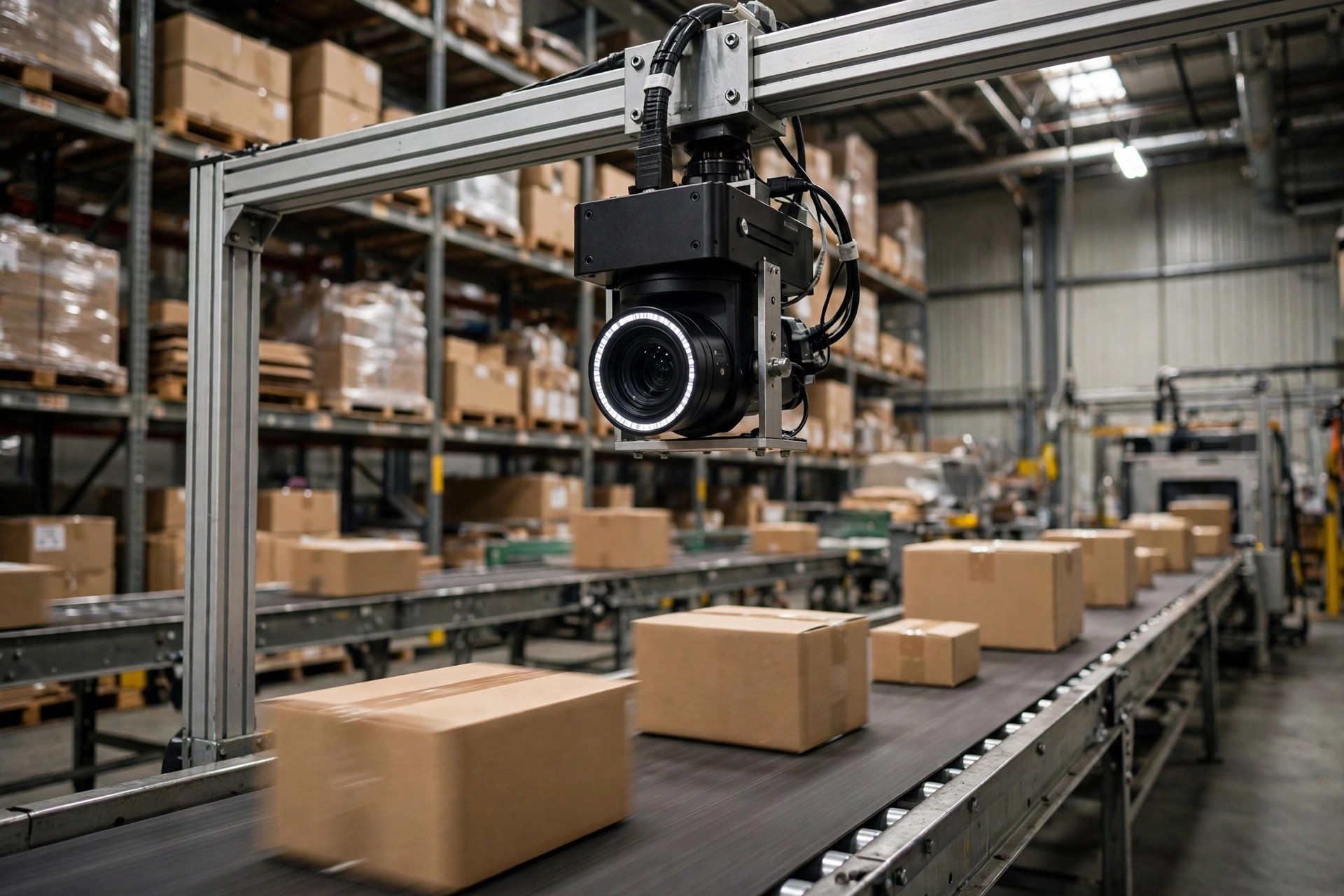
Vision quality control at pack-out is my top pick, and I'd argue for it in almost any room. A camera mounted over the packing station checks each outbound parcel against the order: right item, right quantity, right label. Hardware runs about $15,000–$30,000 per station — camera, lighting, and a small compute box — with software on top as a subscription or a one-time fee. The math is brutally simple. A mid-size DC pushing 5,000 cartons a day with a 1.5% error rate is shipping 75 bad cartons daily. At $25–$40 per mis-ship in rework, reshipping, and retailer chargebacks, that's over $2,000 a day walking out the door. If the camera catches even half of them, payback lands in weeks, not years. And it's low-risk for one structural reason: in the worst case, you own a camera that takes pictures nobody uses. The conveyor keeps running either way.
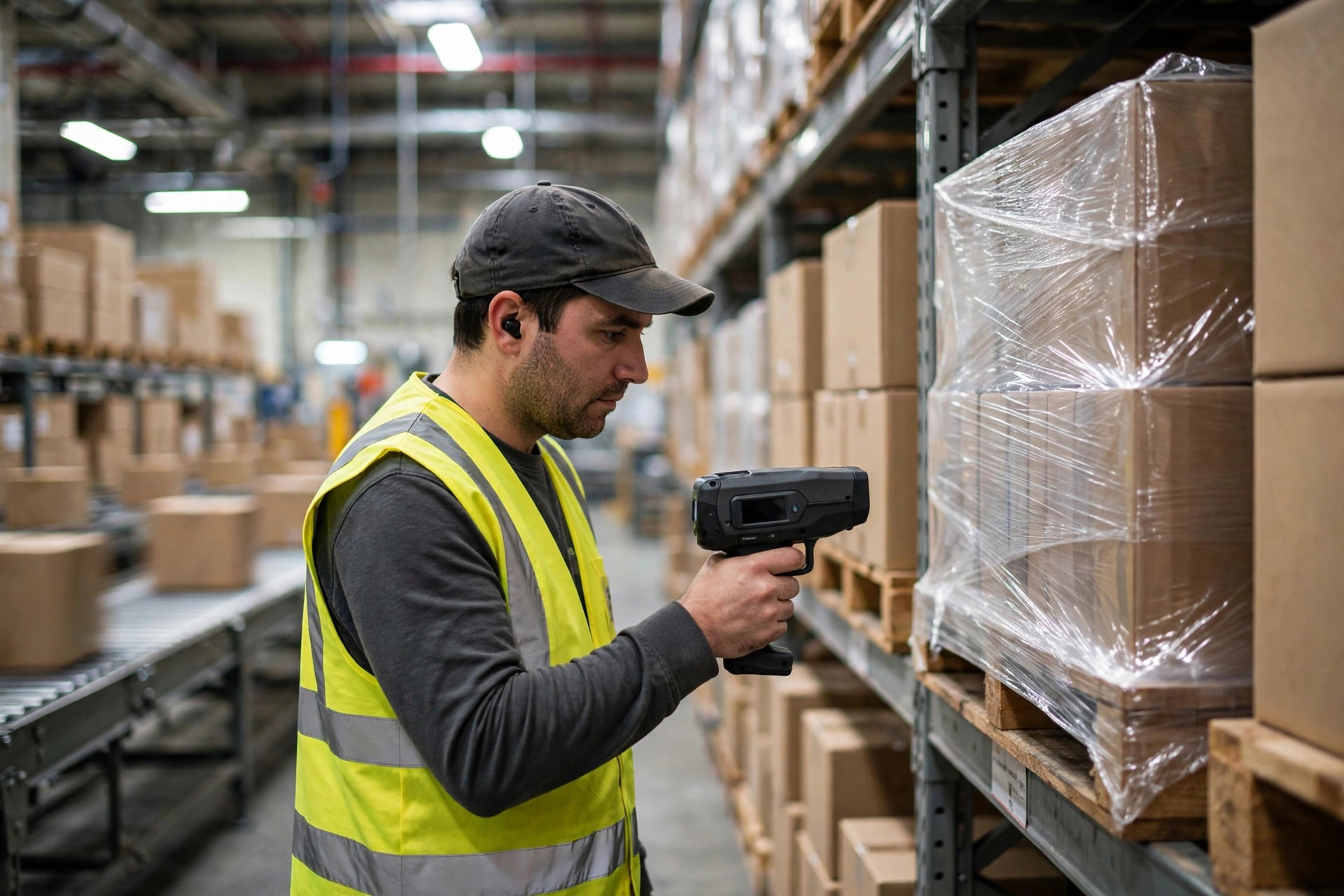
Document OCR comes second. Inbound paperwork — BOLs, packing lists, invoices, PODs — still gets keyed in by hand in more warehouses than anyone will admit. A sane pilot targets exactly one document type at one receiving dock: scan, extract, validate against the ASN. Budget under $20,000 for the pilot including setup. The ROI case: if your receiving clerks burn three hours a day typing, and OCR wipes out 70% of it at 98%+ field accuracy, you've freed most of a headcount without laying anyone off — and you redirect that person to exception handling, which is work that actually needs a human. The caveat is where pilots die: vendor accuracy numbers are measured on clean demo scans. Your drivers hand you crumpled BOLs with coffee stains. Insist the POC runs on your actual paper, from your actual dock, or don't sign.
Anomaly detection on picks is third — promising, but a data-appetite monster. The pitch is to flag the picks most likely to be wrong before they ship: the rushed pick in the last hour of shift, the SKU with a history of count errors. It works, but it needs six to twelve months of clean pick history with timestamps, user IDs, and exception codes. Be honest with yourself: if your WMS data is messy, this pilot will spend 80% of its life as a data-cleaning project. Price it that way before you fall in love with the demo.
AI-enhanced voice picking ranks last for a first pilot, which surprises people, because voice feels familiar. But that's exactly the problem: you're changing how every picker on the floor works, all at once. Legacy voice systems already solve most of what this claims to solve, and the incremental gain rarely justifies ripping out something the floor team trusts. Save it for pilot number three, after you've banked some credibility.
See the pattern? The good first pilots don't change how people work. They watch, check, and flag. The dangerous ones rearrange the floor.
Put the Acceptance Criteria in the Contract, Not the Deck
Almost every POC contract I review has the same flaw: success metrics get written by the vendor, after the pilot, based on whatever the pilot happened to do. That's backwards, and it guarantees you'll pay for a story instead of a result.
You write the criteria before you sign — plain language, in the contract itself. Three elements: what counts as success, how you'll measure it, and what happens if it fails. For vision QC that reads something like: "Over 30 consecutive operating days on Lane 2, the system flags mislabeled cartons with at least 99% precision and no more than a 2% false-alarm rate, verified by a manual audit of 500 cartons." For OCR: "Extracts the correct PO number and quantity from receiving documents at 98% field-level accuracy or better, tested on 200 real documents from our last 60 days." Notice what's missing: adjectives. No "significantly improves." Numbers or it didn't happen.
Then the clause vendors hope you skip: the exit. "If the criteria aren't met, we return the hardware and pay nothing beyond the pilot fee, capped at $X." If a vendor won't agree to that, they don't believe their own demo. Walk away — politely, but walk.
One more thing to get in writing: who owns the data the pilot generates. Your images, your scans, your labels stay yours. I've seen contracts where the vendor quietly kept the training data and folded it into a model sold to the warehouse down the street. Read that clause twice.
Data Prep: The Part Nobody Puts on the Slide
Every vendor says "we'll handle the data." Translation: you'll handle the data, and they'll email you about it every Friday.
The minimum bar is unglamorous. You can export three months of the relevant records from your WMS or TMS in a single day, in a structured file, and the fields mean what you think they mean. For vision QC, you need 2,000–5,000 labeled images of your actual products, your actual labels, under your actual lights — and someone on your team has to do the labeling, or at least verify it. Budget 20–40 hours of a lead's time. If your boss won't free up a lead for a month, you don't have a pilot. You have a wish.
And always test with your ugliest data, not your prettiest. The crumpled BOL. The SKU with five near-identical variants. The night shift under flickering lights. If it only works in the vendor's lab, it doesn't work. Where the technology's current limits are genuinely unclear — and they are, in places — write "verify with the vendor's latest specs" in your own notes and move on. Guessing is how $87,000 invoices happen.
The Two Pitfalls That Actually Kill Pilots
The first is skipping the pilot to go big. In 2023 I watched a distributor in Fontana sign a $250,000 deal for a full AI platform — vision, forecasting, slotting, everything at once, no pilot. Eighteen months later they were still "integrating." The tech wasn't the problem. Complexity is multiplicative: four half-ready modules don't add up to one working system. One working camera station beats four PowerPoint modules every time. There is no shortcut past the boring pilot.
The second is your own people. The day a camera goes up over the pack station, half your team decides it's there to watch them. Don't roll your eyes at that — it's a fair question, and dodging it poisons the pilot. Tell the floor, before install day, exactly what the camera watches and what it ignores. Better yet: put the pack lead on the pilot team and let them run the manual audit that scores the vendor. When the person who distrusted it most becomes the one judging whether it works, resistance turns into ownership. I've watched that single move flip a pilot's fate more than once.
Tomorrow morning, try this: grab a clipboard and stand at your busiest pack station for two hours. Count every mis-ship, every relabel, every carton that comes back. Multiply by your shifts, multiply by, say, $30 a pop. That number — written by your own floor, not a vendor's deck — is your pilot budget and your justification on a single page. Then ask yourself the question I ask every owner before we spend a dollar: if this pilot fails quietly in 60 days, can we walk away smiling? If the answer is yes, you've picked the right one.