The Setup: A Warehouse Paying Rent for Forklift Turns
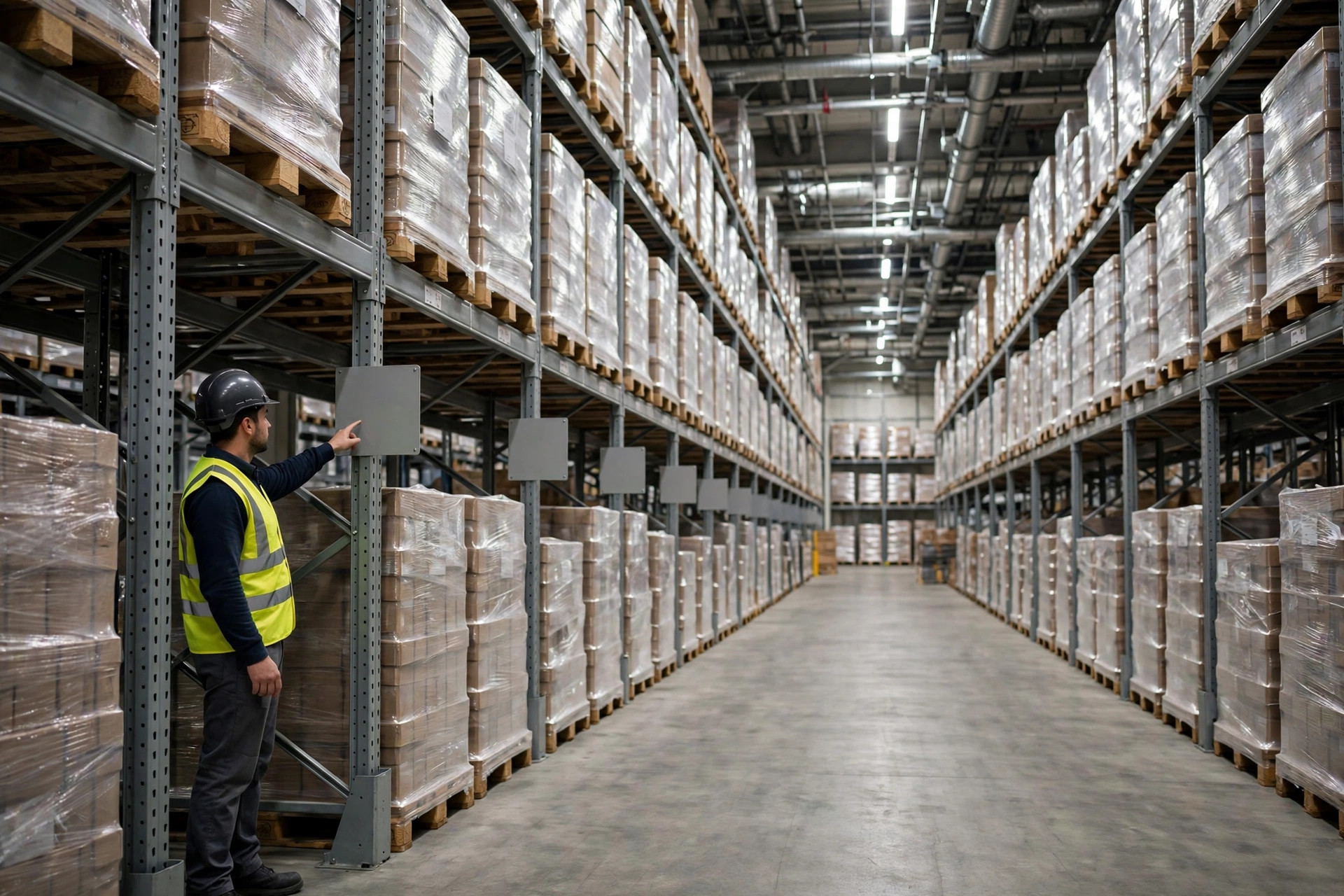
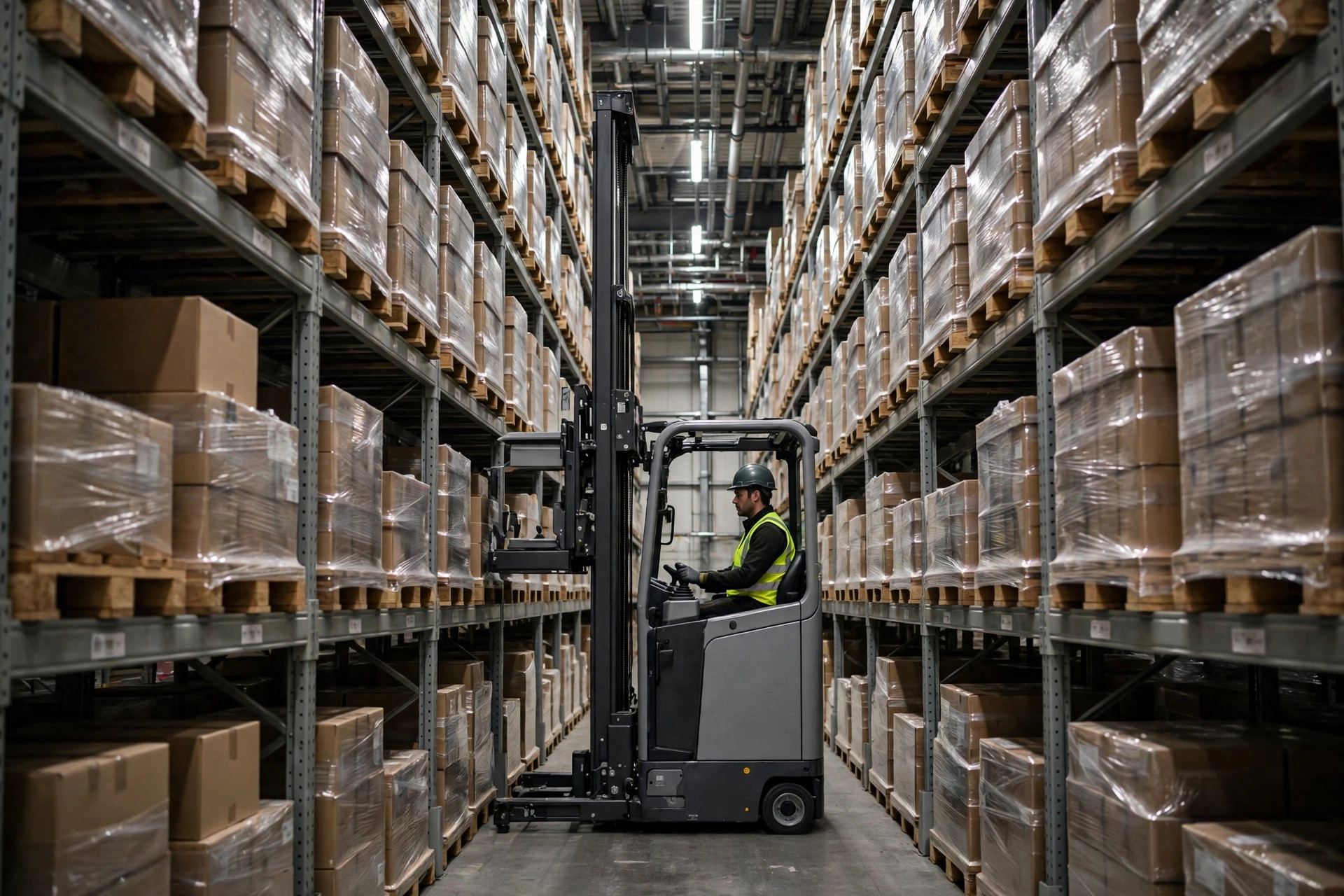
A food distributor's warehouse: 9 m ceilings, all selective racking with counterbalance forklifts, 4 m main aisles, 3.5 m rack aisles. I ran the numbers: aisles consumed 32% of the floor area — over ¥500,000 a year in rent, just so forklifts could turn around.
Worse, 70% of their SKUs were ambient foods with no strict FIFO requirement — perfect candidates for denser storage. Aisle width and rack selection are two sides of one decision: pick the rack, and you've set the aisle; set the aisle, and you've locked in a decade of rent.
Head-to-Head: Three Mainstream Rack Types
| Dimension | Selective | Drive-In | Shuttle | |---|---|---|---| | Storage density | Baseline (100%) | ~150%–180% | ~180%–220% | | Aisle needed | 3.0–3.5 m (counterbalance) | 1.5 m (single entry) | 1.5 m (end operation) | | Pick flexibility | Highest: any pallet direct | Low: FILO | Medium: FIFO achievable | | SKU profile | Many SKUs, shallow depth | Few SKUs, deep inventory | Mid SKUs, large batches | | Equipment cost | Lowest | Medium (racking +30–50%) | High (shuttles + racking) | | Typical fit | E-commerce, 3PL, multi-category | Food, beverage, seasonal stock | Cold chain, FMCG, bulk |
One-line summary: the more numerous and scattered the SKUs, the more selective fits; the fewer and deeper, the more shuttle makes sense.
The Four-Step Selection Method
Step 1: SKU Structure Before Racking
Plot the SKU-to-inventory distribution: if 80% of SKUs average under 2 pallets of stock, go selective without hesitation. If the top 20% of SKUs each hold 20+ pallets deep, drive-in or shuttle deserve serious math.
Step 2: Run Both the Density Math and the Efficiency Math
Density math: shuttle holds ~80% more than selective — how many years of saved rent pay it back? Efficiency math: drive-in picking sends forklifts deep into lanes, taking 2–3× longer per pallet than selective — rent savings can come back as labor cost. Run both; pick the higher net gain.
Step 3: Let Equipment Set Aisle Width
With racking chosen, handling equipment sets the aisle: counterbalance needs 3.2–3.5 m, reach trucks 2.7–3.0 m, VNA (very narrow aisle) trucks squeeze to 1.8 m. Pricier equipment = narrower aisles = less rent — leverage that swaps capex for rent, provided volume justifies the depreciation.
Step 4: Mix, Don't Monoculture
The classic mistake is "one rack type for the whole building." Mature operations mix by zone: selective for fast A-items (quick picks), drive-in or shuttle for slow bulk C-items (density), flow racks for e-commerce eaches. Three to four rack types in a 10,000 m² building is normal, not chaos.
Case Study: A Beverage Distributor's Hybrid Retrofit
A regional beverage distributor: 8,000 m², only 300 SKUs, but 40 pallets average depth each. All selective racking originally — never enough slots, forced to rent a 2,000 m² overflow building.
The retrofit: 60% converted to shuttle (top 100 bulk SKUs), 30% kept selective (long tail + picking), 10% for full-truck direct staging. Aisles compressed from 3.5 m to 1.8 m with reach trucks working the ends. One more detail that paid off: they standardized on a single pallet footprint across the shuttle zone, which let one shuttle serve any lane without reconfiguration — a small standardization choice that removed a whole category of exceptions from daily operations.
Results: pallet positions grew from 6,000 to 10,500, the overflow lease was dropped, saving over ¥800,000/year in rent and management. Shuttle investment paid back in 2 years. The owner's summary: "We used to work for the forklifts; now equipment works for density."
Pitfalls: Five Classic Selection Traps
- Comparing rack unit prices only: cheap racking with wide aisles means a decade of expensive rent. Compare total cost of ownership, not unit price.
- Ignoring FIFO requirements: food, pharma, and cosmetics have shelf lives — drive-in's FILO is a dealbreaker. Check regulations and QC requirements first.
- Under-buying shuttles: one shuttle serves 2–4 lanes max. Buy too few and lanes queue, performing worse than selective. Size for peak waves, not averages.
- Wasting clear height: 9 m ceilings with 4-level racking throws away half the rent. Design rack height to match building height.
- Ignoring future SKU growth: drive-in and shuttle handle SKU growth terribly — doubling SKUs can force a full rebuild. If SKU counts will surge, sacrifice some density to keep a selective flex zone.
Takeaway
Aisle width and rack selection come down to one equation: trading (rent × area) against (equipment + labor). SKU structure picks the rack type, rack type sets the aisle width, aisle width sets a decade of rent. Run both sides of the math before choosing, mix rack types after, and keep flex — that's the conclusion dozens of projects have taught me.
Warehousing with Mr. Mi · 20 years of US warehousing solutions