
The Setup: New Hires Treasure-Hunting, Veterans Memorizing
I've seen too many "human WMS" warehouses: veterans know from memory that "the hot SKU is third row on the left, all the way in," while new hires wander with pick lists and run at half the veterans' speed all day. Management blames the people. The real problem: locations have no language — no coding system everyone can read.
Good location coding is the warehouse's street-address system: see the code, know where the goods are — no asking, no memorizing, no guessing. The four-segment scheme below is the universal template I've distilled from dozens of warehouse projects.
The Four-Segment Structure: Zone-Bay-Position-Level
Standard format: AA-BB-CC-DD, each segment meaningful:
| Segment | Meaning | Example | Rule | |---|---|---|---| | 1st (Zone) | Functional area / aisle block | A, B, C… | Divide by aisle or area, letters ascending | | 2nd (Bay) | Rack bay number | 01–99 | Numbered from the entrance within a zone | | 3rd (Position) | Slot number along the bay | 001–999 | Sequential along the travel direction | | 4th (Level) | Beam level | 1–9 | Ground = level 1, ascending upward |
Full example: B-12-045-3 — Zone B, Bay 12, Position 45, Level 3. A new hire follows "zone → bay → position → level" and arrives within three minutes. No mentor needed, no floor plan memorized.
Five Essentials of Code Design
1. Codes Must Be Self-Explanatory — No Secret Dialects
Every character needs a public meaning. Anti-pattern: a warehouse using "A1" to mean "the rack near packing" — no newcomer can guess that. The fix: the code is a coordinate; anyone with the code plus one zone map can locate it.
2. Leave Numbering Headroom — Keep Codes "Sparse"
Number bays 01, 03, 05… (odd numbers), reserving evens for future bays; leave 2 spare numbers per 10 positions. Warehouses always add racking and shift layouts — without headroom, one new bay forces a full re-code. That's a disaster.
3. Level Numbering Always Starts at the Ground
Whether a rack has 3 or 5 levels, ground is always level 1. Never allow "some racks start at 0, some at 1." Mezzanines get their own prefix (M1, M2) and never consume numeric levels.
4. Special Locations Get Their Own Prefix — Never Crowd the Main Code
Floor stacks, staging, QC hold, and damaged goods use prefixes: STG- (staging), QC- (hold), DMG- (damaged), FLR- (floor). Mixing special locations into the main code is the #1 source of later data chaos.
5. Labels Go on the Rack — Height and Material Matter
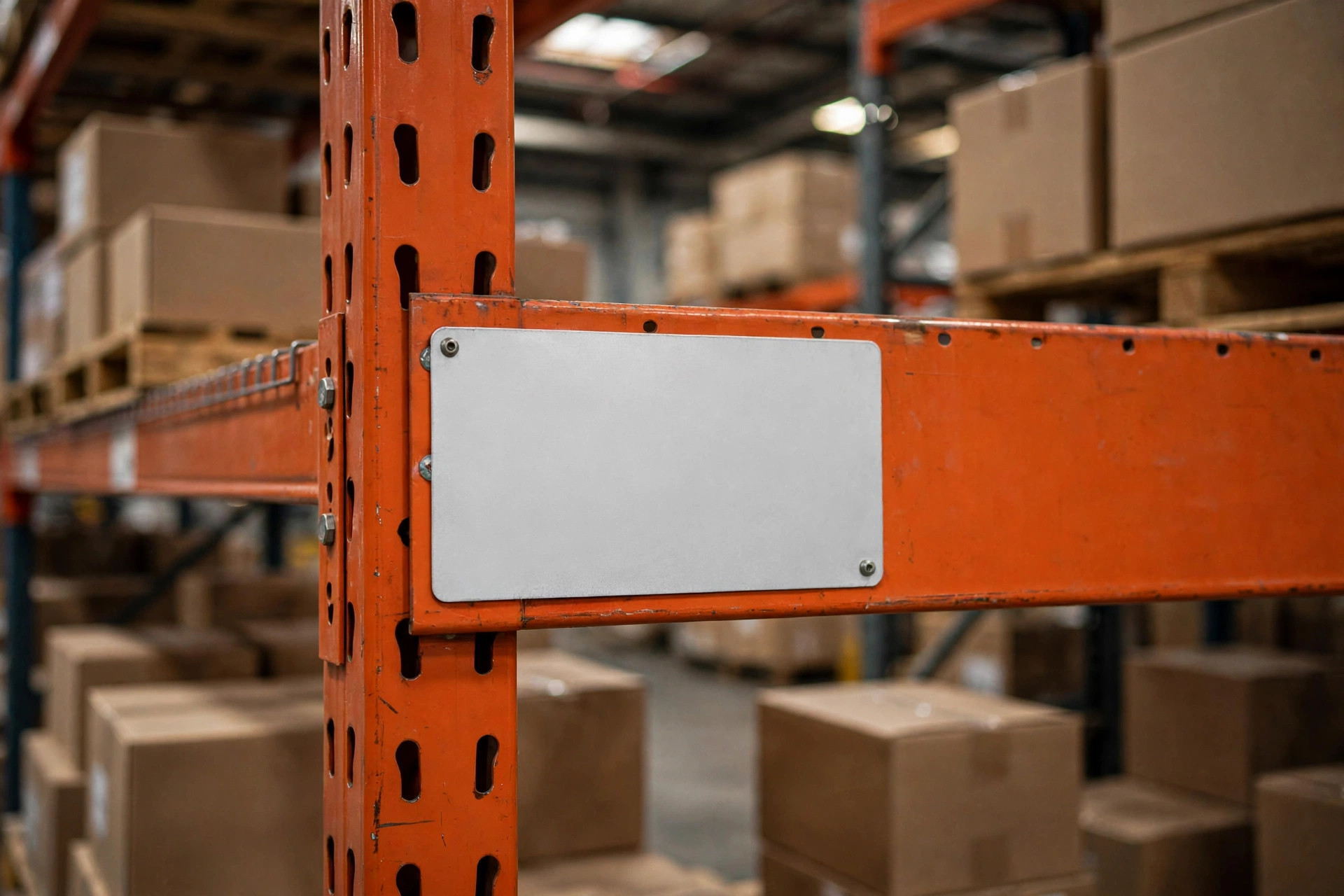
Codes aren't just system data; they're physical signage: labels on the front beam at 1.4–1.6 m height (forklift driver and picker eye level); reflective, waterproof material; print at least 5 cm tall; hang "zone-bay" index signs at every aisle entrance. A missing, dirty, or illegible label means the code doesn't exist — put label upkeep on the daily checklist.
Case Study: 6,000 SKUs "De-Humanized" in Three Days
A 6,000 m², 6,000-SKU home-goods e-commerce warehouse ran entirely on three veterans' memories. New hires needed two weeks to ramp; mis-pick rate was 3.5%.
In two weeks we did four things: ① re-coded the entire building in four segments; ② printed and mounted 12,000 location labels; ③ bulk-imported location master data into the WMS; ④ turned new-hire training into a "code treasure hunt" — 20 codes, fastest finder wins.
Results: new-hire independence went from 14 days to 3, mis-picks fell from 3.5% to 0.8%, and the veterans could finally take vacations. The warehouse manager's verdict: "People used to work for the warehouse; now the system gives people directions." Perhaps the most telling metric came six months later: the mis-pick rate stayed under 1% even after half the picking team turned over — proof that the system, not tribal knowledge, was now doing the heavy lifting.
Pitfalls: Five Classic Coding Mistakes
- Baking product categories into codes: e.g., "F" prefix for the apparel zone — categories change, locations don't. One rezone forces a full re-code.
- Pure-numeric codes: 12030405-style strings — misread one digit, lose everything. Alphanumeric mixes (B-12-045-3) are an order of magnitude more readable.
- Overlong codes: beyond 12 characters, scanners cope but human eyes don't. Four segments is the ceiling — never add a fifth.
- Running old and new codes in parallel: cutover must be a clean break — one go-live day, full label swap. More than a week of parallel codes guarantees floor chaos.
- Coding racks but not staging: receiving and shipping staging without codes are black holes in the WMS. Stage locations need codes too, even simple ones like STG-01.
Takeaway
Location coding translates the warehouse into a language everyone speaks. The four-segment (zone-bay-position-level) scheme endures because it serves both machine readability (WMS-friendly) and human readability (new-hire-friendly). Remember: the best code lets even the clumsiest method find the goods — a new hire working independently in three days is the acceptance test.
Warehousing with Mr. Mi · 20 years of US warehousing solutions