

The Problem: Two Days Shut Down — For What?
Many warehouses do a wall-to-wall physical inventory once a year: shut down for two days, all hands on deck, count through the night — then discover an 8% variance rate, spend two weeks reconciling and adjusting, and never learn which day or which process created the variances. Worse, three months after the count, accuracy slides back to the low 90s — because the count corrected the numbers without fixing the processes that created the errors.
Cycle counting does the opposite: no shutdown, a small slice counted every day, every location counted multiple times per year. It sounds like more work, but it actually costs less labor and holds accuracy above 97%. Here is how to design a dynamic counting program for your warehouse.
The Method: Five Pillars of a Dynamic Counting Program
1. ABC tiering: aim counting frequency at high-value SKUs
Not every SKU deserves equal attention. Tier SKUs by annual shipment value and differentiate counting frequency:
| Tier | Criteria | Frequency | Counts/year | |---|---|---|---| | A | Top 80% of shipment value (~15% of SKUs) | Weekly | ~50 | | B | Middle 15% of value (~30% of SKUs) | Monthly | 12 | | C | Remaining SKUs (~55%) | Quarterly | 4 |
With this design, A-class SKUs are counted 50 times a year — no variance survives longer than a week. For a warehouse with 12,000 SKUs, that is about 90 locations per day, which one dedicated counter finishes in 2–3 hours without disrupting operations.
2. Trigger-based counts: let exceptions raise their own hands
Beyond scheduled counts, set trigger rules so the WMS auto-generates count tasks:
- Zero-on-hand counts: system shows zero but the location has stock (or vice versa);
- Velocity anomaly counts: a SKU's single-day outbound volume exceeds 3× its 30-day daily average;
- Receiving variance counts: received quantity doesn't match the ASN — count it the same day;
- Negative inventory counts: negative on-hand in the system must be verified within 2 hours.
Trigger-based counting is the soul of cycle counting: it aims counting labor precisely where errors are most likely. One auto-parts warehouse cut its average variance detection lag from 23 days to 1.6 days after enabling triggers.
3. Blind counts + verification: design "copying the numbers" out of the system
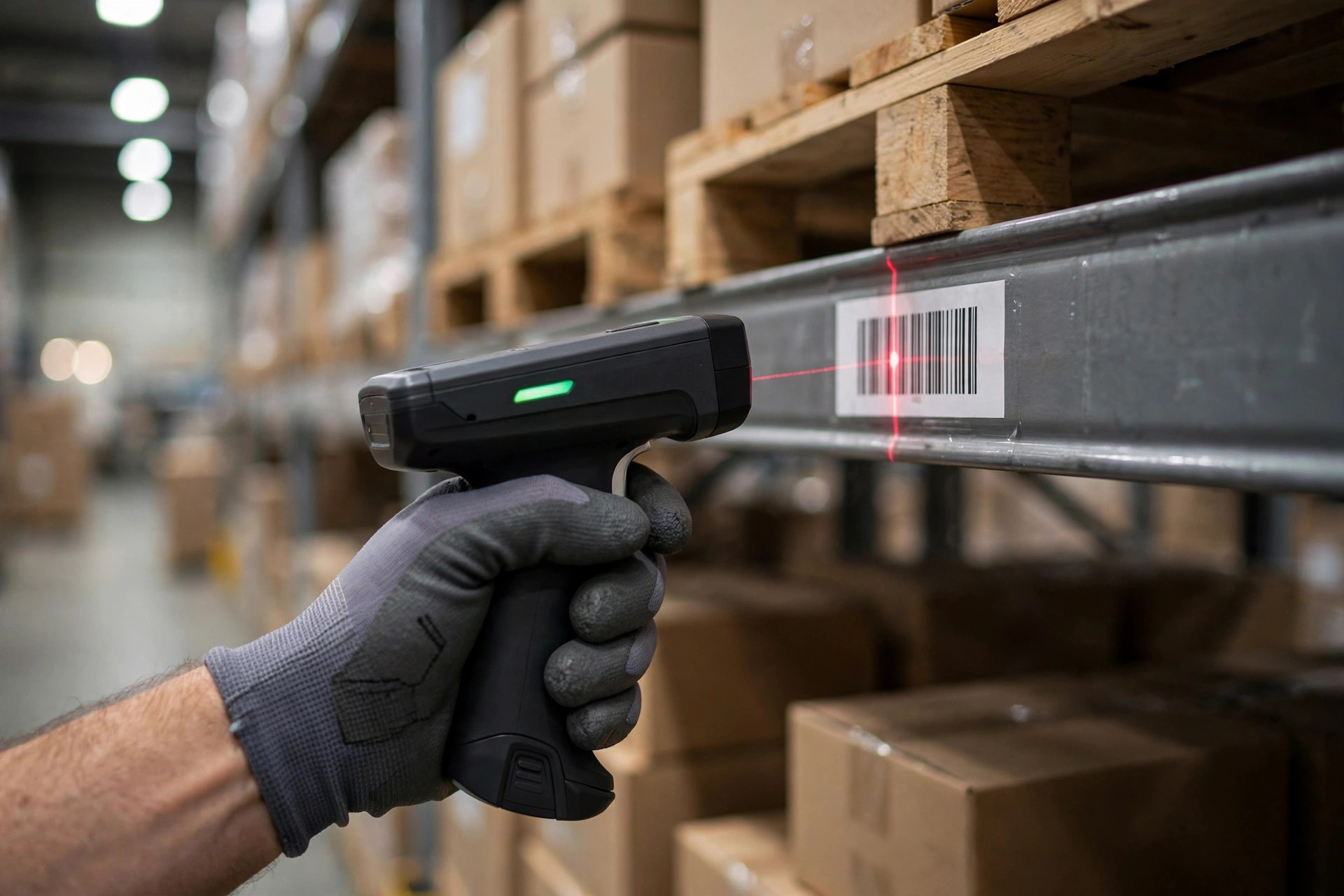
The counter's handheld shows only the location and SKU — never the book quantity (blind count). After submitting, the system auto-compares. Variances beyond a threshold (e.g., quantity off by more than 5%, or value off by more than $50) auto-generate a verification task assigned to a second person. Only when both counts agree does the adjustment post; disagreement escalates to a supervisor for on-site confirmation.
Critical detail: never tie counter performance to "variances found." Tie it to on-time completion rate and verification agreement rate instead. We have seen both failure modes — counters manufacturing variances to "show results," and counters copying book quantities to "look clean."
4. Root-cause analysis: counting is the means, process repair is the end
Every adjustment must carry a root-cause code — the WMS should require it, no skipping. There are really only seven: receiving not scanned, putaway to wrong location, wrong pick, return not received, system transfer unconfirmed, damaged packaging unreported, supplier short-shipped.
Hold a 30-minute monthly variance review covering only the top 3 root causes, and commit to one process fix. One warehouse had "putaway to wrong location" as its top cause for three straight months; the fix was adding a location-verification scan at putaway, and that variance category dropped 70% the next month. The value of a counting program is not in counting — it is in leaving errors nowhere to hide.
5. Measure coverage, not completion
Many warehouses track "planned counts completed: 100%" — a metric a counter can hit by rushing through locations at month-end. Track two metrics instead: location coverage (locations actually counted this month ÷ total locations, target 100%) and variance closure time (average hours from variance creation to adjustment, target under 48). The first prevents skipped locations; the second prevents procrastination.
Field Case: From Annual Counts to 90 Locations a Day
Background: a 50,000 sq ft e-commerce warehouse in Texas, ~9,000 SKUs, annual wall-to-wall counts shutting the building for two days, accuracy stuck at 91–93%, customer service drowning in "order placed, no stock" complaints.
The rollout: Month 1, ABC tiering by shipment value with three frequency bands configured in the WMS. Month 2, four trigger rules live, one dedicated counter reassigned from the picking team. Month 3, blind counts, verification workflow, and root-cause codes.
Results: six months later accuracy held at 98.2%; stockout-driven cancellation rate fell from 1.8% to 0.4%; the wall-to-wall count moved to once every two years for audit purposes only. The dedicated counter cost far less than the old two-day annual shutdown. The surprise bonus: root-cause analysis exposed chronic supplier short-shipping at receiving, recovering about $30,000 in a year.
Pitfalls to Avoid
- Don't kill the wall-to-wall count on day one. Until cycle counting is proven (stable accuracy for 6 months), the annual count is your last safety net. Warehouses that cancel it early watch variances pile up as the cycle-count discipline slips.
- C-class SKUs still need counting. They are low value, but dead stock and expired goods hide there. Quarterly is the floor; food and pharma warehouses layer expiry checks on top.
- Rotate counter assignments. Counters should not permanently count "their own" zones — rotate quarterly. Familiar counters in familiar zones count from memory.
- Freeze the locations being counted. Once count tasks drop, lock inbound/outbound moves for those locations. Otherwise "someone moved the stock mid-count" and variances never reconcile.
Summary
A wall-to-wall count is a physical exam; cycle counting is daily exercise. Four things to remember: ABC tiering sets frequency, triggers catch exceptions, blind counts plus verification keep it honest, and root-cause analysis fixes processes. When your warehouse counts a little every day, the annual count becomes a formality — because you already know the books are right. Accuracy is never "counted into" existence; it is managed into existence. Counting is just the light that makes the management visible.