The Setup: Every Warehouse "Stomach Ache" Starts at Receiving
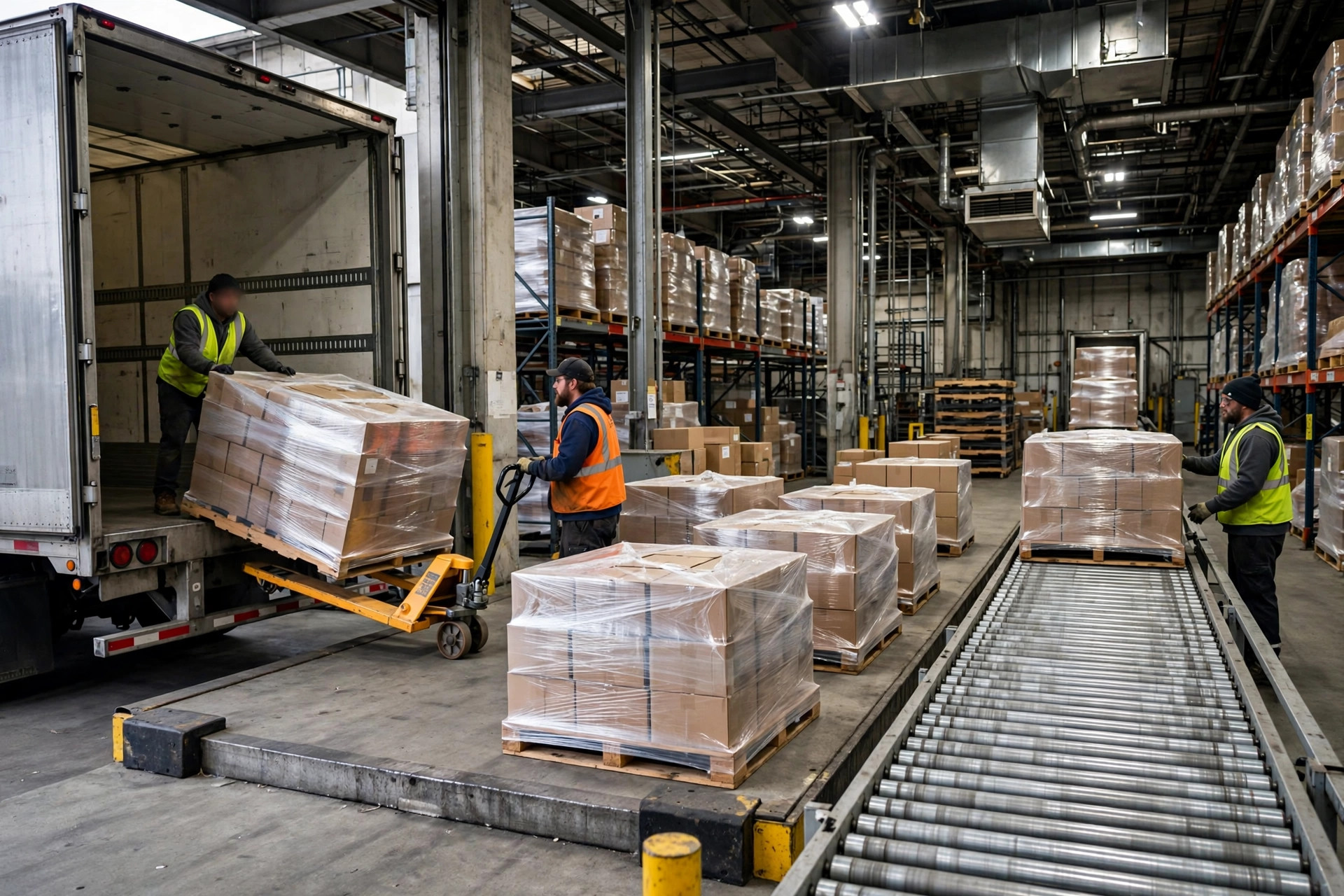
The owner of an imported-foods warehouse vented to me: goods had arrived, but the system showed nothing; sales kept pushing for stock while the warehouse kept saying "still unloading." One visit told the story: trucks queued 2 hours at the gate, unloaded goods sat 3 days awaiting QC, QC-passed goods lay another 2 days in staging before putaway. Dock-to-sellable averaged 6 days.
Receiving is the warehouse's mouth — when the mouth fails, the whole body starves. Here are seven optimization levers for inbound, one by one.
Lever 1: Appointment Scheduling — Flatten the Waves
Unscheduled receiving is a clinic with no appointments. The starting fix is an arrival appointment system (even a shared spreadsheet works):
- Suppliers/forwarders book 1–2 hour windows 24–48 hours ahead.
- Back-schedule window counts from dock capacity: 20 trucks a day means 20 windows, no more.
- Arrivals 30+ minutes late roll to the next open window — written into supplier agreements up front.
Immediate impact: gate queues drop from 2 hours to 20 minutes; the unload crew shifts from "feast or famine" to steady flow.
Lever 2: Inspect While Unloading — Lock Issues on the Spot
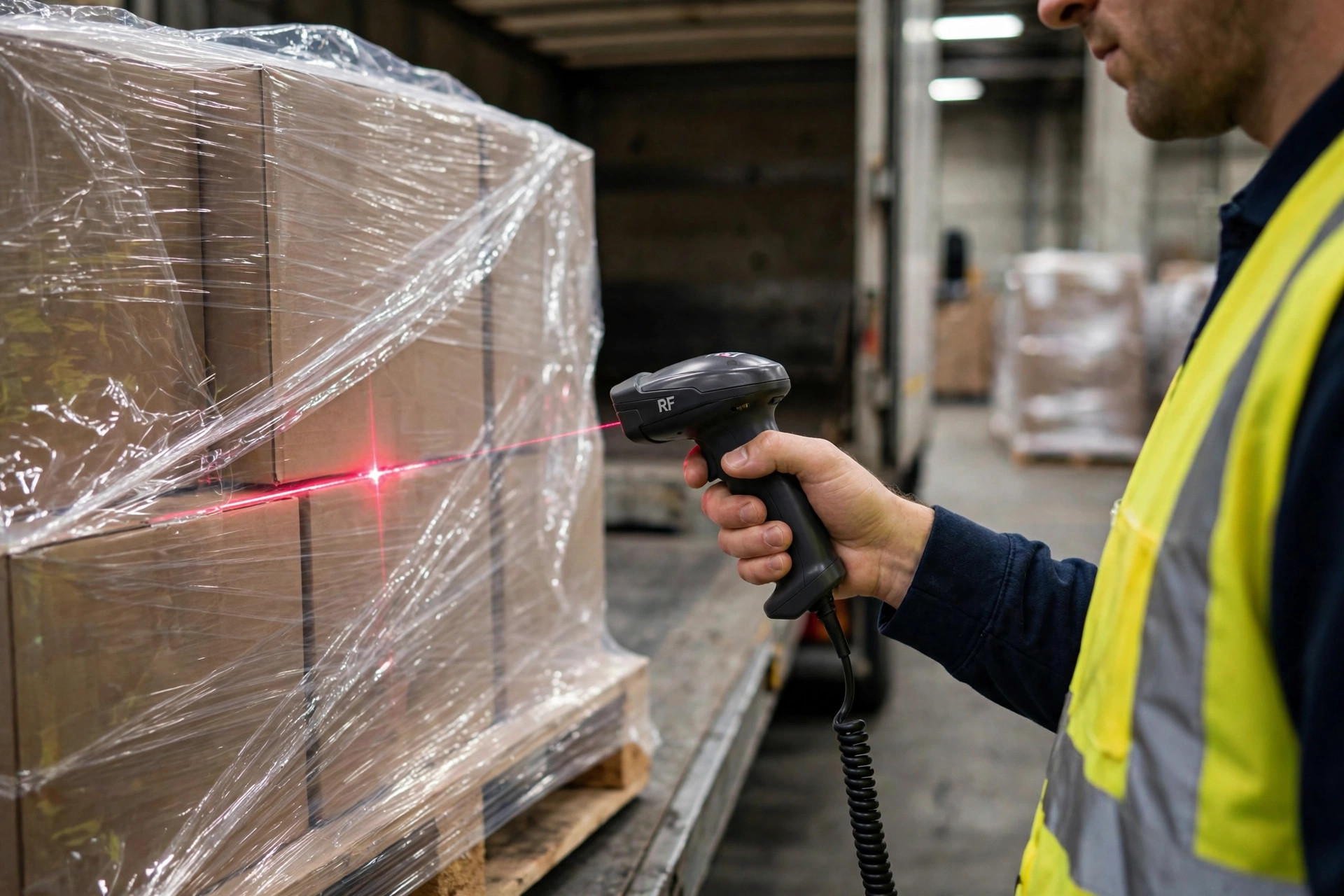
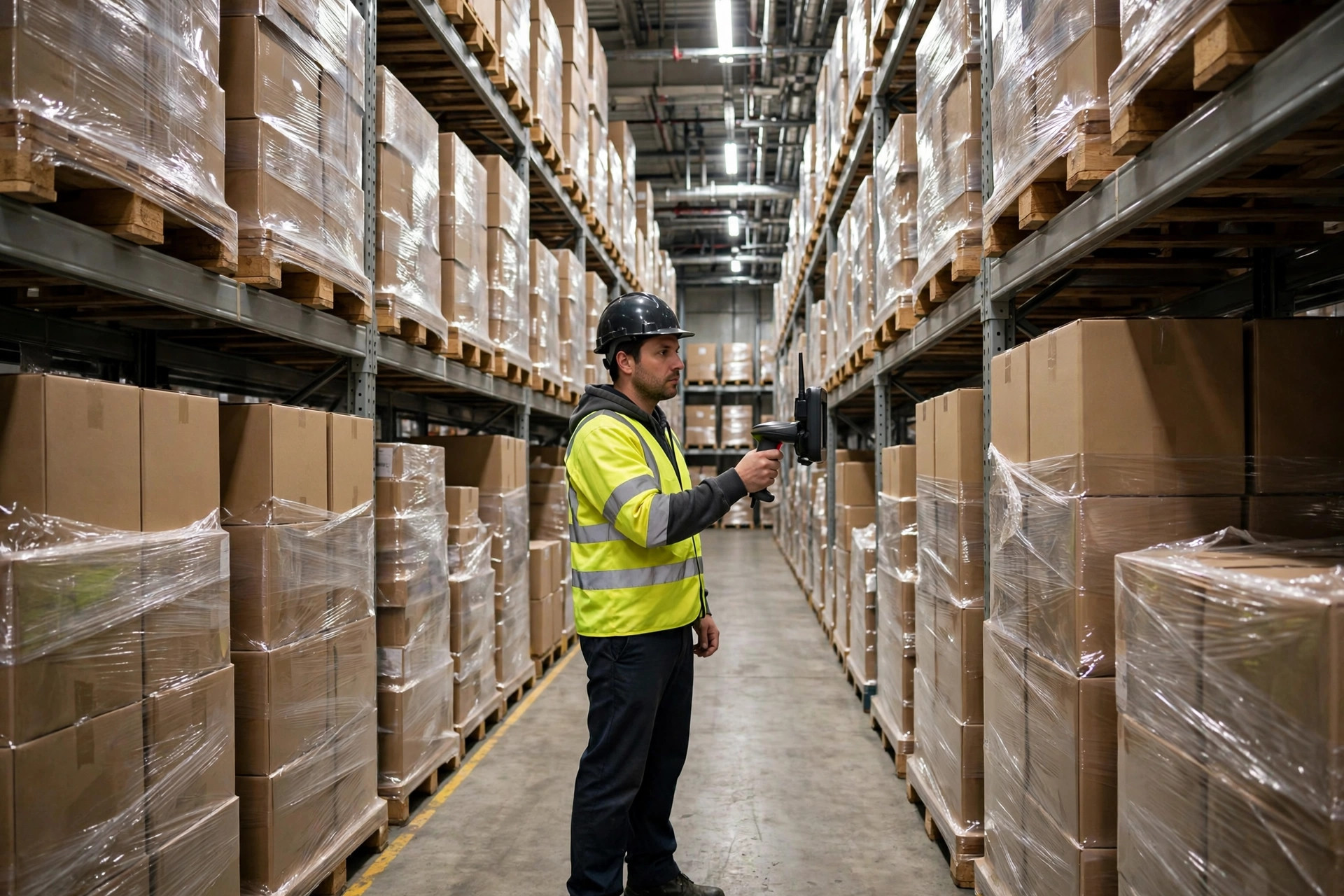
The old way: unload → stack → QC someday → find problems → argue with the supplier (goods long unloaded, evidence gone). The fix: visual inspection during unloading — damaged cartons, shortages, label mismatches photographed on the spot with the driver's signature.
This moves quality disputes from "a week later" to "right now," cutting supplier arguments by 70%+. It needs: handheld terminals plus portable printers at receiving, triage done within 2 minutes, never slowing the unload rhythm.
Lever 3: Tiered QC — Don't Open Every Carton
Many warehouses QC with a blunt instrument: full inspection per shipment, or a mere glance. The scientific approach is tiered inspection by supplier rating:
| Supplier Tier | Criteria | Method | |---|---|---| | A (skip-lot) | >99.5% pass rate, 6 months running | 5% sample, visual only | | B (standard) | 98%–99.5% pass rate | 20% sample, open-carton check | | C (strict) | New supplier / poor history | 100% inspection, line-by-line |
Tiered QC concentrates labor where it matters: Tier-A goods release within 2 hours; only Tier-C earns the heavy effort. Total QC lead time compresses 40%–60%.
Lever 4: Dispatch Putaway "As You Unload"
Waiting for the full truck to unload and clear QC before dispatching putaway tasks is pure waste. The fix: each QC-passed batch instantly generates WMS putaway tasks — putaway crews work in parallel with unloading.
This needs WMS support for "release in sub-batches" with tasks dispatched by slot proximity. In parallel, dock-to-putaway collapses from days to hours — cross-docking is this idea taken to the extreme: unload straight to outbound, zero dwell.
Lever 5: "Milk-Run" Putaway Routing
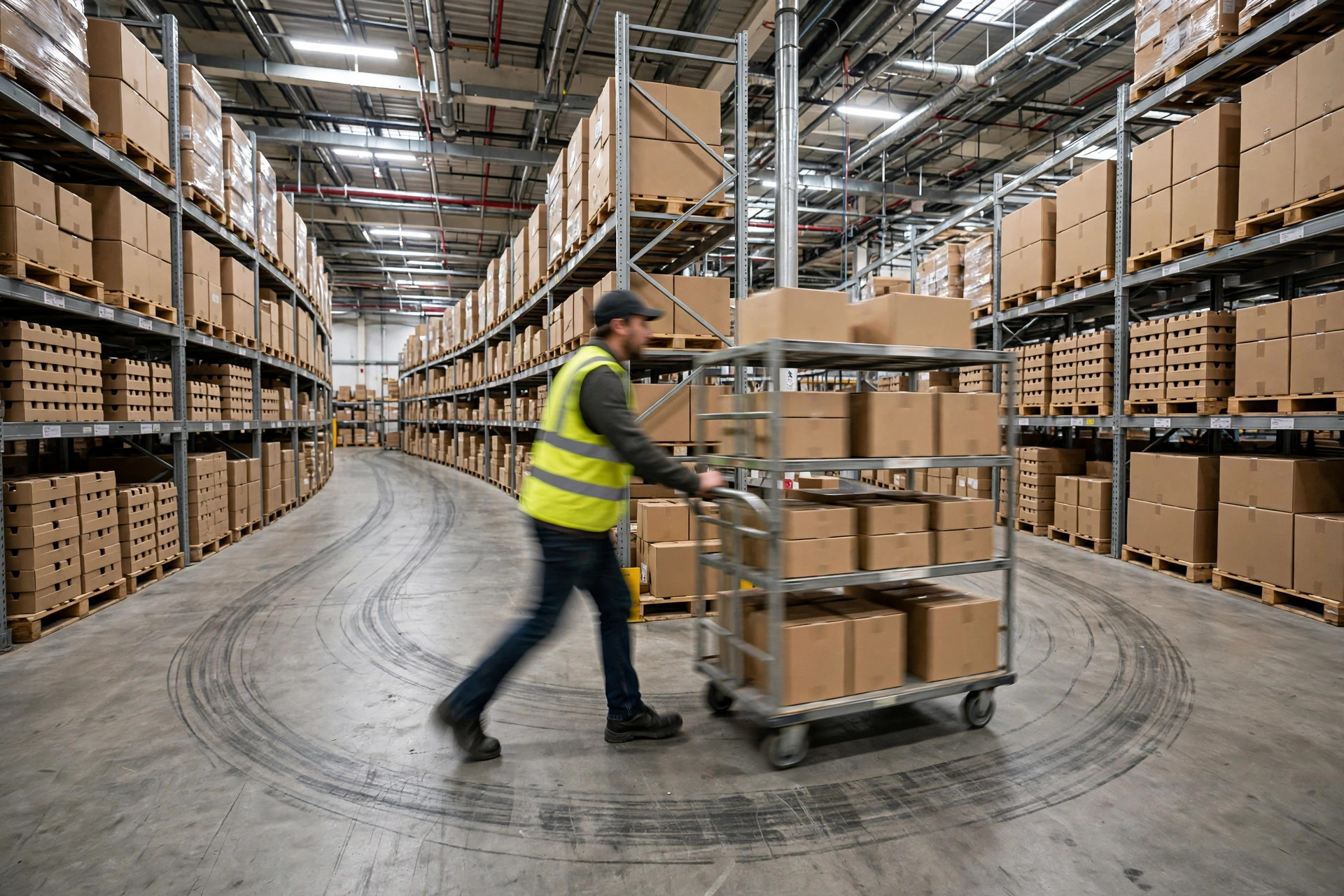
Putaway operators crisscrossing the building on scattered tasks is motion waste. Two techniques:
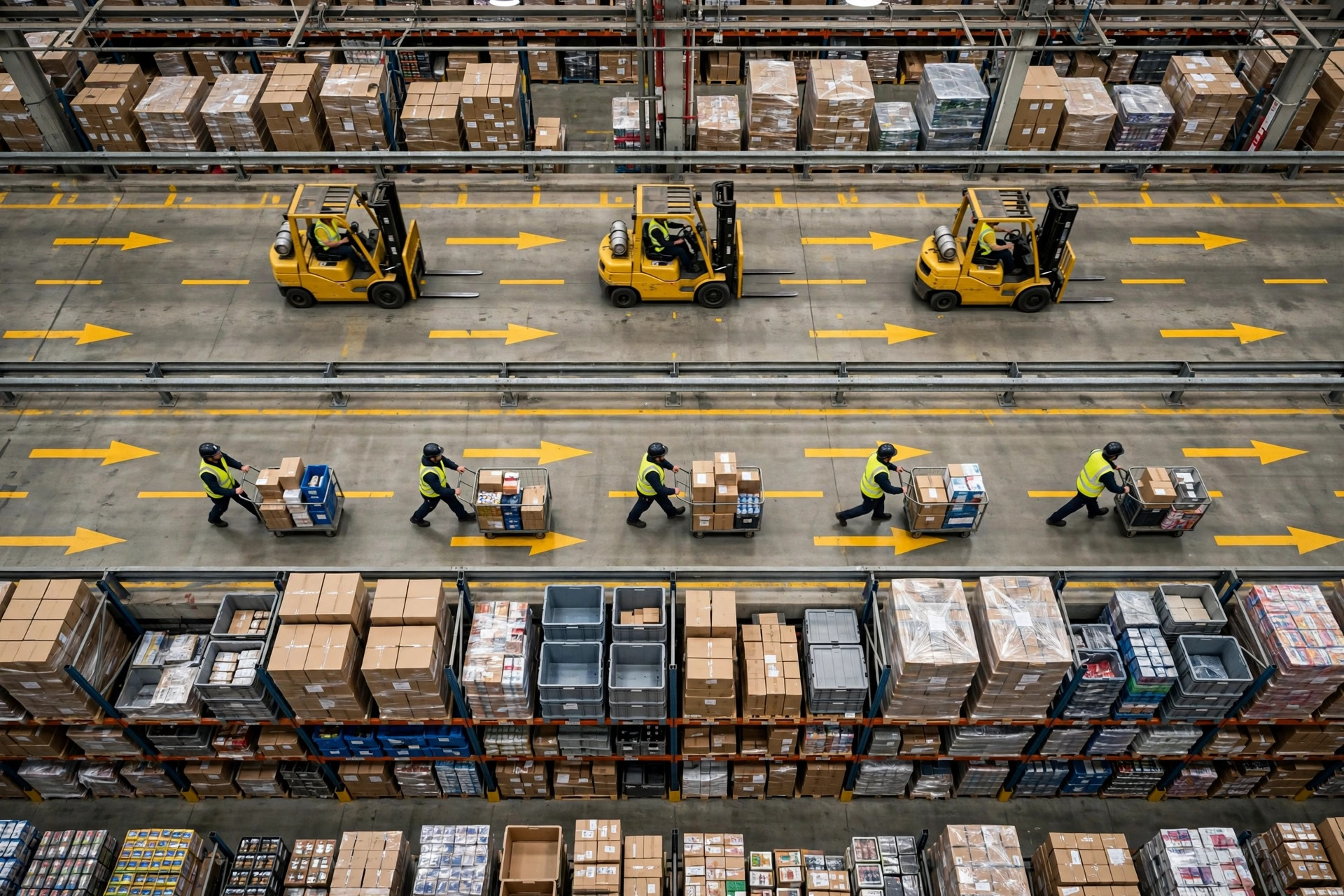
- Clustered dispatch: the WMS bundles same-zone putaway tasks to one operator — one trip, many tasks.
- Putaway with replenishment: operators top up pick slots they pass en route — one walk, two jobs.
Measured results: clustered dispatch cuts average per-pallet putaway time 18%, with forklift empty travel falling in step.
Lever 6: "Same-Day Clear" for Exceptions
Overages, shortages, damage, and no-PO "orphan" freight are what clog receiving. The iron rule: every exception gets a disposition within 24 hours (vendor return / coded staging / scrap) — nothing sleeps in receiving past a day.
Supporting move: mark fixed "exception staging cells" in receiving, each tagged (date + reason + owner); anything unresolved past 24 hours auto-escalates. Exceptions aren't scary; unmanaged exceptions are.
Lever 7: An Inbound Dashboard — Data-Driven
The first six levers land on one dashboard. Five inbound KPIs worth watching:
| Metric | Healthy Line | What It Means | |---|---|---| | On-time arrival | >95% | Share arriving inside booked windows | | Unload responsiveness | >90% within 2 hrs | Truck arrival to unload start | | QC lead time | <4 hours | Unload complete to QC release | | Putaway timeliness | >95% within 24 hrs | Arrival to sellable | | Exception backlog | → 0 | Unresolved past 24 hours |
Review the board at the daily morning huddle; any red metric gets a same-day action. Optimization without measurement is superstition.
Case Study: Imported Foods — 6 Days to 1.5
Back to that imported-foods warehouse. We implemented all seven levers: appointment sheet (2 weeks), unload-triage SOP (1 week), supplier tiering (1 month of data), WMS sub-batch release (a small vendor customization), same-day exception clearing (iron rule).
Three months later: arrival-to-sellable went from 6 days to 1.5, gate queues essentially vanished, and sales stopped promising delivery dates "by feel" — if the system shows stock, it's stock. The owner's math: 4× faster inventory turns, saving millions in safety-stock capital.
Pitfalls: Four Inbound Traps
- Optimizing only inside the four walls: 50% of receiving efficiency depends on supplier cooperation. Without appointment rules and labeling standards in supplier agreements, internal optimization hits a ceiling fast.
- Ignoring ASN data: suppliers send advance ship notices nobody reads or reconciles — a wasted head start. ASNs should auto-reconcile with auto-alerts on mismatch.
- Adding heads, not process, for peak: 20 temp unloaders for the promo season on a broken process just multiplies chaos. Fix the process first, then staff to it.
- Neglecting 5S at receiving: pallets, stretch film, and trash mixed across the dock cut unload efficiency before work even starts. Receiving is the warehouse's front door and efficiency's starting line.
Takeaway
Inbound optimization is about compressing "goods arrived" into "goods sellable" to the absolute minimum. The seven levers form one highway: appointments flatten waves, unloading locks issues, tiering focuses QC, parallelism compresses lead time, milk-runs cut empty travel, same-day clearing kills exceptions, dashboards sustain the drive. Remember: the first half of warehousing is played at receiving — win it, and outbound plays itself.
Warehousing with Mr. Mi · 20 years of US warehousing solutions