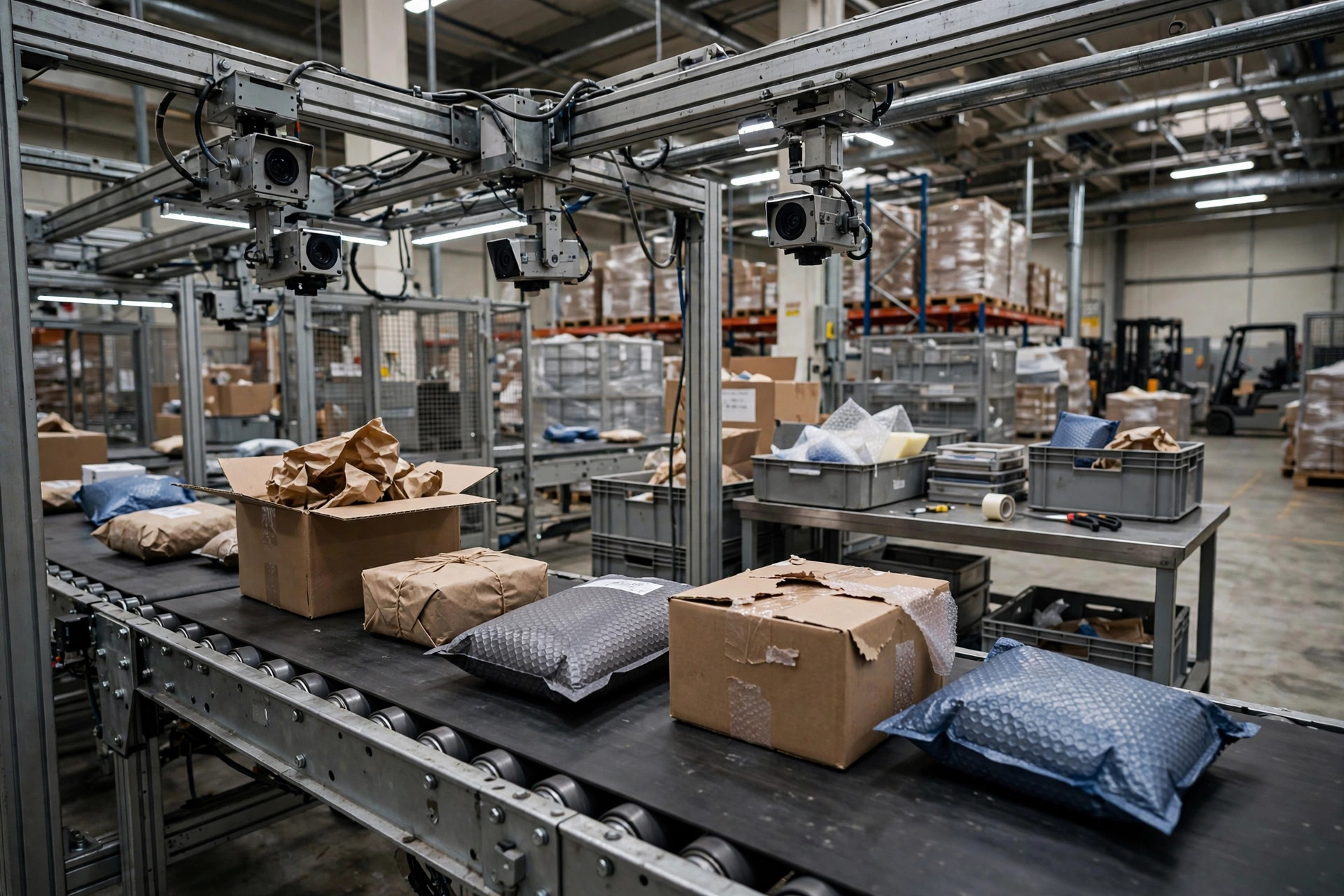
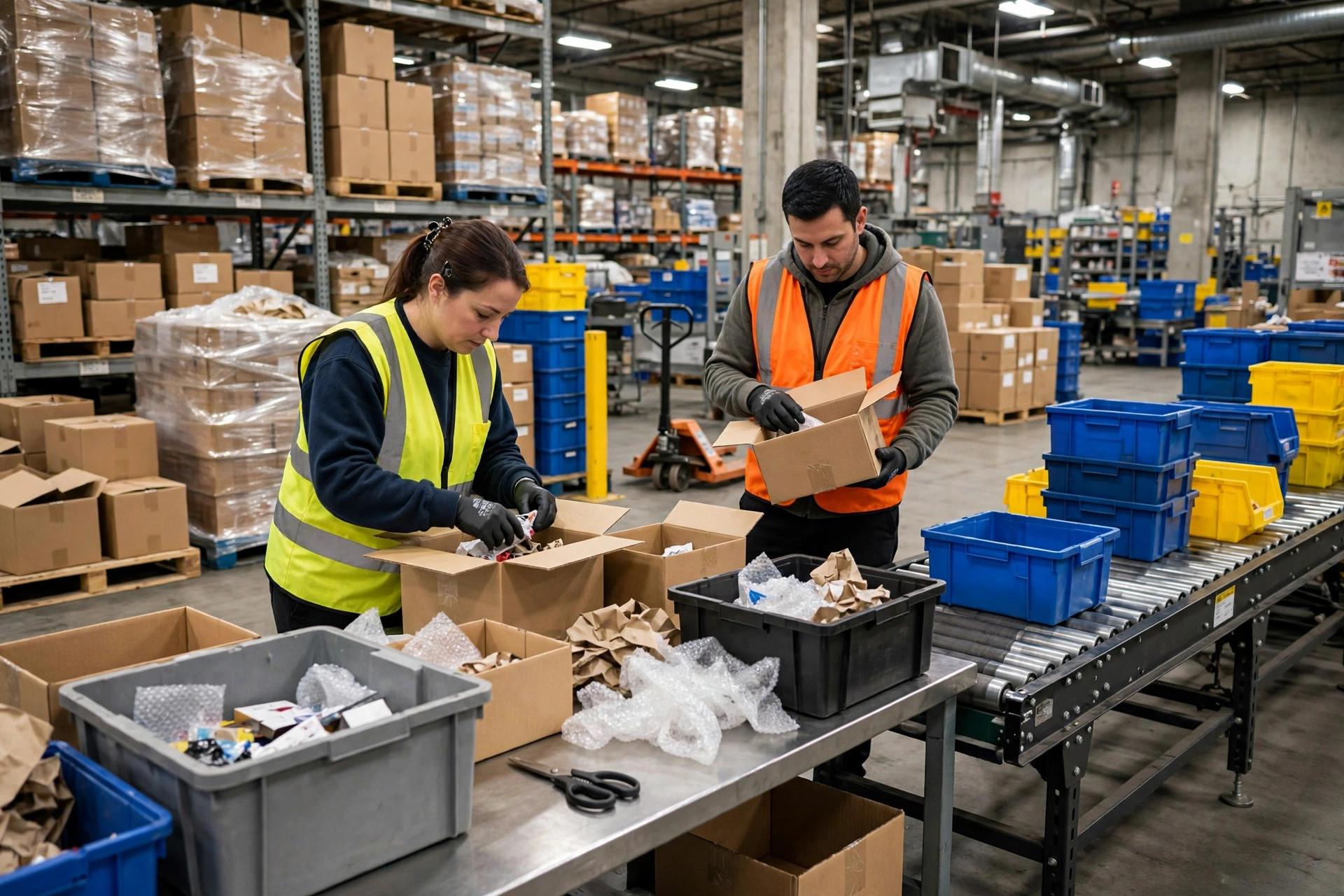
Late in 2024, I was looking at the monthly report inside a 3PL warehouse in Fontana and one number stopped me cold: returns were only 11% of outbound volume, yet returns processing ate up 26% of the building's total labor cost. The money wasn't going into picking. It was going into reverse logistics. Worse, more than half of customer complaints were about returns and refunds — "I shipped it back three weeks ago, where's my money?" I told the warehouse manager the problem wasn't his people. People get ground down by a broken process no matter how hard they work. The problem was the returns-and-refunds chain inside their order management system (OMS), which had never been designed right in the first place.
Here's my verdict up front: when returns are slow, nine times out of ten it's not a staffing problem. It's that the OMS returns flow is missing a few critical nodes, or the nodes aren't connected. A single return has to pass five gates between the customer hitting "request return" and the inventory going back on the shelf. If any one of those gates runs on someone's gut feeling, the refund complaints that month are guaranteed.
How a return should move through your OMS
I break the standard flow into five nodes, each mapping to a specific OMS configuration:
RMA request. The customer initiates a return and the OMS auto-generates a return merchandise authorization (RMA) number — no emailing customer service, no rep creating the ticket by hand. The key configuration point: return reasons must be a forced single-select dropdown (defective, wrong item shipped, wrong size, no-reason return within the window), never a free-text essay. The reason code drives the downstream QC path and refund rules. Warehouses that let customers write free text can't even produce a return-reason distribution report later.
Approval. The OMS auto-approves against rules or routes to a human. My rule of thumb: anything under $50 per item with no quality dispute gets auto-approved; reserve human review for high-value and abnormal returns. After a Fontana operation set its auto-approval line at $75 in 2025, the daily return tickets landing on customer service dropped from over 200 to under 40.
Inbound receipt and QC. The goods arrive, the RMA barcode gets scanned, and the OMS pulls up the expected return detail (SKU, quantity, batch) for line-by-line verification. QC outcomes come in exactly three states: resellable, needs refurbishment, or scrap. One thing the OMS has to support here is partial receipt — the customer said they'd send back three units and only two showed up. The system needs to process what's actually received instead of freezing the whole RMA waiting for the third unit. I've seen too many systems with hard-coded logic where one missing unit suspends the entire RMA, and the refund hangs with it.
Refund trigger. The moment the QC result is submitted, the OMS automatically pushes the refund instruction to the payment gateway; customer service only reviews exceptions. Bake the SLA into your service promise: refunds within 48 hours of QC pass. The configuration that blows up most often here is refund amount calculation — is return shipping refunded, are coupons deducted proportionally, how are discounts prorated on partial returns? All of it has to be pre-built rules in the OMS, not something a rep recalculates by hand every time.
Inventory restock. Resellable units automatically generate a putaway task pushed to the WMS; refurbishment candidates go to the repair area; scrap goes through the write-off flow and syncs to finance for inventory devaluation. Inventory status has to write back in real time, or the available-to-promise numbers on the sales side are fiction.
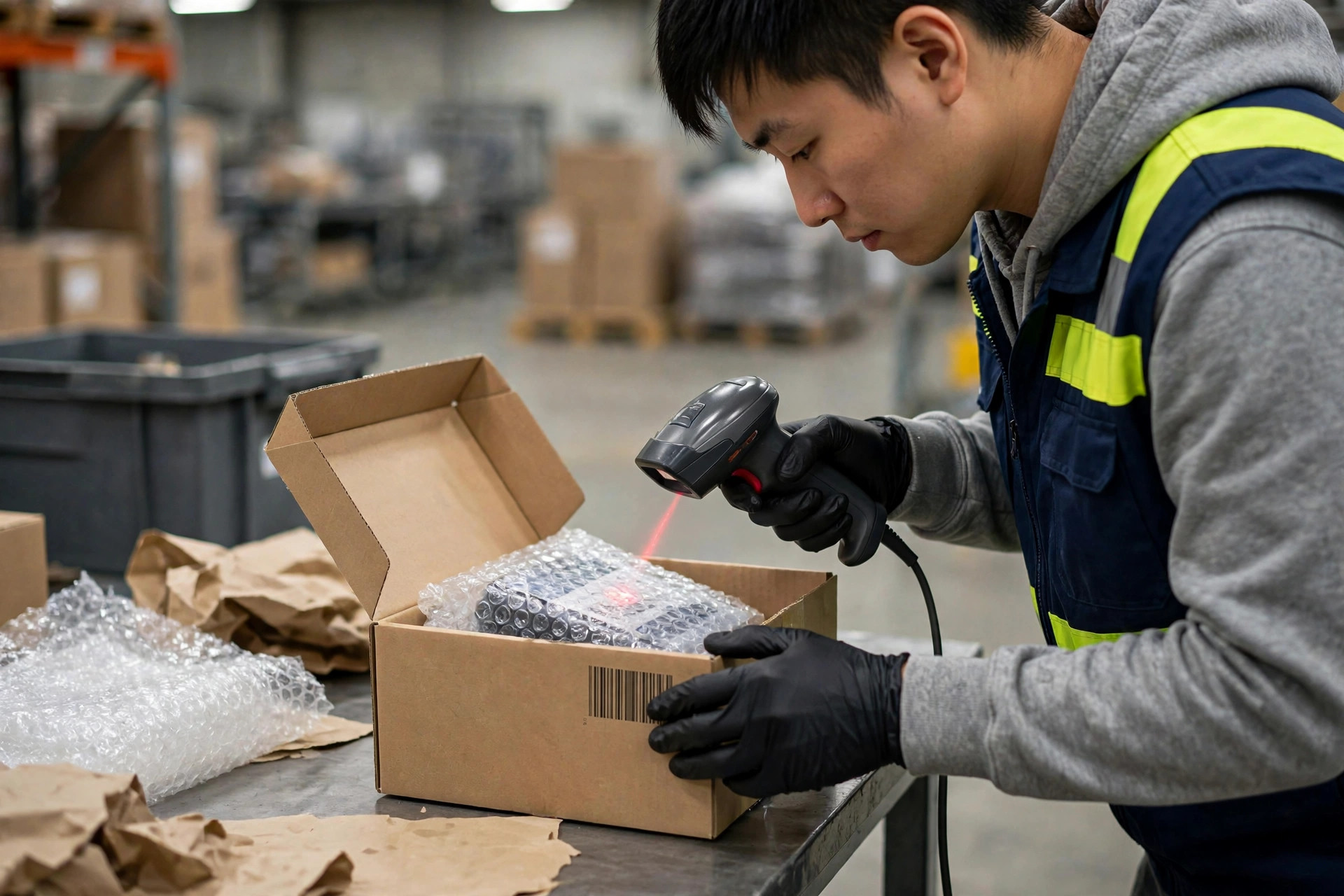
That's the daily reality at a returns QC station: the associate scans the RMA barcode, the system pops up the expected detail, and they verify item by item, photograph as evidence, and select the QC outcome. One scanner and a clean interface, and a QC associate clears an item in two minutes. A warehouse without OMS support takes eight minutes for the same job, all on paper forms.
Where the money goes: unit return cost
I built this cost model for that Fontana warehouse. A clothing return with an average item value of $38 costs this much end to end:
| Step | Cost (USD) |
|---|---|
| Customer service handling the RMA request and inquiries | $2.50 |
| Return shipping (prepaid return label) | $6.80 |
| Inbound receipt and QC labor | $3.20 |
| Refund processing fee (payment gateway) | $1.15 |
| Restock / refurbish / scrap disposal | $1.80 |
| Total | $15.45 |
A $38 item costs $15.45 to take back — more than 40% of its value. And if the QC verdict is scrap, the item value is gone too. That's why the core KPIs of returns design aren't "processing speed." They're unit processing cost and the resellable rate. When that warehouse lifted its resellable rate from 51% to 73%, it stopped throwing away nearly $20,000 worth of merchandise a month.
Here's the checklist. Run it against your own OMS, one line at a time:
- Are return reasons forced single-select codes, not free text?
- Can routine returns under $75 be auto-approved?
- Does the system support partial receipt without freezing the RMA?
- Are QC outcomes limited to three states (resellable / refurbish / scrap), with submission triggering the refund?
- Are refund rules (shipping, coupons, partial returns) pre-configured rather than hand-calculated?
- Do resellable putaway tasks push to the WMS automatically, with no manual re-entry?
- Can customers see return status themselves (received / in QC / refunded)?
Miss three or more of the seven and your return complaint volume probably isn't coming down. One more note: build the self-service return tracking page. When customers can see "received, in QC, refunded" on their own, "where's my refund" inquiries to customer service drop by half. It's the highest-ROI configuration on this list.
Evaluating an OMS: don't get fooled by the demo
When vendors demo returns functionality, they'll show you a beautiful returns dashboard. Three things the demo will never show you:
First, ask whether the refund rules engine can be configured on three dimensions: return reason × product category × customer tier. A system that only supports one global rule will have reps working around it with manual calculations within three months of go-live, and the process exists on paper only.
Second, ask whether the RMA, the original order, the payment record, and the WMS inbound receipt are all linked on the same document chain. Some systems keep returns as standalone documents that can't be tied back to the original order, so finance reconciles refunds and revenue on two separate tracks — month-end close becomes miserable.
Third, ask whether returns data can be reported by reason code. The value of returns analytics isn't in the processing step, it's at the source: if "wrong size" exceeds 30%, the problem isn't the warehouse, it's the size chart on the product page. That reporting capability is what turns returns from a cost center into a profit lever.
And one more trap: some OMS products run returns on the same state machine as forward orders, so adding a "pending QC" status to the return flow requires a code change. Before signing the contract, have the implementation team add a custom return status live in the demo. If they can't, pick another vendor.
Two recurring pitfalls from the field while I'm at it. First, return shipping subsidies getting gamed: some warehouses issue prepaid return labels for every return, then discover serial returners burning over $10,000 a month in freight. The fix is tiering customers by return rate in the OMS — accounts above a 30% return rate lose the free label automatically and ship at their own expense. Second, photo evidence at QC: high-value returns (over $200 per item) must be photographed at inbound QC with the photos attached to the RMA, retained in the OMS for at least 180 days. Without photos, when a customer claims "it arrived fine, you broke it," your reps have nothing to stand on.
A real lesson to close
Early in 2025, a home-goods client averaged 19 days from return request to refund. Digging in: RMA approvals waited for the service supervisor's end-of-day batch, QC paper forms were keyed in once a week, and finance processed refunds in two monthly batches on the 1st and 15th. Three batch processes chained together — that's your 19 days. After reworking the OMS flow — auto-approval, scan-based QC with real-time submission, automatic refund push — the cycle dropped to four days, and return-related negative reviews fell 70%.
The returns-and-refunds chain comes down to five nodes linked end to end, not headcount. If your returns are slow, don't rush to hire. Run those seven checklist items first. Whatever's missing is where the money is leaking.