The Problem: A $70,000 Citation That Started With a Fire Extinguisher
In 2024, a California 3PL warehouse was hit with over $70,000 in OSHA citations. The line items: expired fire extinguishers, pallets blocking the fire lane, uncertified forklift operators. None of it was "unknown" — all of it was "known but unmanaged." Worse, the insurer raised premiums afterward, and OSHA put the site on a focused re-inspection list — three visits in one year.
OSHA's warehouse enforcement logic is: check the "can kill someone" items first, then the "can injure someone" items, then the paperwork. Following that logic, here are the 20 most-cited checkpoints, ranked in three tiers — fatal, serious, documentation — with self-audit frequency and fix guidance.
The Method: 20 Checkpoints in Three Tiers
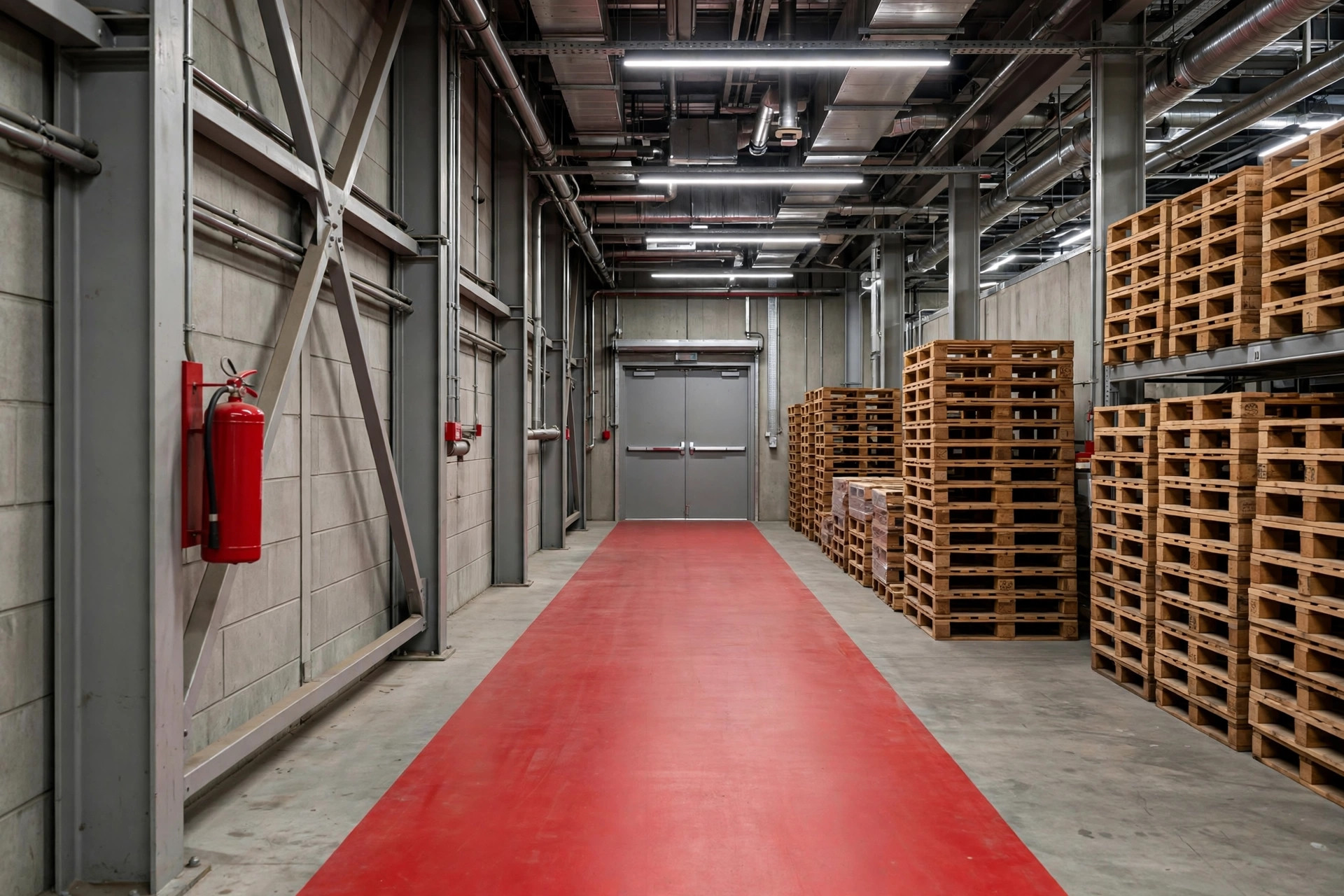
Tier 1: Fatal items (heavy citations on sight — zero tolerance)
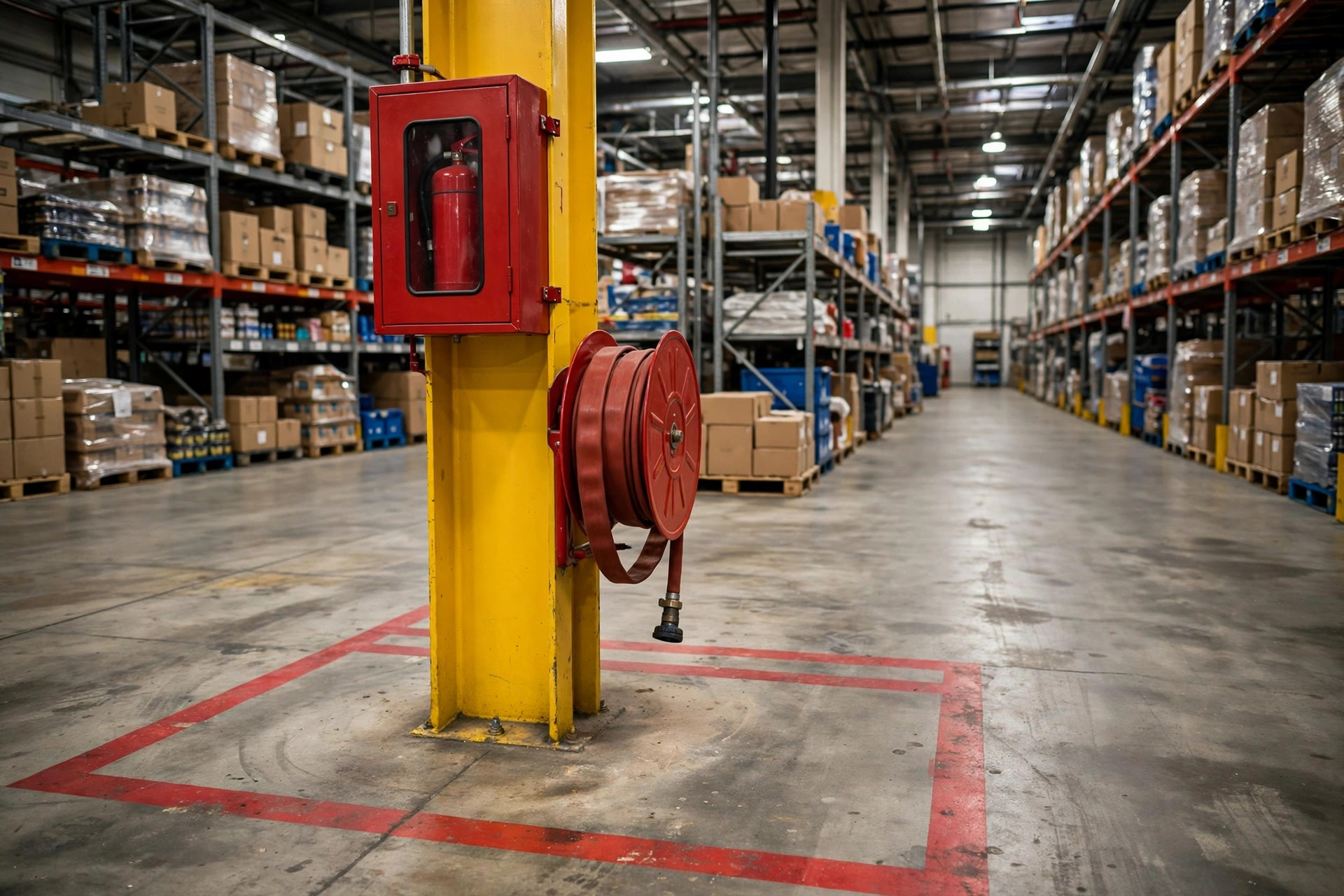
| # | Checkpoint | What OSHA looks for | Self-audit method | |---|---|---|---| | 1 | Fire lanes / exits clear | Exits never locked or blocked; lane widths compliant | Team lead photo check every morning | | 2 | Extinguisher coverage & validity | Coverage by area/risk; monthly inspection tags current | Dedicated inspector signs off on the 1st monthly | | 3 | Sprinkler systems | Heads never obstructed; clearance above storage maintained | Quarterly checks; 18-inch clearance above racks | | 4 | Forklift operator certification | Operators licensed + site-specific trained | Personnel file audits + spot checks on the floor | | 5 | Forklift daily inspections | Pre-shift checks (brakes, lights, forks) | Signed checklists — one missed day is a finding | | 6 | Fall protection | 2 m+ work requires harness/rails | Spot-check picking and maintenance tasks | | 7 | Electrical safety | 36-inch clearance before panels; no damaged/exposed wiring | Monthly walkthrough with photos on file |
This tier's defining trait: when these fail, people die. A blocked fire lane is fatal in a fire; an uncertified forklift operator who hits someone can mean criminal liability for management. Self-audits here run daily or per-shift — never quarterly.
Tier 2: Serious items (high-frequency citations; the totals shock)
| # | Checkpoint | Common findings | Fix guidance | |---|---|---|---| | 8 | Racking safety | Bent uprights, overloaded beams, missing column guards | Quarterly structural checks; replace bent uprights immediately | | 9 | Chemical/hazmat storage | No SDS on hand, incompatible mixing, leaks unaddressed | Dedicated hazmat area; SDS within arm's reach | | 10 | Lockout/tagout (LOTO) | Equipment serviced without de-energizing or tagging | Make LOTO a mandatory maintenance-SOP step | | 11 | Pedestrian–forklift separation | Shared lanes, no markings or barriers | Paint walkways, install barriers, 5 mph limit | | 12 | Lighting | Inadequate aisle illumination, especially nights | Measure with a light meter; add fixtures where short | | 13 | Noise & dust | Over limits with no protection or monitoring | Earplugs/masks are the floor; over-limit needs engineering controls | | 14 | Emergency plan & drills | Plan exists, never drilled; nobody knows muster points | Semi-annual evacuation drills with sign-in sheets |
Tier 2 is citation central: individual fines may be a few thousand dollars, but one inspection yielding 8–10 items adds up fast. Racking safety (#8) deserves special attention: an upright bent by a forklift can lose half its load capacity, and a collapse is a mass-casualty event. Our rule: any visibly bent upright gets replaced within 48 hours — never "next time."
Tier 3: Documentation (small fines alone — but it's the evidence for tiers 1–2)
| # | Checkpoint | Requirement | Recommendation | |---|---|---|---| | 15 | Injury records (OSHA 300) | Record truthfully; post prior year by Feb 1 | One owner; underreporting is punished severely | | 16 | Safety training records | New-hire and transfer training, all signed | Electronic archive, retained for inspection | | 17 | Equipment certifications | Forklifts, elevators, pressure vessels inspected on schedule | Asset register with 60-day advance alerts | | 18 | PPE issuance records | Issue standards + signed receipts | Lost records = never issued | | 19 | Hazard-correction log | Find → fix → verify, closed loop | Before/after photos are the most persuasive | | 20 | Emergency contacts | EMS, fire, poison control posted | Verify numbers quarterly |
Tier 3's logic: inspectors read the paperwork first, then walk the floor. Complete records signal "this place is managed seriously," and the walkthrough stays gentle. Chaotic paperwork signals "unmanaged," and the floor inspection goes deep. Documentation isn't "for the inspector" — it's the proof of how you run the place.
Field Case: A Food Warehouse's 90-Day Compliance Sprint
Background: a food 3PL warehouse in Texas failed a client audit with 23 safety findings. The client issued an ultimatum: fix everything in 90 days or lose the account — 40% of revenue.
The playbook followed the three tiers: days 1–30, zero out all 7 fatal items (fire lanes, extinguishers, forklift licenses…); days 31–60, fix the serious tier — racking first (14 bent uprights replaced, column guards added) and pedestrian separation (800 m of walkways painted, barriers installed); days 61–90, rebuild the paperwork into an electronic register.
Result: the client re-audit passed. The surprise: injury rates fell 60% during the sprint, and the insurer cut premiums 12% the following year — roughly covering the remediation spend. The safety manager's summary: "Compliance spending has the highest ROI in the warehouse — because one serious incident wipes out years of profit."
Pitfalls to Avoid
- Don't wait for OSHA to show up. OSHA runs targeted inspection programs for high-hazard industries, and warehousing stays on the list. Commission a third-party mock OSHA audit annually — small money against big fines.
- No safety-training discounts for temps. A disproportionate share of injuries hits workers in their first 30 days. Fail the safety test, no floor access — no exceptions for temps.
- Close the loop on hazard correction. Find → assign owner/deadline → verify with photos. Skip verification and it's as if nothing was fixed. OSHA re-inspections punish "promised last time, not done" harshly.
- Insurance is not a substitute for compliance. Insurers review your compliance record before paying; claims from gross violations can be denied. Compliance is the 1; insurance is the zeros after it.
Summary
Warehouse safety through OSHA's eyes: 7 fatal items at zero tolerance (fire, forklifts, falls, electrical), 7 serious items on a fix plan (racking, separation, drills), 6 documentation items in an electronic archive. Self-audit cadence: fatal items daily/per-shift, serious items monthly/quarterly, documentation always inspection-ready. The ROI math is simple: one serious injury's direct plus indirect costs typically run 10× the annual safety budget. Every warehouse owner should do that math by hand.