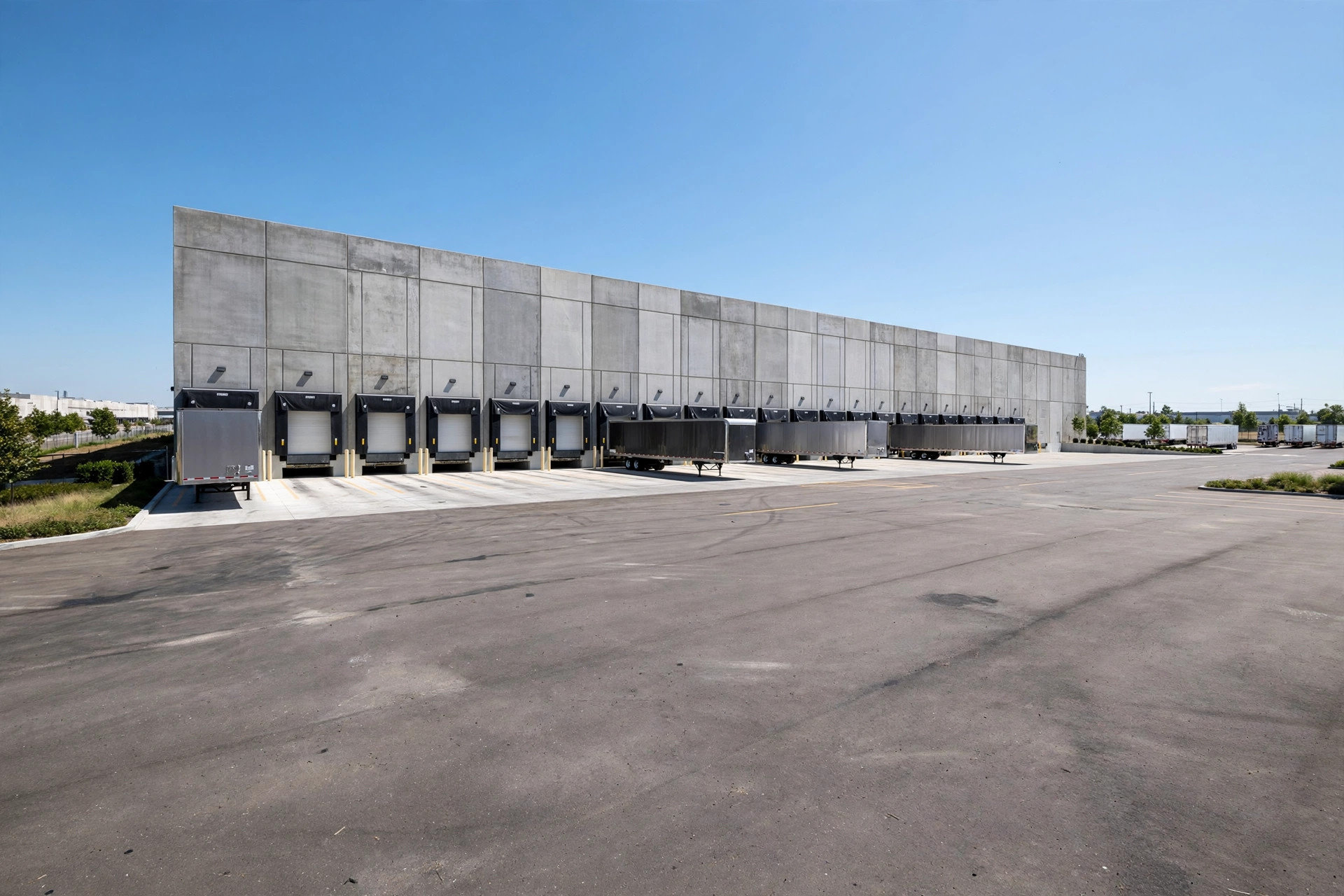
Here's the thing nobody tells you when you sign a warehouse lease: the landlord quotes you $9 a square foot for 50,000 square feet, and you do the math — $450,000 a year. Clean number. But the space where you can actually rack pallets and run forklifts? That's probably only 46,000 square feet. The rest is common area — lobbies, corridors, dock aprons, mechanical rooms. You can't store a single pallet there, yet you pay full rent on every foot of it.
That's the load factor, and it quietly decides what your warehouse space really costs. I've watched plenty of operators haggle a quoted rate down fifty cents and walk away proud, while an 8% load factor buried in the lease was quietly eating $30,000+ a year.
Where the money actually goes
In US industrial leasing, landlords quote rentable square feet (RSF): your usable square feet (USF) plus your pro-rata share of the building's common areas. The load factor is usually written as a multiplier — say 1.08 — meaning your quoted area equals your usable area times 1.08.
Let me walk through a real negotiation I was involved in. A 50,000 RSF multi-tenant warehouse, quoted at $9 per square foot per year, load factor 1.08. The proposal reads: 50,000 × $9 = $450,000 annual rent. Looks tidy.
But 50,000 ÷ 1.08 = 46,296 square feet of actual usable space. Your real price per usable foot is $450,000 ÷ 46,296 = $9.72. Quoted at nine, paying nine seventy-two. Dollars don't grow on trees.
At the quoted $9 rate, 46,296 usable feet should cost you $416,667. The extra $33,333 a year is what common area eats. Over a five-year term that's over $160,000 — enough to buy two used electric forklifts and still have change left over.
It gets worse under a triple net (NNN) lease, which is the standard structure for industrial space. Under NNN you pay base rent plus your share of property taxes, building insurance, and CAM (common area maintenance). The CAM bucket covers things like parking lot upkeep, landscaping, exterior lighting, snow removal, and common corridor cleaning — and your share is calculated off your RSF, common area included. So the load factor inflates not just your rent but your tax and insurance pass-throughs too. You're paying for common area twice: once in the rent, once in the NNN charges.
The checklist before you sign anything
This is the list I run through every time I review a lease for a friend. Don't worry about annoying the leasing agent — if he can't produce these, the quote itself has problems.
First, demand the measurement standard and the measurement drawings. BOMA — the Building Owners and Managers Association — publishes a dedicated measurement standard for industrial buildings (the 2012 industrial edition), and serious landlords will state that their numbers follow it. Get the actual drawings showing which areas count as your tenant area and which are classified as common. A single total number with no drawings is a red flag.
Second, pin down exactly which areas are in the common bucket, as an exhibit to the lease. Industrial common areas typically include dock aprons, shared corridors, stairwells, restrooms and break rooms, mechanical and electrical rooms, and portions of fire lanes. Watch the dock: some landlords fold the dock operating area into common space — the same apron your trucks use every day — which means you're paying double for your own front door. Every common area must be itemized in the lease. Never accept a catch-all like "and other common areas."
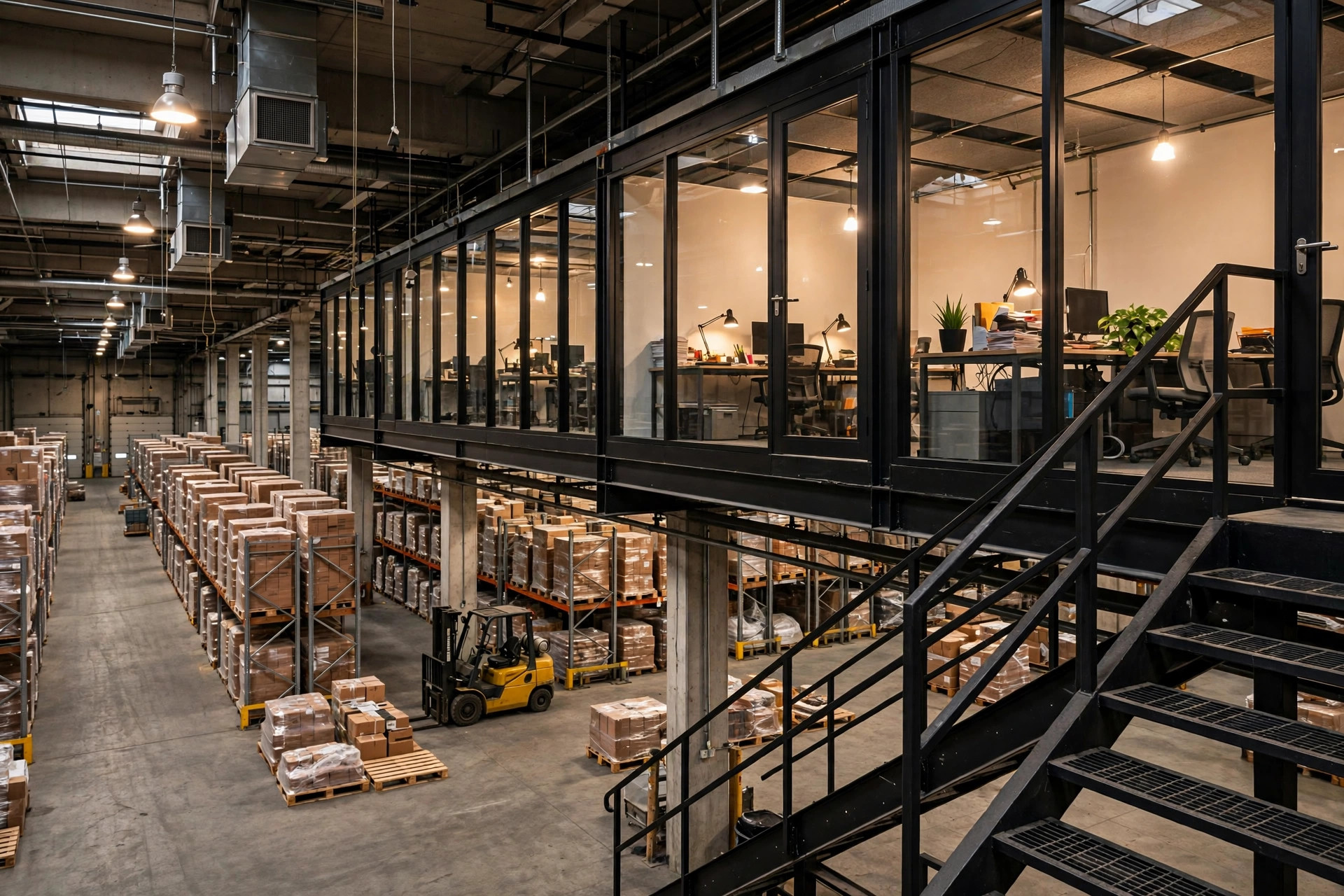
Third, negotiate the NNN pass-throughs line by line. Ask for last year's actual CAM bill to see where the money really went. Get an annual cap on CAM increases written into the lease — say 5% a year; uncapped CAM is a blank check. Confirm who absorbs CAM for vacant units — in some leases, the common-area costs of empty suites get shifted onto existing tenants, so your CAM jumps every time a neighbor moves out. And secure audit rights: the right to review CAM books once a year is industry standard, and no serious landlord will refuse it.
Fourth, lock the load factor into your renewal and expansion clauses too. Many leases say "renewal at market rate" without specifying what area the rate multiplies. Require a re-measurement at renewal, or at minimum a clause that the load factor can't exceed the original term's.
What's an absurd load factor, and how to push back at renewal
My rule-of-thumb numbers for industrial: a single-tenant, single-story building should come with a load factor near 1.0 — basically no common area, you're renting the whole building. Multi-tenant industrial parks or flex buildings with office components: 5% to 8% is the normal range. Above 10%, make the landlord justify it item by item. Above 15%, I treat the quote as inflated unless he produces BOMA drawings proving every foot of common area is real.
Three negotiation moves that have worked in practice.
First, attack the measurements. When a landlord claims 8%, ask for the drawings — you'll often find corridors measured generously or a mechanical room counted twice. I once reviewed a deal where the common-area schedule listed a "second-floor storage room" in a building that had no second floor. That single catch took the factor from 1.08 to 1.05 and saved over $10,000 a year.
Second, use competing quotes as leverage. Get two or three proposals from the same submarket, line up each one's RSF, USF, and load factor in a simple table, and show it to the landlord. What landlords fear isn't you haggling the rate — it's you comparing load factors across the street. When the rate won't budge, the factor often will, and the savings are identical.
Third, use a re-measurement as your renewal chip. After three to five years, the park has usually changed: a corridor got sealed off, a common area became your exclusive dock zone. Hire someone to re-measure per BOMA standards before the renewal negotiation and bring the new numbers to the table — landlords almost always accept them. If the factor won't move, negotiate TI (tenant improvement allowance) or free rent to offset it. Two months of free rent amortized over five years buys back a meaningful chunk of the real rate.
One last honest observation: the landlord will never volunteer this conversation, and the leasing agent's commission is calculated on RSF — the bigger the number, the better for him. So this math is on you. Spending half a day reviewing measurement drawings and last year's CAM bill before you sign may be the highest-ROI half day of your entire lease term.
When did you last ask a landlord what the load factor was?