Wave Release Timing: What Breaks When You Release Too Early vs. Too Late
Here's the short version: release a wave too early and freight clogs your floor; release it too late and freight misses the truck. Both cost money — one just kills you slower than the other.
Last peak season I walked a 3PL in Ontario — 80,000 square feet, 14,000 orders a day. The ops manager told me they'd added headcount and equipment, yet on-time ship rate wouldn't budge. I shadowed one full shift. The problem was somewhere nobody was looking: wave release timing.
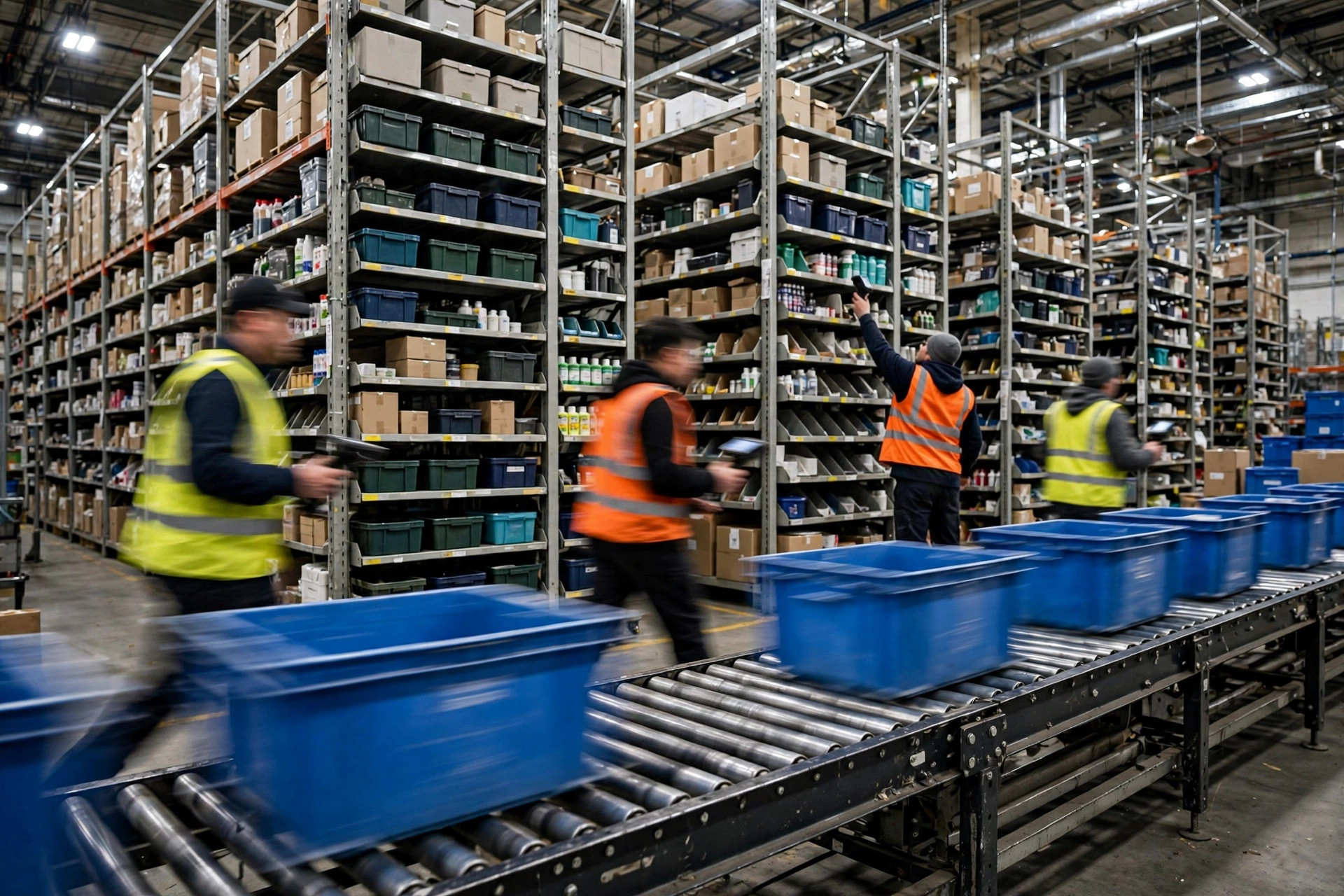
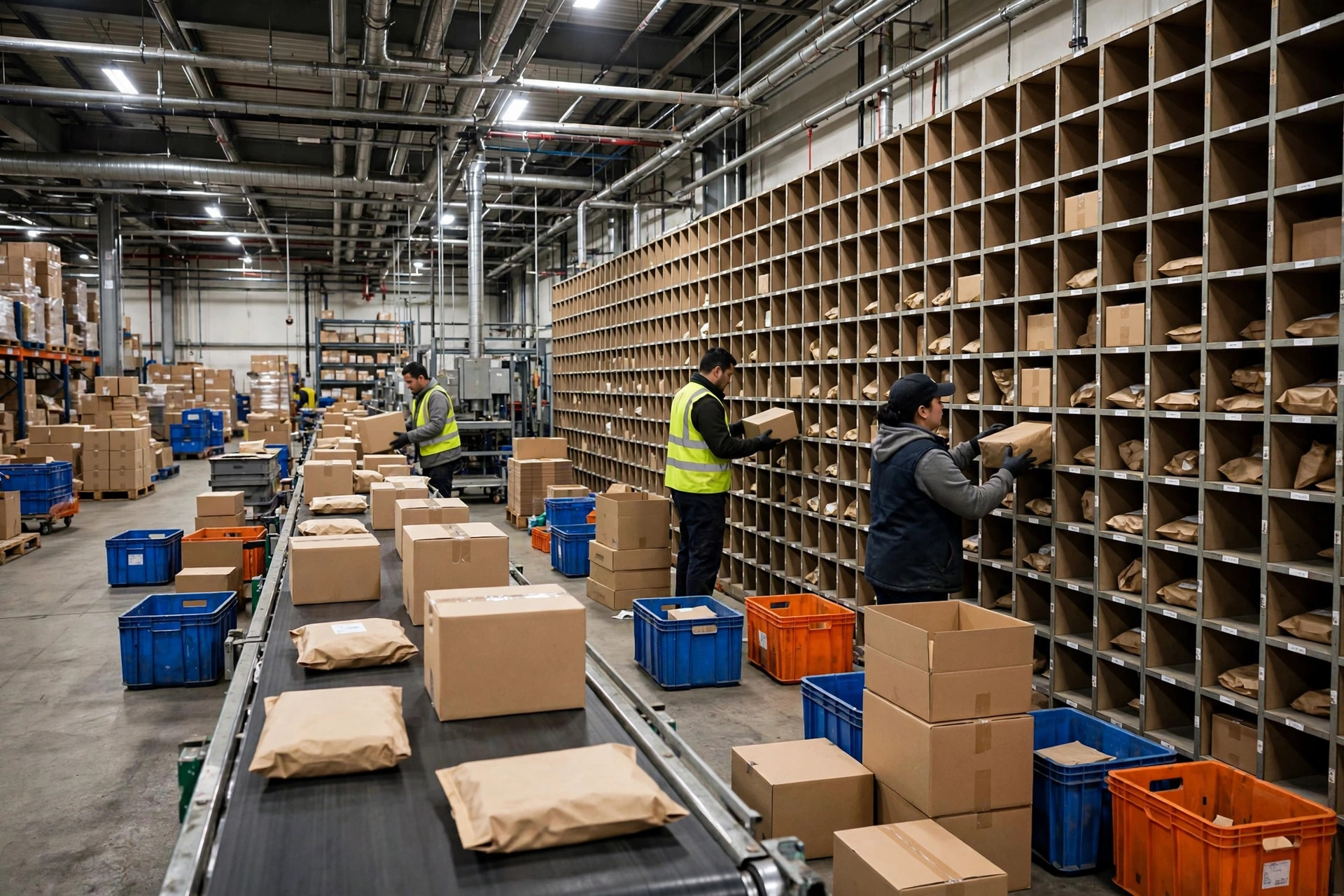
He'd released the first wave three full hours early, reasoning that "picking early means peace of mind." By 10 a.m., pickers had 5,000 orders picked and staged — piled in front of the sort wall and pack stations. All 200 put-wall cubbies were full. Totes and pallets ate a third of the aisle. When the real big wave dropped at 2 p.m., there was nowhere to stage it, so pickers pushed carts around mountains of freight. Cutoff was 6 p.m. Twelve hundred orders missed the UPS pull, sat overnight, and the customer's call went straight to the owner the next morning.
Too early: picked freight with nowhere to go clogs the whole building
A lot of people treat early release as insurance. It's not. Picking is only the first link — every downstream step (sort, pack, audit, load) needs somewhere to receive what you picked. In WMS terms this is work-in-process, and once WIP exceeds the building's physical capacity, throughput doesn't decline linearly. It falls off a cliff.
Four things go wrong, specifically.
First, sort positions get gridlocked. Put walls and cubbies are fixed. One normal wave of 3,000 orders fills 200 cubbies; releasing the second wave early means 6,000 orders fighting over the same 200. Sorters either wait for cubbies to clear or stage freight on the floor for a second sort pass. I measured this at one site: once cubby utilization passed 85%, secondary sort time doubled.
Second, rush orders can't get in. A customer drops a same-day rush at 11 a.m., but every cubby is held by your early wave. Where does it go? It gets hand-picked and hand-packed by one person start to finish — at five times the normal unit cost.
Third, cancellations and address changes come back to bite. E-commerce cancellation rates are real; freight picked three hours early will always include orders the customer already canceled or rerouted. That freight has to be put back. Putaway of picked freight costs roughly twice the original pick — you have to find it, verify it, and return it to a location. The worst site I saw ran a 4% put-back rate on early waves, which is the equivalent of employing two people full-time just to undo picking.
Fourth, fake "busy." Management looks at the report: morning pick UPH looks great, afternoon pack UPH collapses, and the two teams blame each other. The real cause is wave rhythm misalignment — the pick capacity curve and the pack capacity curve never lined up.
Too late: missing the truck costs more than anything else
Late release is simpler and crueler: carrier pull times are non-negotiable. Miss the UPS or FedEx cutoff by 30 minutes and the whole trailer sits overnight. Whatever your 3PL contract says about late-shipment penalties or service credits — read it before you sign, because every contract phrases it differently — it will be more expensive than the labor you thought you were saving.
Rushing triggers a chain reaction. Pickers start skipping verification to save time — the scan-verify step becomes "looks about right." Error rates jump from 0.3% to over 1% without anyone noticing until the complaints arrive. Pack stations skip weight verification to beat cutoff, and shorts and over-ships follow. You saved an hour and bought yourself returns, complaints, and claims.
Let me put numbers on it. One order missing the ground pull has to be upgraded to 2-day air to protect the promise date — that's an $8 to $15 per-order delta (check current carrier published rates; they move). A hundred missed orders is $800 to $1,500 gone in a single day. Do that two or three times a month and you've burned a picker's monthly wage.
There's a hidden line item too: the driver waiting at the door. You booked a 5 p.m. trailer, freight isn't loaded until 5:30, the driver sits an hour. Some carriers charge detention; worse, your facility's reliability score with that carrier drops, and next peak season they'll prioritize the warehouse that loads on time.
So when do you release? One backward-planning formula
Don't guess, and don't copy someone else's times. Every building's capacity is different. The formula is fixed; the numbers are yours:
Wave release time = latest carrier cutoff − load time − pack/audit time − pick time − buffer
Four steps to run it.
Step one: list every cutoff for the day. Not in the supervisor's head — on a whiteboard, on the wall. A typical building has three to five cutoffs (different carriers, different service levels), and each one gets its own backward plan.
Step two: know your real capacity. Don't use the theoretical UPH in the system; use last week's actual average. Small-parts pick at an actual 120 UPH, bulk at 60. Five thousand orders at 2.3 lines each — do the labor-hour math yourself. Same for pack stations: measure, don't trust the nameplate.
Step three: split big and small waves. Big orders (full pallets, full cases, bulky items) go in their own early wave — they pick fast and eat floor space, so they benefit most from off-peak release. Small, fragmented orders release close to cutoff for fast cubby turns. Mixing them in one wave is the most common mistake I see.
Step four: put the parameters in the WES. Wave release offsets, minimum wave quantities, maximum WIP caps — these belong in the system as rules, not in a supervisor's daily verbal announcement. People forget and take days off. Systems don't.
Rolling waves or fixed waves? My take is blunt: high-variance 3PL and e-commerce operations should run rolling (waveless) release — orders flow out continuously as they arrive. Stable dedicated or manufacturing warehouses are better off with fixed waves. Neither is superior; it depends entirely on your order curve.
Finally, a five-minute start-of-shift checklist — print it and tape it to the wave planner's desk: Are today's cutoffs confirmed? Is headcount by zone the same as yesterday? Any abnormal volume — flash sales, promos? Is the WIP cap set right? Are green-lane cubbies reserved for rush orders?
Waves are rhythm. Early is rushing the beat, late is dragging it, and when one musician rushes, the whole band falls apart. Tomorrow morning, do one thing: write your three biggest cutoffs on the whiteboard, count back two hours, and that's your first wave's hard deadline. Stop dragging first; optimize later.