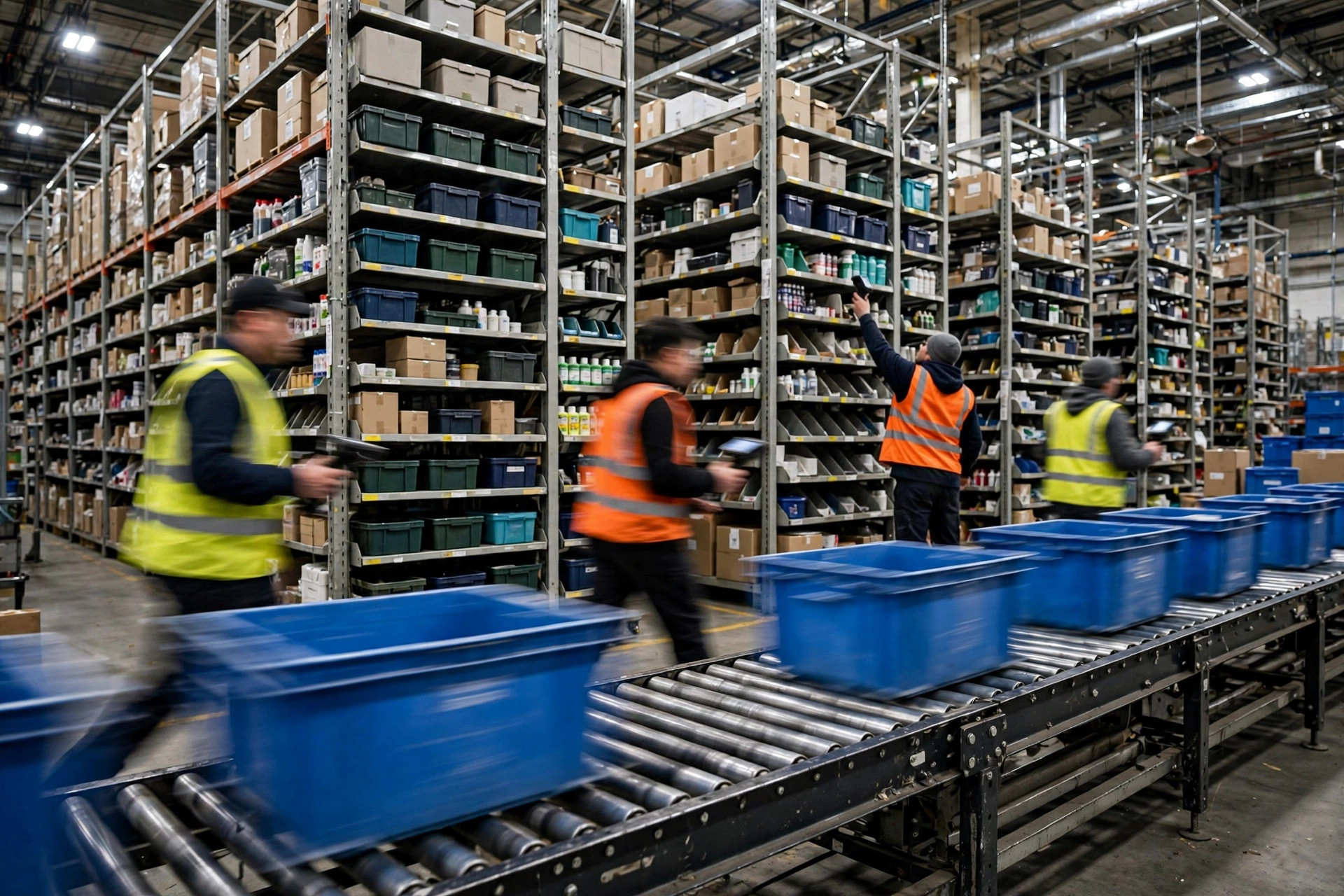
The Opening: 100 Wasted Hours a Day, Hidden in the Waves
In a 300-person picking operation, bad wave planning easily wastes more than 100 labor-hours a day in walking and waiting. Supervisors release waves by feel: looks like a heavy day, so release early and release big — Zone A floods, Zone B idles, and packing benches pile up. The fastest-payback module in any WES is wave management plus the task engine — it replaces gut feel with data.
The Core Framework: Four Points
1. Pick the Right Wave Type — One Playbook Doesn't Fit All
| Wave type | Best for | Key parameters | |---|---|---| | Single wave | Small/mid e-commerce, <5,000 orders/day | 30–60 min per wave, reverse-scheduled from cut-off | | Parallel waves | 3PLs with multiple carrier cut-offs, peak season | Group by carrier pickup time, staggered release | | Waveless (continuous flow) | Top-tier DCs, 50,000+ orders/day | Orders assigned on arrival, no wave concept |
Picking wrong has concrete costs: waveless in a small warehouse burns system overhead for little gain; single-wave in a mega-DC means perpetual firefighting before cut-off.
2. Release Rhythm: Switch from "Push" to "Pull"
The old way is batch release: 2,000 orders dumped on the floor at once, drowning the pick zones. The WES way is pull-based release against each zone's real-time capacity — if Zone A can digest 400 lines an hour, release 400 lines of tasks, then replenish as they're completed.
One apparel warehouse switched from batch to capacity-based release and cut aisle congestion waiting time by 35%; the backlog at packing benches virtually disappeared. Remember: the floor's worst enemy isn't volume — it's uneven arrival.
3. Task Engine Priorities: Five Levels Are Enough
Three priority rules, in order: order cut-off time > carrier pickup time > order aging. Build five priority levels on top, plus one dynamic escalation rule — any task unexecuted for over 2 hours auto-escalates one level, so old orders never get starved by perpetual preemption.
A cautionary tale: one warehouse configured 14 priority rules until even IT couldn't explain why a given order was picked first. Keep it under 7 rules and audit quarterly — retire anything that never triggers.
4. Human-Machine Teaming: Dispatch to People and Equipment Together
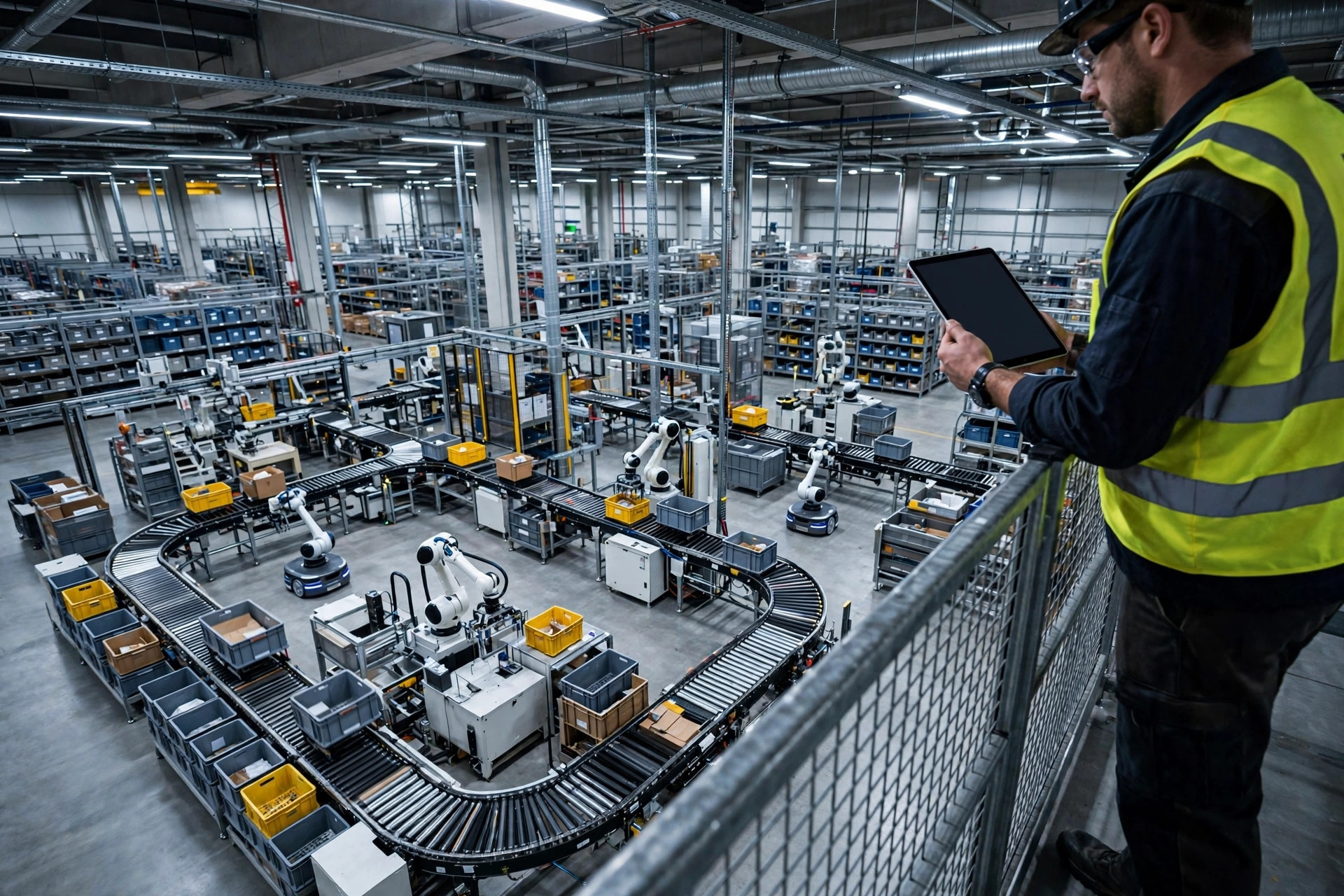
The task engine's real power shows in mixed operations: the same task pool goes to humans via RF devices and to AGVs via equipment interfaces, assigned by real-time proximity. If a picker stands at aisle A's entrance and an AGV is passing Zone B, don't send the human walking to Zone B for a move the AGV can handle.
The prerequisite is fresh location data — RF devices reporting position at least every 30 seconds. Without that, human-machine teaming is a slide deck, not a system.
Field Case: UPH from 85 to 118
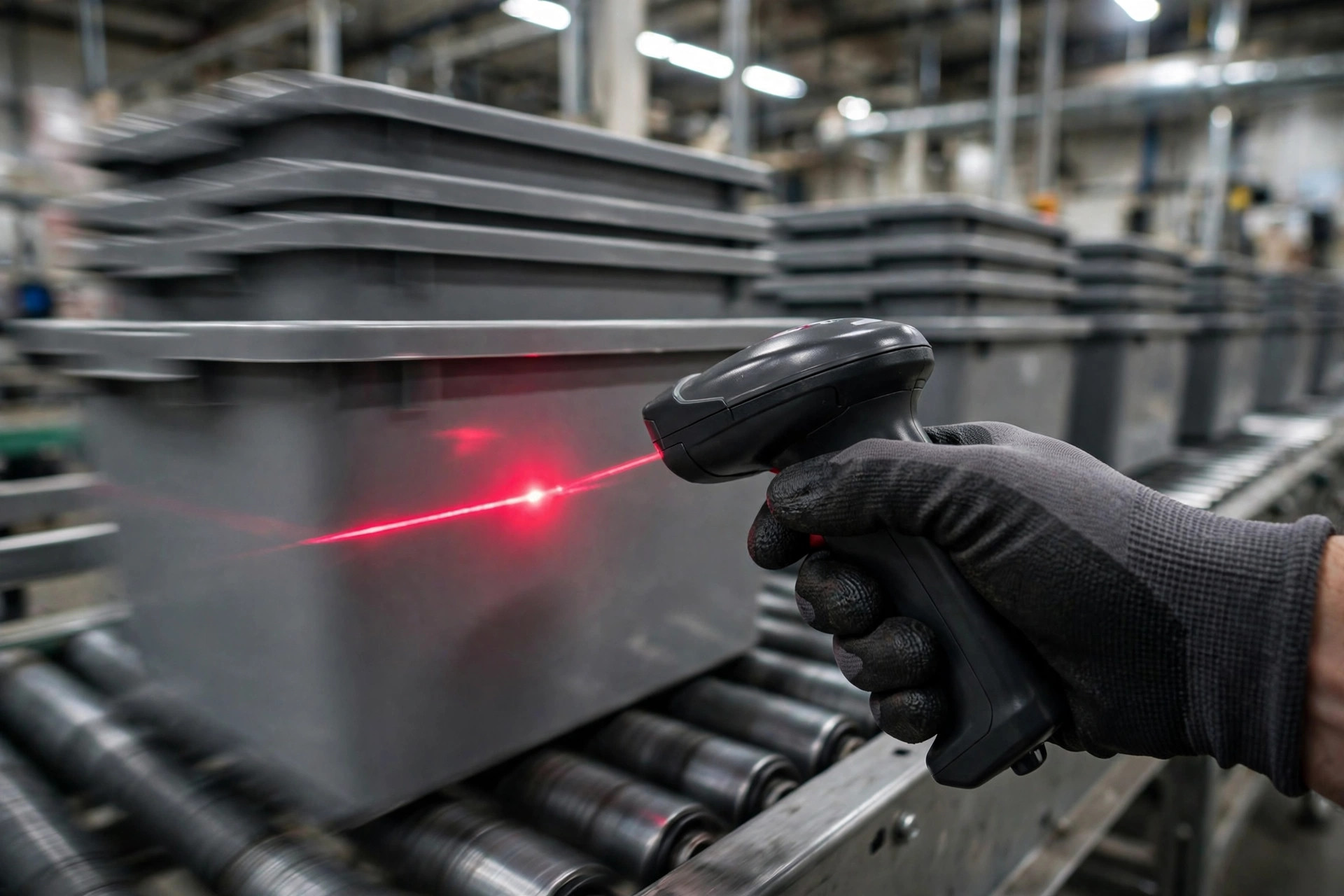
An apparel warehouse on the US West Coast: 30,000 orders a day, 300 pickers. Before the WES task engine, units picked per hour (UPH) sat at 85 and overtime was routine. Three months after go-live: UPH hit 118, up 39%; overtime hours fell 40%, and no temp hiring was needed for peak.
Decomposing the gain: half came from pull-based release (eliminating wait time), half from priority tuning (fewer emergency insertions wrecking the rhythm). Not one headcount changed, not one machine added.
Pitfalls to Avoid
- Over-fragmented waves will kill packing. Picking flows beautifully, but a new wave hitting the pack benches every 15 minutes creates a new bottleneck. Design waves end-to-end, not pick-only.
- Audit priority rules regularly. Business changes beget new rules; after three years nobody dares delete any. Review trigger logs quarterly and sunset zero-trigger rules.
- Never debut a new strategy on peak day. Any wave-strategy change gets at least a two-week small-scale pilot; peak day runs only proven playbooks.
Simulate Before You Go Live: Run History Through It First
Never debut a wave strategy in production. The right move is simulation: take 30 days of real order history and run three strategies in a test environment — the current manual approach, optimized single-wave, and pull-based release — comparing three metrics: UPH, average wait time, and backlog in the 2 hours before cut-off.
Pass criteria: the new strategy must beat the status quo across the board on 80% of days before it earns a pilot. Pilot for 2 weeks in one pick zone only, A/B against the rest. When the data wins, roll out building-wide.
This adds 3 weeks, but it eliminates the biggest risk of all: experimenting in production. A bad wave strategy can stack a full-blown floor incident in 2 hours — simulation is insurance for those 2 hours.
The Task-Engine Dashboard: Five Metrics Every Morning
After go-live, supervisors spend 10 minutes each morning on five metrics:
- Task backlog: unexecuted tasks per pick zone — red-flagged above 1.5x zone capacity.
- Overdue task rate: tasks unexecuted beyond 2 hours, target <3%.
- Zone load balance: busiest-to-idlest zone task ratio, target <1.5.
- Equipment idle rate: AGV/conveyor time waiting for tasks, target <10%.
- Emergency insertion rate: same-day rush tasks as a share of total — above 15% means the wave plan itself needs investigating.
Put the dashboard on the floor's big screen, red-yellow-green at a glance. Three straight red days auto-trigger a review — tune the strategy if it's strategy, add labor if it's labor. Don't wait for month-end to discover it.
The Takeaway
Wave management and the task engine are the fastest-payback part of WES: right wave type, push-to-pull release, simple priorities, proximity-based human-machine dispatch. A 30% UPH lift in one quarter is a thoroughly realistic target.