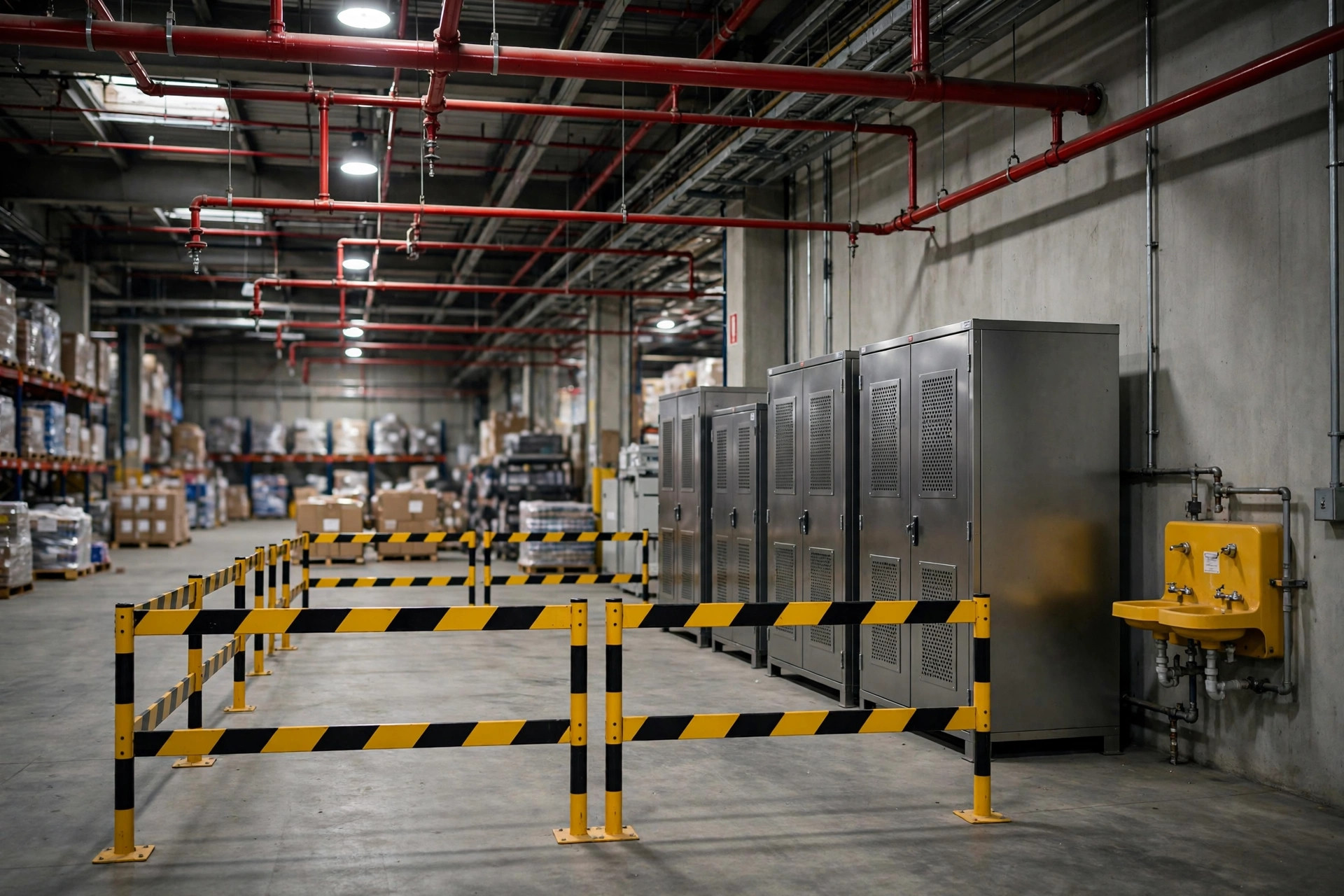

Summer of 2023. A client of mine lost an entire pallet of Bluetooth speakers inside a 3PL warehouse in Arizona — 2,000 pounds, $80,000 in goods. The client marched in demanding full compensation. The 3PL calmly opened the contract, pointed at one line, and said: fifty cents per pound. Two thousand pounds times fifty cents — here's your $1,000. Eighty thousand dollars of product, one thousand dollars back. Case closed. The client had signed that contract himself.
Here's my verdict up front: before you sign a 3PL agreement, the liability clause is the single page most worth reading word by word. Paying a few extra cents on freight is nothing. Losing a shipment and getting pennies back is everything.
The fine print where the cap lives
In a standard 3PL contract, the liability language hides in the "limitation of liability" or "claims" section, usually in the smallest type on the page. Here's what you need to find:
First, the standard of liability. Check whether the warehouse is liable only for losses caused by its own negligence. This matters more than most people realize. Under the law, a warehouse operator owes a much lighter duty of care than a motor carrier — carriers face strict liability for cargo in their custody, but most warehouse contracts say the operator is only on the hook when the loss resulted from its own fault. Your gut says "my goods disappeared in your building, you pay." The contract says "prove it was our fault first." Those are two very different things.
Second, the per-pound cap. This is the most common formulation: $0.50 per pound. That Arizona case was written exactly this way. Light, high-value goods get crushed by this math — $80,000 of small electronics at 2,000 pounds pays back $1,000, not even a rounding error on the real loss.
Third, the per-occurrence or per-shipment cap. Some contracts add a second ceiling on top of the per-pound math, like $50,000 or $100,000 per incident. If you ship high-value freight, find this number. Everything above it is simply not paid.
Fourth, the consequential-damages waiver. Nearly every 3PL contract excludes lost profits, lost customers from stockouts, and reputational damage. If the missing pallet causes a two-week stockout on Amazon and your listing tanks, the warehouse doesn't owe you a dime for that. Sign it only if you can live with it.
Fifth, the claim clock. Most contracts require written notice within days of discovering a loss, with the formal claim letter due within a few months. Over-the-road freight is governed by the Carmack Amendment, which allows up to 9 months for a written claim and just over two years to file suit — but warehouse storage isn't covered by Carmack at all. There, the contract is the whole ballgame. The most common way shippers lose isn't the merits of the claim, it's the calendar: three months of internal finger-pointing, and by the time someone files, the contractual window has already closed.
There's also a coverage gap most people never notice until it bites them. Goods lost inside the warehouse fall under the storage contract's cap; goods lost in transit fall under the carrier's bill of lading and Carmack rules. Different caps, different deadlines, different burdens of proof. Plenty of shippers sign an "integrated warehousing and distribution" deal assuming one standard covers door to door, then discover the two legs are judged separately. Ask one question before signing — from receiving to final delivery, which set of rules governs a loss? Get the answer in writing and attach it to the contract.
Released value vs. declared value: do the math
When you sign, you'll meet two terms: released value and declared value. In plain English, released value means "I agree my freight is only worth this much, I get a cheaper rate, and you only pay up to this if it's lost." Declared value means "I tell you what the freight is really worth, I pay a surcharge, and you cover that amount."
Run the numbers and the choice gets obvious. Take that 2,000-pound, $80,000 shipment. Under released value, the cap is 2,000 × $0.50 = $1,000. Under declared value, you declare $80,000 and the 3PL charges a declared-value surcharge — typically a fraction of a percent of the declared amount (check each provider's current published rates). At 0.5%, fifty shipments a year at $80,000 each costs $20,000 a year in surcharges. That sounds like real money until you compare it against one $80,000 shipment vanishing entirely.
My rule is simple: look at value density — dollars per pound. Apparel, consumer electronics, small appliances, where a pound is worth tens or hundreds of dollars: a fifty-cent-per-pound cap is as good as nothing, and the declared-value money is not optional. Bulky furniture or bottled water, where a pound is worth pennies: the weight-based cap already covers you, and declared value is money down the drain. Pull your SKU list, compute value per pound, and default to declared value for anything over $10 a pound.
The cap itself is negotiable — most people just don't know it. Steady-volume shippers can push the per-pound limit from $0.50 to $2 or $5, or lift the per-occurrence ceiling from $50,000 to $250,000. The 3PL will usually agree, because the actual probability of a claim barely moves and raising the cap costs them nothing. If they won't budge on the cap, negotiate the declared-value surcharge down instead — high volume routinely gets 20 to 30 percent off. And one line item almost everyone misses: ask for a copy of the 3PL's warehouse legal liability policy as a contract exhibit. The policy limits and deductibles tell you whether this operator can actually pay when something big happens, and whether the coverage is current. A 3PL that won't show you its policy is one high-value shippers should walk away from.

The claim checklist that gets you more money back
When freight goes missing, don't panic. Work this list in order — get the order wrong and the payout shrinks:
Note the exception on the delivery receipt, right then and there. Torn carton, short pallet, broken seal — write it down and get the driver to sign. A clean signature followed by a later shortage claim roughly doubles the difficulty of getting paid.
Photograph everything within 48 hours. Damaged cartons, scattered product, the pallet as found — as much as you can. Timestamped photos are best. Warehouse camera footage is typically overwritten within 30 days, so request it in writing as early as possible.
Check the contract's notice deadline. Many contracts require written notice within five business days of discovery. Send an email first to stake your position — subject line with the BOL number, date, and a description of the exception. The formal claim letter can follow, but miss the notice window and nothing after it matters.
Assemble four things: the original bill of lading (proving clean tender), the delivery receipt with the noted exception, the commercial invoice (proving value), and an itemized loss statement (how many units, at what unit cost). State a specific dollar amount in the claim letter. "Severe losses" is not a number.
Watch the response clock. Under Carmack, a carrier must acknowledge a claim within 30 days and pay or decline within 120 days — warehousing claims follow the contract, but use that cadence to chase. If the deadline passes with no answer, follow up in writing and keep the record. If it ever reaches litigation, that paper trail is your evidence.
And here's the honest truth about buying extra cargo insurance: it depends on how valuable your freight is and how reliable your 3PL is. High value density, individual shipments over $50,000, a loss rate that spikes in peak season — if two of those three are true, buy a standalone cargo policy and stop relying on the crumbs in the 3PL contract. A broker's quote usually runs a few tenths of a percent of cargo value, a few thousand dollars a year, and what you're really buying is sleep.
Flip it around: if your freight is low-value-density consumer goods and your 3PL has run three years with a loss rate under one in a thousand, skip the declared-value surcharge and the insurance. Spend the money on making the warehouse actually do its cycle counts. One hour reading the liability clause before you sign beats three months of arguing after a loss.