Fifty Robots Without Dispatch Is Just Bumper Cars
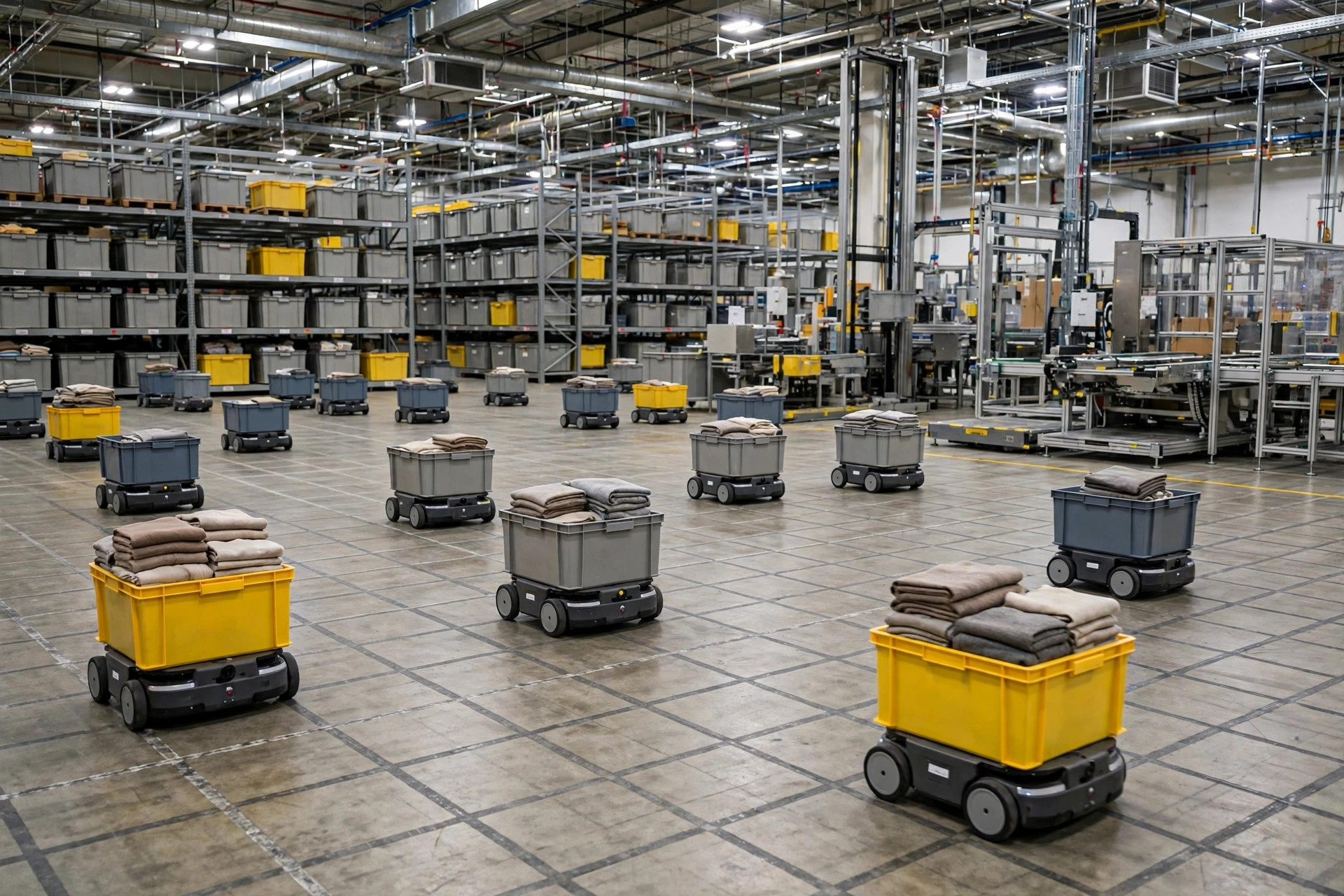
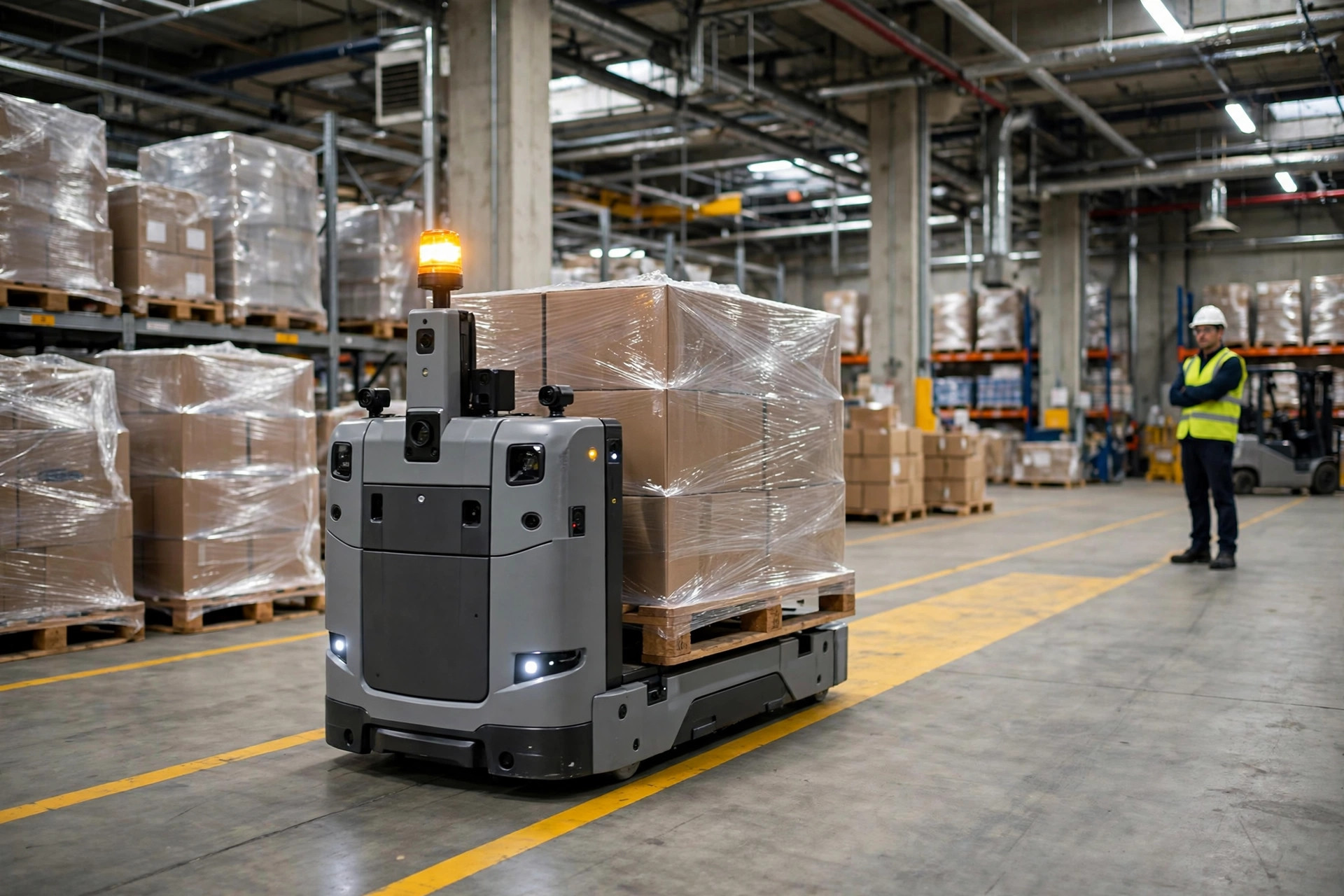
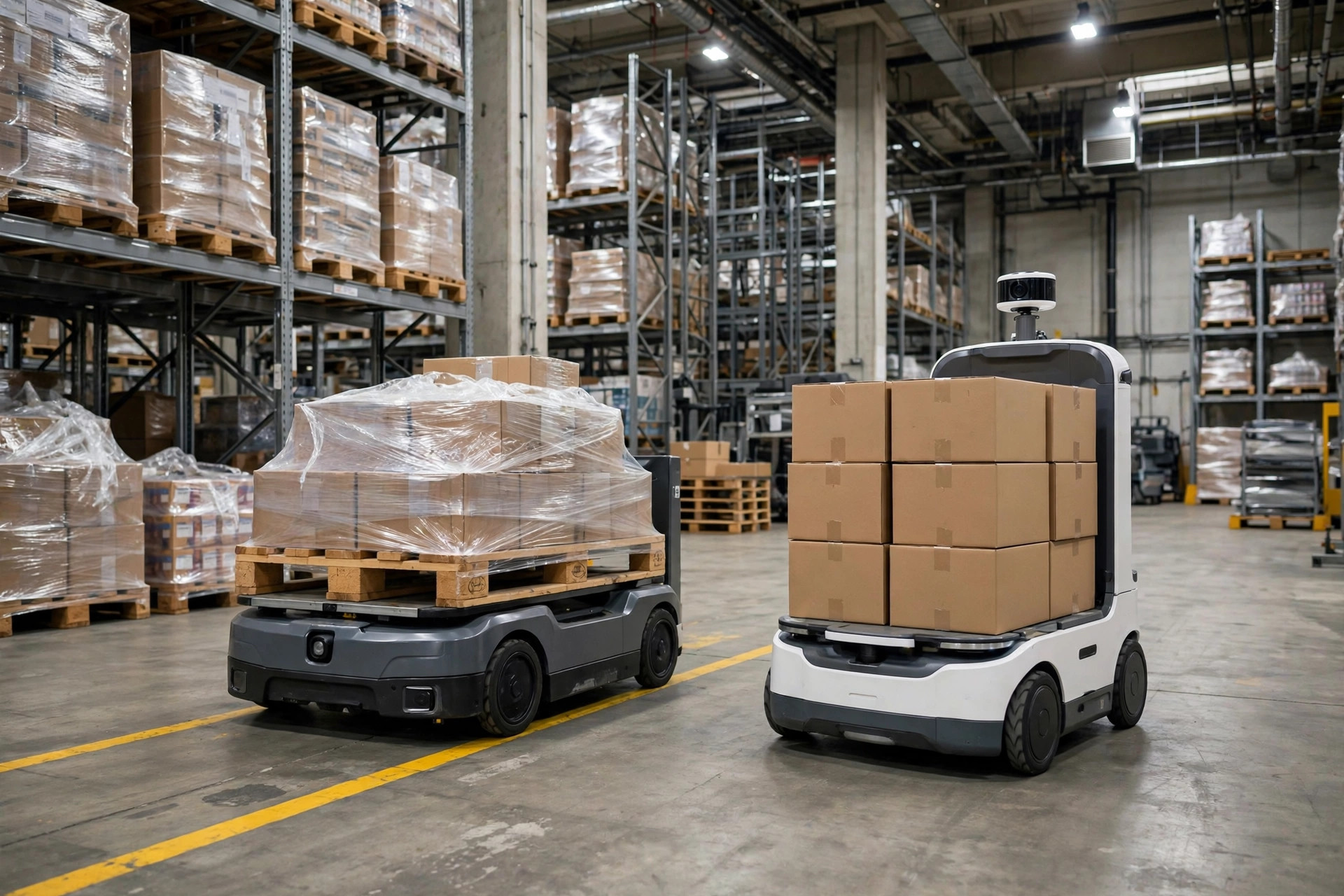
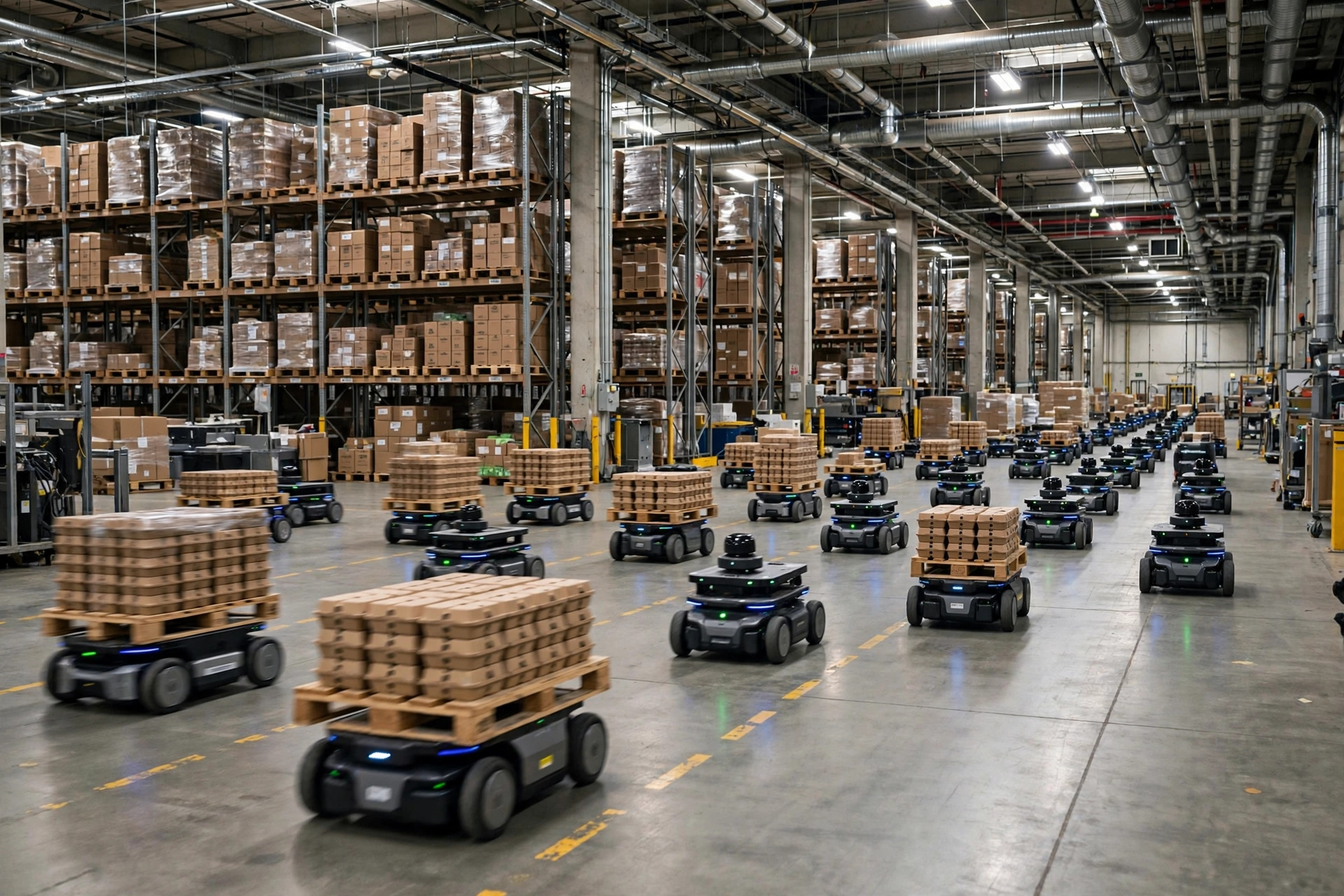
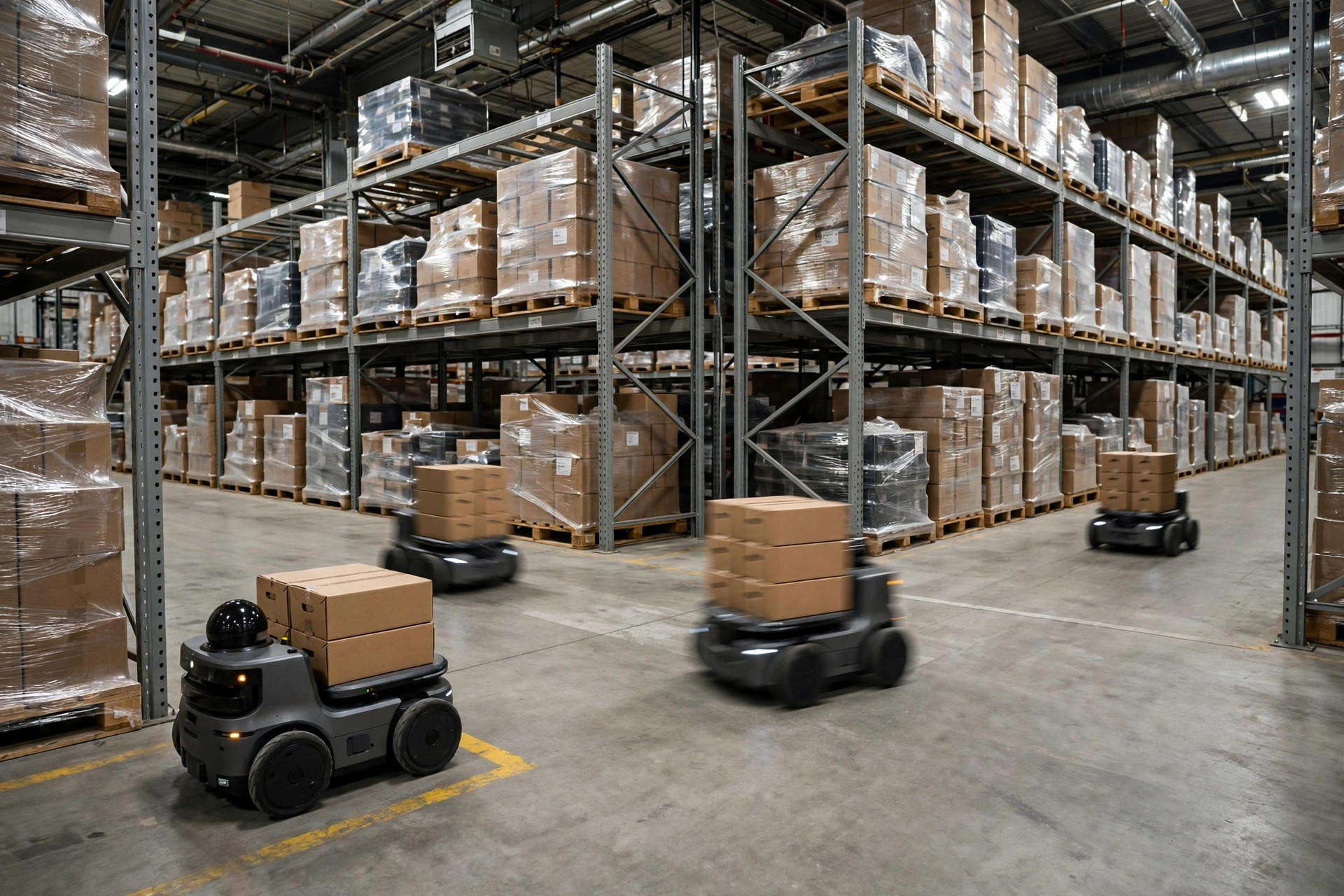
I've seen the cautionary tale firsthand: a client bought 40 AMRs, assuming "more carts means more speed." In week one, the main aisle jammed daily — two carts nose-to-nose in a narrow lane, neither yielding; three carts queuing for one charger; ten carts cruising empty looking for work while real outbound orders waited in line. The owner called me: "Lao Mi, these 40 carts are worse than 20 people." The problem wasn't the carts — it was the fleet management.
The truth about AMRs: single-robot intelligence sets the floor; the dispatch system sets the ceiling. Under 10 units you can scrape by on onboard smarts; past 20, dispatch algorithms are productivity. A fleet manager does four jobs: task allocation, path planning, traffic control, and charge management.
Four Algorithms, Dissected
1. Task Allocation: Who Does Which Job Is a Math Problem
Hundreds of tasks compete at once: Order A needs a tote from rack 3 to packing; pallet B needs moving from receiving to storage. Who gets what? The dispatcher re-optimizes every few seconds on three factors:
- Distance cost: closer carts mean less empty travel — deadheading is pure waste.
- Battery constraint: carts under 30% don't get long runs; they charge first.
- Load balancing: the same "conveniently located" carts can't do all the work while others idle — that accelerates wear on part of the fleet.
Good systems use auction-algorithm or Hungarian-algorithm variants to compute near-global optima in hundreds of milliseconds. Weak systems do first-come-first-served — looks fair, actually adds 20–30% empty travel. First question for any vendor: is task allocation globally optimized or nearest-available?
2. Path Planning: A* in the Warehouse
For each cart, the dispatcher computes shortest paths on the warehouse map with A* or Dijkstra. But warehouses aren't highways — three special constraints apply:
- One-way aisles: narrow lanes go one-way to prevent head-on deadlocks.
- Exclusion zones: fire lanes and dense manual areas are off-limits.
- Dynamic weights: a congested aisle's weight auto-increases so later carts route around — this is dynamic path planning.
Measured results: dynamic weighting delivers 15–25% higher fleet throughput than static shortest-path. Surviving peak without gridlock comes down to this.
3. Traffic Control: Traffic Lights for the Warehouse
Intersections are where accidents and congestion concentrate. The dispatcher must:
- Reserve intersections: carts "request" before entering; the system admits by priority — ambulance logic, outbound tasks outrank inbound.
- Detect deadlocks: four carts in a circular wait at a crossroads; the system spots the cycle and forces one to reroute. This is the classic multi-robot problem — dispatch without deadlock detection breaks down past ~50 units, guaranteed.
- Follow distance: 2–3 m spacing in the same direction, chained e-stops — if the leader e-stops, followers auto-decelerate.
| Module | Core Algorithm | Failure Mode | |---|---|---| | Task allocation | Auction / Hungarian variants | 30% more empty travel, fleet wear imbalance | | Path planning | A* + dynamic weights | Trunk aisles gridlock at peak | | Traffic control | Intersection reservation + deadlock detection | Head-on standoffs, crossroads deadlocks | | Charge management | Off-peak + opportunity charging | Fleet-wide dead batteries at peak |
4. Charge Management: Don't Let Carts "Eat" at Peak
Charging is the most overlooked trap. With 40 carts all heading to charge at 20%, the charger queue alone cuts peak capacity 30%. The right approach:
- Opportunity charging: top up in task gaps and order lulls; keep batteries in the 40–80% "healthy band."
- Off-peak scheduling: the system forecasts the next 2 hours of task load and pre-charges some carts during lulls.
- Charger ratio: roughly 1 charger per 8–10 carts; fast charging recovers 80% in an hour.
Lithium batteries hate two things: deep discharge (to 0%) and long-term full-charge storage. Good charge management stretches battery life from 2 years to 3–4 — across 40 carts, that's a six-figure annual difference in replacement cost.
Real Case: Tuning Bumper Cars into a Symphony
Back to that 40-cart client. Our three-week tuning program did four things:
- Switched task allocation from nearest-available to global optimization — empty travel down 24%.
- Set 3 one-way loops on trunk aisles — narrow-lane deadlocks to zero.
- Moved to opportunity charging plus off-peak top-ups — peak online capacity from 28 to 36 carts.
- Added intersection reservations — average crossroads wait from 40 s to 8 s.
Result: hourly throughput from 900 to 1,400 picks — up 55% with zero added carts. The owner went from "take them back" to "give me 20 more." That's the value of dispatch — hardware is muscle, dispatch is brain.
Pitfalls: Four Traps
- Buying carts without dispatch: some vendors discount the carts and "throw in" a lite dispatcher that falls apart past 20 units. Ask whether dispatch is in-house or outsourced, and whether it scales to 100.
- Sizing the fleet by gut: fleet size needs simulation (FlexSim, Visual Components) — feed in order waves, get optimal cart count out. Guessed numbers are either wasteful or insufficient.
- Wi-Fi dead zones: dispatch lives on real-time comms — a 5-second Wi-Fi drop leaves carts "lost," spinning in place. Full-site roaming tests, signal ≥ −65 dBm.
- WMS interface lag: the dispatcher pulls tasks from the WMS; interface latency over 2 seconds makes allocation perpetually late. Integration-test the interface before signing, not at go-live.
Summary
An AMR fleet manager's four algorithms — globally optimized task allocation, dynamically weighted path planning, deadlock-proof traffic control, off-peak charge management — together are what multi-robot coordination really is. Remember the cautionary tale: 40 carts without dispatch lose to 20 people. Budget 20% of an AMR project for dispatch and integration — the carts are just the ticket in; the brain is the productivity.