When people talk about US e-commerce, 90% name Amazon, Walmart, eBay. But there's a platform with 3x Amazon's average order value, half the return disputes, and a fraction of the competition: Overstock. Unsexy. Lucrative.
Verdict up front: sellers in furniture, home décor, bedding, and bulky outdoor goods will find Overstock the most underrated incremental channel of 2026. Small-parcel generic sellers — this isn't your arena.
What This Platform Actually Is
Founded in Utah in 1999, Overstock.com is America's veteran home-vertical e-commerce player. After its 2023 acquisition by Beyond Inc. and the brand reshuffle, the online business continues under the Overstock.com brand, anchored in furniture, home décor, bedding, outdoor, and lighting — big and semi-big goods.
The user profile is precise: homeowners aged 30–55 buying "a home," not "a bargain." Average order values sit in the $200–$400 range year-round, with repeat purchases clustered around three moments: moving, renovating, and seasonal refreshes.
Why underrated? Because 90% of China-based home-goods sellers pour all their energy into the Amazon–Wayfair slugfest, while Overstock's third-party seller count is a rounding error by comparison — thin competition means cheaper traffic and more negotiating room.
Getting In: Invitation + Review
Overstock runs a partner program, not open registration:
- A company entity, US companies preferred; cross-border sellers need complete credentials
- Home-category supply chain: products, capacity, and a quality system the platform will substantively review
- Brand credentials: own brand or a clean authorization chain
- Product compliance: US furniture regulations (California Prop 65, flammability standards, formaldehyde emission standards) are mandatory
- Apply through the merchant/partner channel on Overstock's site or via a category manager; review cycles run weeks to months
Bluntly: Overstock doesn't lack sellers — it lacks reliable home-goods suppliers. Your product strength and compliance paperwork matter more than company size.
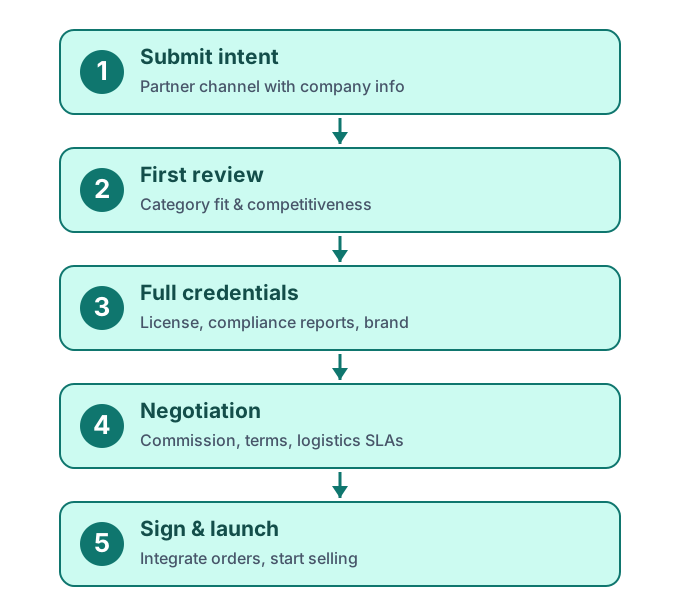
How to Get Set Up: Five Steps
One, submit your partnership intent through Overstock's seller/partner channel with company and product details. Two, the merchandising team does a first pass on category fit and product competitiveness. Three, submit full credentials: business license, product compliance files (test reports, certifications), brand authorization. Four, commercial negotiation: commission rate, payment terms, logistics requirements (Overstock has explicit SLAs on bulky delivery times). Five, sign, list products, integrate with the order system, and start selling.
Intent to first listing in 1–2 months is normal pace. Don't rush it — home-platform merchandising is slow craft, but once you're in, the partnership is far more stable than open-marketplace relationships.
Fee Structure: Let's Do the Math
Overstock runs a commission-plus-services model (exact rates per the latest official policy; varies by category):
- Platform commission: by category, roughly 8%–15% for bulky home goods, confirmed at signing
- Logistics: linehaul + last-mile for bulky goods sits with the seller (or via platform-designated logistics options)
- Promotion: on-site ads optional; bulky categories commonly see strong ROAS given thin competition
- Warehousing: no platform warehousing fee on self-fulfillment; third-party warehouse billed at actuals
The math on a $299 solid-wood coffee table costing $120 ex-factory: 12% commission = $35.88, bulky last-mile (threshold/room-of-choice delivery) ≈ $60, allocated first-mile + warehousing ≈ $25. Total costs $120.88, net $178.12, margin $58.12 — about 19.4%. Lower than small parcel? But $58 margin per order at 50 orders a day is $2,900 — bulky is a "one order equals ten" business; run the totals, not the per-unit.
And returns: bulky return rates run 8%–12%, far below apparel's 30%. One return's logistics cost is steep ($50–$80), but they happen rarely. Net-net, bulky profit margins run steadier.
Tactics: Four That Work
Lifestyle imagery is the conversion king. Furniture is an imagination product — white-background shots are supplements at best; hero images must be living-room/bedroom scenes. $2,000 on a good photo shoot is the highest-ROI spend in the whole store.
Write dimensions to the extreme. Length, width, height, weight capacity, assembly difficulty, whether two people are needed to carry it — the more detailed, the fewer support tickets and bad reviews. A bulky buyer's core anxiety is "it won't fit / I can't assemble it"; your detail page should kill that anxiety in advance.
Assembly service is a plus. Paid assembly or tool-free quick-assembly design lifts conversion visibly. Overstock shoppers are far more willing than Amazon shoppers to pay for service.
Ride the three repurchase moments. Moving season (May–Sep), back-to-school, Black Friday/Christmas — stock and reprice 60 days ahead. Home seasonality is clockwork; hitting the windows is money lying on the floor.
Pitfalls: Four to Avoid
Incomplete compliance files. Prop 65 warning labels, CARB formaldehyde standards for composite wood — miss one and you're delisted. Compliance is the entry ticket, not a bonus — get third-party lab reports done before applying.
Underestimating bulky logistics. A bed frame from a West Coast warehouse to the East Coast runs $80–$120 in last-mile at standard rates. Price without accurate zone-based freight and long-distance orders all lose money. Set up warehouses by region — at minimum one East, one West.
Substandard packaging. Bulky goods survive 3–5 handling touches in last-mile; weak packaging means 10%+ damage rates out of the gate. Damage = returns + bad reviews + freight, a triple kill. Do drop and vibration testing on packaging — don't cheap out here.
Slow after-sales. Bulky buyers' problems (a missing screw, a scratched panel) are urgent — resolve within 48 hours with a parts-first approach. A $5 hardware kit protects the five-star review on a $299 order.
Logistics & Warehousing: Bulky Logistics Is the Moat
On Overstock, logistics isn't a cost center — it's the competitive edge:
Dual-warehouse layout is table stakes. One warehouse East, one West covers a 3-day delivery circle for 80% of the US population. Bulky last-mile is distance-rated; dual warehouses cut average last-mile cost 30%+. Single-warehouse national coverage doesn't work for bulky.
Vet last-mile carriers carefully. Bulky last-mile isn't a UPS Ground problem — it needs dedicated bulky carriers (scheduled delivery, upstairs, installation options). Sign 2–3 carriers on comparison pricing and lock capacity before peak — Black Friday bulky capacity is fought over, not bought.
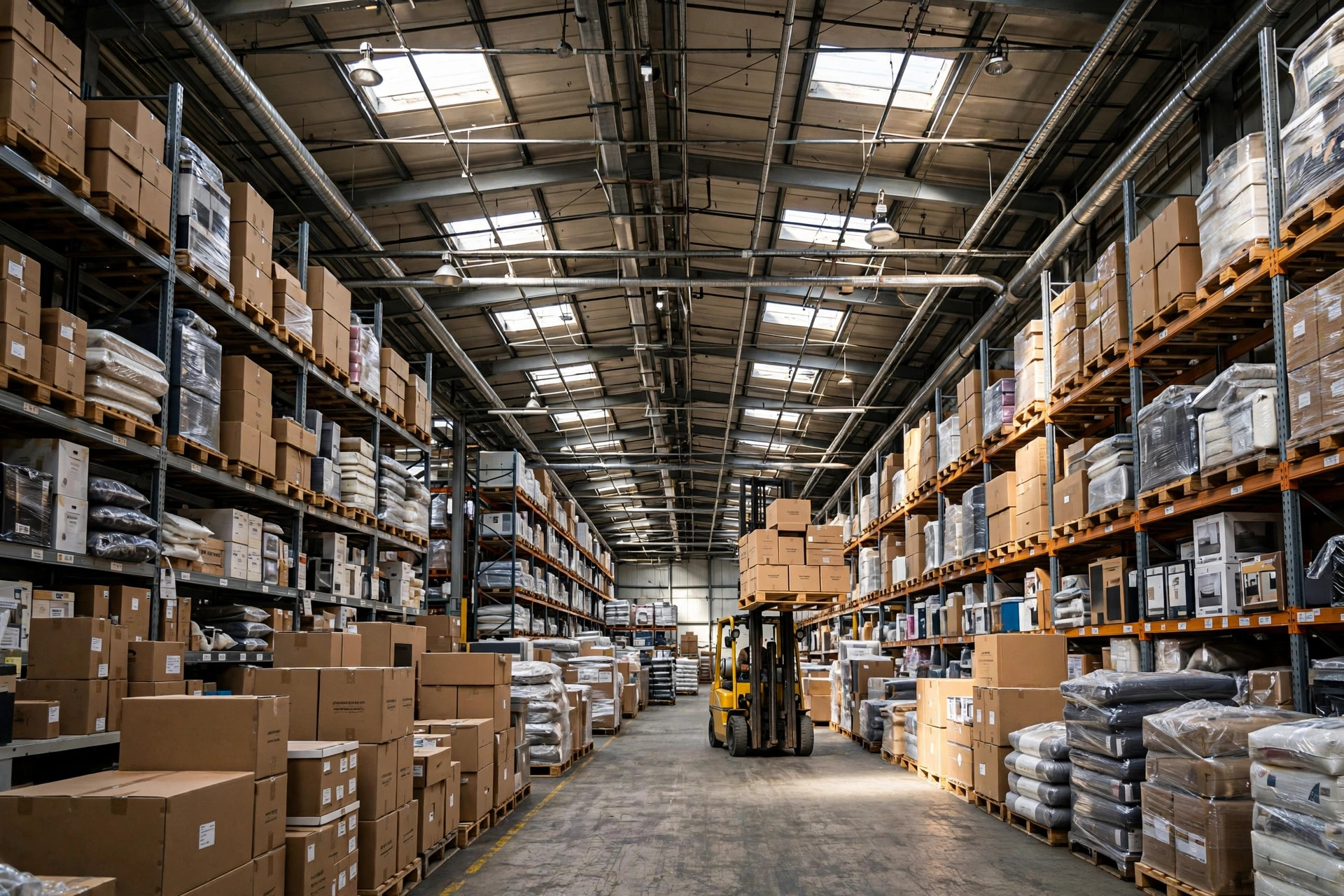
Warehouse operations must fit bulky. Standard e-commerce racking and flows are built for small parcel; bulky needs wide aisles, floor-staging zones, two-person handling SOPs, and reinforced packing stations. Choose a 3PL with bulky experience — tour the warehouse and look at their damage-rate data, not the sales pitch.
Build a separate reverse-logistics chain. Bulky returns can't go through small-parcel return docks: you need inspection, repair, refurbishment, and resale as one capability. A $299 coffee table with a light scratch refurbishes and resells at $199 — 60%+ residual recovery. Bulky sellers without reverse capability are throwing 10% of margin in the trash.
Bottom line: Overstock is the value pocket for bulky home goods — thin competition, high tickets, quality shoppers. But there's no "light operations" in bulky: logistics, compliance, and after-sales — short on any one of the three and you won't last. Get all three solid, and this place is a gold mine.