
In 2024, a friend in beauty started from zero followers on TikTok — one 30-second video made a $12.99 blush go viral, and a single livestream moved 20,000 units. She told me: on TikTok Shop, traffic isn't bought. It's performed.
Verdict up front: sellers with content capability — filming and streaming themselves, or able to recruit creators — will find TikTok Shop the highest-ROI traffic pool in US e-commerce in 2026. If all you know is listing products, you won't sell a single unit here.
What This Platform Actually Is
TikTok Shop is TikTok's closed-loop commerce: short video, livestream, and the Shop tab as three traffic entrances, with users checking out mid-scroll. The US launch in September 2023 kicked off a multi-year GMV tear, making it one of America's fastest-growing e-commerce channels.
Its essence is interest-driven commerce: users come to watch videos, not to shop — buying happens incidentally. That makes product selection logic the opposite of every shelf-based platform: only products that trigger impulse buys earn a seat at the table.
Three seller types: domestic shops (US entity, US warehouse fulfillment), cross-border shops (China entity, cross-border fulfillment), plus a semi-managed mode. In 2026 the platform is visibly favoring domestic shops with traffic support.
Getting In: Know Your Lane
Domestic shops: US company (LLC etc.), EIN, US bank account, US domestic warehousing and shipping capability, US ID or passport verification.
Cross-border shops: Chinese business license, legal-rep ID, cross-border payout account. Some categories require brand credentials.
Universal requirements: category qualifications (beauty, food, baby products and other regulated categories need extra certification), a security deposit by category (check the latest official policy), and a US-based return address.
Note: there's a cap on how many shops one entity can open — forget the multi-store playbook. TikTok's crackdown on store networks has only intensified.

How to Get Set Up: Six Steps
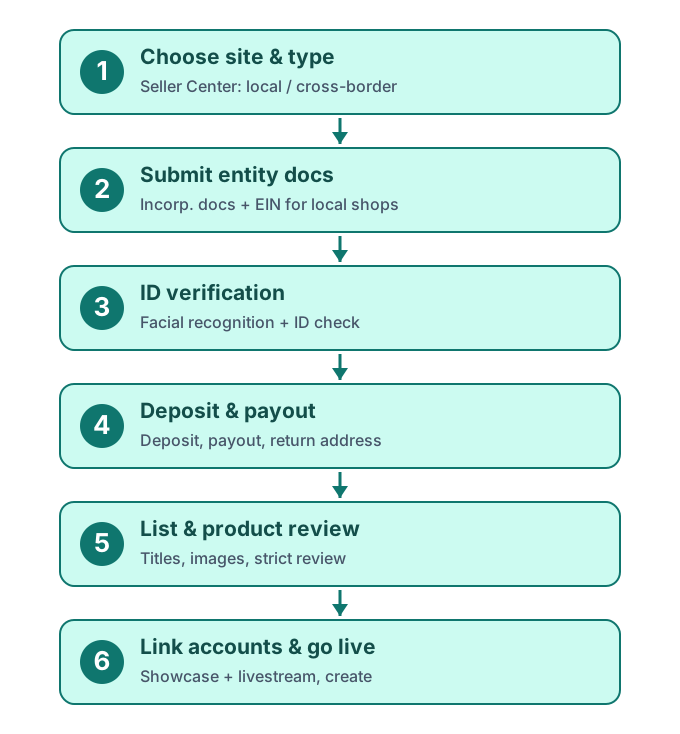
One, log into the TikTok Shop Seller Center and pick the US site and shop type. Two, submit entity credentials: incorporation docs + EIN for domestic shops, business license for cross-border. Three, complete legal-rep identity verification (facial recognition + ID). Four, pay the deposit, bind your payout account, and set the return address. Five, list products once approved — titles, hero images, descriptions, SKUs, all done properly, because TikTok's product review is strict on imagery and claims. Six, link TikTok accounts (official + channel accounts), enable showcase and livestream permissions, and start creating content.
Application to first livestream takes about two weeks when fast. But the real starting line is step six: a shop with no content effectively doesn't exist on TikTok Shop.
Fee Structure: Let's Do the Math
TikTok Shop fees have been climbing; 2026 levels (per the latest official policy):
- Platform commission: roughly 6% by category (raised from 2% in 2024 and never came back down), varying by category
- Payment processing: around 3%
- Creator commission: you set the rate for creator-driven sales — 15%–20% is standard in beauty, and nobody promotes you at zero
- Security deposit: one-time, refundable on exit
- Ads: TikTok Shop ads are performance-based, optional
The math on a $25.99 serum costing $6 to make: 6% platform commission = $1.56, 3% processing = $0.78, 15% creator commission = $3.90, ~$4.00 domestic small-parcel shipping. Total fees $10.24, net $15.75, margin $9.75 — 37.5%. Not bad — but that's the creator-driven math. Stream it yourself and you keep the $3.90 creator cut, pushing margin to $13.65. That's why top sellers all build in-house livestream studios: creator commission is the biggest variable cost on TikTok Shop.
Now the organic-traffic math: one viral short video at zero cost driving 5,000 orders saves $3.90 in creator commission plus ad spend per order — content capability is worth five figures per hit here.
Tactics: Five Traffic Codes
Short video is the base; livestream is the amplifier. Post 3–5 short videos daily to keep the account active; stream at least 3 sessions a week, 2+ hours each. Video without streaming caps your conversion ceiling; streaming without video starves you of inbound traffic.
The first 3 seconds decide everything. "I wish I'd bought this sooner" beats "hello everyone, today I'll introduce…" a hundred times over. Completion and engagement rates directly drive distribution — don't film short videos like TV infomercials.
Start creator partnerships at the mid-tier. Top creators charge steep slot fees with long lead times; creators with 10K–100K followers are the sweet spot. Commission-plus-free-sample deals: test 20 creators, double down on the ones whose data pops.
Write product-card titles for search behavior. TikTok Shop has its own Shop-tab search — people really do search "strawberry bear tumbler." Bury 2–3 core search terms in the title; don't keyword-stuff.
Livestream rhythm: pitch, push, giveaway, repeat. A 2-hour stream spends 8–12 minutes per product, layered with limited-time discounts and lucky draws to stretch watch time. Livestream traffic is allocated on GPM (gross merchandise per mille) — high GPM gets pushed.
Pitfalls: Five to Avoid
False claims. "Whiter skin in 3 days" or "lose 10 pounds with one swipe" gets products delisted at best and shop penalties at worst. TikTok reviews efficacy claims harder than Douyin does (and the US FTC is watching too).
Creator ghosting. Sending samples and never seeing a video is routine. Check a creator's last-30-day sales data before partnering — not just follower counts. Ship samples in batches: post first, ship next.
Inventory-content disconnect. The video goes viral and the goods are gone — the most painful death for TikTok sellers. Content and supply-chain teams must sync inventory daily; size hero-SKU stock at 30 days of daily sales minimum.
Neglecting after-sales. Impulse buys return at 15%–25% naturally; slow customer service lets bad reviews and disputes pile up, and shop weight falls faster than it rose. State return terms clearly; respond within 12 hours.
One basket for all eggs. An account ban or throttled livestream wipes you out overnight. A matrix (official account + 2–3 channel accounts) is standard — never bet all traffic on one handle.
Logistics & Warehousing: When Content Blows Up, the Warehouse Can't
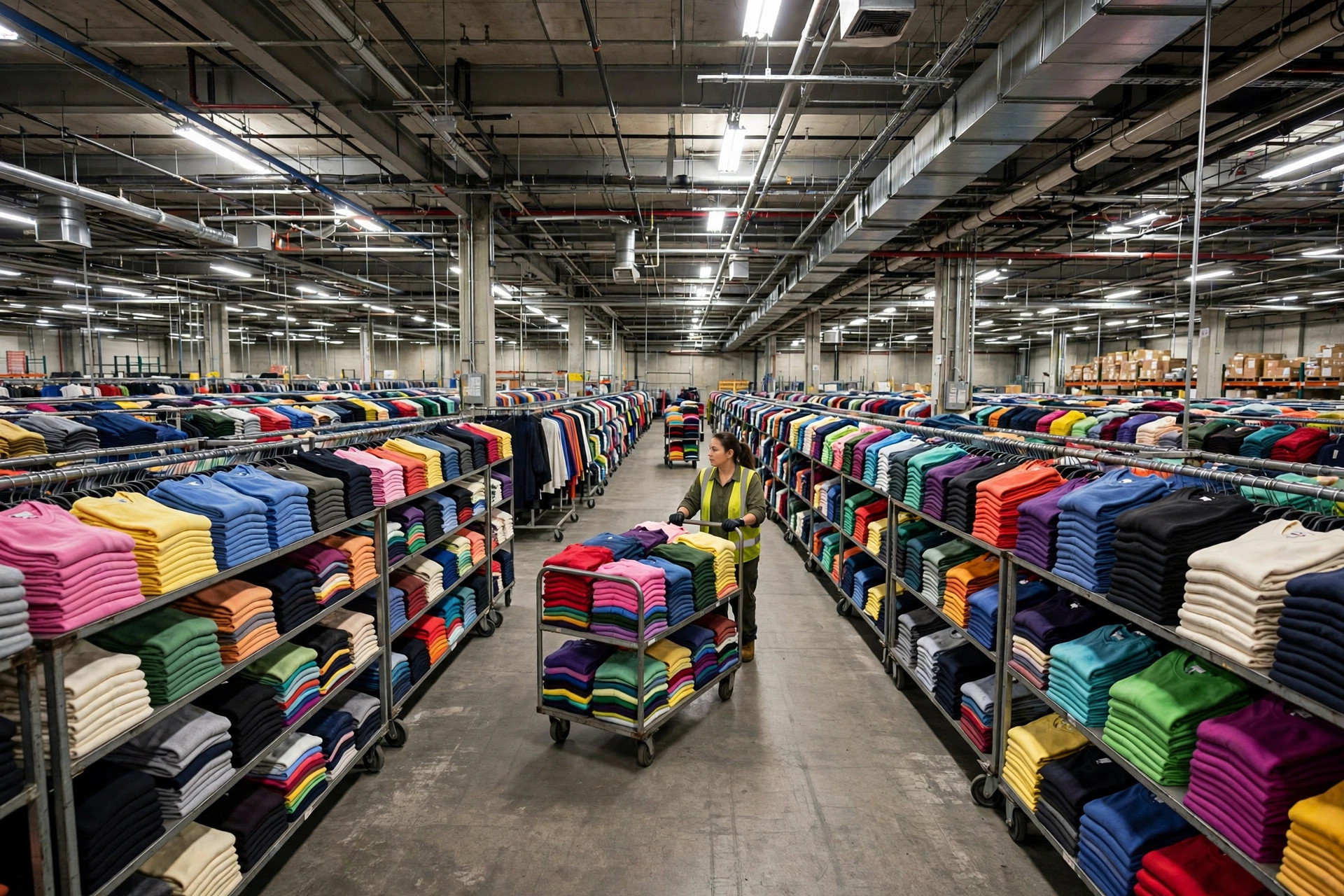
TikTok Shop order curves are pulsed: 200 orders a day normally, 5,000 after one hot livestream. That peak-and-valley shape is an extreme test for warehousing:
A domestic warehouse is mandatory. The platform keeps tightening ship-time requirements (pickup within 2 days for in-stock items is the baseline); cross-border direct shipping is getting harder on TikTok Shop. One warehouse each on East and West Coast — or a 3PL covering the whole US — is the 2026 standard.
Flex labor + pre-packing. Before promos and big streams, forecast volume and pre-pack hero SKUs (labels on, boxes ready) so orders ship the moment the stream ends. Hiring temp hands last-minute? The labor market is busier than you in peak season.
Returns warehouse + resale. At 15%–25% return rates, returned goods need fast QC and relisting. Beauty and personal care note: opened items can't be resold — state it in the return policy to cut disputes.
ERP integration. Orders, inventory, creator payouts, ad spend — data scattered across four or five backends. Past a thousand orders a day without an ERP, it's one big blurry mess. Stand the system up two months before you blow up, not after.
Bottom line: TikTok Shop is the biggest variable in US e-commerce in 2026 — content capability is money-printing capability. But remember: traffic is borrowed; supply chain and fulfillment are yours. Plenty of viral hits died on "can sell it, can't ship it."