The Piece-Picking Error Black Hole
Piece picking is where warehouse errors concentrate. With paper-based picking, the operator must "read the order — find the location — verify — pick — check off," and a lapse at any of the five steps creates an error. Industry-wide, paper-based piece picking runs at 0.5–1% error rates — 50 to 100 errors per 10,000 order lines, with returns, reshipments, and customer-service costs to match.
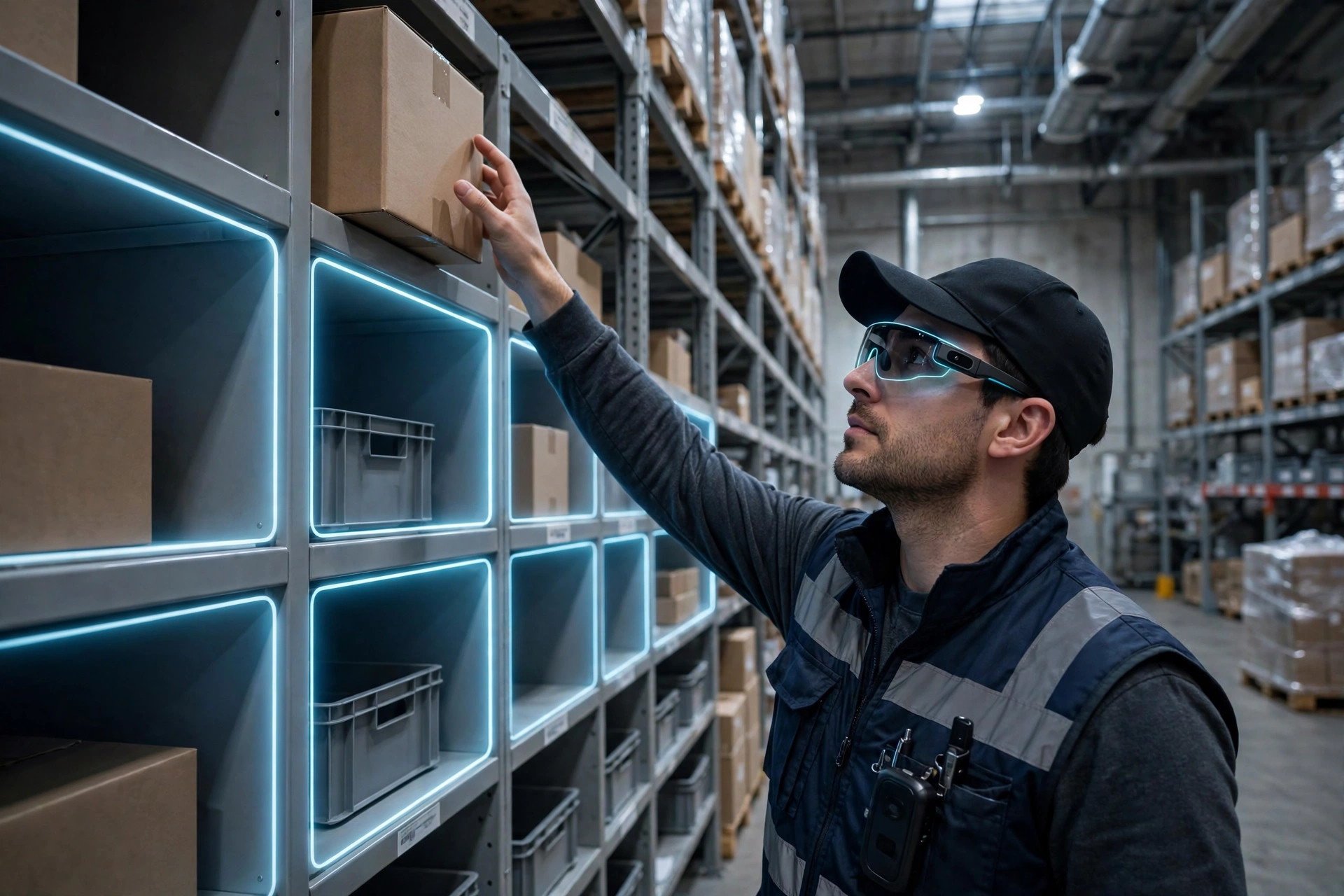
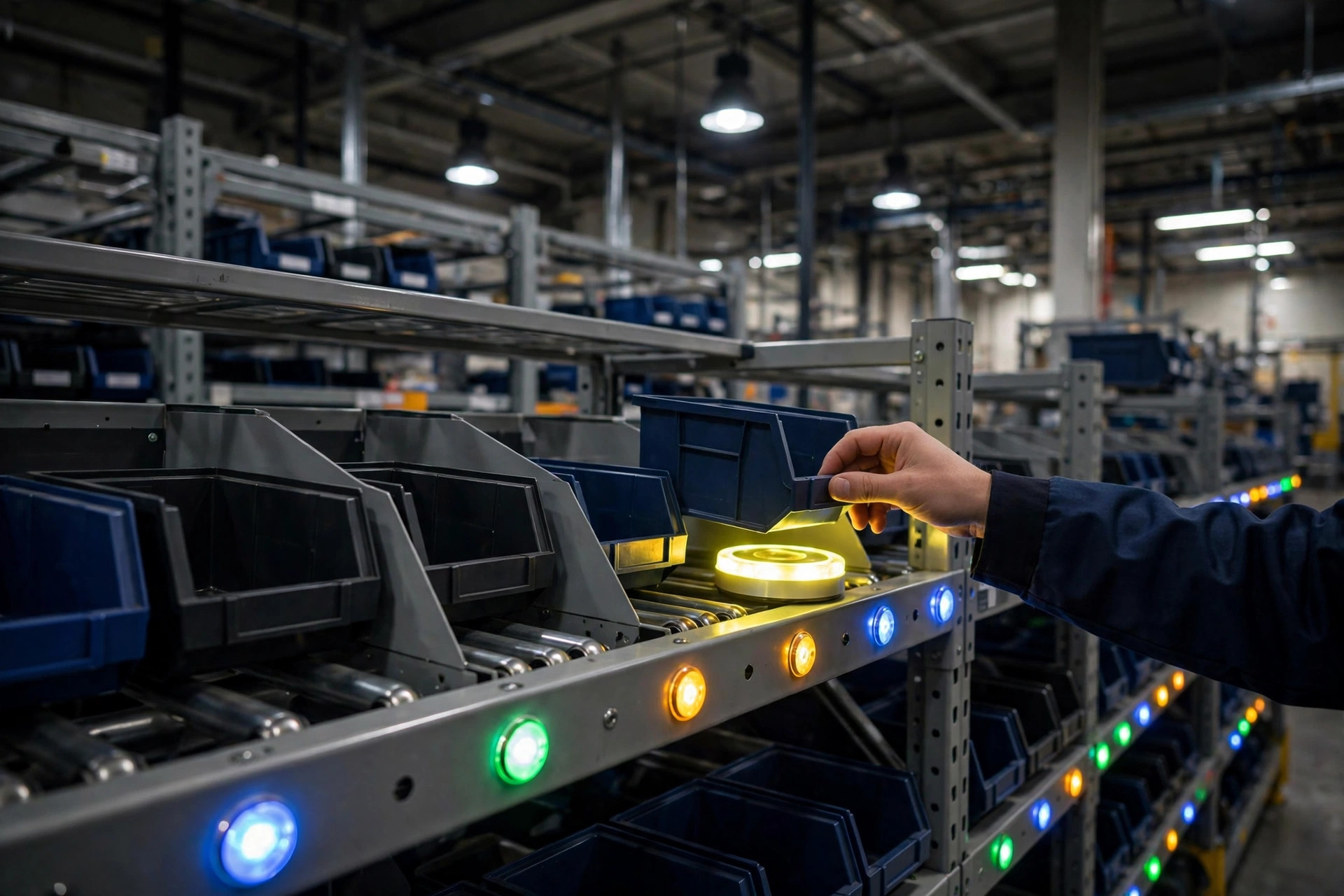
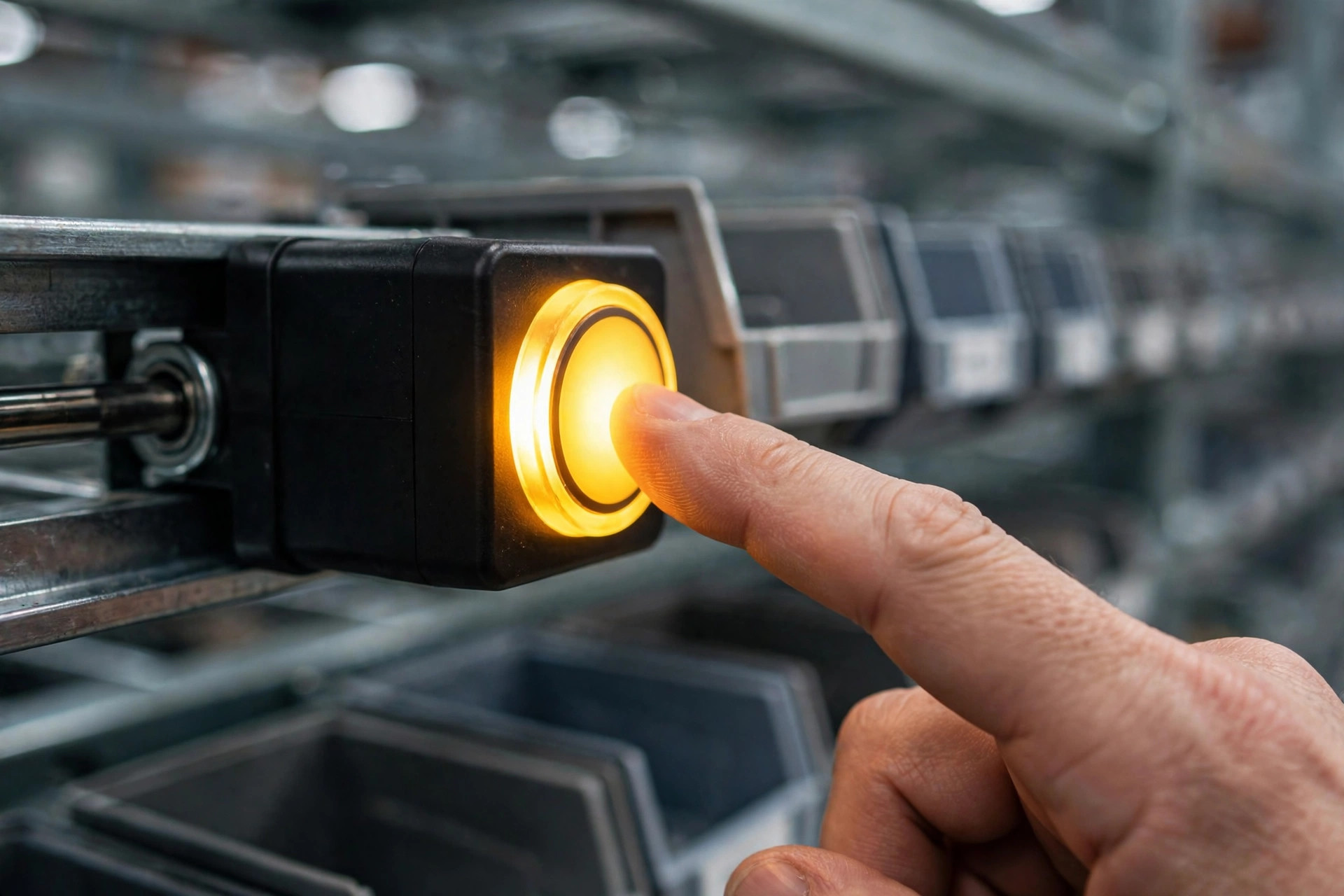
Pick-to-Light (PTL) attacks exactly this black hole: a light on the shelf location says "pick here"; the numeric display beside it says "pick 3"; you press the confirm button after grabbing the items, and the light goes out. The "find" and "verify" steps move out of the operator's head and into the lights. Result: error rates below 0.05%, and pick speed up 30–50%.
1. How It Works: Light, Label, Confirm Button
A PTL system has three layers:
- Electronic labels (light + display + confirm button): mounted at each pick location. A lit lamp means "this location has a pick task"; the display shows the quantity; the operator presses the confirm button after picking to signal "done."
- Zone controllers: each controller drives dozens to a hundred labels, communicating with the WMS/host system — pushing tasks down, collecting confirmations back.
- WMS integration: order lines are exploded by location, light tasks are dispatched in real time, and confirmations decrement inventory in real time.
The workflow: orders drop → lamps light at the right locations with quantities → the operator walks to each lit location → picks the displayed quantity → presses confirm → the lamp goes out → all lamps out means the wave is complete. The operator never reads a list and never scans (premium setups add scan verification); eyes stay on the lights.
2. What It Costs: Price per Pick Point
PTL is priced per "point" — one label, one point:
| Cost item | Unit / share | Notes | |---|---|---| | Electronic labels | $20–55/point | Domestic $20–35, imported $40–55, with display | | Zone controllers | ~10–15% of label total | 1 controller per 50–100 points | | Installation & wiring | $7–14/point | Drilling, cable runs, commissioning | | Software integration | $4,000–11,000/project | WMS interface development | | Annual maintenance | 5–8% of hardware value | Label replacement, batteries (wireless) |
A 2,000-location mid-size piece-pick zone runs roughly $55K–85K with domestic labels, $95K–140K imported. Wireless labels save wiring cost but run ~30% more per label and need periodic battery swaps — best where locations change often.
3. When It Fits: Three Hard Requirements
PTL isn't universal. Three hard requirements — miss one and don't buy:
- High order-line density: thousands of piece-pick lines per day concentrated in a fixed pick zone. Too few lines and the lights can't pay for themselves.
- Stable locations: SKUs stay married to locations. PTL labels live on the racking; in a warehouse that re-slots daily, mounting and remounting labels is misery.
- "See-light, grab-goods" SKUs: small items in standard packs, distinguishable by sight (beauty, personal care, 3C accessories, pharma). SKUs that need weighing, measuring, or batch/expiry verification don't benefit from lights.
The archetype: beauty e-commerce DCs, pharma distribution, 3C accessories, and piece-pick zones in retail distribution centers.
4. The Numbers: Speed and Accuracy Gains
Typical post-go-live changes:
- Pick rate: from 80–100 lines/hour per operator to 120–160 — up 30–50%;
- Error rate: from 0.5–1% to below 0.05% — an order of magnitude;
- Training: new hires productive in 2–3 days instead of 2 weeks — just follow the lights;
- Peak flexibility: temp workers ramp fast, multiplying labor elasticity.
5. PTL vs. Voice vs. RF: Choosing
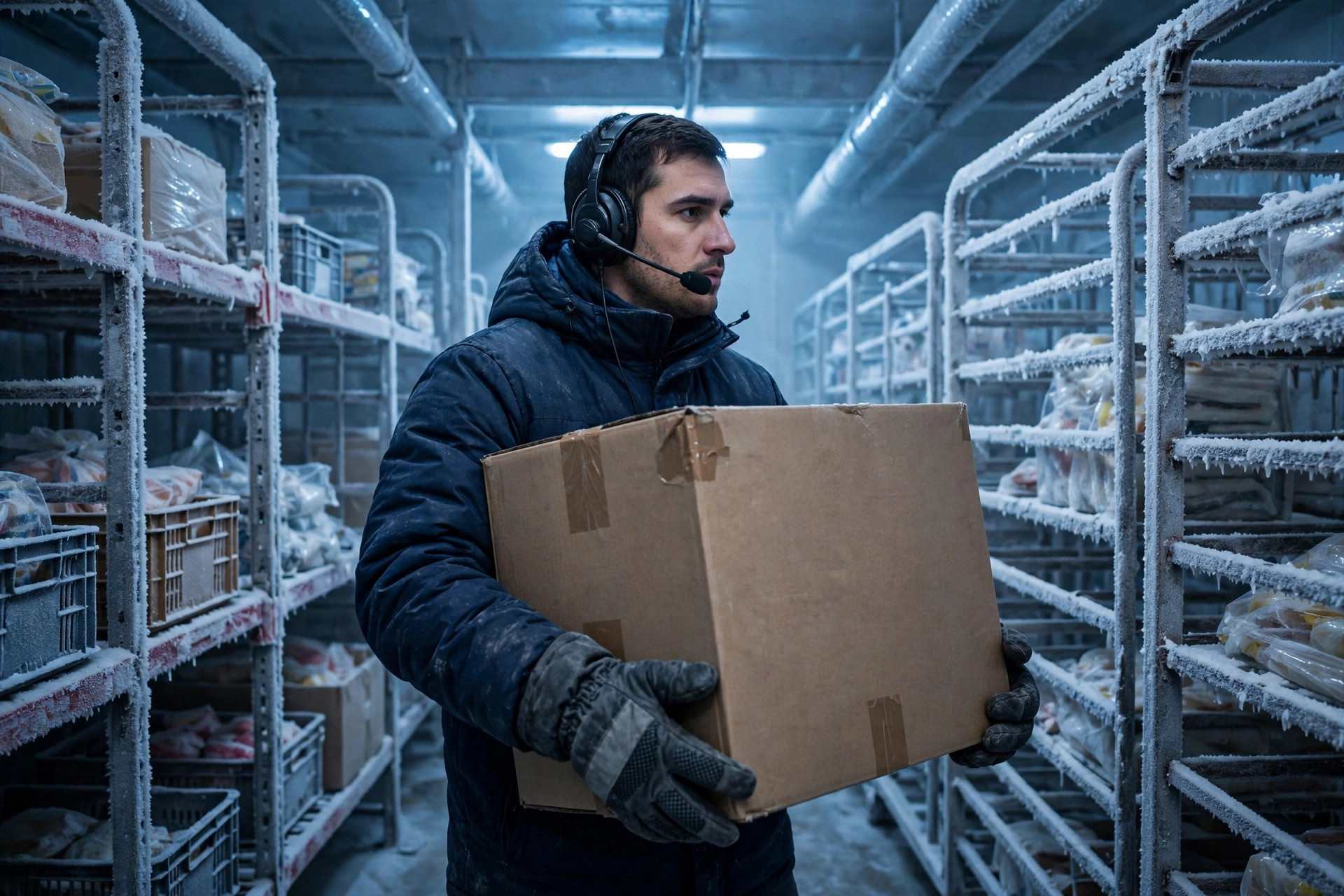
| Dimension | PTL | Voice picking | RF handheld | |---|---|---|---| | Sweet spot | Piece pick, small items | Case pick, large items, freezers | General purpose | | Error rate | <0.05% | ~0.1% | ~0.3% | | Speed gain | 30–50% | 15–25% | Baseline | | Unit investment | $20–55/location | $1,100–2,100/operator | $400–850/unit | | Location stability required | High | Low | Low | | Best for | High-density piece pick | Gloves / hands-busy | Flexible general use |
One line: fixed locations + dense orders + piece picking → PTL; hands occupied + shifting locations → voice; a bit of everything → RF as the base.
Case Study: 90 Days After PTL Go-Live at a Beauty E-Commerce DC
Background: a beauty e-commerce DC in East China — 12,000 piece-pick lines/day, ~3,500 SKUs. Previously RF-based with a 0.6% error rate; promotions brought complaint spikes.
Solution: 2,800 PTL points (domestic labels) across 4 wave zones, WMS dispatching light tasks by wave, scan verification added for high-value SKUs.
Results at 90 days: pick rate from 95 to 142 lines/hour; error rate from 0.6% to 0.04%; new-hire training from 10 days to 3; project cost ~$80K (¥580K), payback ~14 months on 14 fewer operators plus error-cost reduction.
Pitfalls
- Think before major re-slotting: PTL labels follow the racking — a category overhaul means tearing down and reinstalling labels. Get ABC zoning right up front; put A-movers in the PTL zone and keep C-movers out.
- The confirm button isn't decoration: some sites allow "batch confirm" for speed — that throws away half the error-proofing value. Enforce one-light-one-confirm; add scanning for valuables.
- Keep spares: labels are consumables — stock 3–5% of point count and replace failures same-day.
- Don't ignore ambient light: over-lit pick zones drown out the indicators. Test under real operating light levels.
Takeaway
PTL turns "people find goods" into "goods find people" — one lamp doing the two most brain-intensive steps for the picker. If your warehouse checks all three boxes — dense orders, stable locations, piece picking — a PTL system typically pays back in just over a year, making it the highest-ROI starting point in piece-pick automation. But it can't fix chaotic slotting or sloppy management: no lamp shines through a messy rack.