When Both Hands Are Busy
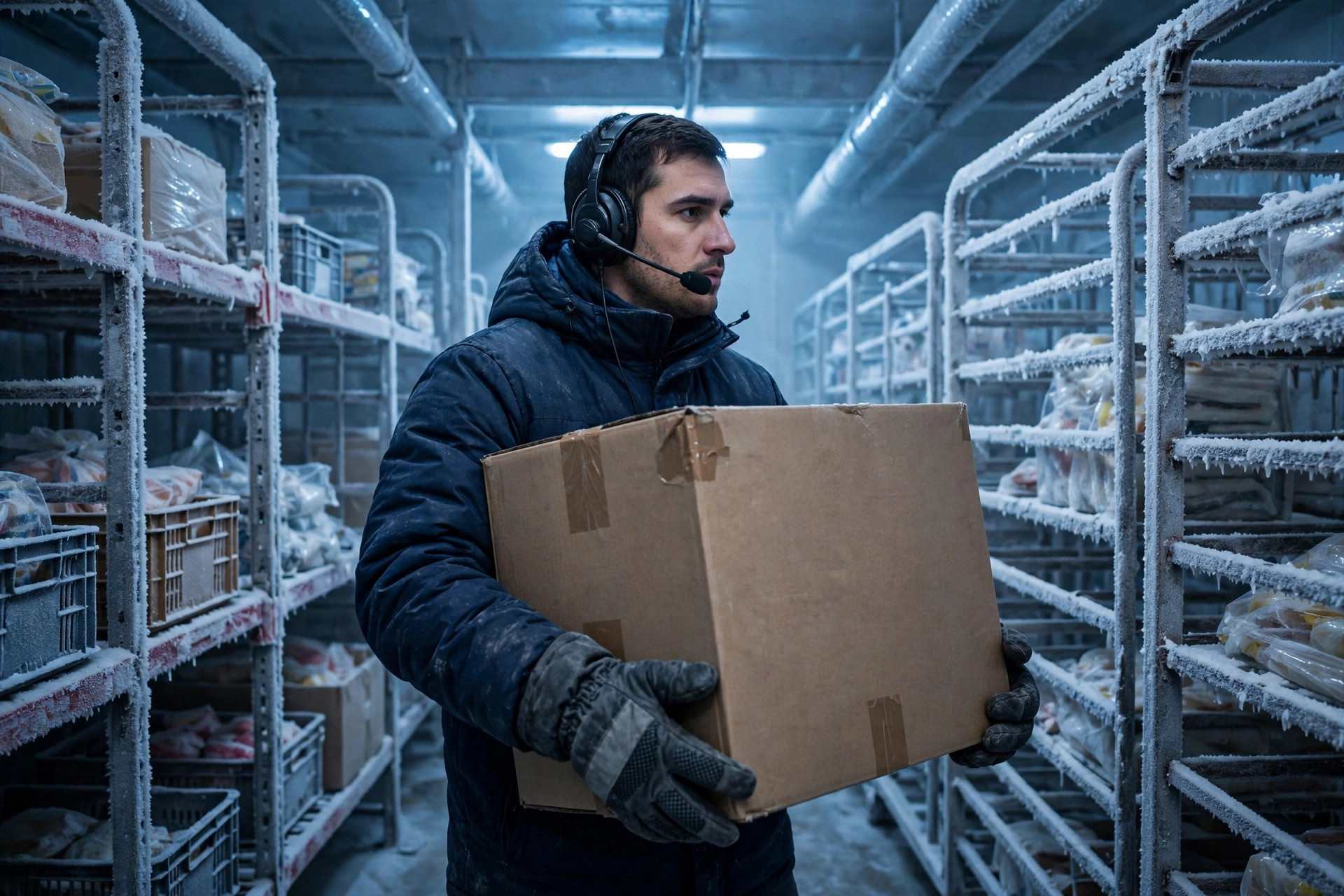
Picture two scenes: in a freezer, pickers wear thick gloves and can't operate an RF gun's keypad at all; in a case-pick zone, the picker is carrying a 20 kg carton with both hands — no hand left for reading lists or scanning.
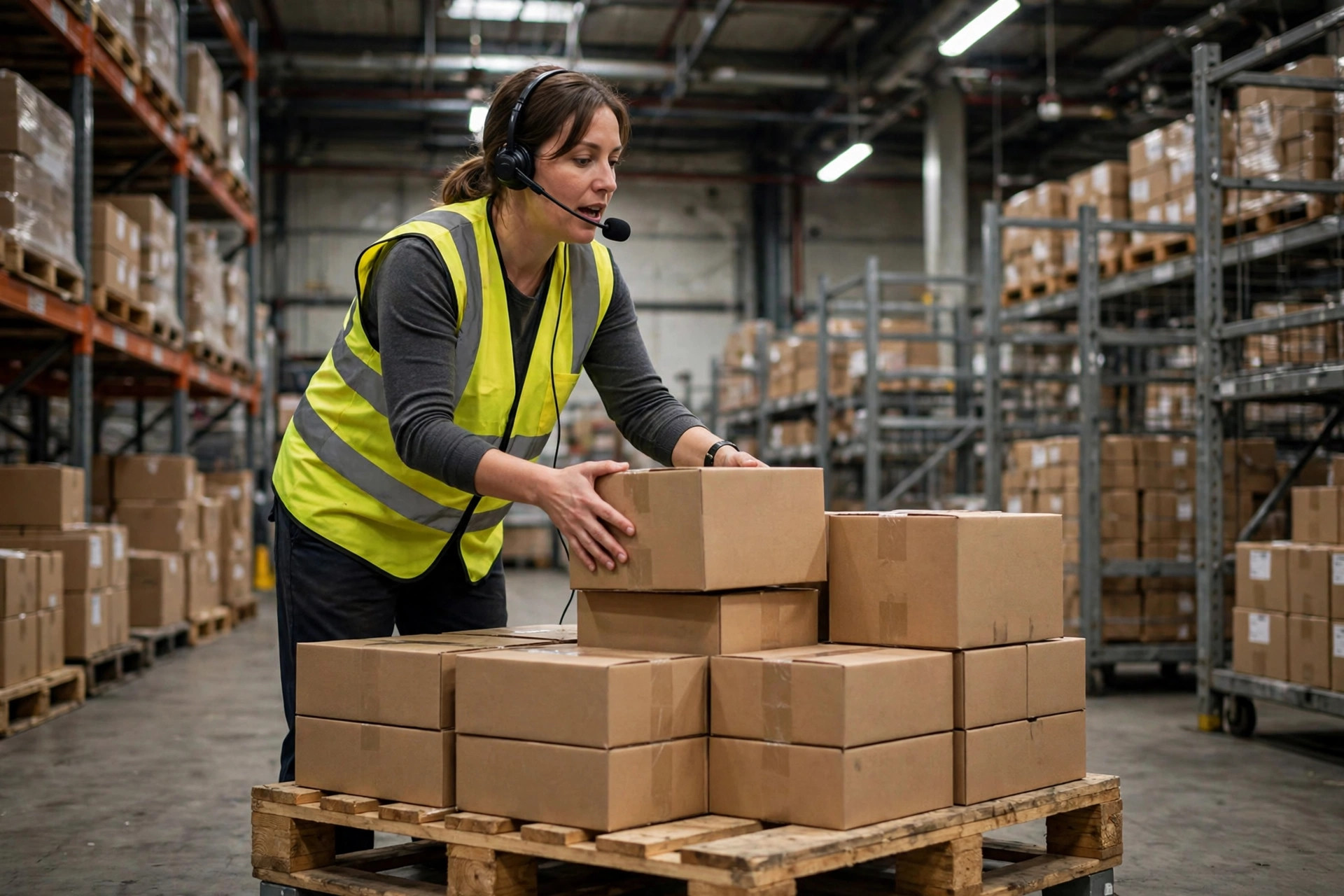
The bottleneck in traditional picking isn't legs, it's "hands and eyes" — eyes reading lists, hands holding guns, pressing keys, scanning. Voice picking (pick by voice) simply eliminates both: put on a headset with a microphone, and the system talks you through it — "go to A-03-2, pick 5 cases." You grab the goods and speak the check digits of the location into the mic; the system verifies and issues the next instruction. Hands free, eyes free, all shift long.
1. How It Works: Ears and Mouth Replace Eyes and Hands
A voice-picking system centers on a dialog engine:
- Task dispatch (system → human): the WMS sequences pick tasks along the optimal path; the voice server announces them one by one — "go to aisle 7, location 12, pick 4 cases."
- Execution confirmation (human → system): the picker arrives and speaks the check digits of the location code (e.g., location A0712 → "12"). The system matches them before releasing the quantity prompt.
- Quantity confirmation: the picker speaks the actual picked quantity; the system compares against the order and immediately flags discrepancies for recheck.
- Exception handling: shorts, damages, quantity mismatches all have voice commands ("skip," "short pick," "damaged") — no need to touch a device.
Check digits are the soul of voice error-proofing: they force the picker to say where they are, not assume where they are — catching wrong-location errors before anything is picked.
2. Where It Pays: Three Warehouse Types
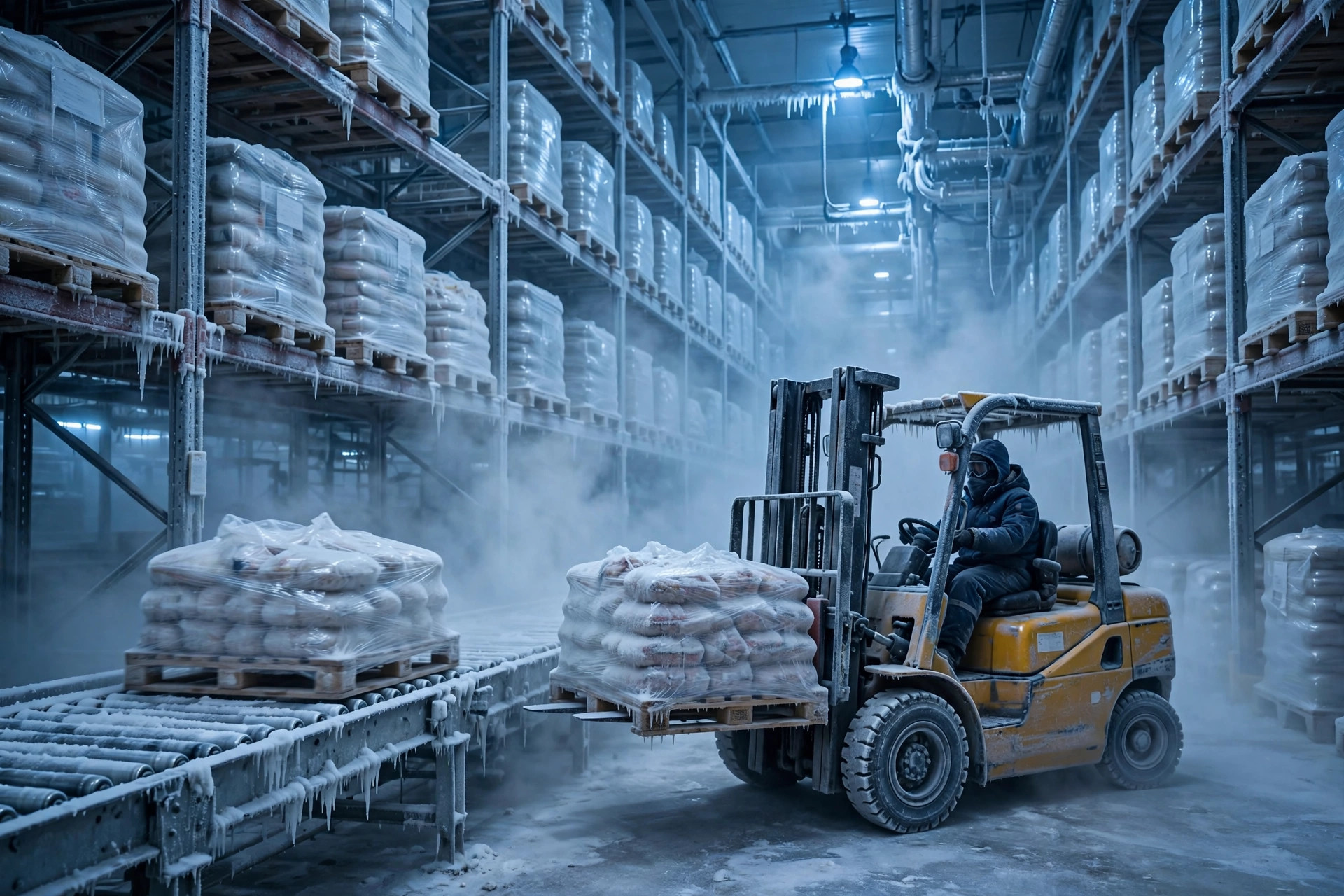
- Freezers / cold chain: gloves make RF guns unusable; voice is the natural answer. In -25°C environments, just specify low-temperature headset terminals — nobody removes gloves.
- Case / full-pallet picking: hands moving heavy cartons, eyes needed for the path. Warehouses shipping mostly full cases — food and beverage, large-pack personal care, auto parts — run 15–25% faster on voice than on RF.
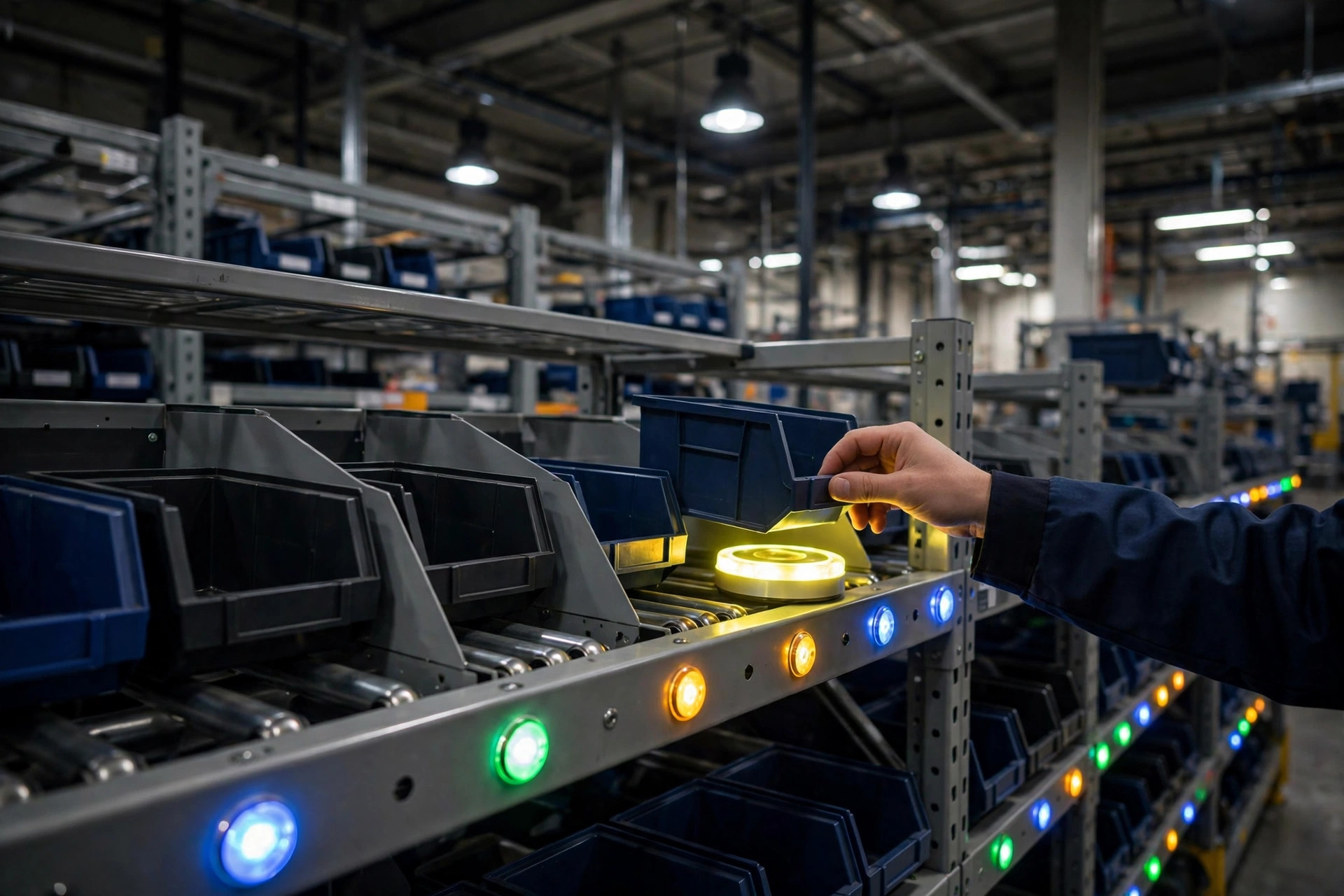
- Warehouses with shifting locations: unlike PTL, which needs fixed labels, voice only needs location codes — re-slotting costs zero in hardware. Maximum flexibility.
Conversely, dense small-item piece picking belongs to PTL's lights; ultra-slow movers with very few order lines are cheaper on RF. Voice's sweet spot is "big items, full cases, busy hands."
3. Five Implementation Must-Dos: From Voice Templates to Check Digits
- Voice template training: each picker spends 20–30 minutes "teaching" the system their voice (reading 50–80 words) before going live. Modern speaker-independent recognition works without it, but a template pass lifts accuracy — especially for teams with strong accents.
- Keep prompts short: compress "please proceed to aisle seven, location twelve" to "aisle 7, location 12." Every syllable costs time; over thousands of announcements a day, one saved word saves minutes.
- Enforce check digits: no check digit, no next task — this is the accuracy floor. Don't disable it for speed; the day you do, error rates will teach you why it existed.
- Manage noise: warehouses are loud (forklifts, fans). Use noise-canceling microphones; consider bone-conduction headsets in high-noise zones. Survey site noise before implementation — areas above 85 dB need dedicated treatment.
- Integrate deeply with WMS: voice is only the interaction layer; the pick logic (waves, routing, verification) lives in the WMS. Map every exception flow — short picks, damages, carton changes — into voice commands. Leave no "go find the supervisor" gaps.
4. The Numbers: What Free Hands Buy You
- Pick productivity: in case-pick scenarios, 20–35% over paper, 10–20% over RF;
- Error rate: from 0.5–1% on paper down to ~0.1%;
- Training: new hires productive in 1–2 days — just follow the voice;
- Per-operator investment: headset terminal + software license runs $1,100–2,100/person — far below PTL's per-location cost.
| Dimension | Voice picking | PTL | RF handheld | |---|---|---|---| | Hands-free | Yes | Yes | No | | Location stability required | Low | High | Low | | Freezer suitability | Excellent (gloves on) | Fair | Poor | | Unit cost | $1,100–2,100/operator | $20–55/location | $400–850/unit | | Sweet spot | Case pick, freezers | Dense piece pick | General purpose |
Case Study: Voice Goes Live at a Cold-Chain DC
Background: a cold-chain DC in South China — -18°C freezer, mostly case picking, 4,000 cases/day. Previously paper-based with thick gloves: pickers removed gloves for every order to read and sign, error rate 0.8%, and the constant glove on-off in the cold was miserable.
Solution: 30 voice terminals (low-temperature headsets), WMS integrated with the voice server, two check digits added to every location code, full exception-command mapping.
Results at 6 months: pick productivity up 28%; error rate from 0.8% to 0.12%; new-hire training from 5 days to 2; the surprise bonus was morale — no more glove juggling in the freezer, and complaints dropped sharply. Project cost ~$55K (¥400K), payback 11 months.
Pitfalls
- Don't force it into high-noise zones: recognition drops near compressor rooms and loading docks. Survey noise first, then design — use zones where needed.
- Test with real accents and dialects: pilot with frontline workers, not office staff. Teams with non-standard pronunciation need a two-week pilot measuring recognition rates.
- Battery life: a headset terminal must survive an 8–10 hour shift — provision spare batteries at 1:1.5 and put charging cabinets in the vestibule.
- Don't buy hardware only: WMS integration and process design decide success; software and implementation services should be at least 40% of budget. Buying on hardware price alone guarantees trouble.
Takeaway
Voice picking swaps "look and press" for "listen and speak," giving hands back to the material handling itself. In case picking, freezers, and hands-busy scenarios, it's among the highest-ROI pick technologies. But it's no silver bullet: noise, accents, and process discipline each need to be solid, or the voice in the headset becomes just noise. Pilot first, then scale — two weeks of frontline voting beats any vendor slide deck.