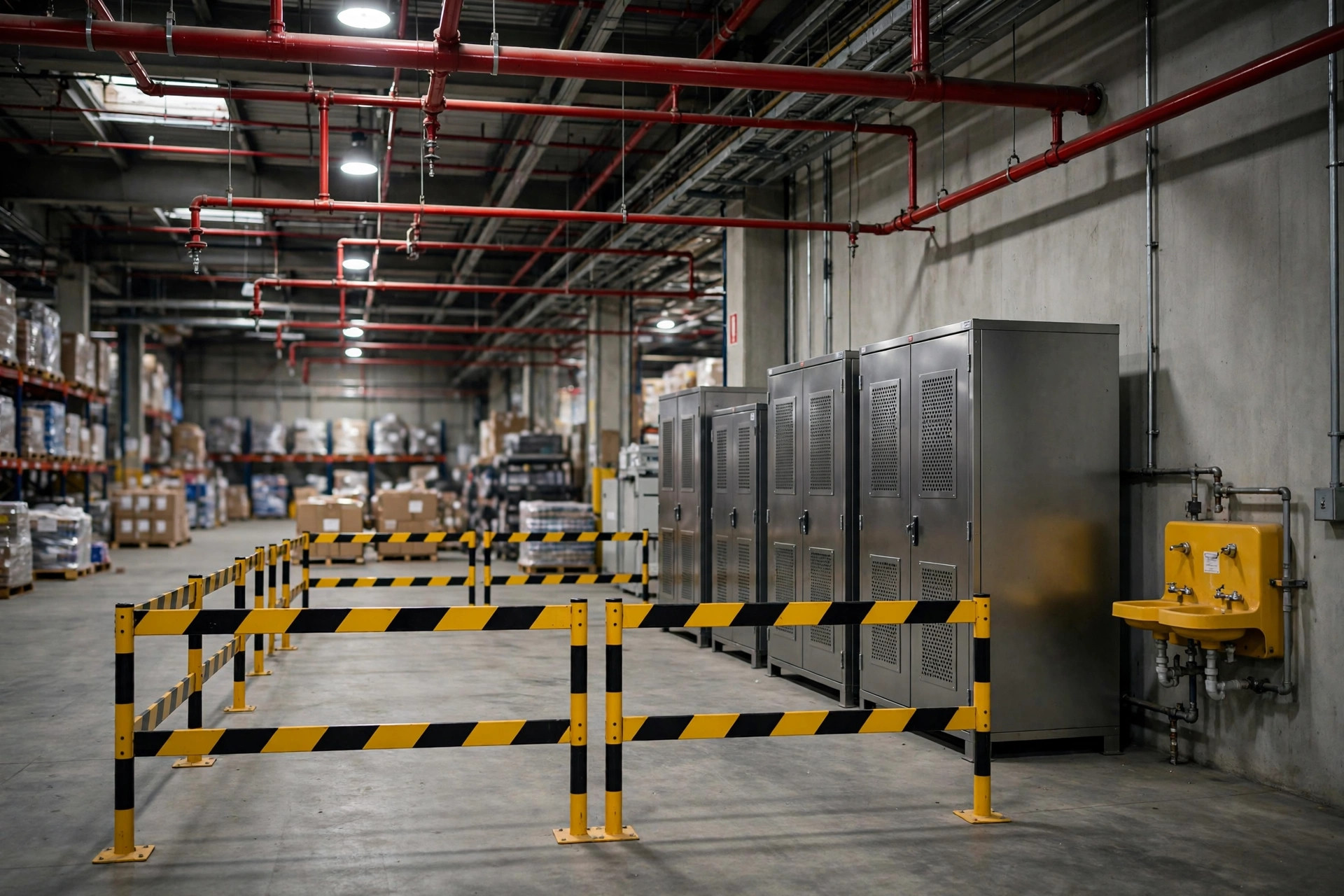

Peak season 2023. A 120,000-square-foot 3PL in Ontario, California gets a call from a big client: we need 40 more pickers, tomorrow. The owner's move was straightforward — two staffing agencies, bodies on the floor the next day. The bill rate ran nearly 50% above a direct hire's hourly wage, and he ate it, because freight had to move. Three months later, a letter from the Labor Commissioner asked for the written quota disclosures. The warehouse froze: turns out temp workers count toward headcount, and they get the same written notice. That year the facility spent over $900,000 on temp labor. The compliance penalties were extra.
Here's my verdict up front: temp labor doesn't buy you cheap. It buys you flexibility. Let me break down what it really costs and where the compliance lines are.
Where the money actually goes: reading the bill
A staffing agency's math is simple. The worker's take-home is the pay rate; what you pay is the bill rate; the spread is the markup. For light industrial and warehouse roles, that markup typically runs 35% to 60%. Do the arithmetic: a picker takes home $18 an hour, a 45% markup puts your bill at $26.10 an hour.
Now the true cost of a direct hire at $18 an hour: payroll taxes, workers' comp, unemployment insurance, plus recruiting and management overhead — roughly another 25% to 30% on top. Same $18 role, a direct employee costs you about $22.50 to $23.40 an hour all-in, versus $26.10 for the temp. Three dollars an hour sounds trivial until you scale it: a 40-person crew through a three-month peak (about 500 hours each) costs you an extra $60,000 to $80,000.
The hidden costs off the invoice are worse. First, attrition: temps don't always show up. An 80% show-up rate through peak is decent, and on the days they don't, your direct crew covers with overtime — which you also pay. Second, sunk training: every new temp needs two to three days to get productive, and when they walk, that investment walks with them. Third, injuries: unfamiliar workers in their first 30 days are your highest-risk population, and one workers' comp claim brings premium hikes and downtime. Fourth, conversion fees: many agency contracts charge a fee to hire a temp onto your own payroll — sometimes starting around 25% of annual salary and stepping down to zero after a set number of hours. Check your contract terms; the number varies. If you don't read that clause at signing, it becomes a surprise line item at conversion.
So stop asking whether temps are cheaper. The right question is whether the flexibility premium is worth it.
Line one: AB701 doesn't only cover your direct employees
California's AB701 took effect January 1, 2022, and it regulates quota systems in warehouses. It applies to facilities with 100 or more employees at a single warehouse distribution center, or 1,000 or more warehouse employees statewide in California. The part that sinks people: agency-supplied workers count toward headcount and are covered by the law.
What does it require? At hire, every worker gets a written description of any quota: how many tasks or units, in what time period, and what adverse action follows if they miss it. Quotas can't prevent compliance with meal and rest periods, bathroom breaks — including reasonable travel time — or OSHA safety requirements. A quota that squeezes those out is itself unlawful. Workers can request their own personal work-speed data for the last 90 days, and any adverse action within 90 days of such a request or complaint carries a rebuttable presumption of retaliation. Enforcement sits with the Labor Commissioner.
That Ontario warehouse fell into the trap I see everywhere: "they're the agency's people, disclosure is the agency's problem." Wrong. Under AB701, the warehouse operator owes the written disclosure to everyone working the floor, no matter whose name is on the paycheck. My low-tech fix that actually works: a one-page quota sheet per workstation, written in the language the workers read, signed and filed, with a copy to the agency. That piece of paper is cheaper than a lawyer.
Line two: they're the agency's employees, but not only the agency's problem
The staffing agency is the employer of record: W-2 wages, tax withholding, workers' comp, unemployment insurance — all baked into the markup. But the law looks at actual control. Whoever sets the schedule, sets the quota, and runs floor discipline can be found a joint employer. When something goes wrong, "he's just a temp" doesn't get you out of it.
Here's the one supervisors step on most: temp workers have the same protections against discrimination, harassment, and retaliation as direct employees. "He's a temp, just call the agency for a replacement" is an expensive sentence in a courtroom. You can end an assignment, but the reason and the process have to survive scrutiny — same standard as your own people.
Don't touch the 1099 line. Paying someone who works full-time, long-term hours as a 1099 independent contractor doesn't survive California's ABC test under AB5. The taxes and insurance you "saved" come back with interest in one audit. When in doubt, write it into policy: frontline warehouse roles are W-2 only; 1099 is reserved for genuine project-based contractors — and check current official guidance for the latest classification rules.
Overtime is the line item everyone forgets to budget. Federal law: 1.5x past 40 hours a week for nonexempt workers. California is stricter: 1.5x past 8 hours a day, 2x past 12. The agency cuts the overtime check, but the overtime bill rate flows straight through to your invoice. Running temps on 12-hour shifts through peak doubles that portion of the bill — model it as its own line.
Safety training documentation stays with you. OSHA training, forklift certifications, PPE issuance — whether the agency did it and whether there's a paper trail, you need your own copy. After an injury, the site operator gets the first questions.

Don't underestimate the 10-minute pre-shift huddle. I have leads take attendance, state the day's quota and the safety topic, and file the sign-in sheet. AB701 is all about this kind of paper trail: did you disclose, and did it reach every person. With temp turnover, this daily habit is the only thing that keeps you covered.
When to convert: write the answer into the contract
My rule of thumb: if you've staffed the same role with temps for more than 90 days straight, or you've trained the same worker twice, it's time to run the conversion math. Simple comparison: the conversion fee (or your own recruiting cost for a direct hire) against the ongoing markup spread — it usually pays back in four to six months. Keep temps on the volatile roles (picking, packing through peak); convert the roles where experience compounds — slotting knowledge, systems fluency, forklift operation. Every time one of those walks, you lose real money.
When you sign an agency contract, read these clauses before anything else: how the conversion fee is calculated and after how many hours it drops; who pays first on a workers' comp claim and the coverage limits; annual proof of the agency's workers' comp and employer's liability insurance; confidentiality — temps turn over fast, don't let customer data walk out the door; and termination terms — how many days' notice when peak ends and you cut headcount.
One thing you can do tomorrow: pull your current temp roster and check three things — does every person have a signed AB701 quota disclosure on file, what page of your agency contract holds the conversion fee clause, and whether anyone on last month's overtime invoice worked back-to-back 12s. If all three are clean, you're in good shape on this topic.
And one question to sit with: after peak ends, what direct-hire ratio are you targeting? That number decides whether you're playing offense or defense this time next year.