Last fall I was doing a process audit at a 3PL warehouse in the Inland Empire, and the first thing the warehouse manager complained about wasn't pick efficiency. It was this: "You know what we dread most at month-end? Counting trailers."
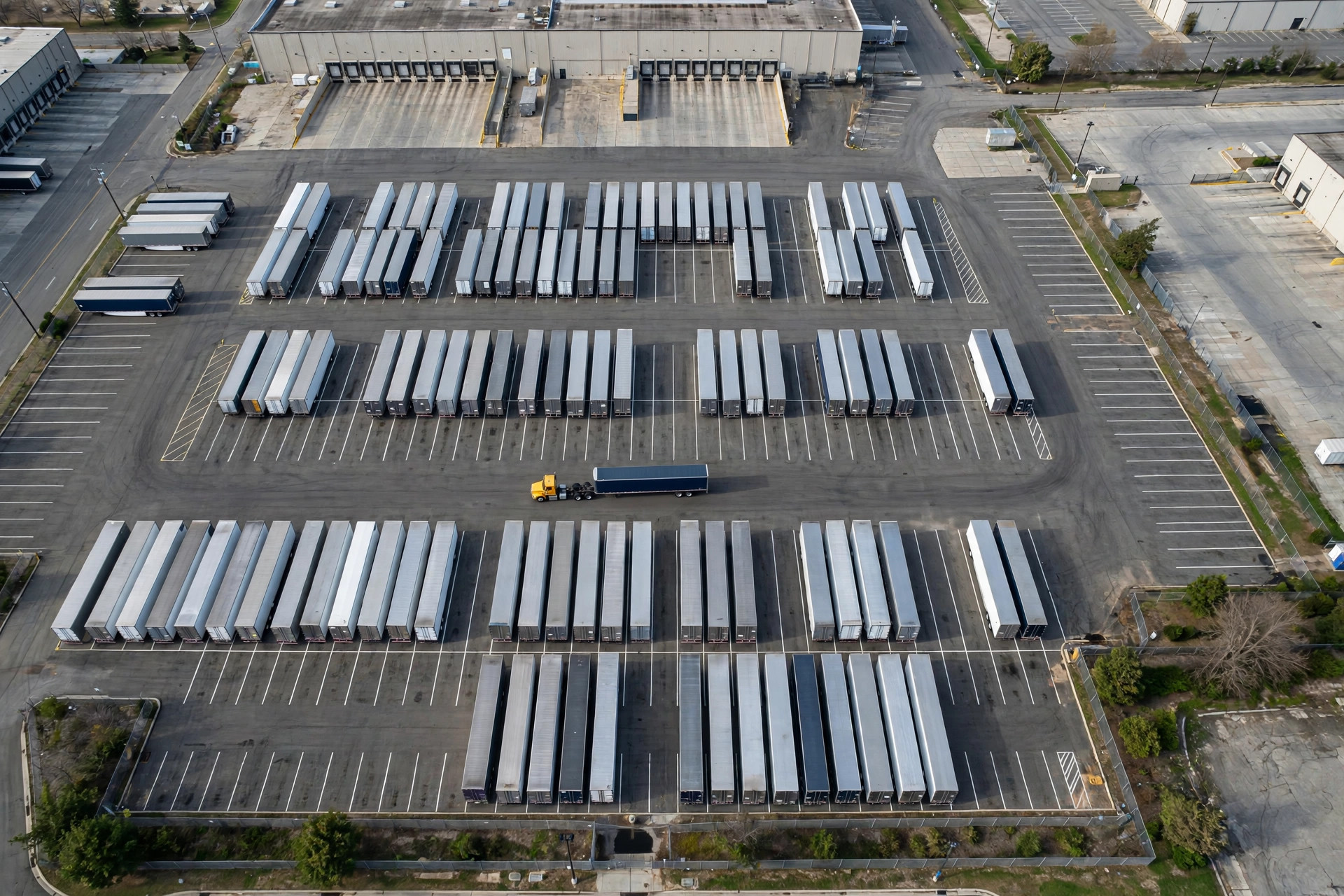
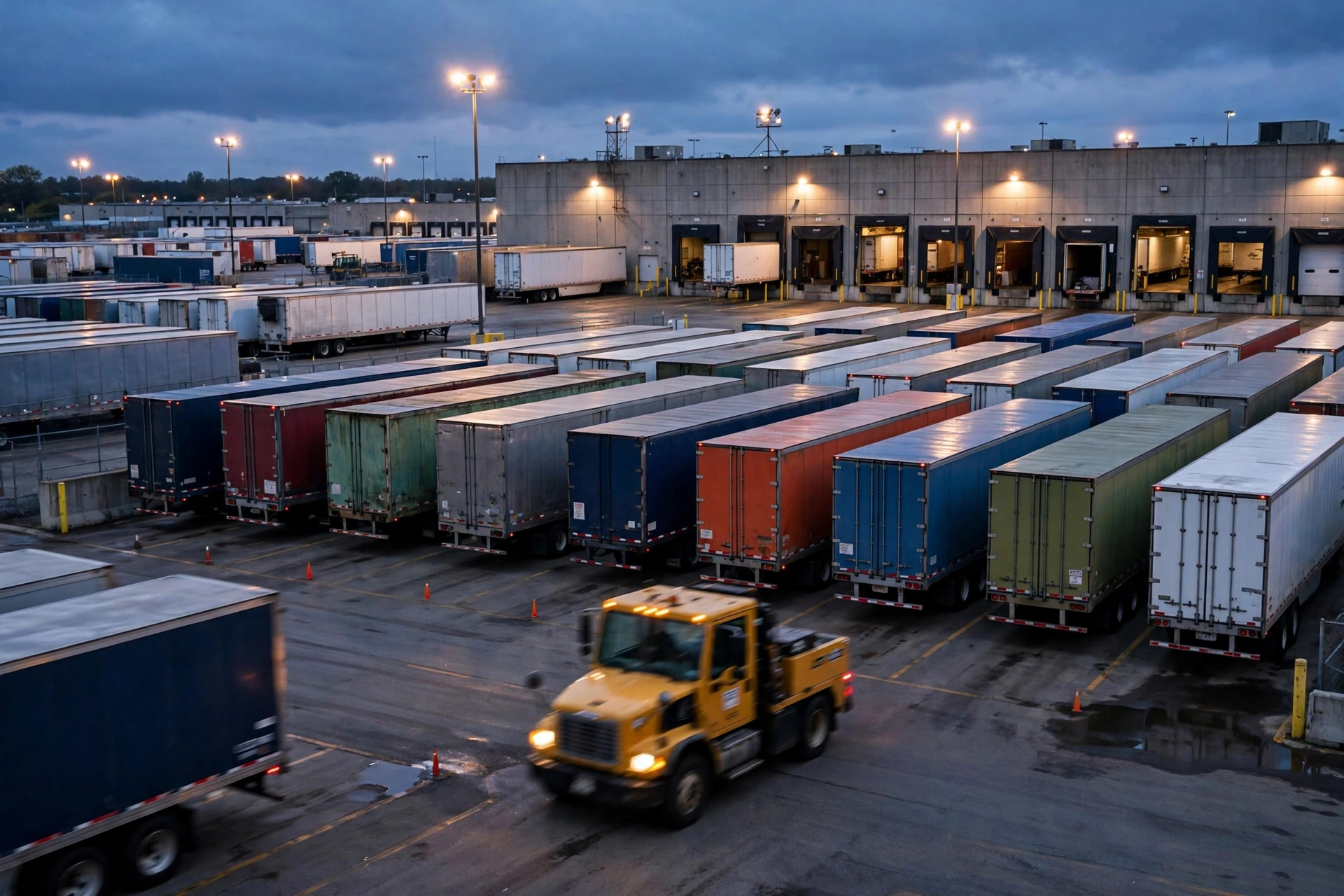
They had over 120 trailer spots. Loaded trailers, dropped empties, units sitting in the repair area, drivers who hooked and left without telling anyone — nearly 150 trailers scattered across the yard. At month-end, two people would drive a yard jockey around in circles, copying trailer numbers one by one. An entire morning gone. Back in the office, they'd reconcile the list against the records — didn't match. Count again. Still three short. Turns out one trailer had been picked up by a driver that morning with no record, one was parked in the repair area hidden behind a container, and one number had been misread because the plate was caked in mud.
Here's my verdict up front: the old-school way of counting trailers isn't wrong — it just has a hard ceiling. Once your yard passes about 60 trailer spots, or 20 moves a day, the manual method costs more than a YMS subscription. I'll show you the math.
What the Old-School Method Actually Looks Like
Don't laugh — this is what most small and mid-size US warehouses still run on. Let me walk you through it.
Morning shift starts. The yard office has a whiteboard with a hand-drawn map of the yard, trailer numbers scribbled into each zone. A driver arrives; the guard handwrites a gate slip: license plate, trailer number, time, appointment number, and clips it into a folder. The trailer gets dropped; the yard jockey remembers from experience that "this one goes to C-12." Outbound loading time: the dispatcher radios, "Hook up 53048 in zone C."
Sounds workable, right? The problems are all in the details.
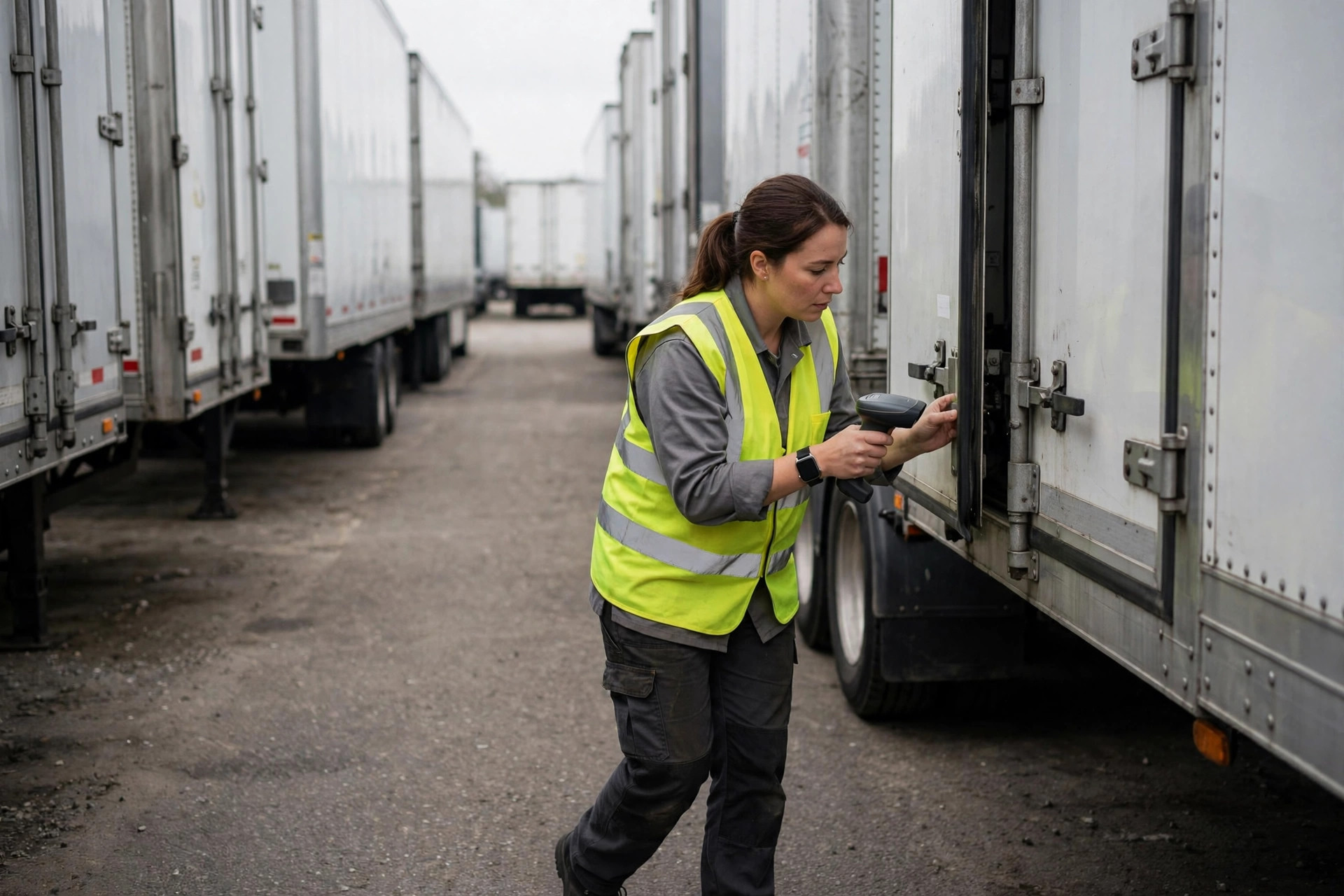
First, misread plates are routine. Trailer numbers sit on the rear doors. Mud, water, rust — add a winter rainstorm and misreading one digit is completely normal. One site I know mixed up two trailers whose numbers differed by a single digit, loaded the wrong freight, got a refused delivery, and spent two days sorting it out.
Second, locations live in people's heads. The yard jockey calls in sick for a day and the replacement has no idea where anything is — just drives around the whole yard. In peak season with 40+ moves a day, location information goes stale within hours.
Third, paper is always behind reality. A driver drops an empty at 6 AM and leaves; the guard doesn't start until 8. For two hours the dispatcher thinks there are five empties available when there are really three — and the loading plan is already wrong.
I've costed this out: a 120-spot yard typically needs two dedicated yard staff. At California wages around $55K a year, that's $110K annually. And that doesn't include demurrage from miscounts, claims from misloads, or the complaint calls from customers asking "where is my trailer?"
What a YMS Actually Does for You
A yard management system does one thing: it makes every trailer's location and status visible in real time. Nothing mystical — four core functions:
First, automated gate check-in. Vehicles pass the gate, license plate recognition plus driver badge, and the trailer number and timestamp enter the system automatically. No more handwriting. One site I worked with went from an average 3-minute gate process to 20 seconds.
Second, a live map of trailer spots. Which spot is empty, which has a trailer, whose it is, how long it's been sitting — the dispatcher sees it all on screen. Month-end count? Click a button, the report comes out. Two people driving around all morning becomes a five-minute job.
Third, dwell-time alerts. Trailers parked beyond the agreed free time get flagged automatically. Plenty of 3PL-carrier contracts allow 48 hours free, then $75–$150 per day. Under the manual method this money basically never gets collected — you don't even know which trailers overstayed. A YMS turns that from "money we lost track of" into accounts receivable.
Fourth, appointment integration. Drivers book a time and a door; the YMS pre-assigns a spot, so they drive straight in instead of waiting at the gate while the dispatcher hunts through the whiteboard.
The Math
Here's a costing framework — plug in your own yard's numbers.
YMS subscription: mainstream products charge by yard size. For a 100–150 spot yard, expect roughly $15K–$30K a year. Implementation takes 4–8 weeks, mostly gate hardware and numbered spot signage.
On the return side, three buckets:
Labor. With a YMS, two yard office staff can drop to one — or the freed-up person moves to higher-value work. That's $40K–$50K a year saved. The most concrete line item.
Recovered dwell fees. For a 120-spot yard on the manual method, I've seen one site leak $80K a year in uncollected overstay charges. A YMS recovers most of it.
Hidden costs: misloads, customer complaints, month-end overtime. Hard to quantify precisely, but one manager told me that after six months live, customer calls asking "where's my trailer" went from a dozen a week to nearly zero.
My verdict: under 60 trailer spots and fewer than 15 moves a day, the manual method plus the optimization checklist below is fine — don't spend money you don't need to. Above that scale, a YMS typically pays for itself within a year. Delaying just means throwing money out every month.
If You're Not Buying a YMS, Max Out the Manual Method
Budget too tight, or yard too small? Get the manual method to a solid 90 points with this checklist:
- Number every trailer spot permanently — painted on the ground plus a standing sign. Locations live in spot numbers, not in someone's head.
- Standardize the gate slip: plate, trailer number, driver phone, appointment number, timestamp. All five, no exceptions. Photograph the trailer plate.
- Two scheduled yard walks daily (8 AM and 5 PM), signed off, with the whiteboard updated on the spot for any moves.
- Physically separate the drop zone from the repair area, with repair units logged separately — no more "couldn't find it, it was blocked."
- Friday afternoon reconciliation: system (or whiteboard) count versus actual walk count. Never let a discrepancy survive the weekend.
Done well, this keeps a sub-60-spot yard out of serious trouble. But remember — this only raises the ceiling of the manual method; the ceiling is still there. When scale arrives, buy the system.
One question to take home: how many person-hours does your month-end trailer count take? Multiply by the hourly rate, times twelve months. If it's over $20K, it's time to get serious YMS quotes.