Warehouse Electrical Fires: The Red Lines for Charging Areas and Electrical Rooms
At 11 p.m., a forklift's lead-acid battery started smoking in the charging area. The night-shift attendant had stepped away for five minutes. By the time he came back, smoke filled half the charging room. Lucky for them it was a windy night and someone spotted smoke seeping under the door — ten more minutes and the whole row of chargers plus the cardboard staging next to it would have been a different story.
A warehouse in Fresno told me that story two years ago, and ever since, the charging area and the electrical room are the two stops I never skip on a walkthrough. In fire-service statistics, electrical failure consistently ranks among the top causes of warehouse fires (check the latest NFPA report for current rankings). Yet most warehouses pour all their fire-prevention energy into sprinklers and extinguishers, and leave the electrical side to luck.
The charging area: the most underestimated fire source in the building
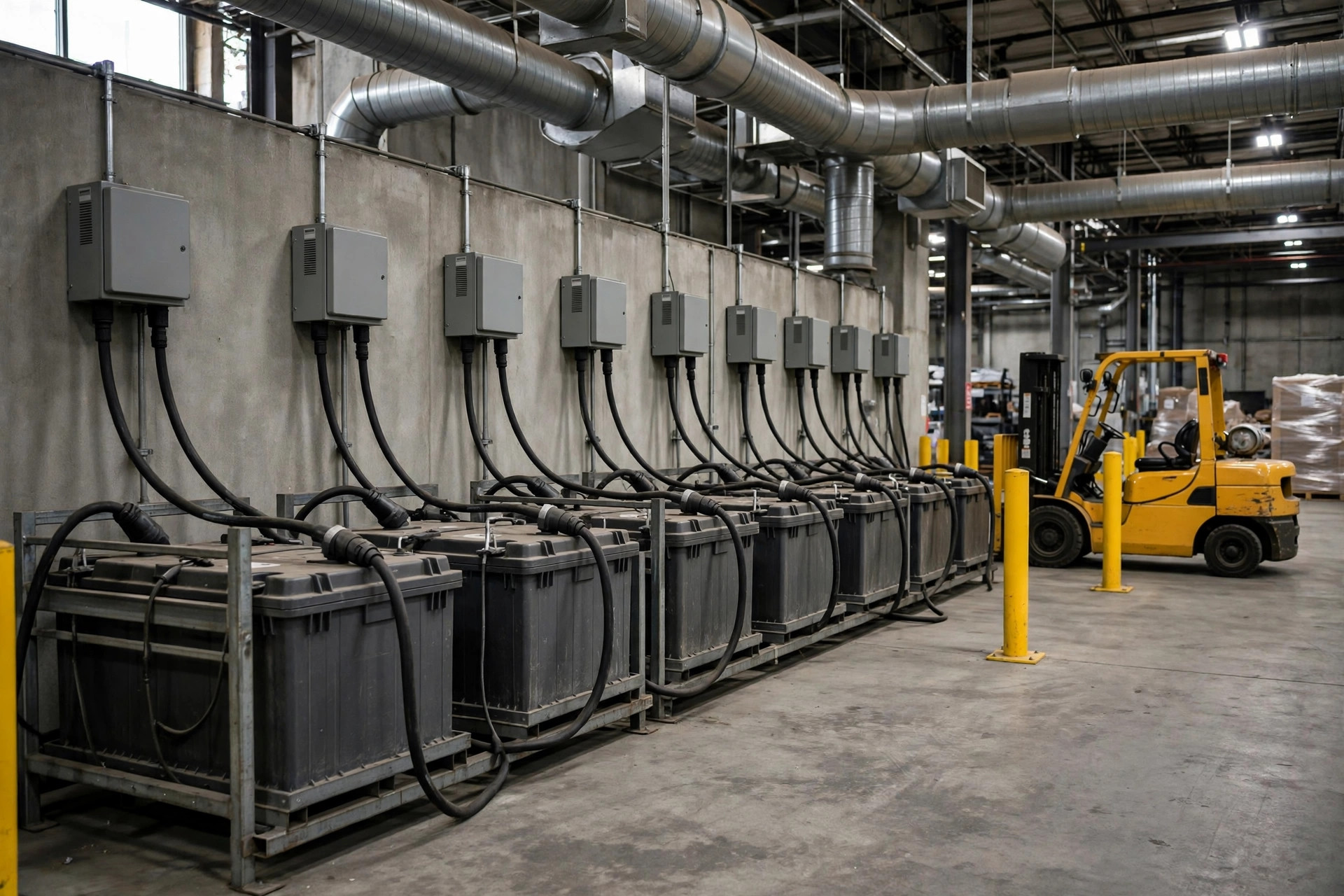
A mid-size warehouse charging area typically has a dozen or two forklifts and pallet jacks charging at once. Lead-acid batteries release hydrogen while charging; hydrogen's lower explosive limit is just 4%, so without ventilation it accumulates — and one spark is enough. Lithium batteries are worse in a different way: once thermal runaway starts, cell temperatures can shoot past several hundred degrees Celsius within minutes. A standard dry-powder extinguisher won't stop it; the playbook is isolate, alarm, and wait for the fire department (follow your local fire authority's latest guidance for specifics). Different failure modes, but the same set of red lines in management.
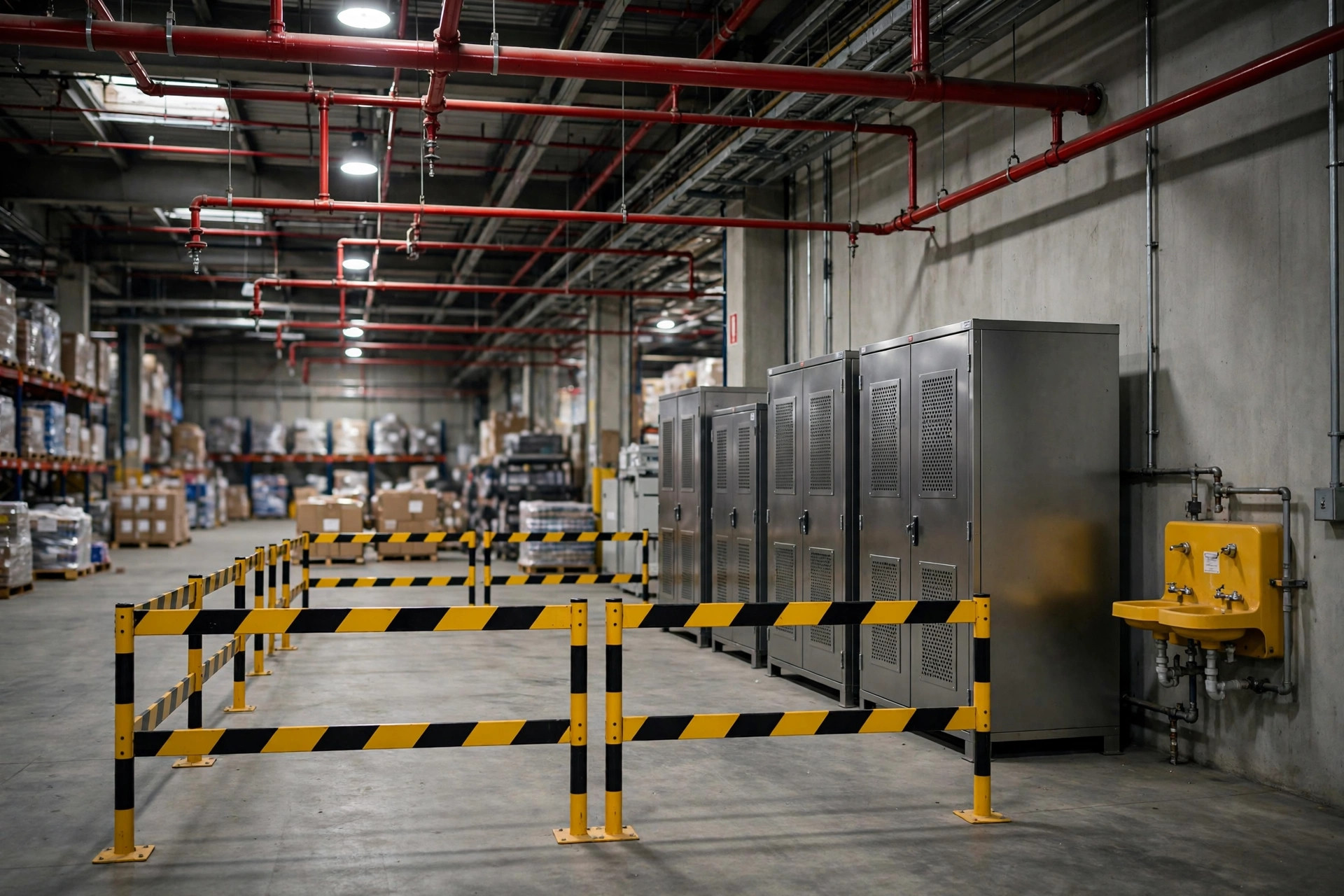
First, the charging area must be standalone. Not "a corner at the end of an aisle" — a dedicated enclosure, well away from cardboard, stretch film, and wooden pallet storage. The worst I've seen: charging racks back-to-back against a wall of finished-goods cartons, one meter apart. That's not a management gap, that's gambling.
Second, chargers must match batteries. Voltage, current, chemistry (lead-acid vs. lithium) — get any of them wrong and you get anything from a ruined battery to an overheated fire. Label every charger: which trucks, which battery type. When batteries get replaced, update the labels the same day. Don't rely on the veteran tech's memory.
Third, ventilation plus detection. The charging room needs mechanical ventilation — hydrogen is lighter than air and rises, so exhaust placement matters. Smoke detectors alone aren't enough; add heat detectors. Lithium thermal runaway shows up as rising temperature before visible smoke, and by the time you see smoke it's often too late. A handheld thermal camera costs a few hundred dollars; sweep charging batteries weekly and hot spots show up immediately.
Fourth, the iron rule: no charging without someone on watch. So many of these fires start between 2 and 4 a.m. because the night shift is thin and charging is unwatched. If you run 24 hours, put the charging area on the patrol route with sign-offs every two hours. If you don't, kill power before close, verify nothing's abnormal, and lock up.
Fifth, the details veterans know and new hires never get taught: open battery caps during lead-acid charging for heat dissipation, check electrolyte levels on schedule, top up with distilled water — never tap water. Put it in the SOP. Don't leave it to word of mouth.
The electrical room: locked, clear, electricians only
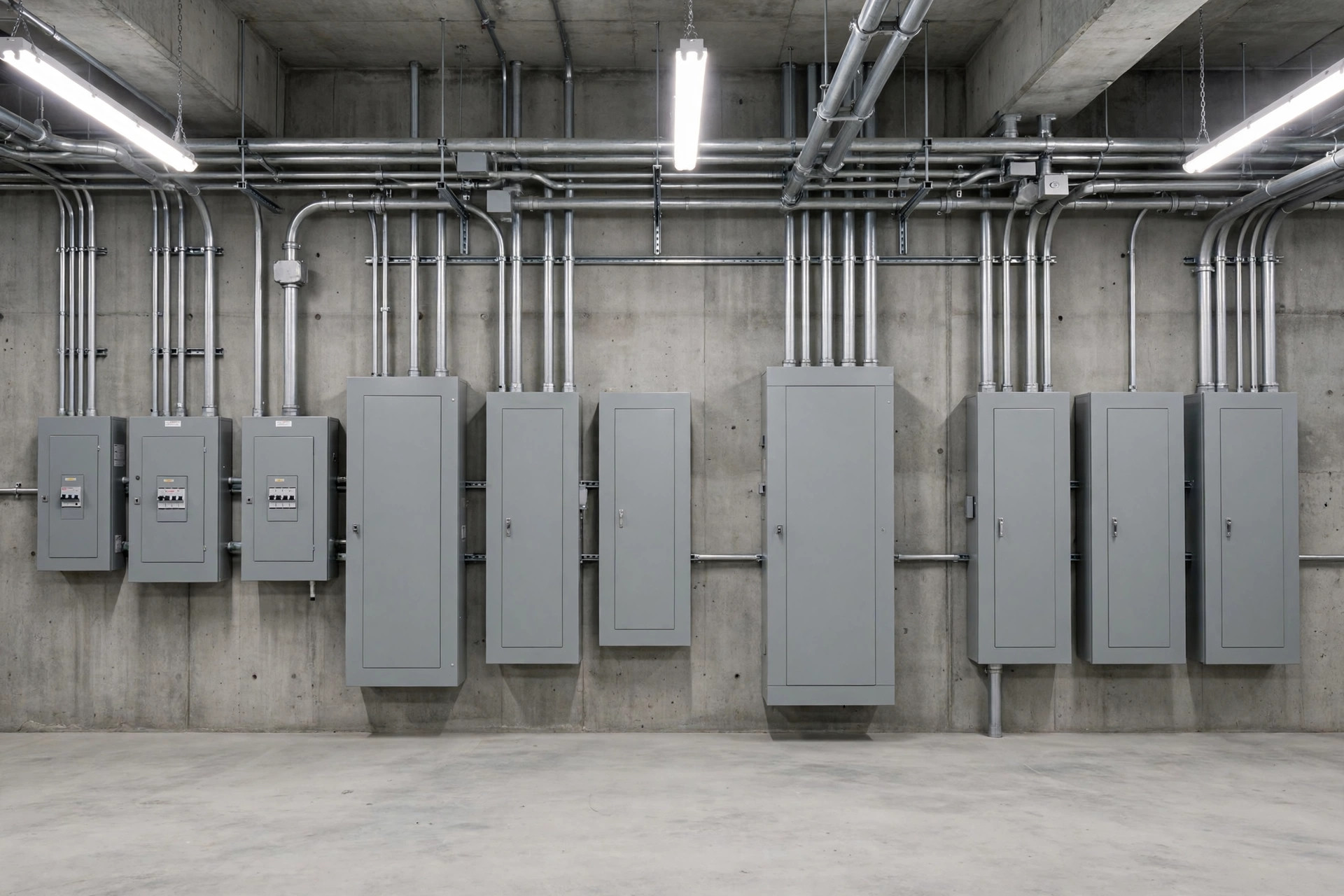
Electrical rooms fail less often than charging areas, but when they do, it's big. Three rules: locked, clear, licensed.
Locked means the door stays locked and only the electrician and the facilities lead hold keys. I've seen more than one warehouse where the key hung in the guard shack for anyone to grab. The door needs clear hazard signage.
Clear means working space in front of panels. OSHA has explicit requirements for working space around electrical equipment — for equipment under 600V, the depth in front of the panel is generally 3 feet (about 0.9 m), and the width no less than the equipment width or 30 inches, whichever is greater (verify against the current OSHA 1910.303(g) standard; requirements vary by voltage). I carry a tape measure on walkthroughs, and eight times out of ten the clearance fails — cartons, pallets, cleaning gear stacked right in front of the panels. In a real incident, the electrician can't even get close.
Licensed means only licensed electricians touch the gear. Unauthorized wiring is the chronic offender: peak season adds a few pack machines, the electrician is busy, so the shift lead runs a line out of the panel himself. I've seen those lines — undersized conductors, no conduit, joints wrapped in electrical tape — left in place for half a year. Every time I find one on a walkthrough, I require it de-energized and fixed the same day. No overnight exceptions.
One more: monthly infrared thermography on panel terminals to catch abnormal hot spots. A loose terminal means higher contact resistance and slow heating — the starting point of many electrical fires, invisible to the naked eye, obvious on a thermal scan.
A ten-minute weekly checklist
Electrical fire prevention doesn't need big spending. It needs frequency. Here's a checklist you can walk in ten minutes:
Charging area: Are the ventilation fans running? Are smoke/heat detector indicators normal? Any charger-battery mismatches? Are battery caps open? Any electrolyte leakage on the floor? Is last night's charging logged and signed?
Electrical room: Is the door locked? Is the 3-foot clearance in front of panels free of freight? Any new unauthorized wiring? Any abnormal buzzing or burning smell from panels? Was last month's IR scan done, and were the hot spots addressed?
Ten minutes, walk it, sign it. That stack of paper is your documented diligence when OSHA inspects or the insurer investigates.
The math is easy
A standalone charging-room retrofit: a few thousand dollars. Smoke plus heat detection: a few hundred. A handheld thermal camera: a few hundred. All together, maybe less than one month's forklift rental.
Now the other side of the ledger: one small fire means a day of downtime, freight damage, fire-department and environmental follow-up, and the insurance deductible — five figures before you blink. If it reaches the structure, the landlord's claim and lease default are a whole second lawsuit. An OSHA electrical-safety citation at the serious level starts in five figures (check OSHA's current penalty schedule), before counting the cost of shutdown for remediation.
One more note on insurance: many property policies let the carrier argue reduced payout or denial for electrical fires when "improper maintenance" can be shown — long-standing unauthorized wiring, freight stacked in front of panels. That weekly signed checklist is your shield when it matters.
Tomorrow's walkthrough: bring a tape measure and start at the panels — is the 3-foot clearance real? If not, move the freight first; that one doesn't wait overnight. Then check the charging area: who's on watch tonight, and is the charging log signed? Do those two things and you've grounded at least half of your building's two biggest electrical risks.