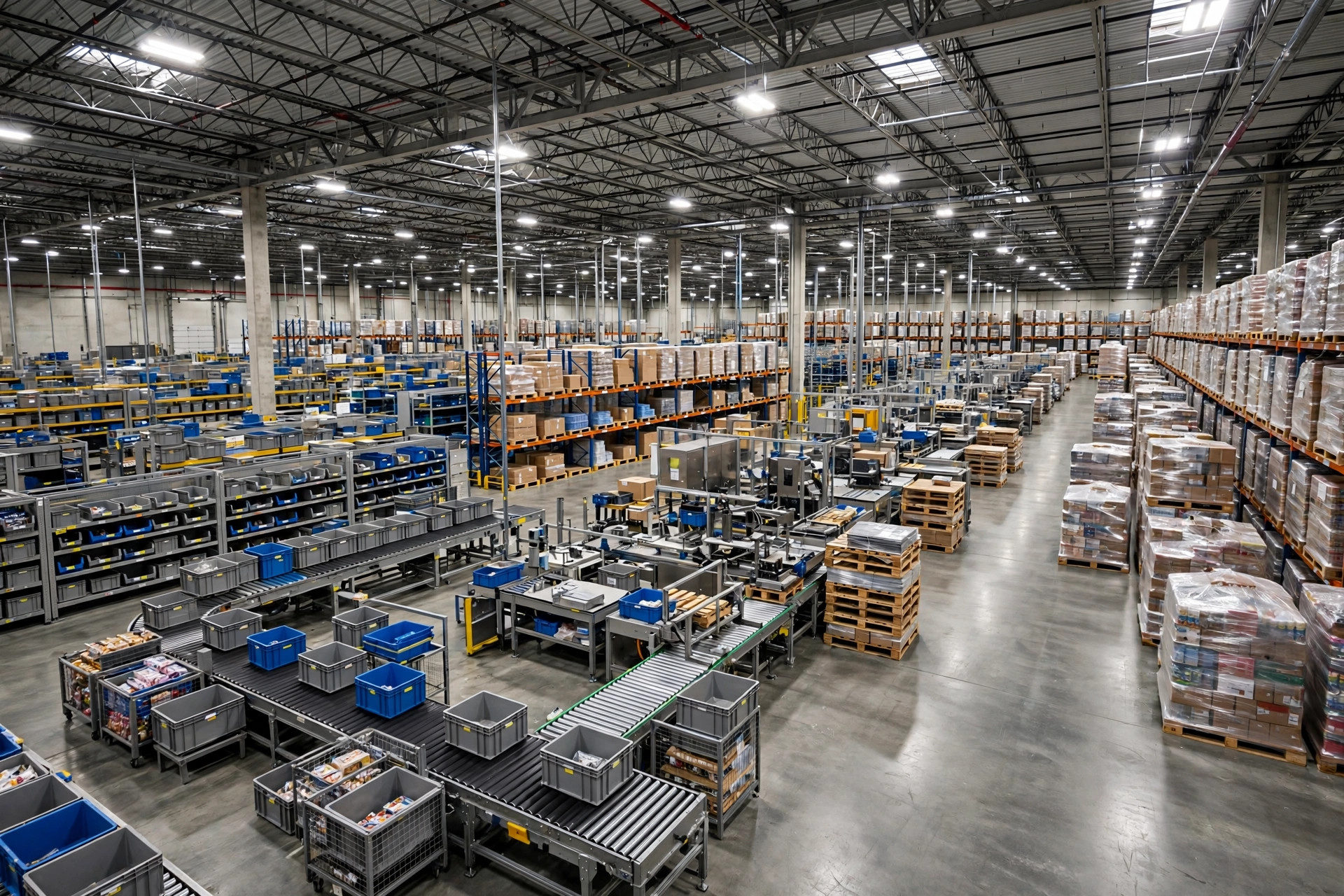
The Setup: One Drawing, Three Warehouses, Three Different Outcomes
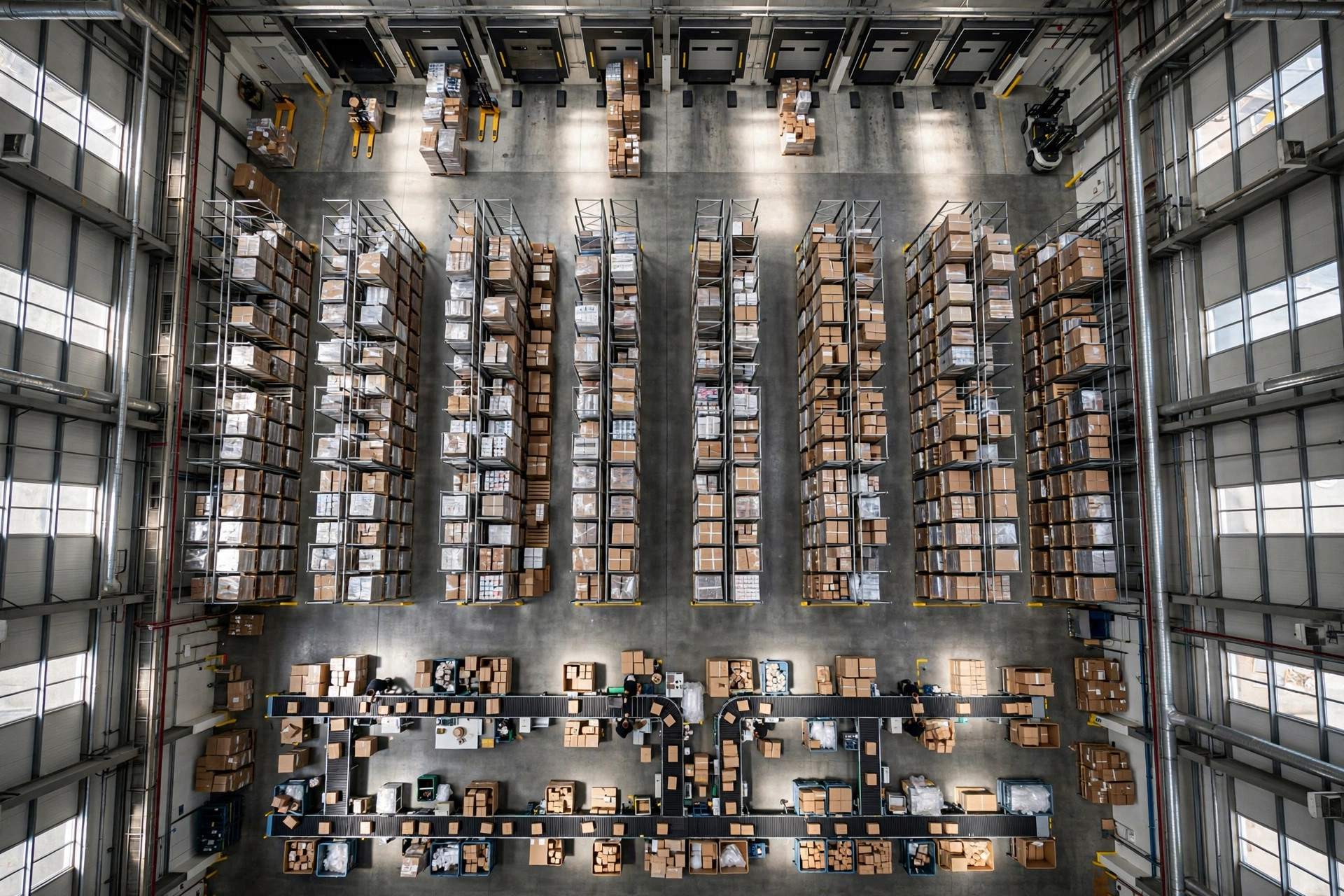
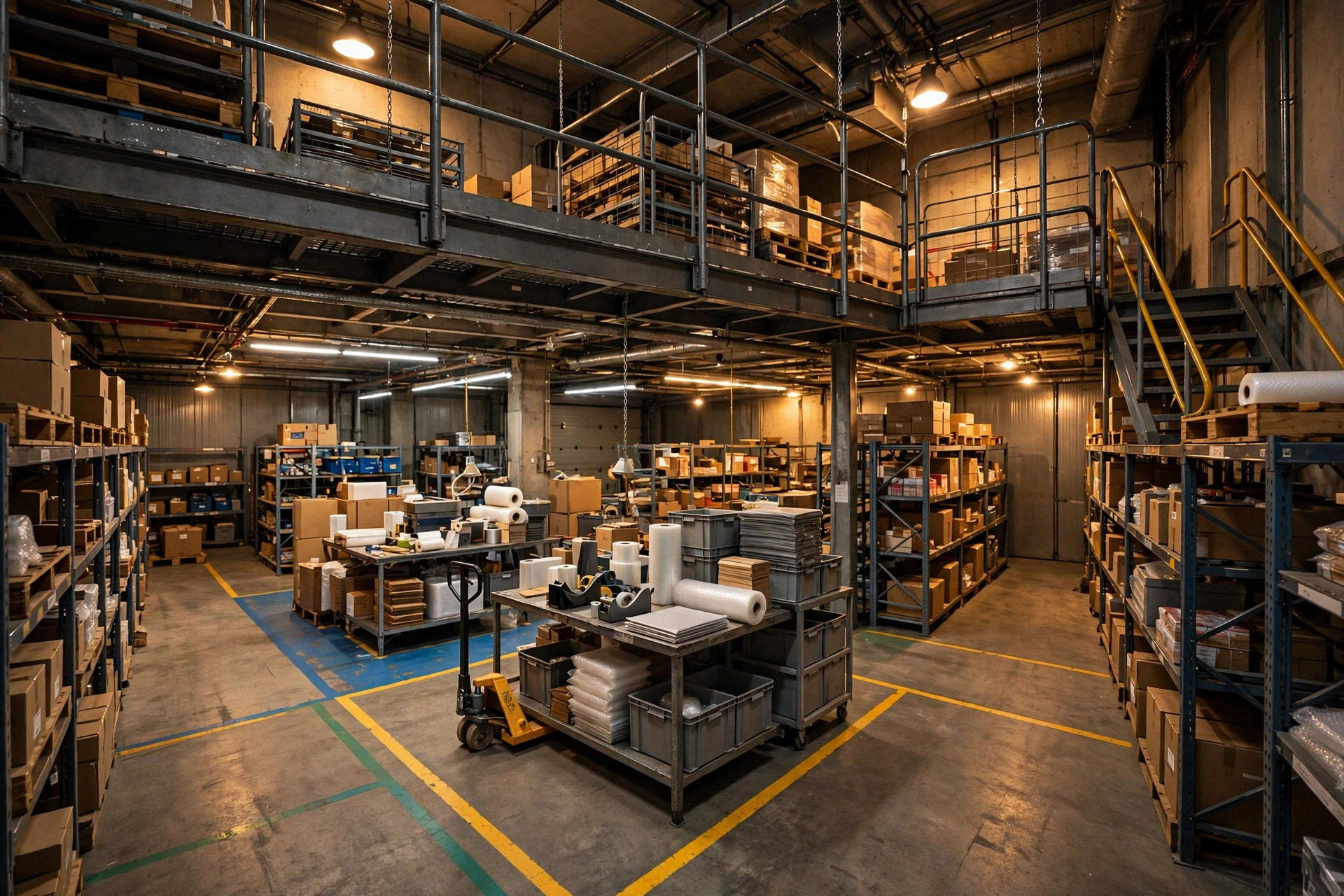
I once saw three neighboring warehouses in the same industrial park — an e-commerce seller, an auto-parts manufacturer, and a third-party logistics provider. Similar size, all using the same "standard" zoning drawing. Six months later, the e-commerce pack zone was bursting daily, the manufacturing line-side inventory kept running short, and the 3PL faced constant mis-shipment complaints. The problem wasn't execution — it was the starting point: the three businesses move goods in fundamentally different ways, and they should never share one zoning plan.
The first step to understanding the difference is reading each operation's "flow signature" — where goods come from, where they go, and at what rhythm.
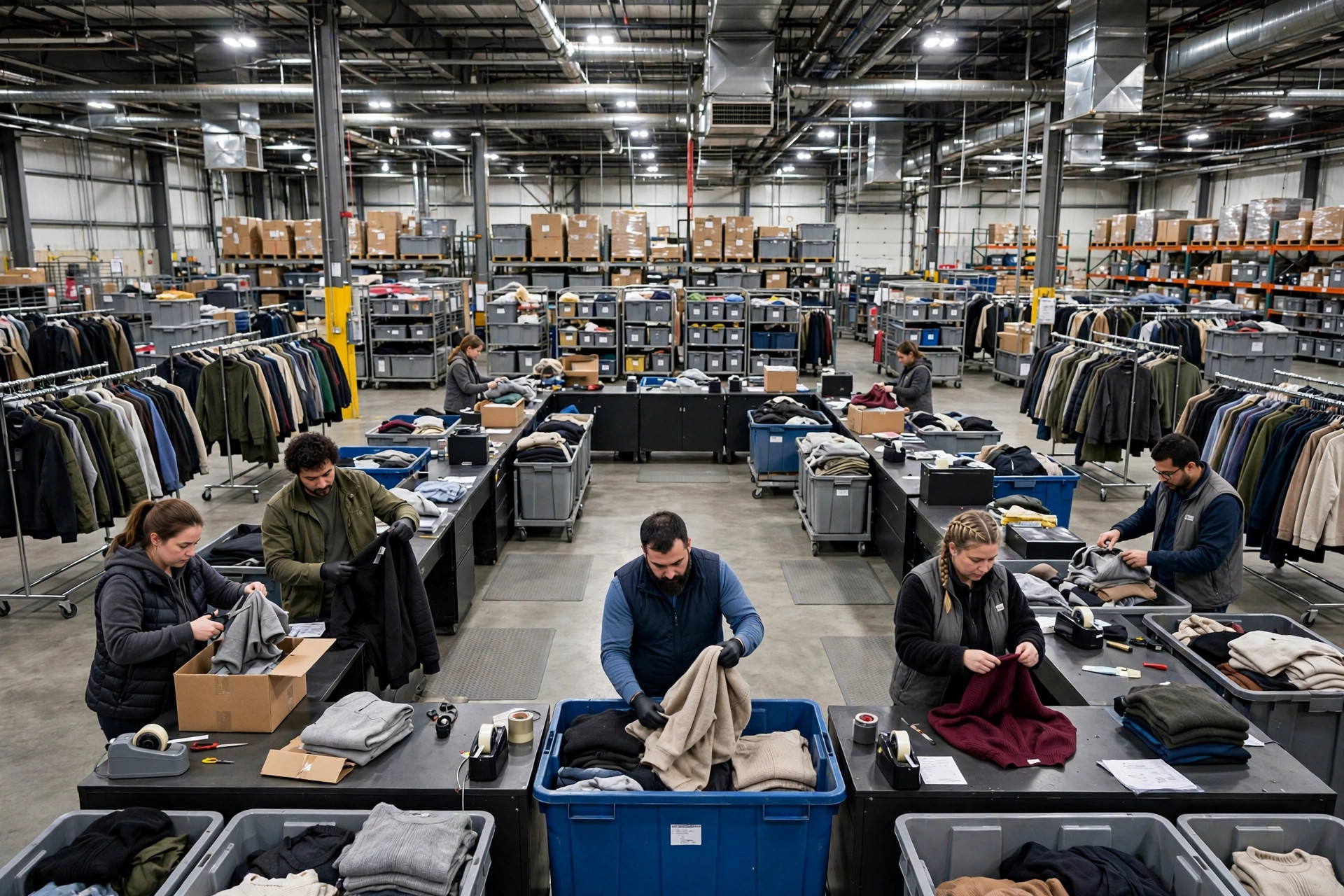
E-Commerce Warehouses: Fragmented Orders, Picking Is the Heart
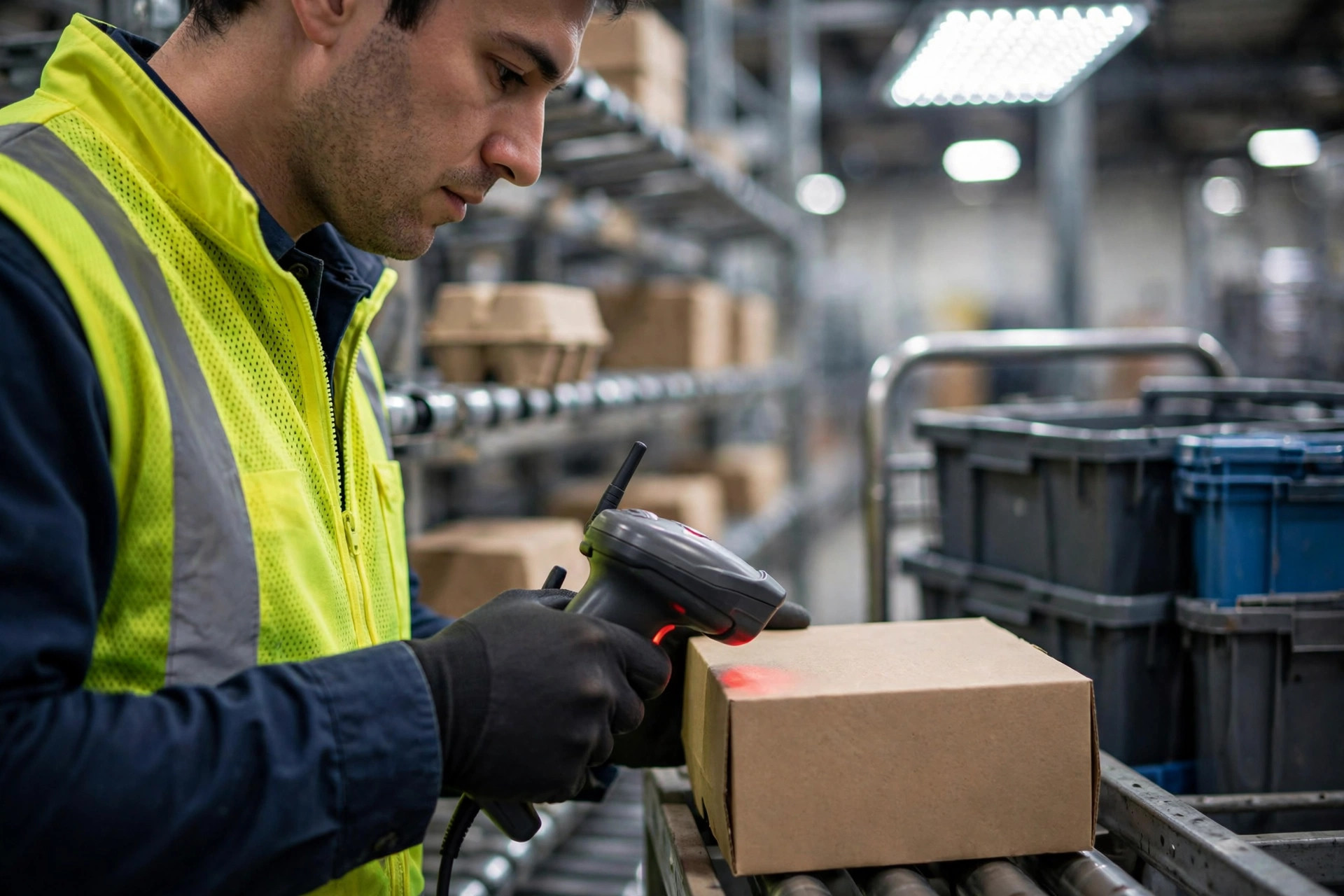
The e-commerce signature: huge SKU counts, tiny units per order, dense waves. Tens of thousands of orders a day, 1–3 units each, with brutal cut-off times.
- The pick zone is the absolute core, typically 25%–35% of space, built for pick-and-sort (put walls and pick-to-light everywhere).
- Packing must hug picking, with lanes split by parcel size: small parcels to the auto-sorter, oversized to manual pack stations.
- Outbound staging is split by carrier — UPS, FedEx, USPS each get their own cages and time windows; mix them and chaos follows.
- Returns get an independent zone near receiving — 15%–30% return rates are normal in e-commerce, and returns processing speed directly sets resale velocity.
- Storage can stay "thin": fast turns make dead stock poison, so deep reserve storage needs are small.
The e-commerce zoning mantra: everything revolves around the order — orders dictate the layout.
Manufacturing Warehouses: The Production Takt Calls the Shots
A manufacturing warehouse serves the production line, not orders. Its signature: raw materials in by the pallet, finished goods out by the pallet, rhythm set by the master production schedule.
- Raw-material and finished-goods warehouses are often physically separated, sometimes at opposite ends of the plant: materials in, finished goods out, never interfering.
- Point-of-use (line-side) inventory is the critical design: JIT delivery paced to workstation takt — one minute of line-side stockout stops the entire line for one minute.
- Storage is pallet-in/pallet-out; racking leans toward selective and drive-in; the pick zone is small.
- Incoming QC (IQC) is heavy: rejected lots go straight back to suppliers, so the QC area must be large, close to receiving, with a segregated non-conforming area.
- Space-wise, bulk storage can exceed 60%; packing is often just the tail end of the finished line.
The manufacturing zoning mantra: everything revolves around the line — the production line is the warehouse's pacemaker.
3PL Warehouses: Multi-Client Under One Roof, Flexibility Is Everything
Third-party logistics is the hardest: a dozen clients in one building, each with different products, packaging, and SLA requirements — and clients constantly moving in and out.
- Zoning by client is table stakes: physical partitions or logical system segregation; big clients get dedicated zones, small ones share.
- Billing logic drives zoning in reverse: 3PLs earn storage plus handling fees, so zones must precisely measure each client's footprint and activity — shared pack areas and consumables need allocation rules.
- Flexibility is the lifeline: when Client A peaks, it must temporarily absorb space Client B vacates in its valley. Partitions must be movable, and contracts must spell out flex terms.
- Highest system complexity: the WMS must support multi-owner inventory, multi-rate billing, and multiple SOPs — zone design and system capability must be planned together.
- Value-added services (labeling, re-kitting, light assembly) are profit centers that deserve their own zones and their own billing.
The 3PL zoning mantra: everything revolves around the client — zoning is the contract, material flow is the invoice.
Side-by-Side Comparison
| Dimension | E-Commerce | Manufacturing | 3PL | |---|---|---|---| | Core driver | Order waves | Production takt | Client contracts | | Space hog | Pick + pack (35%–45%) | Bulk storage (55%–65%) | Flex per client | | Pick profile | Put/pick, heavy eaches | Mostly full pallets | Mixed, per-client SOP | | Returns | Dedicated large zone | Rare (NCR segregation) | Per client agreement | | Pain point | 2 hours before cut-off | Line-side stockout | Client churn, billing disputes | | Flex demand | Promo peaks | New product / line change | Client moves |
Case Study: A 3PL Ends Billing Disputes with Client Zoning
A 12,000 m² 3PL in California used to run "one big pot": all clients' goods mixed together, costs allocated monthly by pallet count. Every month brought billing challenges, and the ops team spent half its time explaining invoices.
The fix was straightforward: dedicated physical zones per client — anchor clients (60% of space) got fixed zones plus flex overflow, smaller clients went to shared zones with logical system segregation; shared pack lines and consumables were allocated by actual scan counts. Three months later, billing disputes dropped 80% — and transparent zoning helped close two new clients. Good zoning is itself a sales tool.
Pitfalls: Copying Across Business Types Is the Biggest Trap
- E-commerce people running manufacturing warehouses: don't worship speed — the KPI is zero line stoppages, not 10 minutes faster.
- Manufacturing people running e-commerce warehouses: don't trust full-pallet efficiency — 80% of e-commerce cost sits in eaches picking.
- Running a 3PL with an in-house mindset: there is no "our warehouse," only "the client's warehouse" — zoning, systems, and billing are one trinity; miss one and it doesn't work.
- Ignoring fire compartments: with multi-client storage, fire zones and insurance liability must align with physical zones — when something goes wrong, that's a legal question.
Takeaway
E-commerce warehouses exist for orders, manufacturing warehouses for production lines, 3PL warehouses for clients. Before zoning, ask: why do my goods move? Different answers mean different drawings. Forcing someone else's standard plan onto your operation is the most common cause of zoning failure.
Warehousing with Mr. Mi · 20 years of US warehousing solutions