Let me give you a number. Last year I visited a 3PL warehouse in Ontario, California, shipping 30,000 orders a month. They were losing over $10,000 a month to short-pick claims. Nothing was stolen. Pickers were just occasionally missing an item, or shipping a promo gift as if it were the ordered product. A 0.4% short rate sounds tiny, but every incident meant customer service time, a reshipment, and a refund — about $28 per order on average. The owner asked what to do. I told him: before you replace the system or hire more auditors, put a scale on the pack-out bench.
Here is my verdict: catching short picks with human eyes treats the symptom. Catching them with a scale treats the disease. A scale is the last line of defense against short picks, and the cheapest one you will ever buy.
Where you put the scale decides how much it catches
There are two ways to do check weighing. Which one fits depends on your volume.
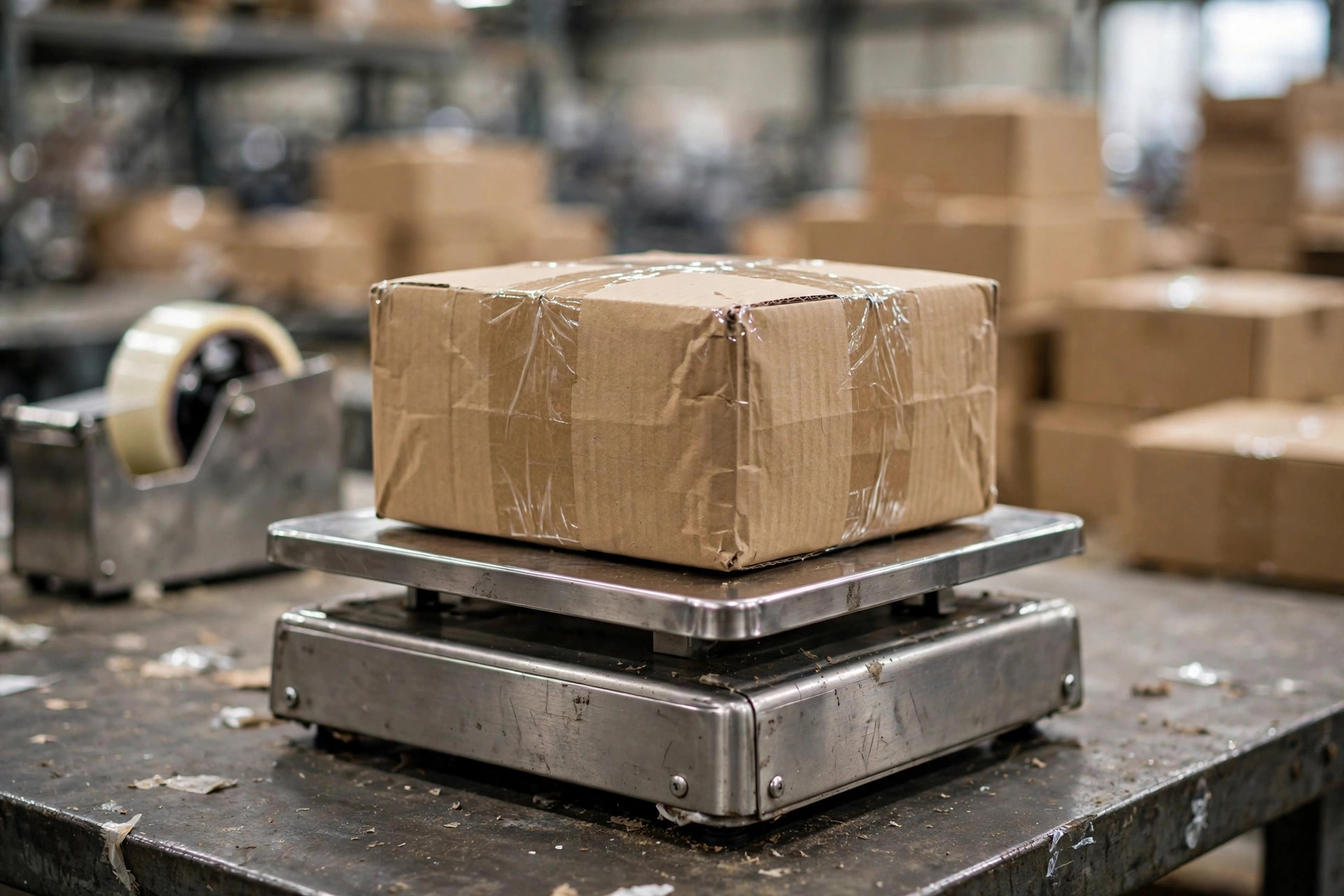
The first is static weighing at the pack station. After packing, the whole carton goes on a bench scale, the system compares actual weight against expected weight, and anything out of tolerance triggers an alarm. This works for operations under about 20,000 orders a month. A bench scale costs $300 to $800, and the packer is already standing there — one extra glance at the weight adds almost no labor.
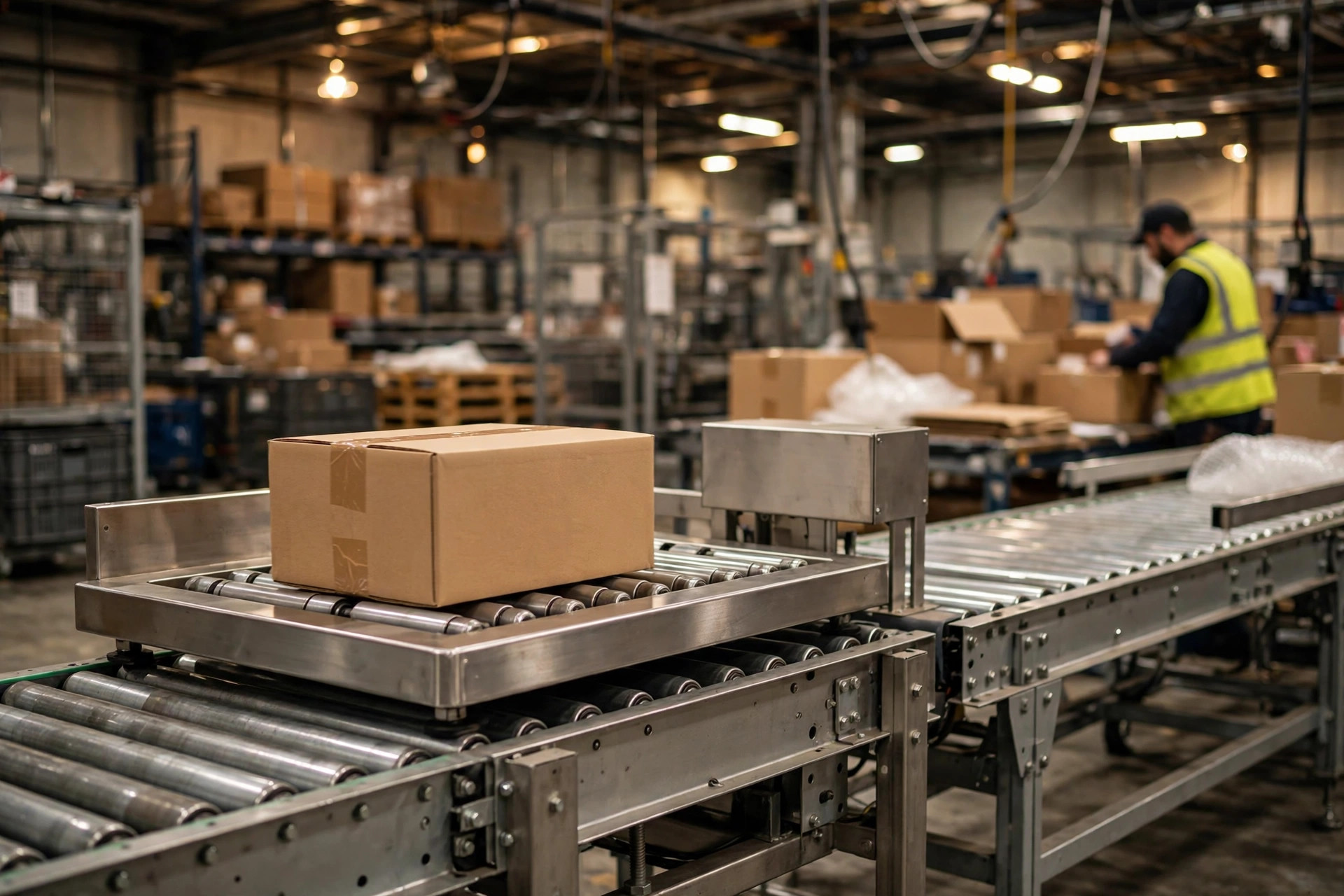
The second is dynamic weighing on the conveyor, the checkweigher. Parcels fly over the scale on the belt, it weighs each one in a few hundred milliseconds, and rejects get diverted automatically. Throughput runs 60 to 120 parcels per minute, built for operations doing thousands of orders a day with conveyor lines. Equipment runs $8,000 to $25,000 depending on accuracy and speed.
The worst setup I have seen: a warehouse bought a dynamic checkweigher but installed it after taping and before label application. The label weight was never in the expected value, so it alarmed all day until the workers muted it. The scale has to sit at a fixed point in the flow, and the expected-weight definition has to match that exact point — label included or not, dunnage included or not. Write it down. No ambiguity.
Tolerance is where the craft lives
A check weighing program is only as good as its tolerance. Too loose and you miss everything. Too tight and it alarms all day until workers stop caring.
Expected weight = sum of all item weights + packaging weight. Every component needs a real number.
Where does the per-unit item weight come from? Weigh it at first receipt. Do not trust the supplier's spec sheet — it is wrong more often than you would think. My standard onboarding process: for a new SKU's first inbound, randomly pull 10 units, weigh each, take the average, and store it in the WMS item master. On every later receipt, weigh 3 units as a spot check, and update the master if the deviation exceeds 5%.
Packaging weight needs the same treatment. Weigh your 5 most-used carton sizes, your bubble wrap, your void fill — 10 samples each, average them. Most warehouses skip this and their expected weight is permanently light.
My go-to tolerance formula: tolerance = (per-unit weighing error × quantity) + packaging error + scale error. Example: an order with 3 T-shirts at 180 grams each with 5 grams per-unit error, a carton at 320 grams with 20 grams error, and a scale error of 10 grams. Expected weight is 860 grams, tolerance is 5×3+20+10 = 45 grams. Anything between 815 and 905 grams passes; the rest alarms.
The operating checklist:
- New SKU setup: weigh 10 units at receiving; unit weight is a required field in the item master — no weight, no putaway.
- Carton master: weigh every box type you use; re-weigh when you change suppliers.
- Tiered tolerance: tighten tolerance by half for high-value items (say, over $50); loosen it for cheap small items.
- Monthly audit: randomly re-weigh 50 orders, watch the false-alarm rate, and retune tolerance if it exceeds 3%.
- Scale calibration: calibrate monthly with certified test weights; tape the calibration log to the scale — who did it, when, next due date.
A scale that does not talk to the system is decoration
Plenty of warehouses have a "dumb scale" — a worker glances at the number and judges by feel. That does not work. The weight has to flow into the system, and out-of-tolerance orders have to lock automatically.
The standard integration: the scale sends the weight to the WMS over serial or network, the WMS compares it against expected weight. My recommended exception flow, written in stone: audible and visual alarm → parcel auto-diverts to the exception cage (or the pack bench light turns red) → auditor opens and counts → records the reason in the system (short pick / over pick / weight anomaly / missing gift). The reason is mandatory, because that is the data you will use later to find the real root causes.
One more detail: exceptions need a deadline. My rule is that exception parcels must be cleared within 2 hours, never carried overnight. Otherwise the exception cage fills up, nobody touches it, and you might as well not have the system.
The math: how fast does the scale pay for itself
Back to that Ontario warehouse. 30,000 orders a month, 0.4% short rate = 120 short orders a month. At $28 each, that is $3,360 a month in losses.
With pack-station check weighing, the short rate typically drops below 0.05%. That is 15 orders a month, $420 in losses. Nearly $3,000 a month saved.
The investment? Two bench scales at $1,200, plus WMS integration work in the low thousands if the interface already exists. Call it $8,000 all in. Payback in under three months. A dynamic checkweigher costs more, around $20,000, but for a large operation that is still about half a year to payback.
Things to watch out for, before you learn them the hard way:
Cartons absorb moisture in rainy season — I have measured 2 to 3% heavier in humid regions. Loosen tolerance before the wet season, or store cartons in a dry area instead of by the dock doors.
Gifts and samples are the number one missing master-data item. Marketing runs a promo with free samples, the warehouse never gets the weight data, and the whole batch alarms. The rule: nothing goes into stock without a weight on file — including freebies.
Scales hate vibration. Do not put the bench scale next to a pack bench that forklifts rattle past all day; the readings drift. I once spent a month chasing 50-gram swings before finding the scale was sitting under a mezzanine where forklifts crossed overhead.
What you can do tomorrow
Do not buy equipment yet. Do these three things first: pull the 20 SKUs with the highest "short item" return rate, weigh each one and build the master data; do manual weight comparison at the pack bench for one week and see how far actual weights drift from expected; once the data is clean and the false-alarm rate is under control, then decide on the scale.
Customers do not give you a second chance on short picks. The first time, a reshipment fixes it. The second time, they shop elsewhere. What a scale really protects is not a few missing items — it is customer trust. That math always works.
One note: the rates and equipment prices above reflect the US market in 2026 — check current supplier quotes for your purchase. But the sequence — master data first, tolerance second, equipment last — never goes wrong.