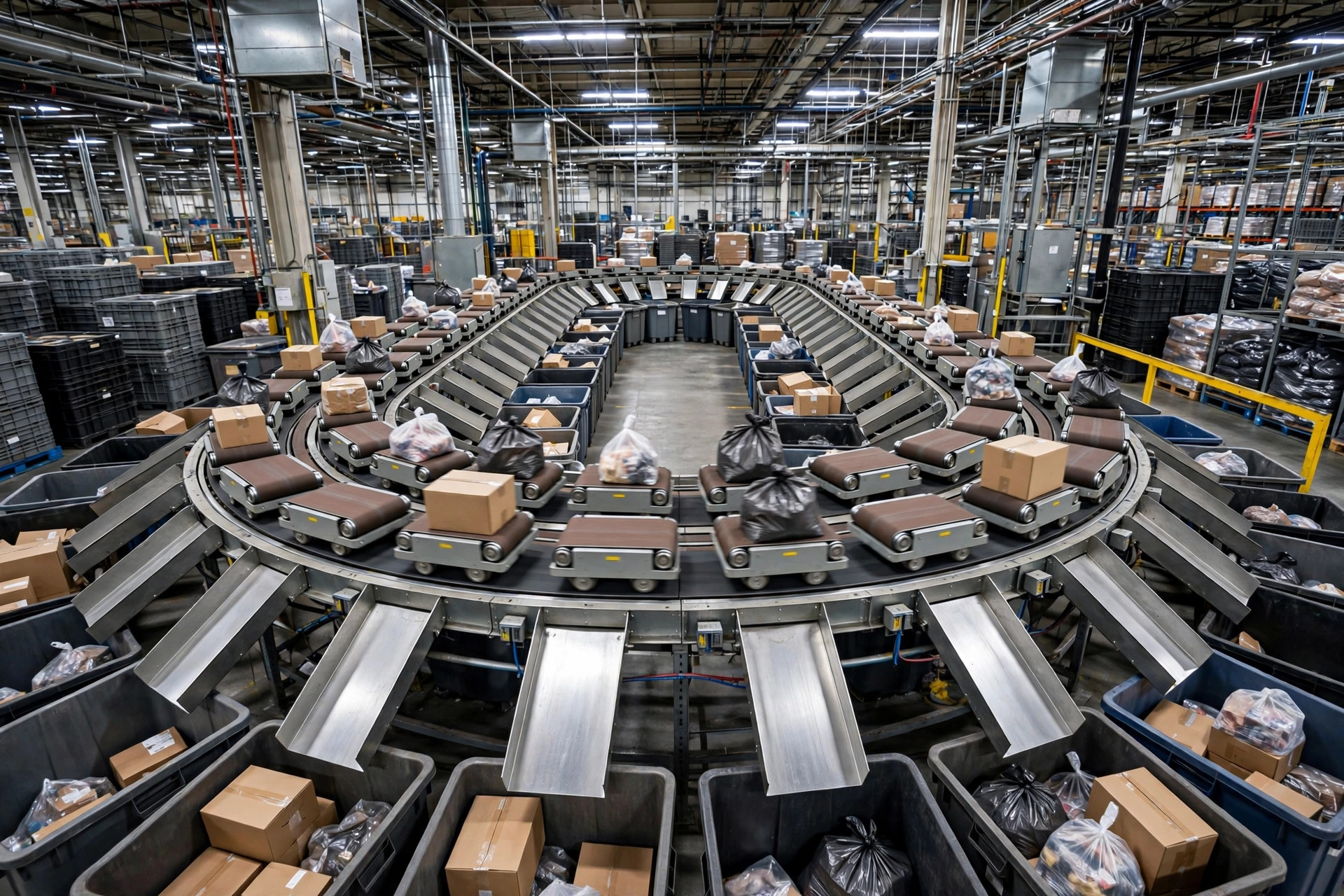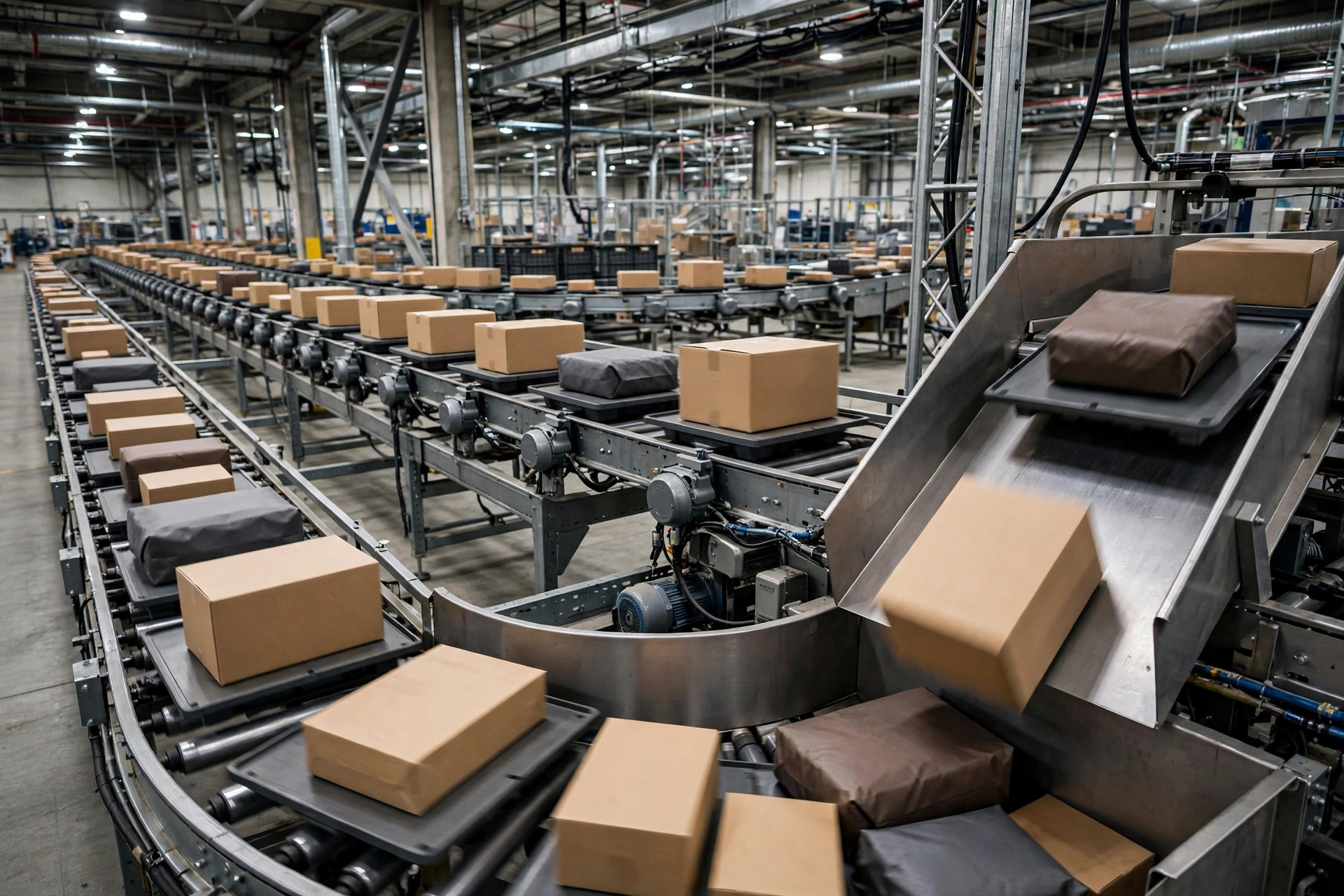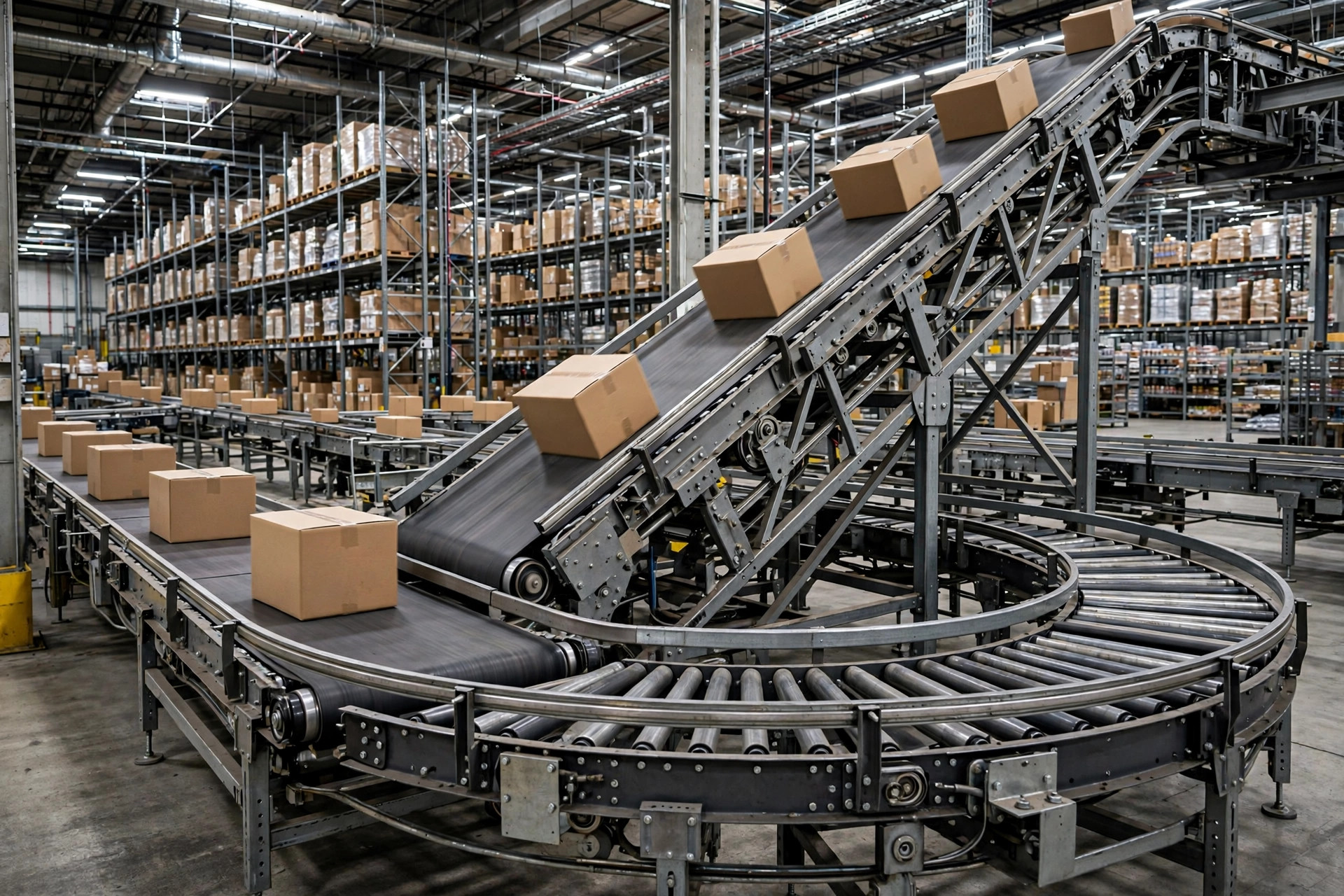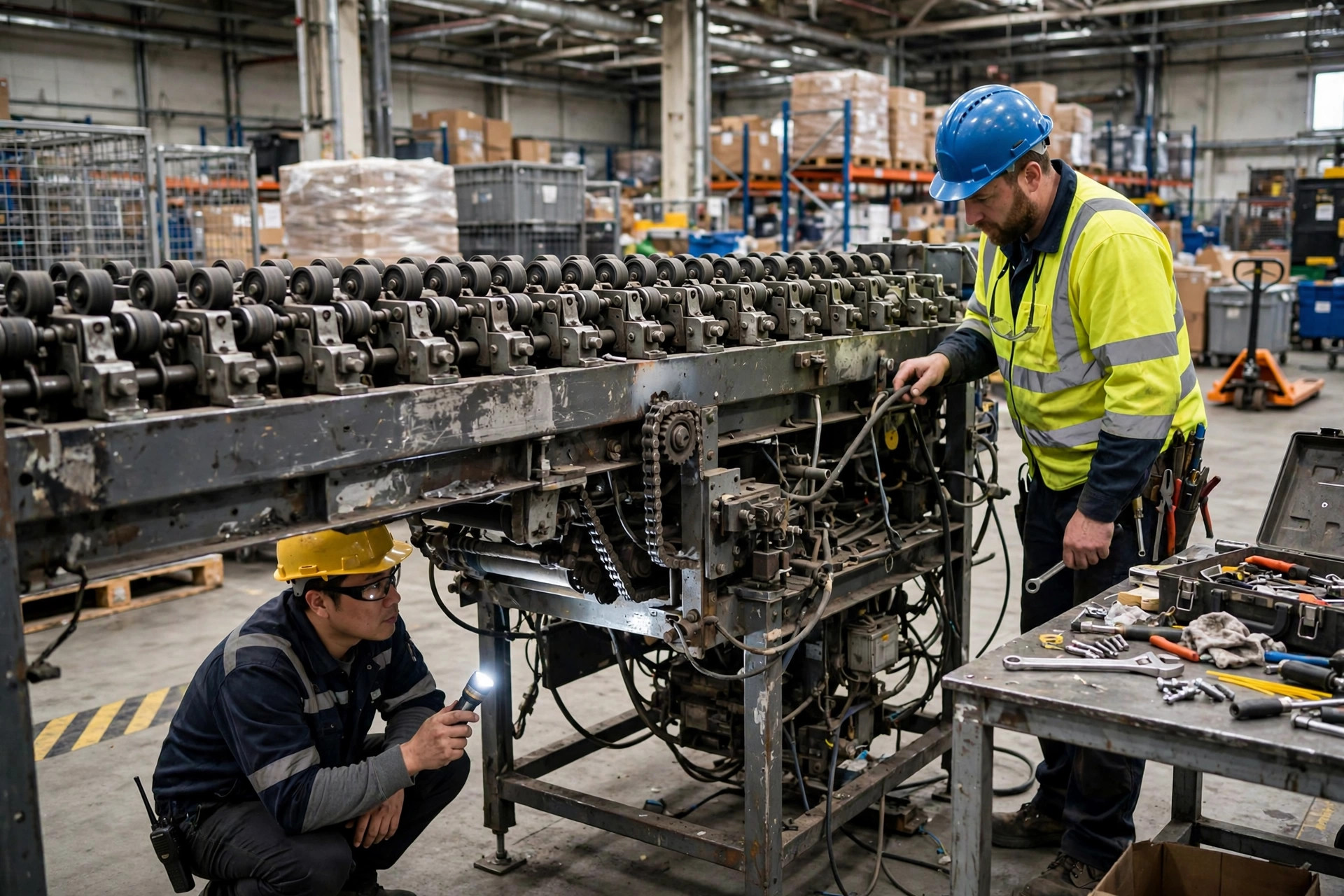
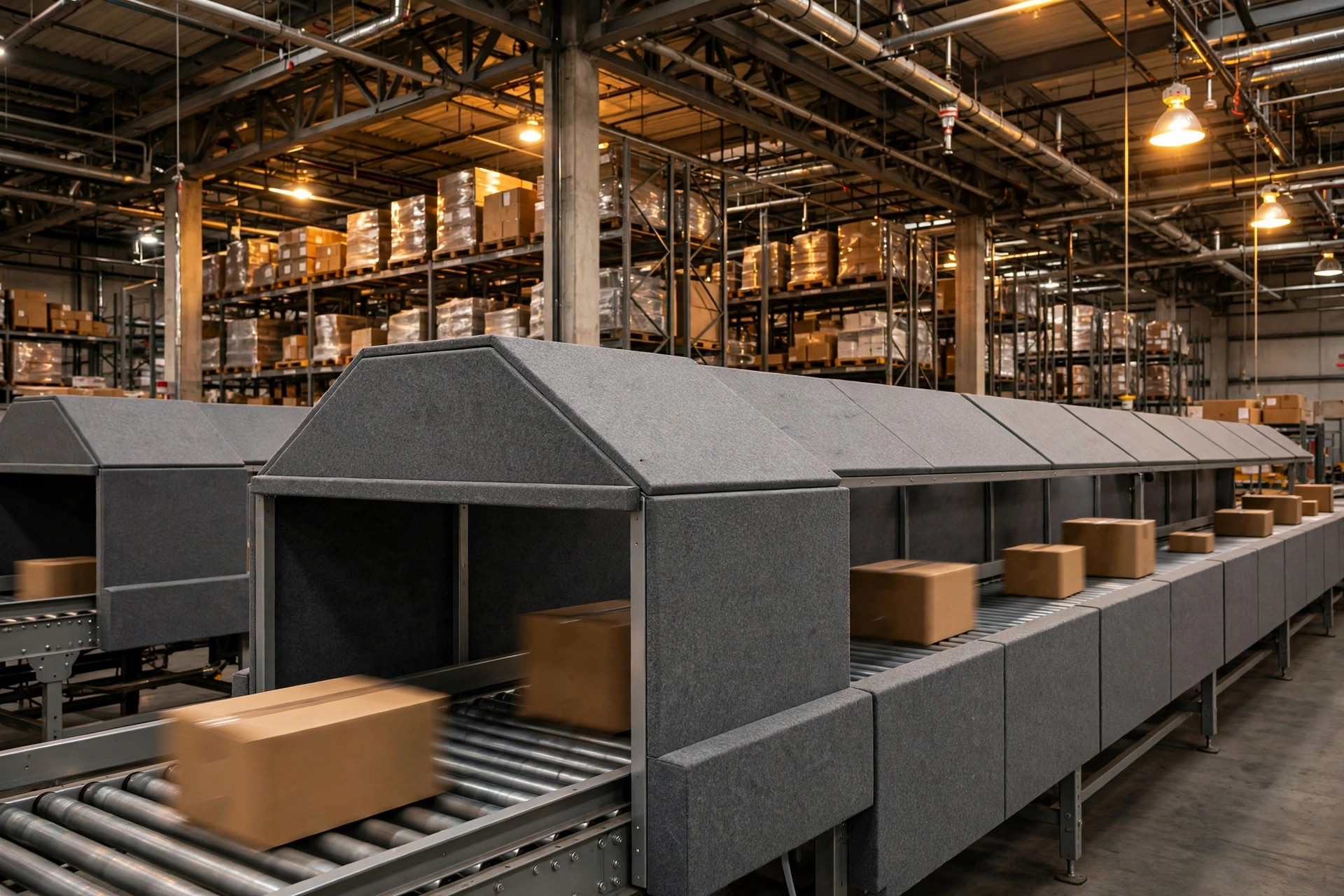
In 2019, I took on a returns-processing warehouse near Long Beach. The moment the conveyor started up, the finance manager upstairs came down and said, "I can't even make a phone call up here." I pulled out my phone, ran a quick sound app, and got 91 dBA at the operator line. From that day on, this stopped being an "employee gripe" and became my problem.
Here is my conclusion up front: fix the rollers and the lubrication first, and that solves the noise problem in roughly eight out of ten warehouses. Acoustic enclosures are the last resort — expensive, bad for heat dissipation, and a pain for maintenance. And never start by getting quotes. Measure first. Once you know exactly where the noise comes from, every dollar you spend has a target.
Know the Standard Before You Panic
"It feels loud" and "it exceeds the standard" are two different things. Here is a quick reference — treat the numbers as action guides and always check OSHA's website and your local ordinances for the latest official policy:
| Standard | Value | What it means |
|---|---|---|
| OSHA PEL (permissible exposure limit) | 90 dBA, 8-hour TWA | Above this, you are in violation and a hearing conservation program is mandatory |
| OSHA action level | 85 dBA, 8-hour TWA | At this level, you need audiometric testing, earplugs, and a written program |
| Rule-of-thumb comfort line | Below 85 dBA | Employees stop complaining, management stops worrying |
| Nighttime community/industrial limits | Varies by city, commonly 50-65 dBA (lower at night) | This is the line landlords and neighbors complain under — check your local code |
One thing to remember: OSHA looks at the 8-hour time-weighted average, not a one-second peak. A single 95 dBA reading where a worker spends 20 minutes a day is a very different situation from 88 dBA for a full 8-hour shift. Measure with an 8-hour dosimeter, not a spot reading, before you scare yourself.
Find the Source: Measure, Don't Guess
I have seen too many warehouses jump straight to enclosure quotes after one complaint, only to discover the real culprit was two rows of worn-out rollers. Spend half a day measuring section by section:
- Run the full line and take a reading every 5 meters, 1 meter from the equipment at about 1.5 meters height (roughly ear level). Sketch a simple noise map.
- Find the hot spots: shut down the downstream sections, run only upstream, and watch whether the numbers drop. Power up section by section and circle the worst contributors.
- At the worst spots, measure right next to the rollers, motors, and chains to pin it down to the component.
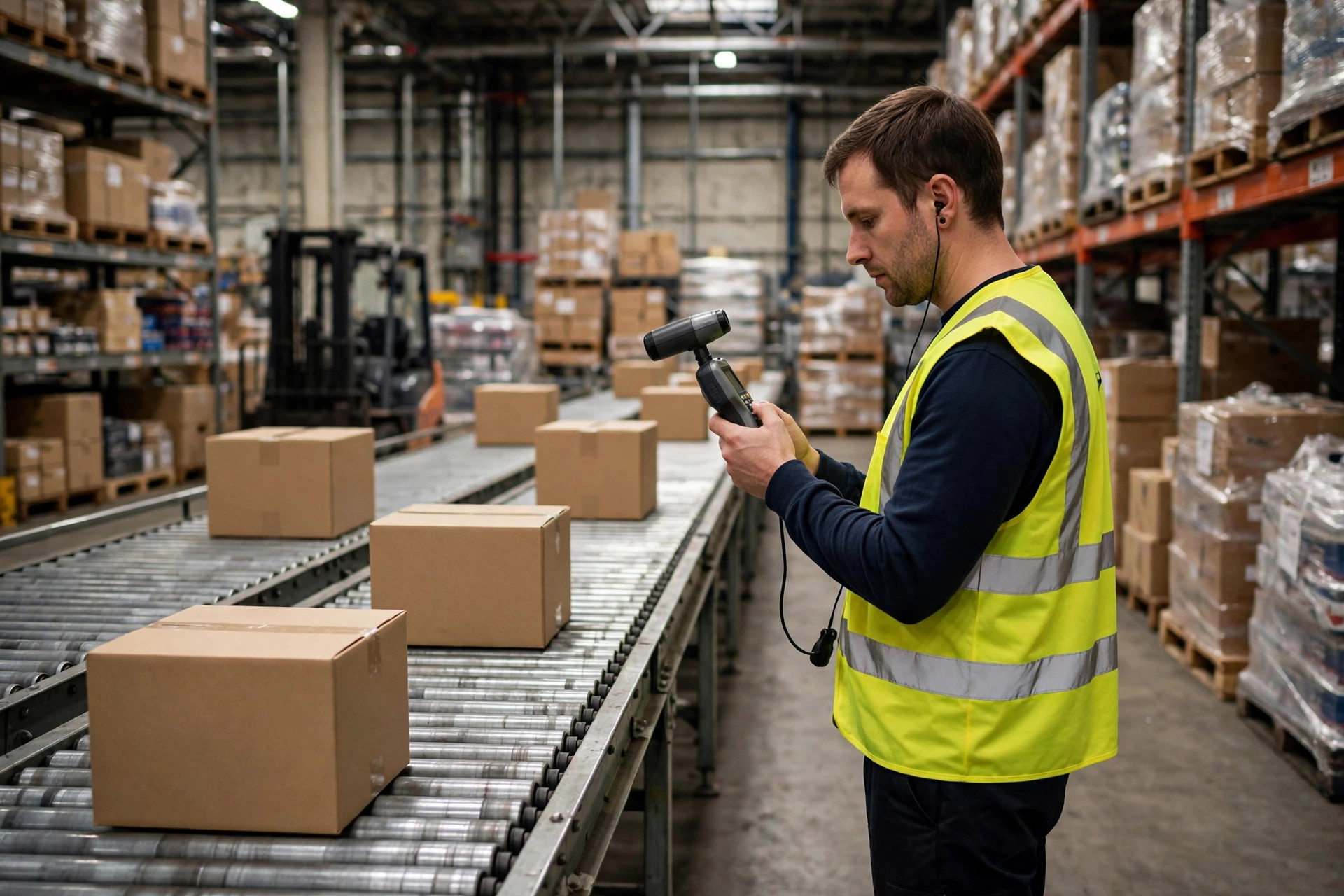
A phone app is fine for the first sweep. Once you have narrowed it down to a section, rent or buy a handheld sound level meter (a few hundred dollars) for the follow-up readings — those are the numbers you can actually discuss with OSHA. Common noise sources, matched to symptoms:
| Source | Typical sound | Quick check |
|---|---|---|
| Rollers (especially steel) | Continuous roar along a section, louder near the rollers | Shell feels hot, grinding when rotated — that is your culprit |
| Chain and sprockets | Rhythmic clicking | Dry chain, or worn sprockets |
| Motor/gearbox | Low-frequency hum | Test with the motor powered down separately |
| Belt rubbing from mistracking | Sharp squealing | Look for black rub marks on the belt edge |
| Package impact | Repetitive thuds | High drops at transfers and chute ends |
| Air-blow diverters | Short high-frequency puffs | Packages getting mis-sorted and triggering repeat blows |
Where the Money Actually Goes
Here is my fix list, ranked from cheapest to most expensive, each with a rough cost and the noise reduction you can expect. These numbers come from my own projects at West Coast warehouses over the past few years — expect variation by vendor and line type, and get fresh quotes before committing.
Lubrication and maintenance program (roughly $200/month in consumables and labor): Dry chains clicking, roller bearings grinding — a systematic lubrication round often drops 2-4 dBA on its own. This is the most underrated move, and it is a management problem, not a technology problem. Set a schedule: chains weekly, roller bearings monthly, belt tension monthly. The cost is negligible; the effect is immediate.
Slow the line down ($0, if throughput allows): Drop line speed 10% and noise typically falls about 2 dBA. Many complaints come from the night shift, when volume is low anyway — running slower at night barely touches throughput. Ask yourself: is this speed a process requirement, or just "how it has always run"?
Low-noise rollers / polyurethane-coated rollers ($8,000-$15,000 for a 15-meter belt section): My favorite fix. Swap plain steel rollers for urethane-coated ones and packages land with a soft thud instead of a metallic bang — a real-world drop of 6-8 dBA per section. I did this in 2021 at an e-commerce warehouse in Ontario: 18 meters of sortation line, $12,000 in coated rollers, operator-line noise went from 89 to 82 dBA, and the complaints stopped cold. One caveat: urethane coating does not like sharp objects — think twice in returns or building-materials operations where packages carry nails.
Package cushioning guides and drop buffers ($3,000-$8,000): Add cushioned guides or brush curtains at transfers and chute ends to turn a "slam" into a "slide" — worth 3-5 dBA. Impact thuds are the easiest to fix and the most complained about: people tolerate continuous hum far better than intermittent banging.
Motor/gearbox replacement or VFDs ($5,000-$20,000): Replace a howling old gearbox with a low-noise model, or add variable-frequency drives for soft starts and speed control — typically 4-6 dBA. Soft starts have a side benefit: less belt shock means quieter package impacts too.
Vibration isolation mounts ($50-$150 per support point): When line vibration travels into the floor and steel structure, the whole building resonates. Isolation pads break that path. Cheap, but only effective against structure-borne noise — first confirm which type you have. Touch the support columns: if they are buzzing, it is structure-borne.
Acoustic enclosures ($2,000-$5,000 per meter): The last resort. They work — 8-12 dBA reduction — but heat builds up (motors trip on thermal overload in summer), maintenance means removing panels, and fire marshals and OSHA inspectors may flag them. My verdict: do everything above first, then enclose only the worst few meters if you are still over the limit. Never enclose the whole line.
How to Verify the Fix
The process is four steps: measure, fix, re-measure, document.
Re-measure at the same positions and under the same operating conditions as the baseline (same volume, same line speed), or the numbers are not comparable. My suggested acceptance criteria: operator-area 8-hour TWA at or below 85 dBA, and nighttime property-line readings within your local ordinance if neighbors complained. Then spot-check daily for a week to confirm it was not just "quiet for two days after the fix."
Do not skip the documentation: baseline readings, the fix list, verification readings, and equipment replacement records, filed as one package. When an OSHA inspector asks for your hearing conservation program, that file on the desk beats any amount of explaining.
One thing you can do tomorrow: walk the line on the night shift with a sound app on your phone and note every spot above 85. First thing in the morning, check the lubrication log — I will bet that at least half of your noise problem is hiding in that logbook nobody opens.
So, what is the loudest section in your warehouse — rollers, motors, or packages slamming down? Once you have pinned it to the component, come talk to me, and I will help you figure out which level of fix your money should go to.