Used Warehouse Automation: Real Bargain or Expensive Trap?
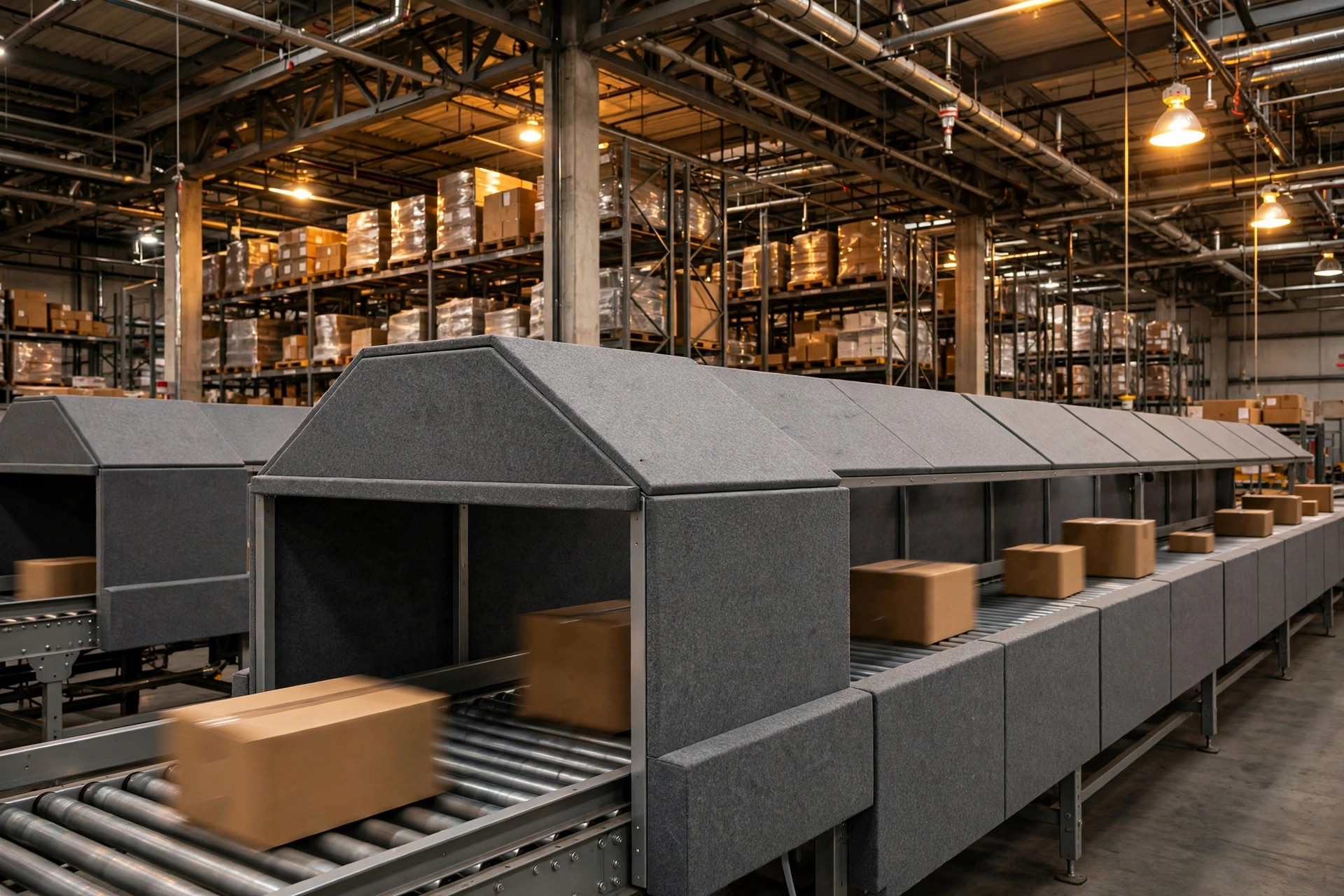
Last fall, a friend who runs a 3PL in the Inland Empire called me. He had just landed an e-commerce client and peak season was about to add 8,000 extra orders a day — more than his sortation area could handle with the crew he had. Someone offered him a used cross-belt sorter: "Came out of a big DC that upgraded, only six years old, forty percent of new price." He asked me: is this a steal?
My answer: the conveyor lines are worth a conversation, the sorter needs a very careful look, and stacker cranes — don't even think about it.
Over twenty years I've bought, specced, and inherited my share of new and used equipment. The used automation market is deep water, but it's navigable. Here's my full playbook: how to inspect, how to do the math, and how to negotiate.
The short answer: what's safe to buy used, and what to never touch
Safe bets:
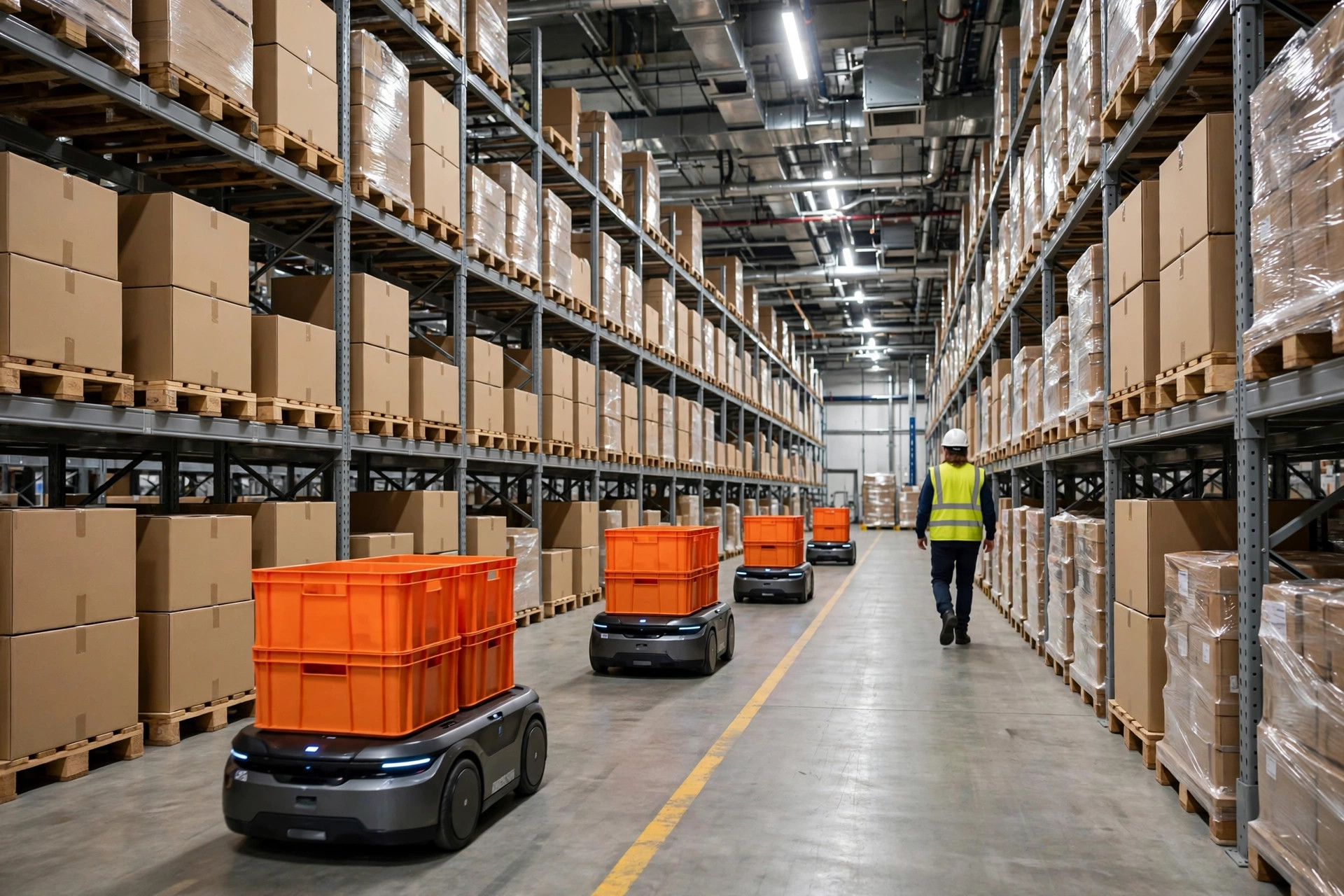
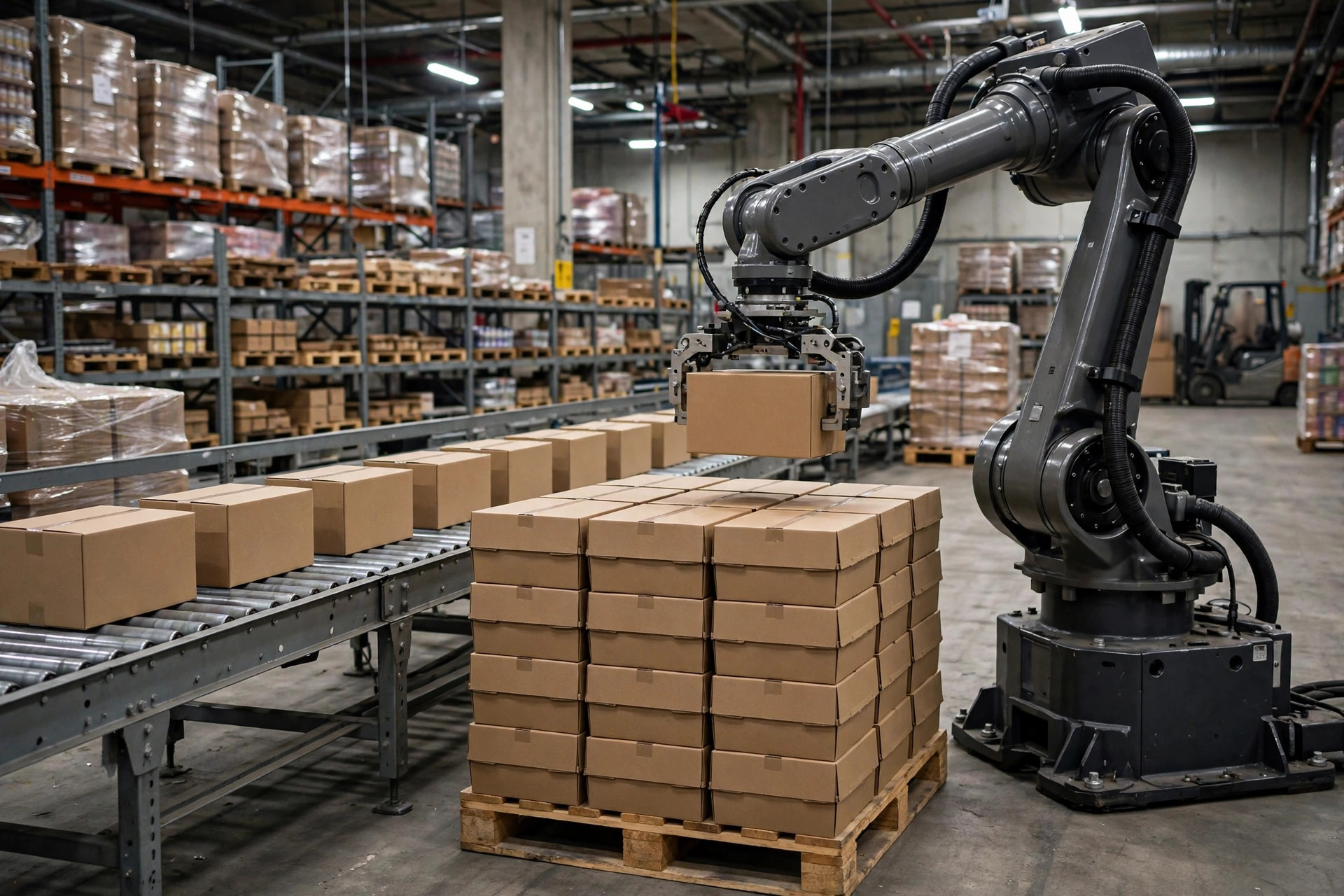
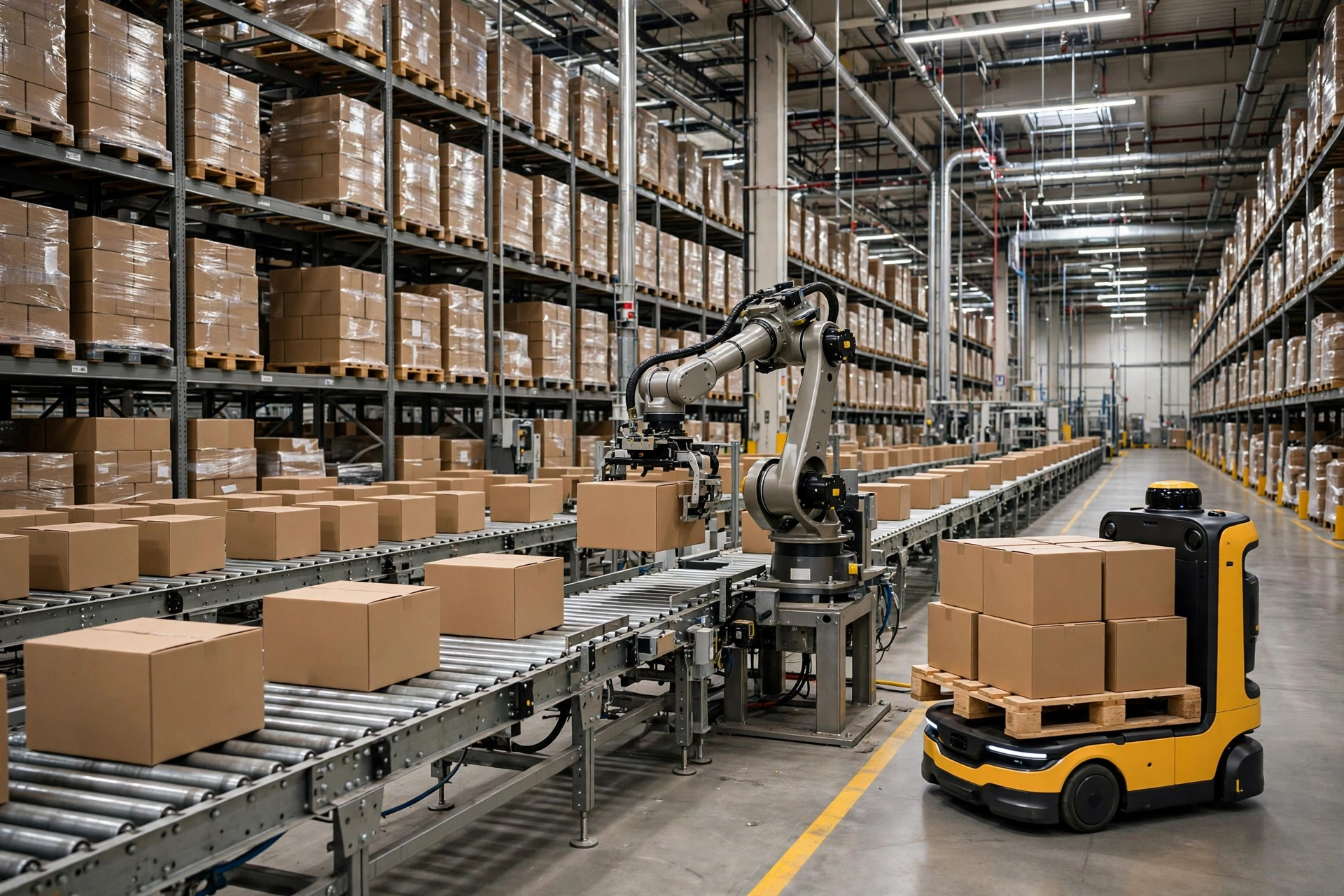
Powered and gravity conveyor is the most forgiving used purchase — mostly structural steel, simple mechanics, and cheap to repair. Pallet racking and flow rack are fine too, but only if the beams and uprights are straight and free of serious rust. Extendable belt conveyors, case sealers, and strappers are the best value in the used market: simple machines, simple fixes. AMRs can work, with three conditions: mainstream navigation (laser SLAM), a replaceable battery, and a manufacturer that is still in business.
Never touch:
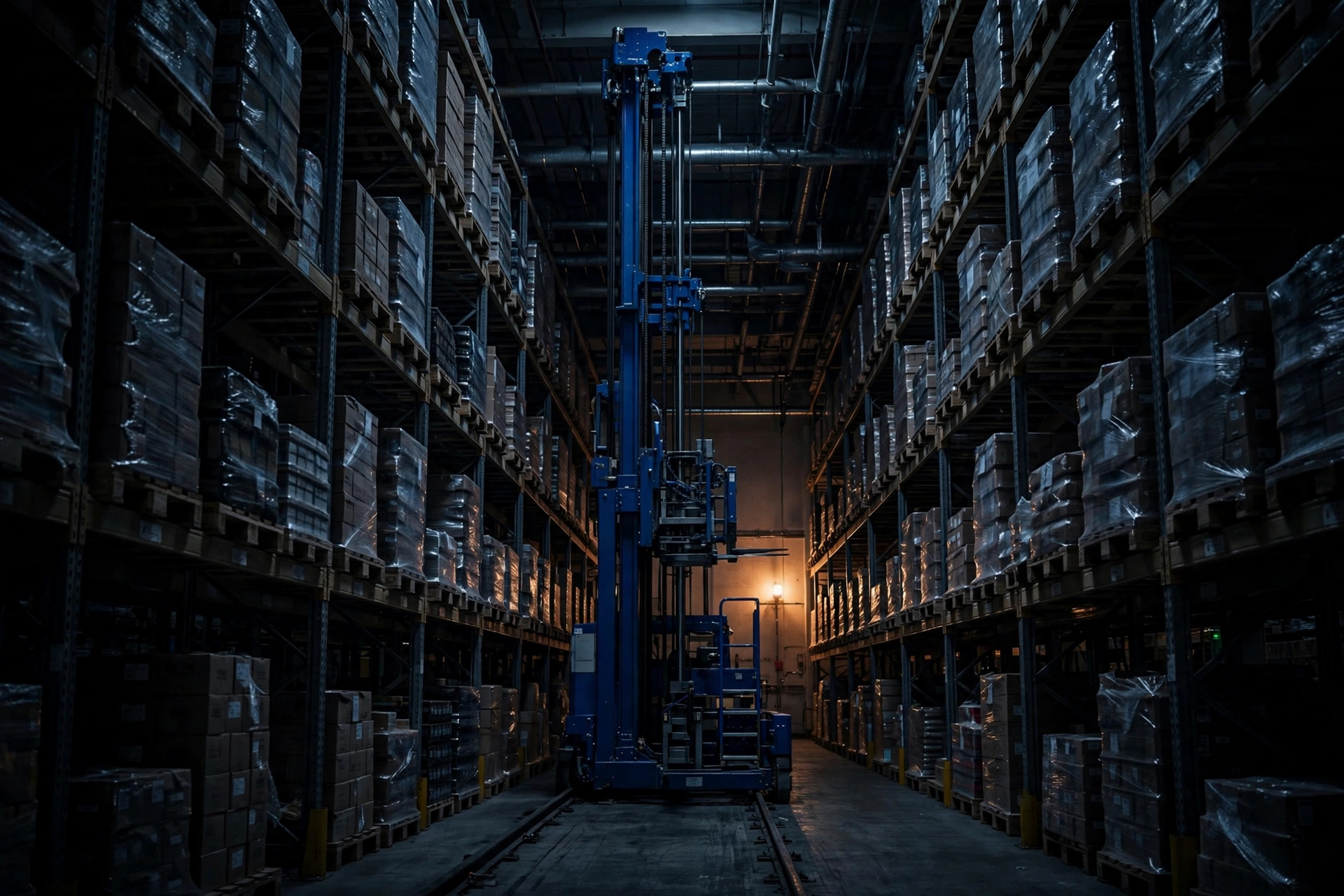
Stacker cranes (AS/RS) top the list. Safety risk is high, installation needs foundations and rails, and the software and safety systems are deeply tied to the original vendor — every dollar saved on the purchase gets spent twice on re-engineering. Old cross-belt or sliding-shoe sorter controls are another trap: the steel might be fine, but the PLCs are discontinued and spare modules are gone, so one failed card stops the whole line. Complete systems locked to a WCS/WES license are worse still — license transfer fees and re-integration routinely exceed the hardware savings. Same logic for AMRs and AGVs with aging batteries: a lithium pack replacement runs from a few thousand to well over ten thousand dollars, and any quote that doesn't state battery condition should be priced as "battery needs replacing."
The inspection: three checklists
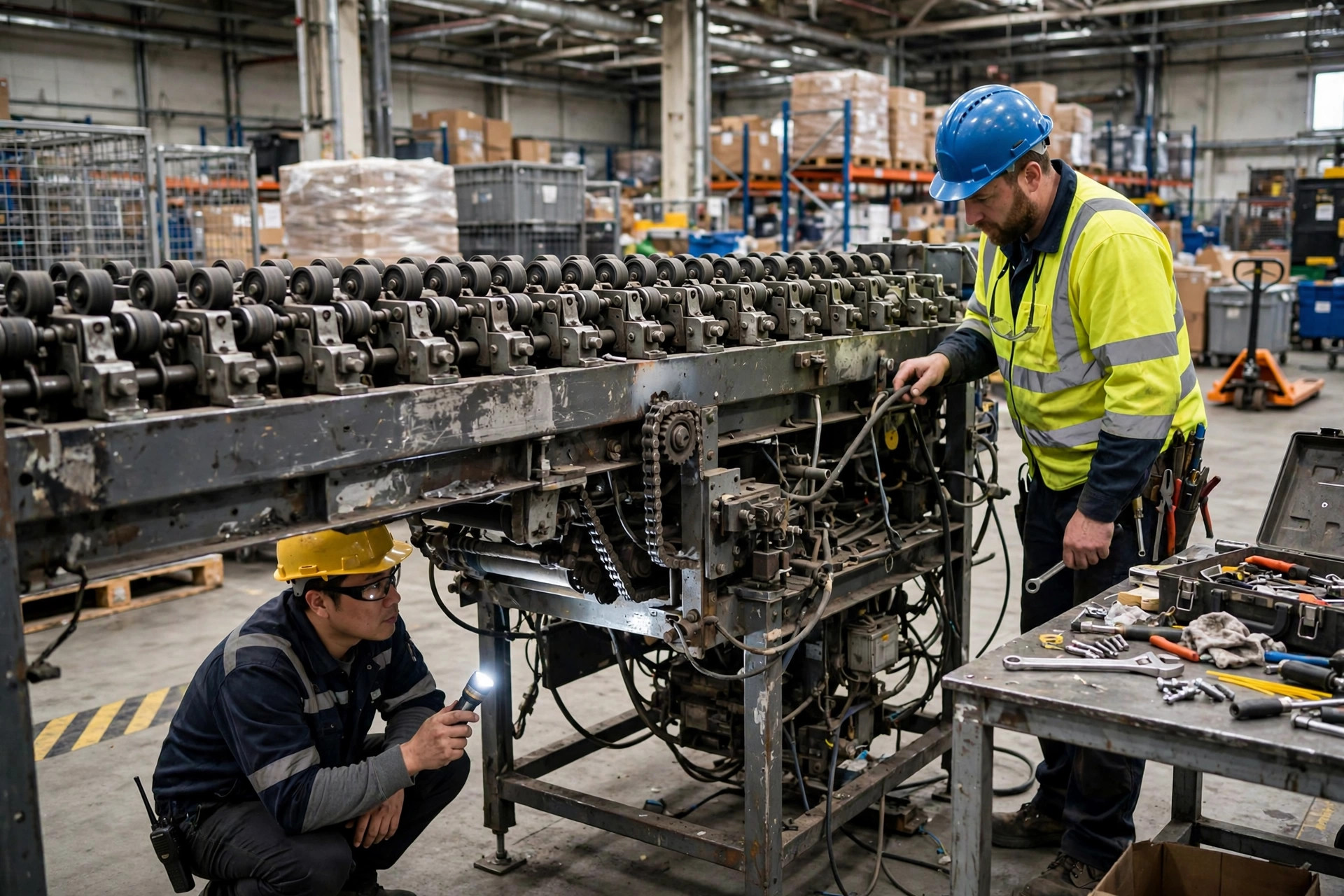
This is where the money is really made or lost. The purchase price is never the biggest cost of used equipment — the problems you didn't find are. When I go to a site, I bring three checklists: mechanical, electrical, and controls.
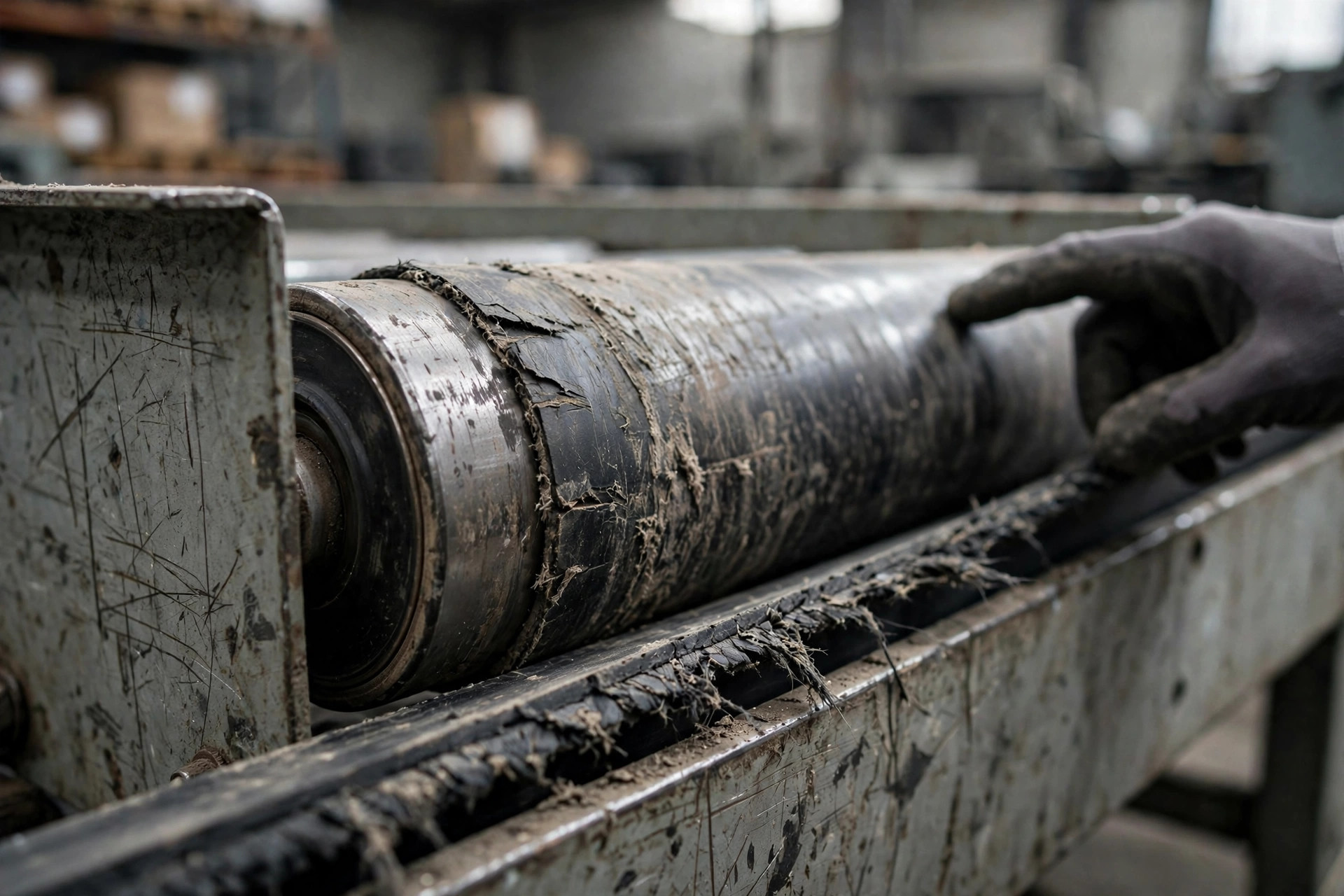
Mechanical is what you can see and touch: do the rollers spin freely, any seizing or grinding; belt edges — cracks, fraying, tracking off-center; frame — bent members, rust-through; chain tension; oil weeping from bearing housings. My field trick: run the line empty for twenty minutes, then put your hand on the motor housings and bearing blocks. If it's too hot to hold, walk away. On conveyors, a full roller-and-belt replacement is the most expensive part of a refurb — count exactly how many rollers need swapping before you quote.
Electrical: megger the motor insulation (bring the meter); look up the VFD and contactor part numbers — if they're discontinued, spares come only from cannibalized units at double the price; check cable jackets for brittleness and cracking; press every e-stop and verify the circuit; make sure the ground conductors haven't been stripped out. If the control cabinet shows water damage or caked dust, budget for a controls rebuild.
Controls is where buyers get burned most: can the PLC program be exported and backed up? Does the OEM still offer support? What HMI version, and does the touchscreen still respond? What sensor brands — and are drop-in replacements available? And the single most important question: are the electrical and mechanical drawings complete? A used line with no drawings is a black box; every future repair becomes guesswork.
Can't visit the site? At minimum, demand three things from the seller: a continuous ten-minute run video (including a start-stop cycle and one e-stop test), photos of the inside of the control cabinet, and a close-up of the nameplate showing model, serial number, and year of manufacture. If the seller can't produce even that, move on.
The math: price anchors, refurb costs, and one division
Price anchors first. These are rough ranges I've seen in recent years — region, brand, and condition move them a lot, so treat current vendor quotes as the final word:
Used conveyor (powered roller or belt): roughly $60–$150 per linear foot; comparable new runs about $250–$500 per foot. Used AMRs in the mainstream 500–1,000 kg payload class: roughly $8,000–$25,000 per unit; new $25,000–$60,000. Complete used cross-belt sorter systems rarely hit the open market; a refurbished small-to-mid-size installation typically lands in the $300K–$800K range. Refurb costs: a conveyor refurb (rollers, belts, bearings, electrical cleanup) runs about 20–40% of new price; a full control-cabinet replacement runs roughly $15K–$50K.
Then depreciation and residual value. Material handling equipment is generally depreciated over seven years (ask your CPA for your specific tax treatment). My rule of thumb for what used gear is actually worth: straight-line over seven years, so a five-year-old conveyor line holds about 25–35% of new price, an AMR about 30–40%. If the seller's ask is far above that, they're selling nostalgia, not equipment.
Finally, the one division that decides everything:
(used price + refurb + de-install, freight, install + 3 years of maintenance) ÷ (new price + 3 years of maintenance) ≤ 0.6–0.65
If the all-in cost lands at roughly sixty percent of new, the deal is worth the hassle. The line item most buyers forget is de-installation and rigging: teardown, crane work, interstate freight, and site installation routinely add 15–25% of total cost. When a seller says "installation included," get in writing exactly what that covers — wiring and commissioning are often excluded.
A concrete example: 200 linear feet of powered roller conveyor. Used ask: $20,000 ($100/ft). Refurb (rollers, belt, bearings): $12,000. De-install, freight, install: $8,000. Three years of maintenance: $9,000. Total: $49,000. The same line new at $350/ft is $70,000, plus $12,000 in three-year maintenance: $82,000. 49 ÷ 82 ≈ 0.6 — right on the line, worth pursuing. If the used ask were $30,000, the ratio hits 0.72 — at that point buy new and sleep well for three years.
Where to find it, and how to negotiate
Sources come in four flavors: industrial auction houses, used-equipment brokers, liquidation sales from closed or relocated warehouses, and teardown inventory from local integrators. Auctions are cheapest but strictly as-is, for buyers who know what they're looking at; brokers charge more but usually provide run videos and basic warranty.
Four negotiation rules. First, demand a run video and maintenance records — if the seller can't produce them, price it as heavily used. Second, negotiate the spares package separately: one full set of wear parts (rollers, belts, sensors) is worth more than another five percent off the price. Third, push for a 30-day warranty or holdback payable after on-site acceptance; if they refuse, at least split payment into three milestones. Fourth, for AMRs, verify the manufacturer is alive and the software license is transferable — an AMR from a dead vendor is an expensive steel sculpture.
One more thing before you sign: check for liens. In the US, ask the seller for a UCC lien search — liquidated-warehouse equipment is where buyers get burned, paying for machines they legally can't take away.
The bottom line
Used automation isn't off-limits — buying it "because it's cheap" is. My order of operations never changes: run the division first, walk the three checklists second, negotiate last. Reverse that order, and every dollar saved up front comes back doubled on the repair invoice.
If you're looking at a used system right now, don't wire a deposit yet. Take the seller's quote and equipment list, run the math above, and walk the site with the three checklists. If it fails the math or the inspection, walk away — no matter how tempting the price looks.