Last year, an AGV integrator asked me: what if we ship from Changzhou to Vietnam first, swap containers, slap on new marks, and then bring the goods into the U.S. — wouldn't that wipe out the 25% Section 301 duty? My exact reply: whatever you save won't cover the fine. He said others in the industry were doing it. I told him plenty of people do it, and plenty of them get caught — you just never hear about it.
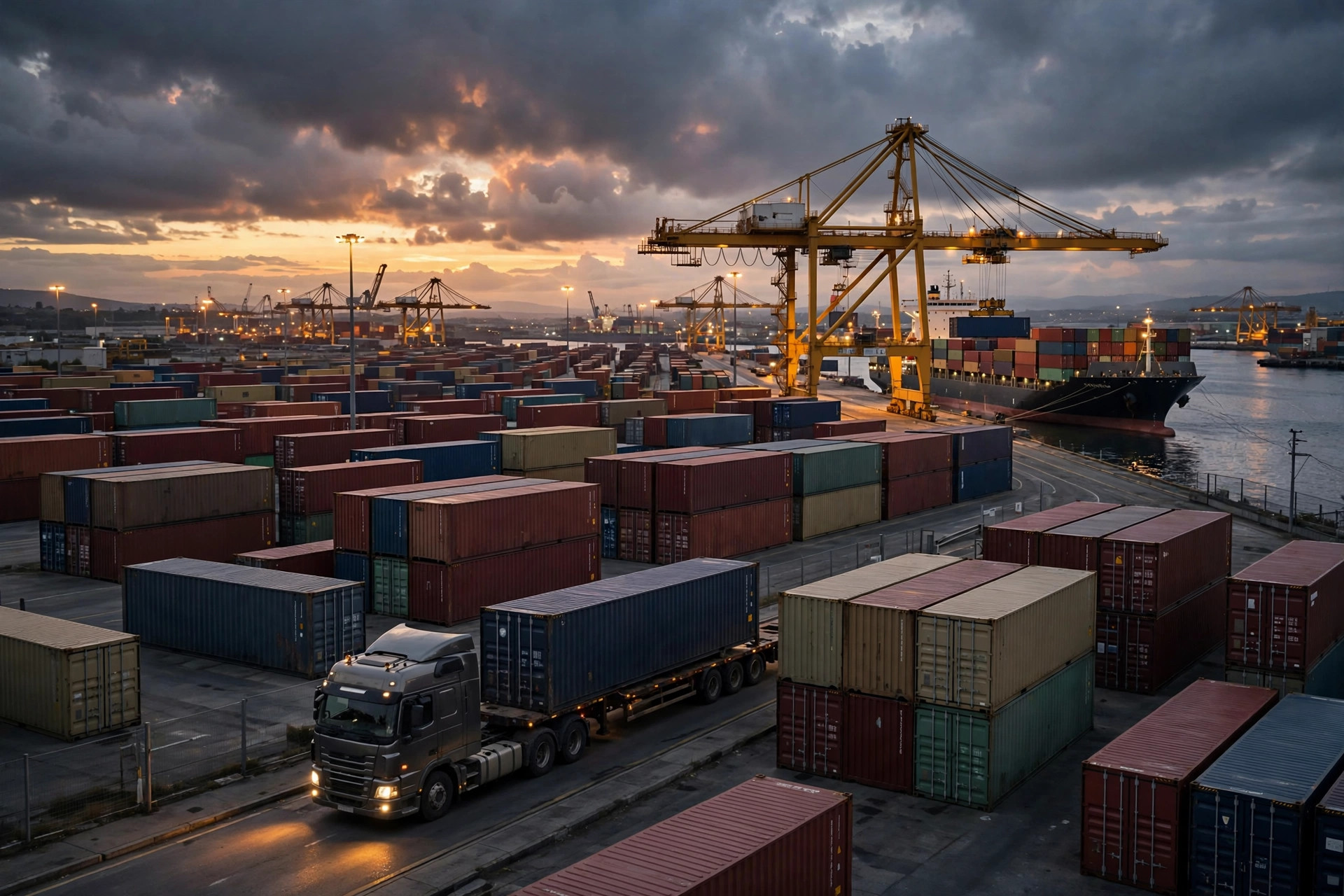
That's not scaremongering. Automation equipment — AGVs, autonomous forklifts, four-way shuttles, racking systems — runs $200,000 to $300,000 a container. A 25% Section 301 duty on one shipment is $50,000 to $75,000 in difference. The temptation is real. But transshipment evasion is exactly the lane U.S. Customs and Border Protection has been watching hardest in recent years. Today I'll lay out how CBP investigates, how penalties stack up, and what legal duty-reduction paths actually work.
How CBP actually finds out
First, kill a common myth: a Vietnamese certificate of origin plus a fresh set of documents does not fool anyone. CBP doesn't adjudicate origin by reading the paperwork you hand over — it reconstructs the cargo's real journey.
Document matching is the baseline move. CBP's systems hold your entire import history: port of lading, carrier, container numbers. Cargo loaded in Changzhou, transshipped in Ho Chi Minh City, discharged in Los Angeles — that trail is all over the ocean carrier's manifest. You declare Vietnam as origin, but the bill of lading shows the goods sat in Vietnam for three days. Can "substantial transformation" happen in three days? CBP knows the answer. And it gets worse: CBP can demand the Vietnamese factory's production records — electricity consumption, labor hours, raw-material purchase invoices. A plant that supposedly assembles AGVs, running a few hundred kilowatt-hours a month with a dozen workers? The math doesn't work.
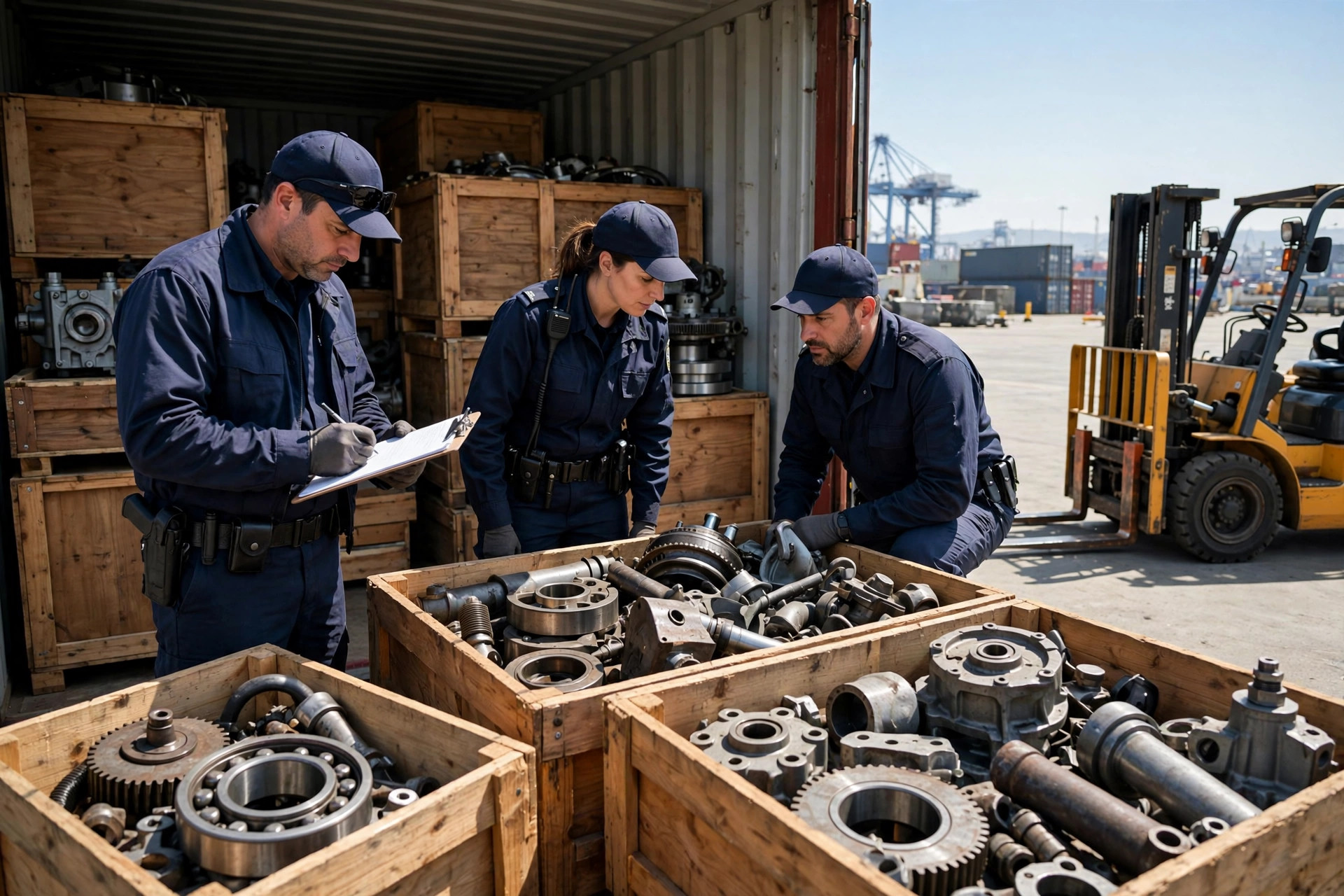
The second tool is overseas verification. CBP runs dedicated verification teams that can work with foreign customs or visit third-country factories in person. The automation industry is a small world — there are only so many plants genuinely capable of real assembly work, and each one gets checked. Then there's the move people never see coming: tips. Domestic competitors, disgruntled employees, even a freight forwarder you once worked with can all file allegations through CBP's e-Allegations system. Under the Enforce and Protect Act (EAPA), CBP must open an investigation when it receives an allegation of Section 301 duty evasion — and during the investigation it can require importers to post bonds to keep cargo moving. Your freight sits, and your cash flow chokes first.
The third tool is industry-wide sweeps. CBP runs targeted enforcement actions by product category — one year it's lithium batteries routed through Southeast Asia, another year it's racking. Automation equipment, with its high cargo values and big duty differentials, is a regular on the shortlist. Getting pulled in isn't bad luck; your product category was on the list.
"Substantial transformation": don't fool yourself
This is the most important and most misunderstood part of the whole topic. The U.S. origin standard is substantial transformation: inputs processed in a third country must emerge as a new article with a different name, character, or use. Sounds simple. In practice, the bar is high.
Here are three working tests I use, all drawn from repeated CBP and court practice. First, depth of processing: shipping a complete Chinese AGV broken into kits to Vietnam and reassembling it does not count. Federal courts decided cases like this long ago — simple assembly, labeling, and repackaging do not constitute substantial transformation. Second, the value-add ratio: if the Vietnam leg adds only single-digit percentages to the finished product's value, good luck convincing CBP. Third, indispensability: are the operations performed in Vietnam ones without which the product couldn't function? If it's just tightening bolts, painting, and swapping packaging, the answer is obvious.
What does defensible third-country processing look like? A real example: a company ships AGV chassis, drives, and control systems to Mexico, where a full local operation does final assembly, software flashing, complete vehicle testing, and burn-in — a real production line with engineers and test rigs, local value-add above 30%. That generally survives a substantial transformation analysis. But "generally" is not "guaranteed" — CBP has the final say, and if you're unsure, get a binding origin ruling before you ship. Don't decide this over coffee.
My twenty-year rule of thumb: any third-country route designed to dodge duties, CBP sees through instantly. Any third-country footprint designed around real supply-chain logic, CBP usually leaves alone. Motive is written into commercial substance. You can't hide it.
The penalty math: run the numbers
This is the part that should sober up anyone tempted. U.S. customs penalties aren't "pay the back duties and move on." They sit under the 19 U.S.C. 1592 framework — three tiers of civil penalties, plus potential criminal exposure.
Run the numbers: one AGV shipment worth $300,000, Section 301 duty at 25%, so $75,000 owed. You transship, declare Vietnam origin, and pay zero. Once proven, the classification matters. Negligence: penalties up to 2 times the lost duties — $150,000 — plus the $75,000 in back duties, so one shipment costs you $225,000. Gross negligence: penalties up to 4 times lost duties, starting around $300,000. Fraud: penalties up to the domestic value of the merchandise — the shipment's full $300,000 value becomes the penalty base. Add interest, which CBP accrues from the date the duties were due — drag it out a few years and that's tens of thousands more.
And that's per entry. Twenty shipments a year means twenty separate penalty calculations. Worse still, if CBP finds fraud, the responsible individuals can face criminal charges — 18 U.S.C. 542 (false statements on importation) and 545 (smuggling) carry real prison time. The company can land on intensive-exam lists, meaning every future shipment gets opened and inspected, and your logistics lead times collapse. For an automation integrator, a one-month project delay costs more in liquidated damages and lost client trust than the duty ever did.
So back to my opening line: the 25% you "saved" won't cover a fraction of the fine. That's not a metaphor. It's arithmetic. (Duty rates and product lists change — always verify against current official policy.)
Importer self-check: five red flags
If you're importing automation equipment from China, or considering a third-country route, run through these five. Hit two or more, and get your customs broker and trade counsel to review immediately.
One: your supplier or forwarder pitches the "Vietnam/Malaysia/Mexico routing option" unprompted, with the duty savings spelled out in the quote. A vendor actively marketing evasion schemes is itself a risk source. Two: you've never visited the third-country factory, have no video audit on file, and can't describe what operations it actually performs. Three: breaks in the document chain — the bill of lading shows China as port of lading, the origin certificate says Vietnam, and you hold zero processing evidence from the Vietnamese plant. Four: roundabout payment flows — funds go to a Hong Kong or third-country account instead of the actual shipper. Five: your customs broker gets vague on origin questions, or says "everybody files it this way."
Number five is the most dangerous. "Everybody files it this way" translates to "don't call me when it blows up."
Three legal ways to actually cut duty costs
Legitimate duty savings are real — they just require thinking, not scheming.
First, re-examine your HTS classification. Automation equipment classification is genuinely tricky: the same AGV classified as an "automated transport vehicle" versus "industrial robot parts" can land at very different duty rates. Many importers have been rolling with the HS code their supplier handed them five years ago, and those codes often hide overpaid duties. A proper classification review by someone experienced saves real money and is entirely legal. When in doubt, request a binding ruling from CBP and file against the written decision. Sleep matters.
Second, tariff engineering. This is explicitly lawful under U.S. law: designing the product itself with duty consequences in mind, so it legitimately falls under a lower-duty classification. The classics include importing a machine as unassembled complete kits, or adjusting a component's material or function to shift tariff headings. Know the boundary: tariff engineering is about the design of the product, not word games on the paperwork. The former is legal; the latter is fraud.
Third, the first sale rule. If your goods change hands through a middleman — say the Chinese factory sells to a Hong Kong trading company, which sells to you — then under a strict set of conditions (bona fide transaction, arm's-length pricing, complete document chain), dutiable value can be based on the first sale price (factory to Hong Kong) rather than what you paid the middleman. Automation equipment routed through trading companies is common, and this can shave 10 to 20% off the dutiable base. But the conditions are demanding, and the transaction structure must be built by trade counsel up front — reconstructing it after the fact rarely works.
One honest closing thought: Section 301 rates and product lists keep shifting, so compliance strategy has to shift with them. Energy spent figuring out how to dodge is energy wasted; energy spent on getting classification, valuation, and origin right saves just as much — and lets you sleep at night.
Could your current third-country supply chain survive a CBP factory visit? Answer that question honestly, and the rest answers itself.