ASRS Power Outage: What to Do When the Lights Go Out
Here's the bottom line up front: when the power dies on an automated storage and retrieval system, the most dangerous thing isn't the pallets you can't get out — it's the pallets hanging in mid-air and the people who don't know what to do next.
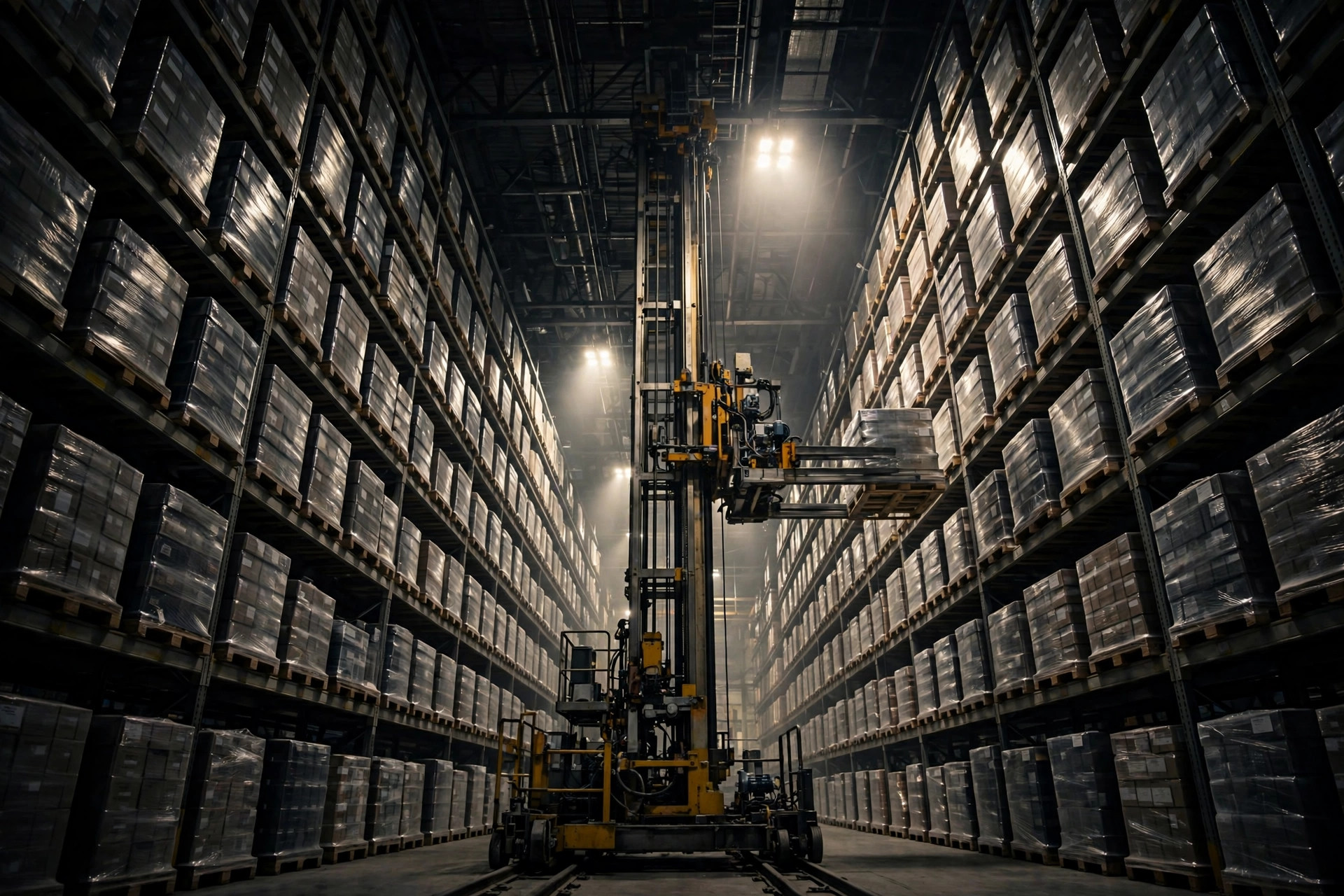
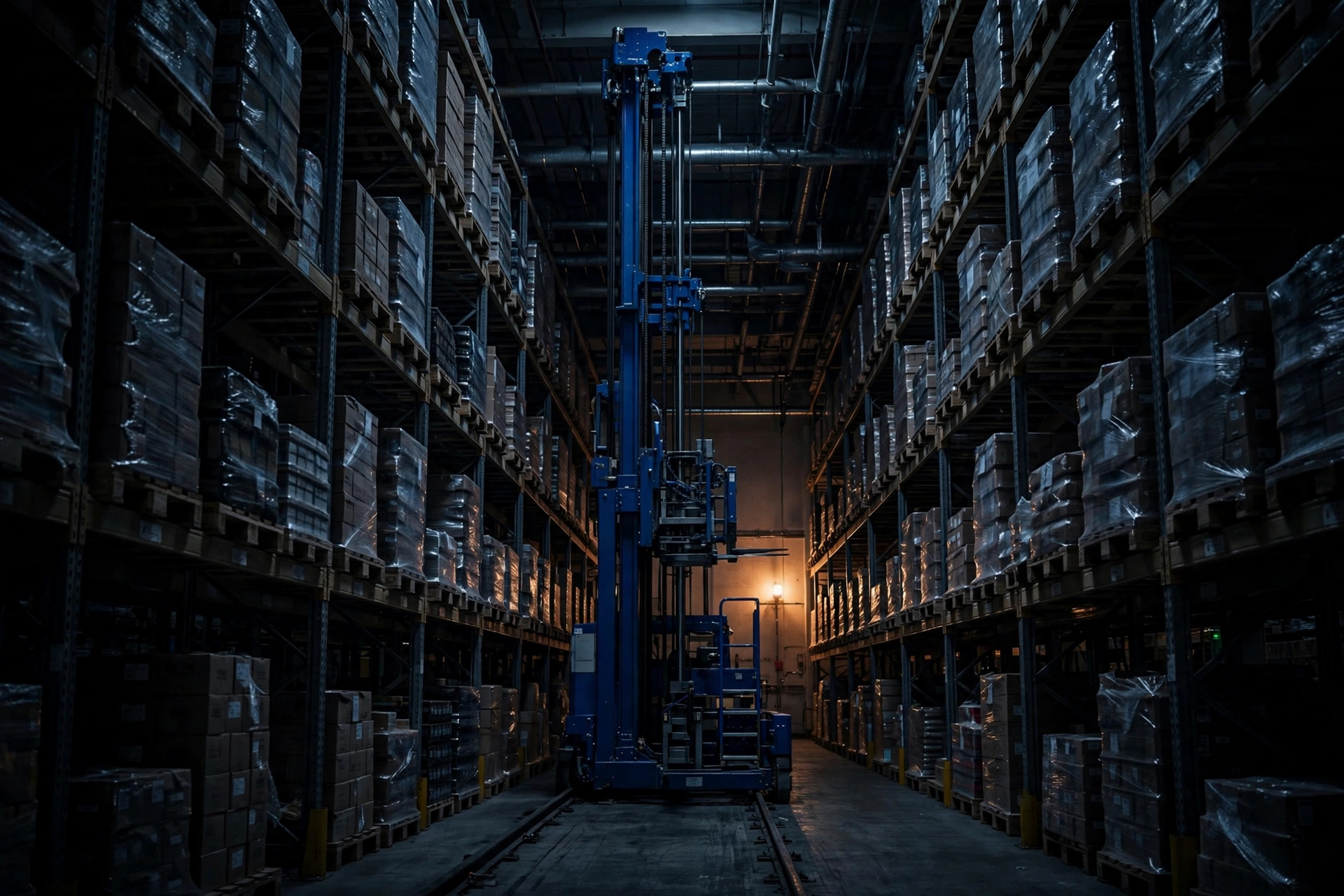
Summer 2022, rolling blackouts across California. A food distributor I know ran a four-aisle mini-load ASRS. The moment power dropped, two stacker cranes were carrying pallets at 40 feet up. Power cut, the cranes emergency-stopped, brakes locked — two pallets suspended in the air. Worse, the control room's first instinct was "try rebooting." If they'd forced a reset while the UPS was dying, a pallet could have dropped through the racking. The damage wouldn't have been measured in hours of downtime.
This article breaks a power outage into four steps: what to protect in the first minutes, the restart sequence, how to get stranded pallets down, and post-recovery reconciliation. Use it as your template.
First, understand what actually happens when power dies
Many people assume the UPS "keeps the ASRS running." The truth: the UPS keeps the control systems alive — PLCs, servers, WMS. It cannot keep the stacker crane drive motors alive. A single aisle crane draws tens of kilowatts for travel and hoisting. A typical UPS buys you a graceful stop, not continued operation.
The instant power drops, the crane's safety logic kicks in: drives de-energize, mechanical brakes lock, the load freezes wherever it is. That design saves lives — what kills is human improvisation. Screen goes dark, someone hits reset, someone tries to hand-crank the hoist, and a pallet swaying at 30 feet up is a nightmare you don't want.
There's also an invisible loss: interrupted WMS transactions. Putaway and retrieval tasks that were "dispatched but unconfirmed" at the moment of the outage become mystery entries. Restart without reconciling, and your inventory can be off by dozens of pallets.
So the first principle of the plan: when power dies, protect people and product first, production second. Get the order wrong and the losses multiply.
Step one: the first fifteen minutes — five actions
- Lock down the aisles. Immediately barrier-tape both ends of every aisle. Nobody goes under a suspended load. Suspended pallets are the number-one risk in these fifteen minutes.
- Record load positions. Have the shift lead (or review the camera footage) write down: which cranes are carrying loads, in which aisle, at roughly what height. Use pen and paper — the system may already be dark, and paper doesn't need power.
- Shed non-essential loads. Confirm the UPS feeds only the control systems. Kill lighting and office power to stretch control-system runtime for an orderly shutdown.
- Notify. Work the call tree in parallel, not in sequence: warehouse manager, the equipment vendor's 24-hour service line, the utility company (ask for estimated restoration time). Don't wait — call all of them now.
- Freeze inbound. Stop unloading inbound trucks. Pallets already on the conveyor stay put — send nothing more toward the ASRS.
Put these five on a single sheet of paper taped to the control room wall. People panic when the lights go out; a checklist beats memory ten times over.
Step two: the restart sequence — order matters
Power's back. Don't just flip everything on. Wrong order means fault alarms at best, a crane into the racking at worst.
- Control systems first. Servers, PLCs, network switches up in sequence. Wait until WMS and the equipment control system are fully online with normal status lights.
- Export the "outage snapshot." Pull from the WCS/WMS a list of every in-flight task at the moment of the outage: which pallets were on cranes, which were on conveyors, their target locations. This list is the baseline for manual reconciliation.
- Return loads in manual mode, one crane at a time. Switch each crane to manual or semi-auto, have an operator visually confirm, and slowly lower loaded cranes to a safe height, returning pallets to their original or temporary locations. One crane at a time — no parallel moves.
- Dry run empty. With all loads secured, run each crane through its full travel empty — travel, hoist, fork extension — listening for abnormal sounds and watching for alarms.
- Resume automatic operation. Trial-run ten to twenty pallets first. Full speed only after WMS reconciliation checks out clean.
Full recovery for a four-aisle system takes roughly two to four hours. Don't rush it — rushing is how accidents happen.
Step three: when a stranded pallet won't come down
In most cases step two gets every pallet down safely. But prepare for two edge cases:
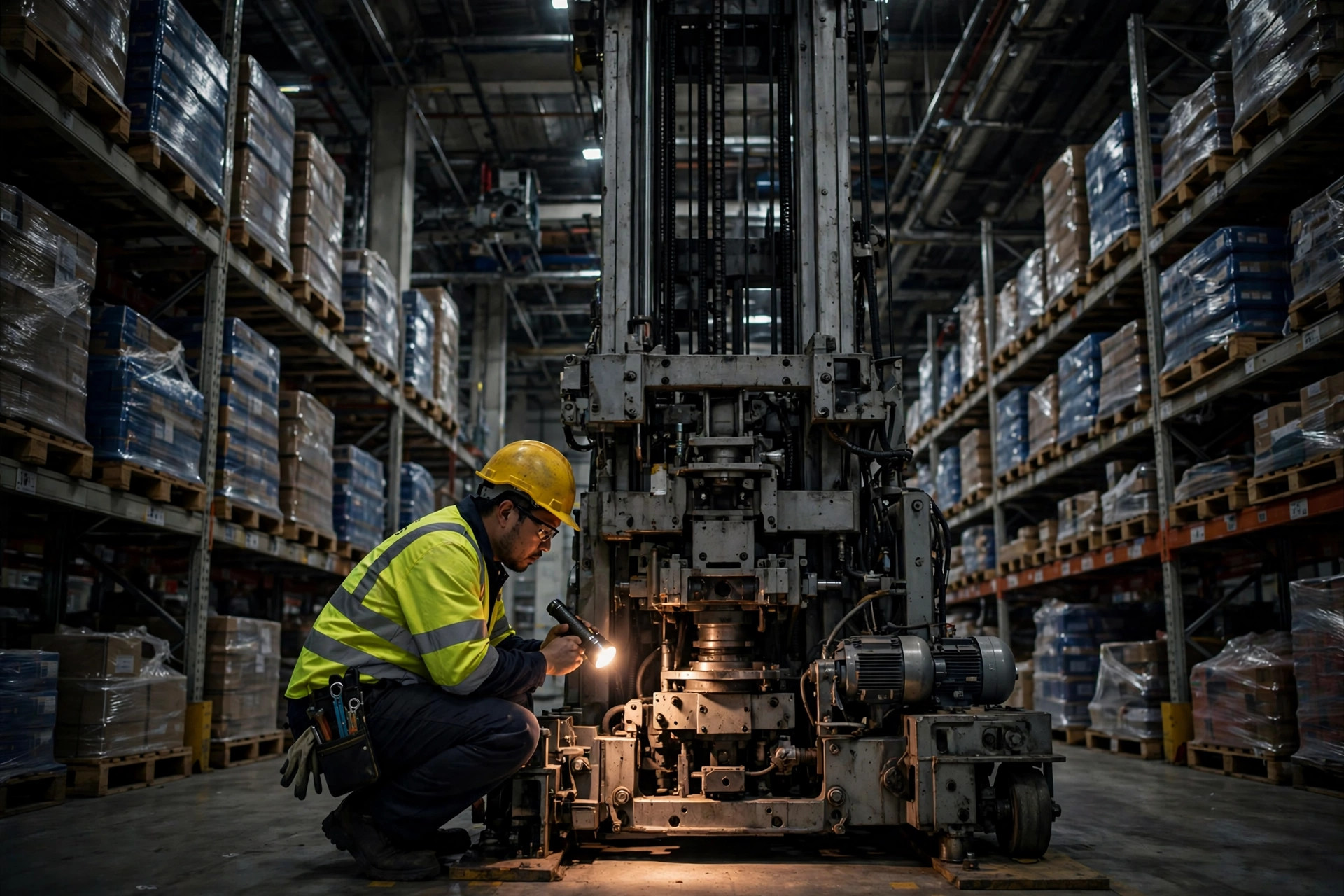
Mechanical failure plus outage. Brake jammed, manual release not working, pallet stuck. This is when you need the vendor's emergency service — which is why the plan must have their 24-hour number, verified at least once a year. I'm not joking: I've seen plans listing a phone number belonging to an engineer who left three years ago.
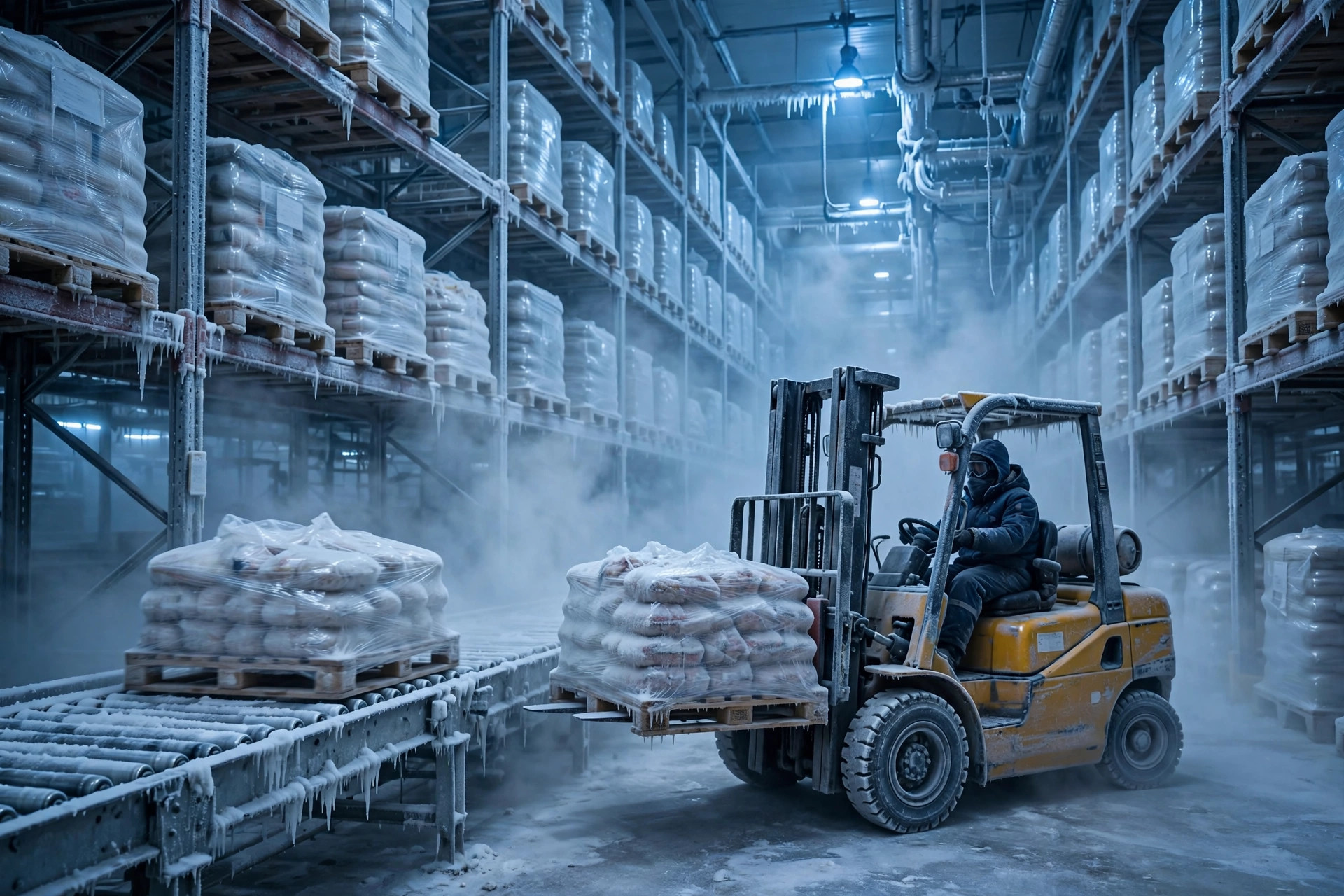
Extended outage (over eight hours). Customers need product, the product is in the ASRS, and you can't reach it. The plan needs a degraded-mode section: which SKUs switch to manual picking, which backup warehouse covers, who talks to customers and what they say. Food warehouses add cold-chain timing — in a refrigerated ASRS, someone must track the temperature recovery curve against product shelf life.
My recommendation: run a real outage drill once a year. Actually kill the power (or simulate it) and walk the whole procedure. One afternoon of lost throughput buys you a calm team when it happens for real. Warehouses I've worked with that drill recover in about half the time of those that don't.
Step four: post-recovery reconciliation — three things must match
Before resuming production, three data sets must align:
- WMS inventory versus physical locations. Every pallet that was in flight at outage time gets individually verified. Off by one is not acceptable — one is tomorrow's cycle-count variance.
- Equipment alarm logs. Export every alarm from the outage window. Look for sensors or encoders damaged at the moment of power loss. Fix before restarting.
- UPS and electrical inspection. How long did the UPS actually hold this time? What's the battery health? Plenty of warehouses run UPS batteries three years past replacement — giving you ten minutes when you needed thirty. Check now, replace as needed.
Don't forget the conveyors: the other disaster zone
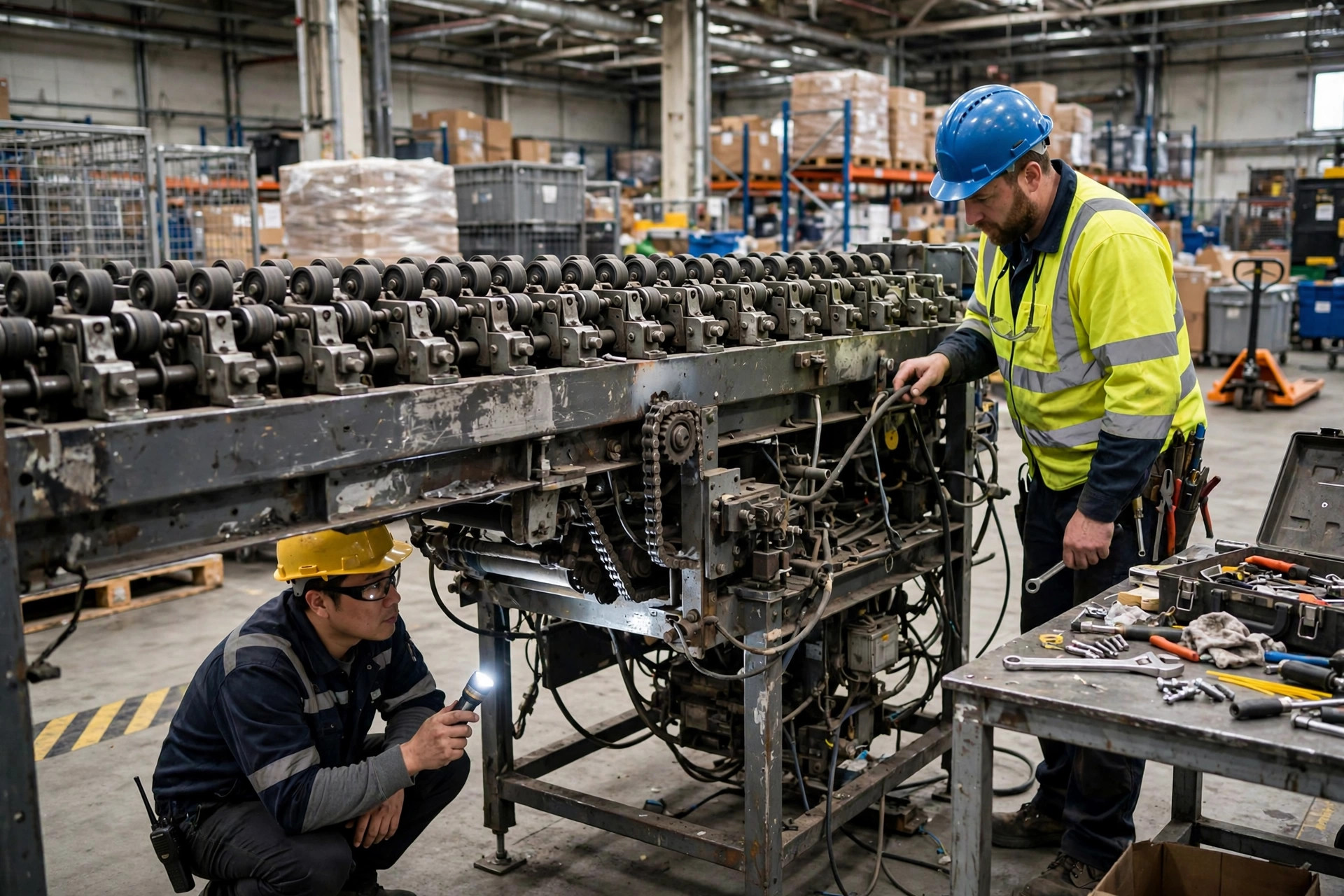
Everyone focuses on the cranes, but conveyor pallets are just as messy. At power loss, conveyors stop dead, and pallets can halt in photo-eye blind spots — the system thinks the zone is empty when it isn't. Restart automatic mode without checking, and two pallets rear-end each other on the conveyor.
The fix: after power returns and before going automatic, walk the conveyor line and record every pallet's actual position against the system's. For mismatches, manually move the pallet to a photo-eye-confirmed position or correct it in the system by hand. Twenty minutes of work that prevents the first post-recovery collision.
Prevention is cheaper than the plan: an investment list
Finally, the prevention math — all cheaper than one real outage:
- UPS capacity plus scheduled battery replacement. Target: keep control systems alive at least thirty minutes for orderly shutdown and data preservation. Replace batteries every three years, not when they fail.
- Diesel generator or dual utility feed. If you can swing it, this is the ultimate answer. Not cheap — but compare it against one eight-hour outage. A four-aisle ASRS represents six figures of daily throughput value. A generator pays for itself in a few years.
- A printed load-position sheet. Print the current in-flight task list every evening and leave it in the control room. When everything goes dark, that paper is your WMS. Cost: a few sheets of paper.
- A vendor emergency service contract. Get four-hour on-site response written into the maintenance contract. Don't buy the cheap "business hours only" package.
Outages are low-probability, high-expected-loss events — one is enough to hurt for half a year. The plan doesn't need fifty pages. Four steps: protect people and product, restart in sequence, handle stranded loads, reconcile after. Print it, tape it to the wall, drill it once a year. When the day comes, you'll be glad you spent this afternoon.