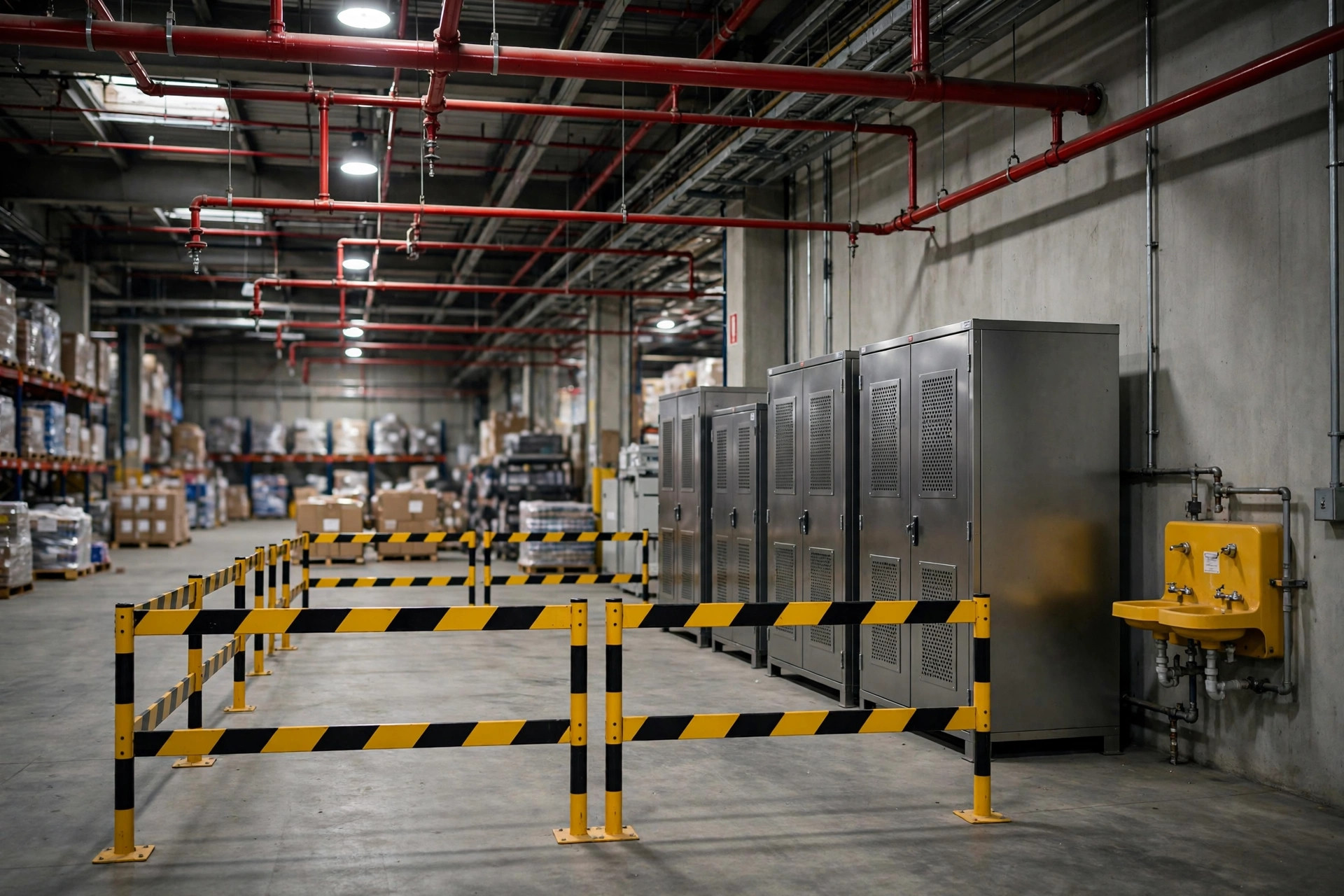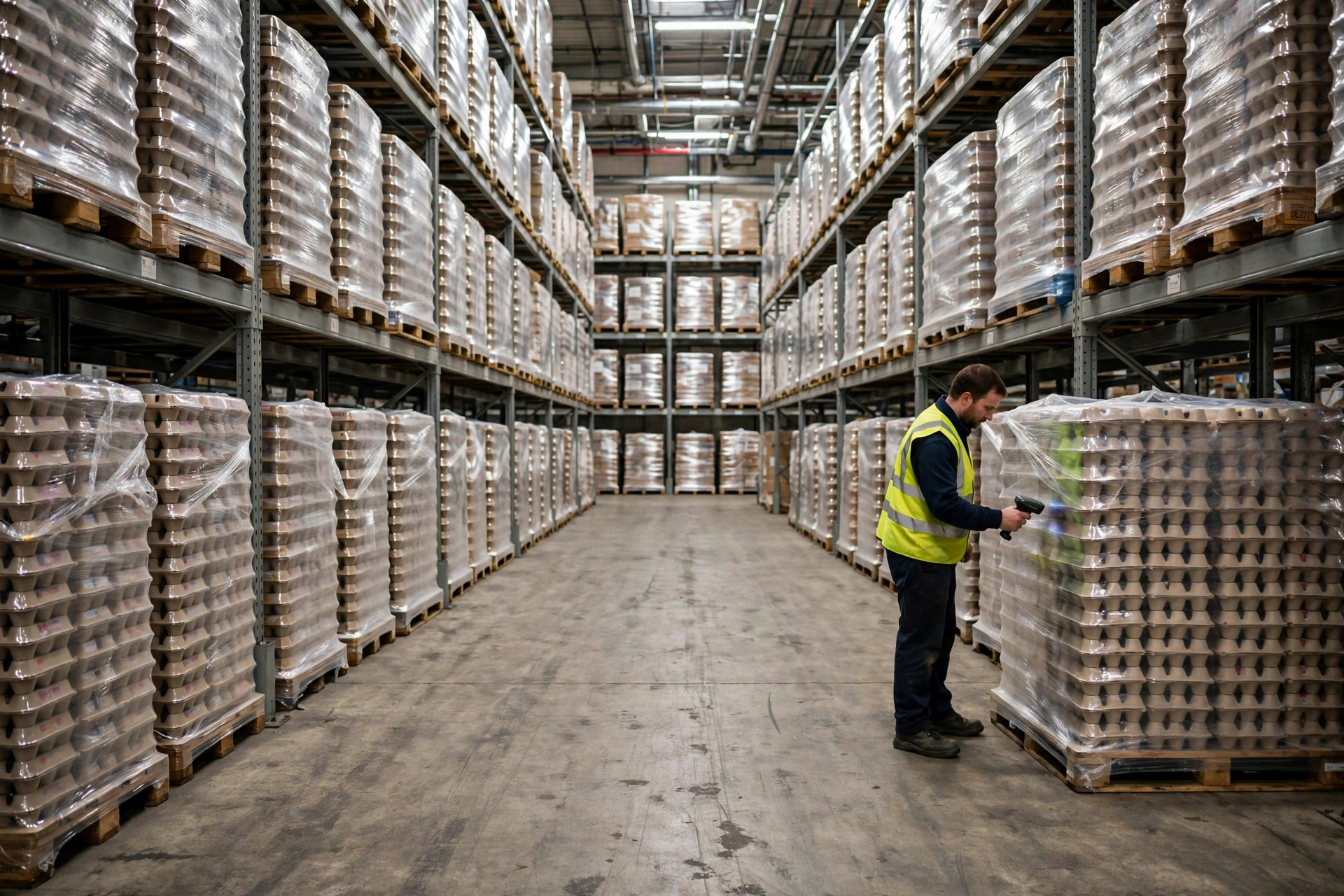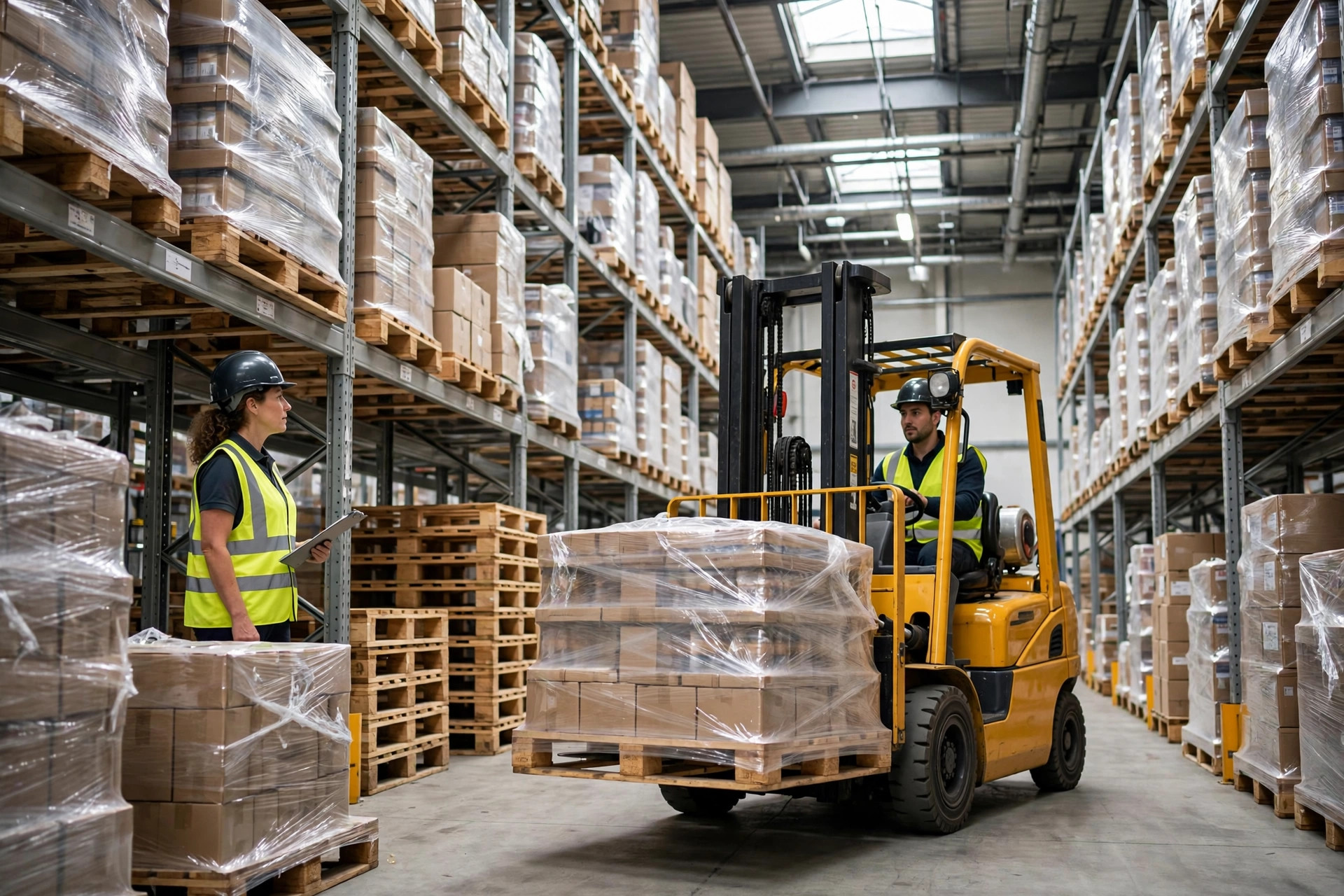
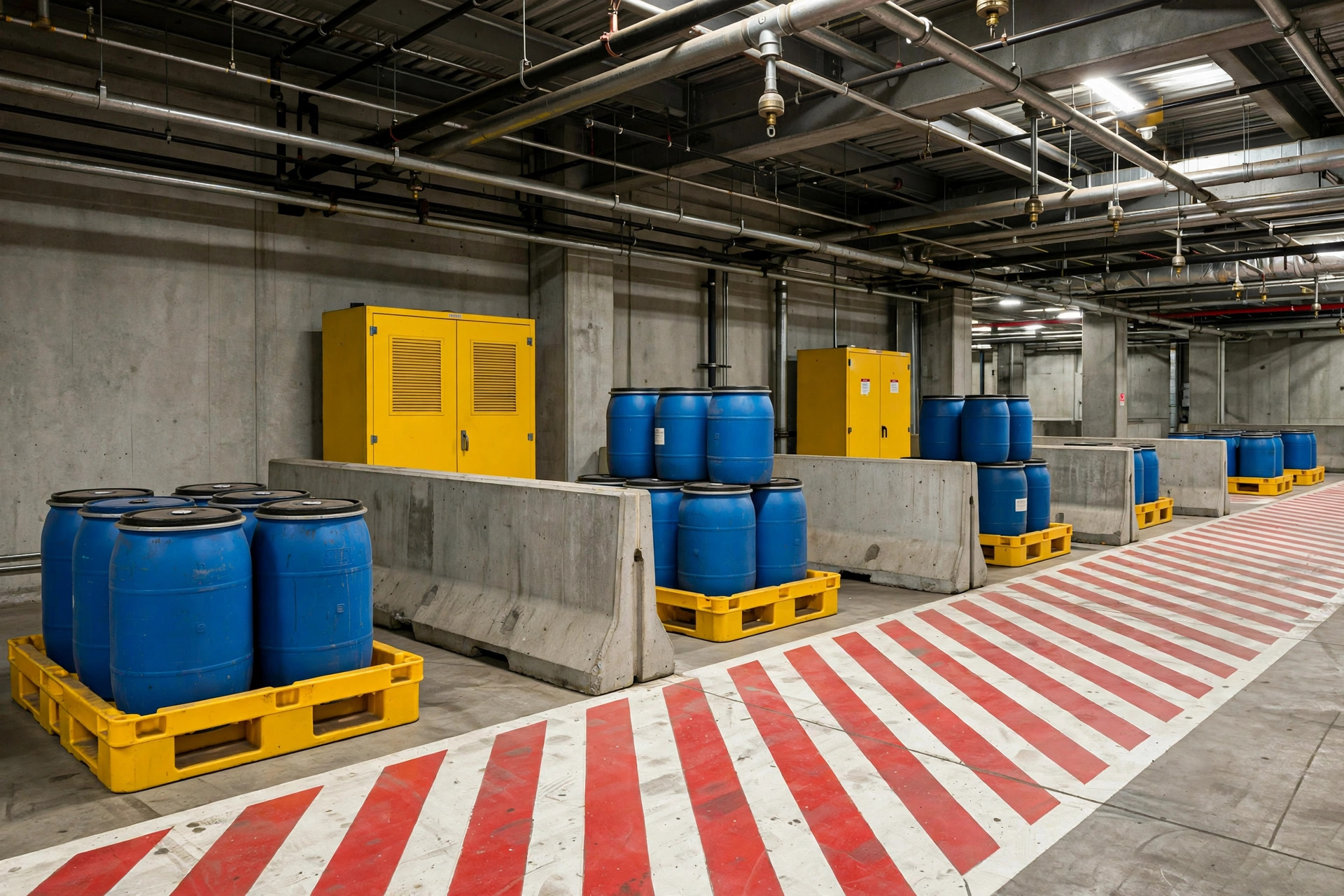
Two years ago I walked a chemical 3PL in Ontario, California — 120,000 square feet, hazmat area looked sharp. Yellow safety cabinets, red explosion-proof lights, everything in place. Then I circled the racks, pointed at a row of nitric acid drums, and asked the warehouse manager: "What's on the pallet next to these acids?" He said glue. I said: "Glue is flammable. Nitric acid is an oxidizer. These two are neighbors. How are you going to explain that to the fire marshal?" He broke out in a sweat on the spot.
Here's my verdict up front: hazmat segregation comes down to one sentence. Keep chemicals that shouldn't meet far enough apart that they can't react — or cut them off from each other with a physical barrier. Most warehouses don't lack the awareness. They segregate, but the distance is short, the wall is wrong, or they measured from the wrong place.
Know your enemy pairs
In twenty years in this business, I'd say eight or nine out of ten hazmat incidents I've seen weren't a chemical blowing up on its own. They were two things that should never have met, meeting. Memorize these pairs:
Oxidizers plus flammables is the most common killer. Nitric acid, sodium hypochlorite — oxidizers don't burn by themselves, but they make any nearby fire burn faster and hotter. That Ontario warehouse with nitric acid next to glue was a textbook case.
Acids and bases react violently and throw off heat; a deformed drum splashes. Acids mixed with cyanide compounds release hydrogen cyanide. Acids mixed with bleach release chlorine gas. Both gases are acutely toxic — one spill and the whole building evacuates.
Then there's the pair people forget: water-reactives — sodium metal, potassium powder. Their enemy isn't just another chemical; it's water, including the water from your fire sprinklers. That means the location of this inventory has to be decided with suppression in mind from day one, avoiding sprinkler coverage or using a dedicated suppression system. A lot of warehouses never think about this.
In practice you don't need to memorize the whole incompatibility chart. My method: for every chemical that arrives, open Section 10 of its SDS — "Stability and Reactivity" — where incompatible materials are spelled out. Sort your entire inventory into four to six groups: oxidizers, flammables, acids, bases, toxics, water-reactives. Post the grouping chart on the receiving dock wall so the receiving team knows which zone each shipment goes to just by looking. Get this step right and everything downstream is just following the chart.
The 20-foot rule, and how to actually measure it
The industry's famous "20-foot rule" comes from the fire code — IFC Section 5003.9.8 — not from OSHA. The fire code requires that incompatible materials in containers over 5 pounds or half a gallon be separated by one of four methods: at least 20 feet (about 6 meters) of distance; a noncombustible partition extending at least 18 inches (about 46 cm) above and to the sides of the stored material; an approved hazardous materials storage cabinet; or, for compressed gases, a gas cabinet or exhausted enclosure.
OSHA 1910.106 handles a different question: how flammable liquids themselves are stored and in what quantities — for example, limits on how much can sit outside an inside storage room or a safety cabinet within one fire area. When the fire marshal checks your distances, the citation is the fire code. Quote the wrong source and you look like you don't know your business.
How to measure, from my experience — three hard rules: measure from the nearest edge of the two stored materials, not from the center of the aisle; upper and lower levels of the same rack count as one unit; and count any pallet overhang sticking out of the rack. Plenty of warehouses measure their 20 feet from the middle of the aisle and end up with 14 feet between actual product edges. That kind of "close enough" is worth nothing at inspection time.
When you don't have the space: what replaces distance
The most common complaint from small warehouses: the building is only so big, we can't pull 20 feet. The fire code gives you three alternative paths. Pick one and commit.
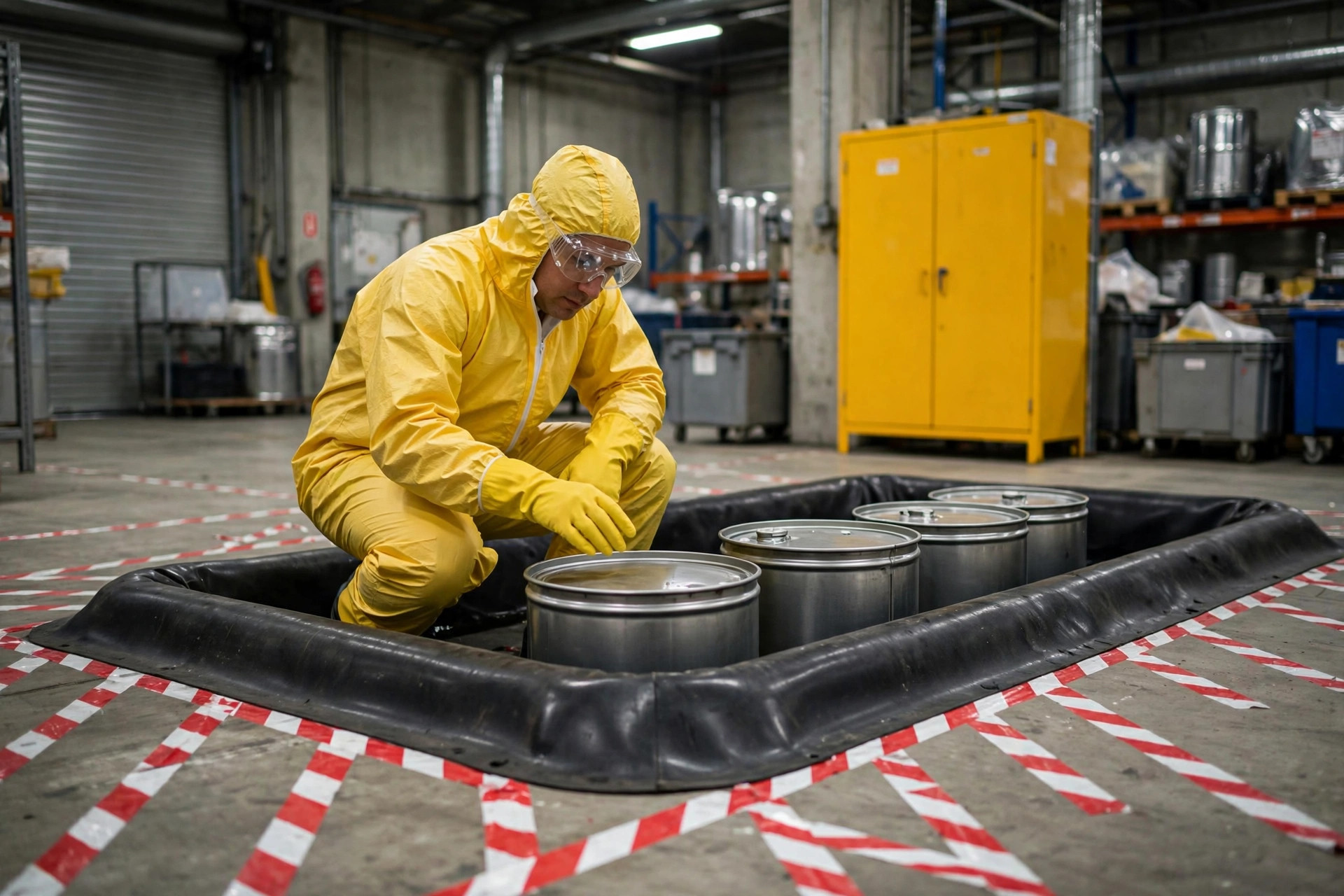
The cheapest fix is the safety cabinet. An OSHA-recognized flammable liquid storage cabinet typically holds up to 60 gallons. Acids in one cabinet, solvents in another — each cabinet acts as its own fire barrier. My standing advice to small warehouses: buy the cabinets first, talk about floor layout second. A few thousand dollars solves the problem; don't gamble against an inspection.
The second path is building a wall. A 2-hour fire-rated wall creates a separate fire compartment, and inventory on either side no longer counts as adjacent. But note: once the wall goes up, sprinklers and ventilation have to follow the same compartmentalization, or the wall is a wall and the smoke is smoke — wasted money.
Compressed gases deserve their own note. Oxygen and acetylene cylinders are a classic enemy pair and the same separation logic applies — distance or a fire barrier, with the exact method per your local fire code. Cylinders must stand upright, secured against tipping. That's basic, and yet someone violates it every year.
Spill containment, absorbents, classified electrical: the rest of the package
Segregation stops reactions. Spills are a separate problem. Build spill containment berms to the industry's standard practice: 110% of the largest single container's volume. And don't just do the drum math — if pallets sit inside the berm, subtract the volume they displace. People get this wrong all the time.
Keep absorbents matched to the chemistry of their zone: acid-resistant pads for acids, oil-only pads for oils — never mix them, because mixed absorbents become a reaction source themselves. Placement matters too: keep them next to the zone they serve, not all stacked at the building entrance. Nobody runs 50 meters for a spill pad during an actual leak. Inspect quarterly for moisture and expiration.
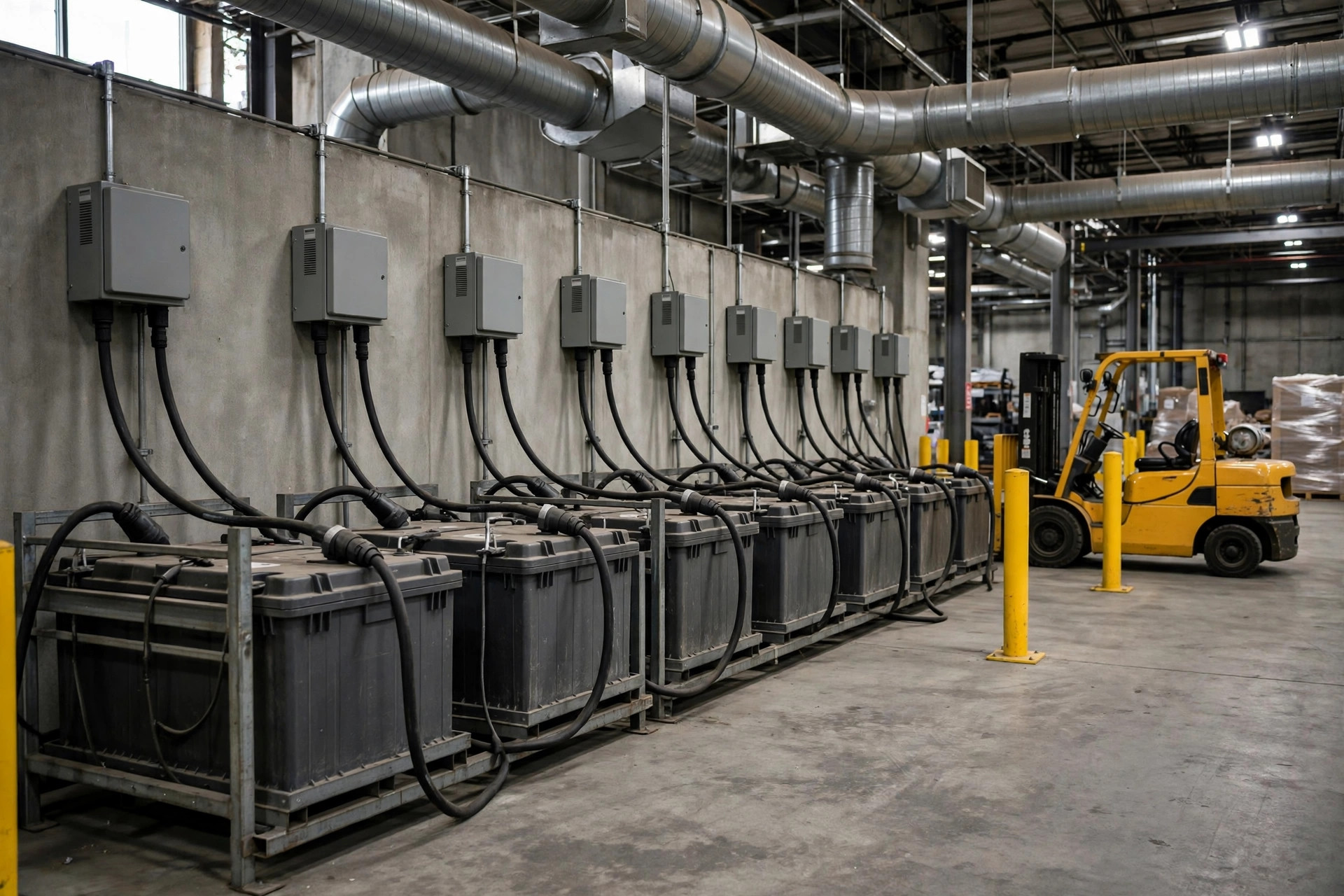
Electrical in classified areas follows NEC Article 500; a flammable liquid storage area is typically Class I, Division 2. Ventilate low — solvent vapors are heavier than air and sink. Forklifts should be explosion-proof, or keep the battery charging area fully separated. The worst I've seen: a regular power strip in a classified area, charging somebody's phone. That kind of detail belongs on your checklist.
From SDS to slot: a process that actually runs
The biggest risk after a segregation plan is drawn is that the plan lives on paper while operations do their own thing. The five-step process I set for warehouses: every SDS must be entered into the system within 72 hours of the chemical's arrival; every SKU gets a hazard-class tag in the WMS; slotting rules enforce hard separation by class, with the system blocking violations outright; monthly cycle counts include a quick mixed-storage check; the grouping chart gets reviewed quarterly for any new chemical that hasn't been classified.
Steps two and three are the load-bearing ones: the tags must live in the system, and the rules must be hard blocks. Relying on memory and good intentions deforms within three months.
Before opening day and every quarter, walk the floor with this checklist:
- Section 10 of every chemical's SDS reviewed; no incompatible pair missed
- Incompatible groups at least 20 feet apart, or separated by an 18-inch noncombustible partition or safety cabinet
- Distances measured from nearest product edges and documented
- Berm capacity at 110% of the largest single container, pallet displacement subtracted
- Absorbents matched to the zone's chemistry — not mixed, not expired
- Classified-area electrical labels complete; forklifts and charging areas compliant
- No SKU missing its hazard-class tag in the WMS; violations get blocked by the system
- Emergency contacts and SDS binders within arm's reach at the hazmat area entrance
One thing you can do tomorrow: draw a floor plan of your storage area and mark every incompatible pair currently sitting together. I'll bet that most warehouses doing this for the first time find at least one pair that's too close. Finding it is the good news — then fix it using the four options above, starting with the cheap ones like safety cabinets.