Running Out of Sorter Chutes? Here's How to Add Temporary Ones
In early November last year, I visited an e-commerce warehouse in Fontana getting ready for Black Friday. Their cross-belt sorter had 120 chutes, but peak-season SKUs had ballooned to nearly 200. Chutes ran out, so workers had to haul overflow parcels to cage carts on the side and sort them a second time by hand. That single workaround added 6 extra laborers a day — over $30,000 in extra labor across the 40-day peak, not counting the customer service cost when mis-sort rates climbed.
Bottom line up front: when you run out of chutes, 99% of warehouses do not need a new sorter. There are plenty of ways to add temporary chutes — but picking the wrong one is worse than doing nothing.
First, figure out exactly how many chutes you're short
Don't go by gut feel. Pull the last 30 days of chute utilization: how many chutes did the peak day use, how many parcels does one chute handle per day, and which chutes are "one customer eats half the capacity" hogs.
My go-to formula is crude but works: peak-day volume ÷ parcels per chute per day × 1.15 (15% buffer) − existing chutes = the gap. And don't use the equipment vendor's rated throughput for that middle number — use your own numbers from last peak. A cross-belt chute realistically handles 3,000 to 5,000 parcels a day; vendor ratings usually run 30% high.
Odds are the math shows you're not short 50 chutes — you're short 12 to 20. At that scale, there's no reason to touch the machine itself.
The cheapest move: chute consolidation and time-sharing
Don't add physical chutes before reallocating the ones you have. Most warehouses set chute assignments once in January and never touch them again, long after the SKU mix has moved on.
Step one: merge low-volume chutes. Two chutes doing 200 and 300 parcels a day can share one chute with an extra manual verification step — throughput barely suffers. I've seen a warehouse free up 18 chutes this way, at zero cost.
Step two: time-share chutes. Customer A's chutes in the morning, Customer B's in the afternoon. Your WMS just needs two chute mapping tables that switch per wave. The cost is a 10 to 15-minute chute clearing at each switchover, so it fits warehouses with long gaps between waves. This works especially well for 3PLs sharing one sorter across multiple clients.
Only after both steps should you talk about adding physical chutes.
Three ways to add temporary chutes, with the math done
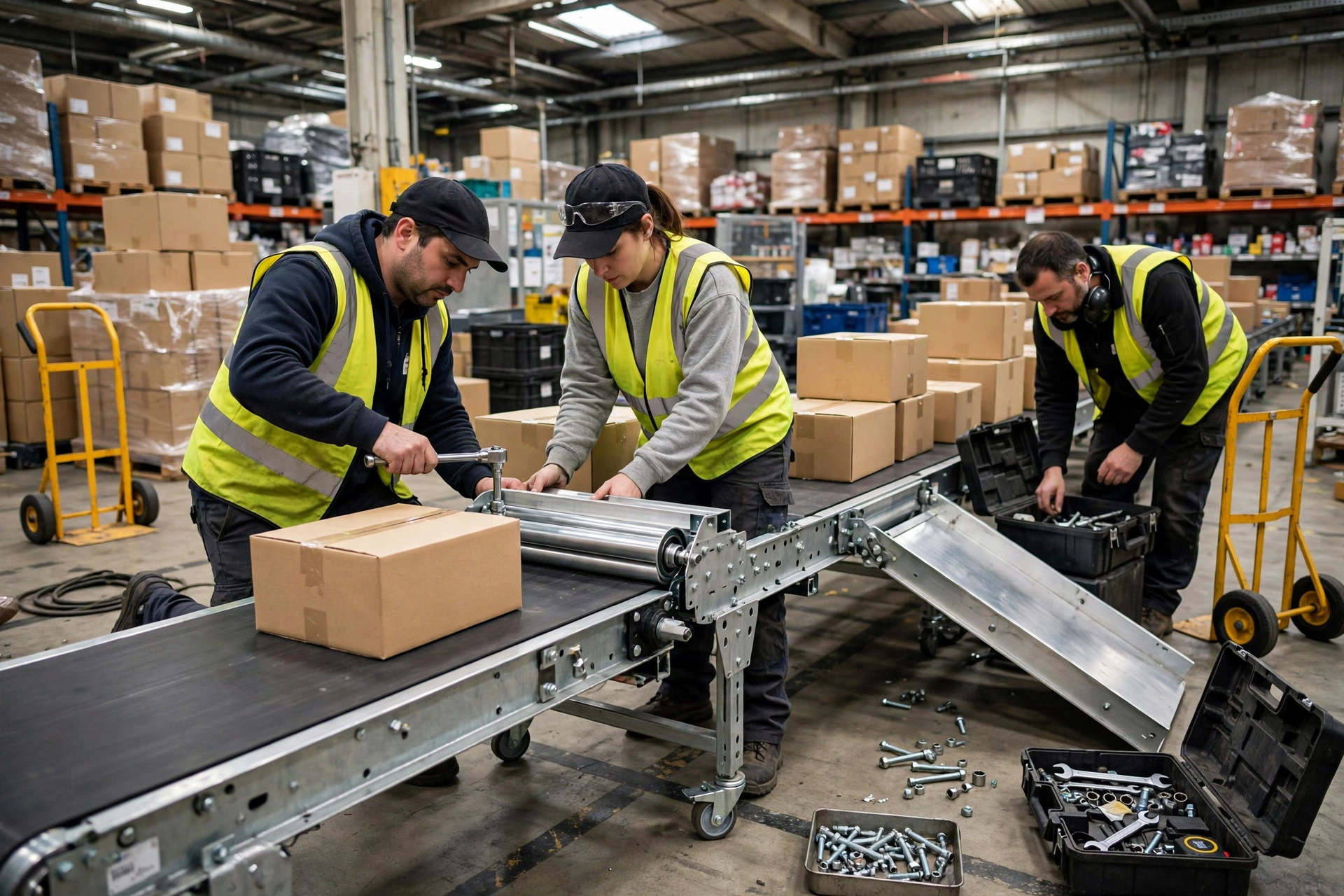
Option one: portable roller conveyor extensions. Buy a few 10-foot sections of mobile roller conveyor, bolt them to the sorter's overflow end, and sort manually at the far end. A used 10-foot section runs $800 to $1,200; four sections plus a manual sort table comes in under $10,000 and goes up in half a day. The catch is it's all manual labor with a hard speed ceiling — fine for up to about 5,000 extra parcels a day.
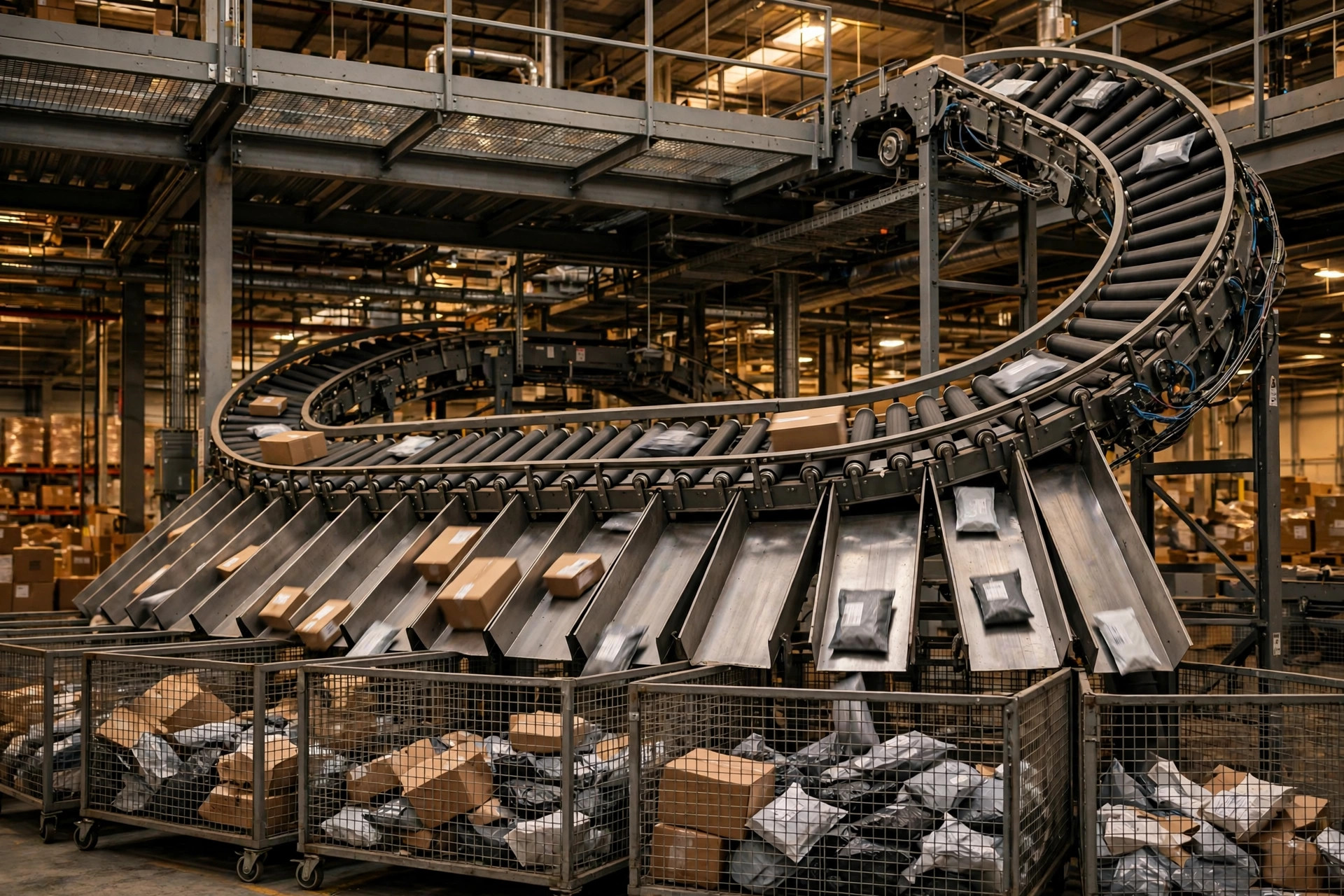
Option two: add-on slide chutes plus cage carts. Mount temporary chutes on the side of the sorter so parcels slide straight into cage carts below — one cart per chute, swap full carts for empty ones. A custom chute runs $2,000 to $4,000, and you already own the carts. This is the best value play I know. The Fontana warehouse went this route: 14 add-on chutes, under $30,000 total, and it carried them through the full 40-day peak.
Option three: rent a modular sorter section. Some equipment vendors lease short cross-belt or swivel-wheel sections by the month that tie into your main line. Best performance, highest cost: $20,000 to $50,000 a month, and you need to book two months ahead. Only worth it when daily overflow exceeds 20,000 parcels or you simply can't hire enough hands.
The selection rule is one equation: gap volume × peak days × manual cost per parcel, versus the price of the option. In my experience, slide chutes plus cage carts win in about 90% of cases.
Numbering temporary chutes and configuring the WMS
Physical chutes are only half the job — the system has to recognize them too. The classic failure mode: temporary chutes go up, nobody creates chute records in the WMS, and sorters work from memory. Mis-sort rates take off immediately.
Do it properly: give every temporary chute a formal ID that can't be confused with main chutes. If main chutes are S001 through S120, make the temporary ones T01 through T14. Print the labels big and mount them directly above each chute — readable from 10 feet away. Create matching chute records in the WMS with the full mapping: destination lane, sort logic, exception handling. All of it.
One more detail: temporary chute destinations change often — one customer today, another tomorrow. Keep a separate "peak chute mapping table" in the WMS and refresh it 10 minutes before each wave, with a printed copy taped next to the sort station. Don't expect sorters to memorize anything — peak-season temps get half a day of training, and the simpler the setup, the fewer the errors.
Two traps after you expand
First, verification. Temporary chutes have no scan-confirmation step, so mis-sort rates will rise. Add manual verification at the end of every temporary chute — or at minimum, color-tag parcels from temporary chutes so pack stations can spot them instantly. The Fontana site skipped verification in week one and mis-sorts jumped from 0.3% to 1.1%. Their customer service line melted down.
Second, traffic flow. Temporary chutes and cage carts eat into main aisles, and forklifts fighting pickers for the same lane is a safety problem first and an efficiency problem second. Mark the floor before you build: keep at least 8 feet of clear main aisle, and pre-define the exact route for hauling full carts away.
My recommendation
Don't rush to buy equipment when chutes run short. Work the sequence: reallocate, then time-share, then add slide chutes — and run the numbers at each step. If peak is more than 60 days out, you have plenty of time to do the chute utilization analysis now. If it's under 30 days, go straight to slide chutes plus cage carts and don't second-guess it.
One thing to remember: temporary chute expansion isn't an equipment game, it's a game of knowing your own volume profile. If you can't say how many parcels each chute handled on your peak day, every chute you add is a guess.