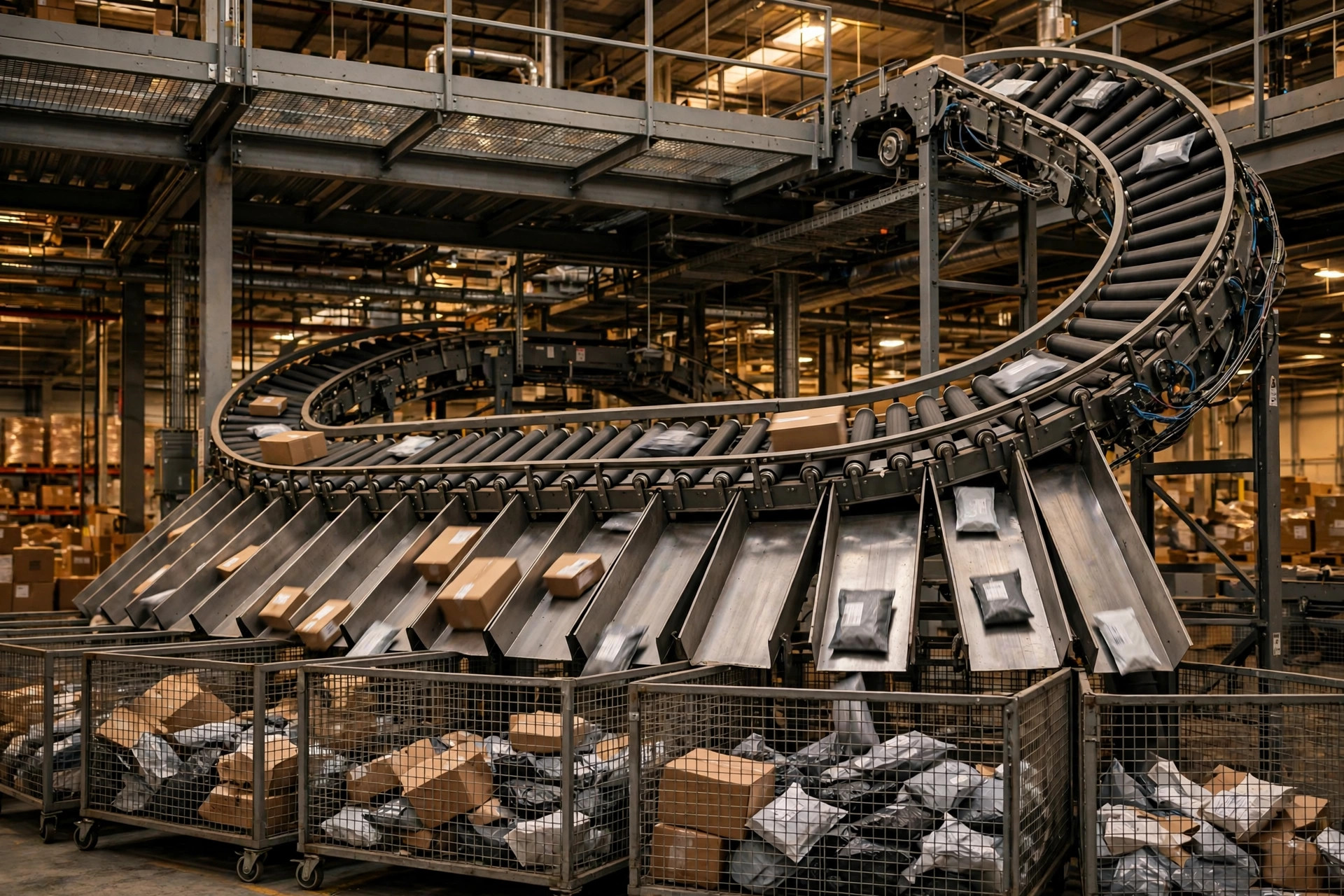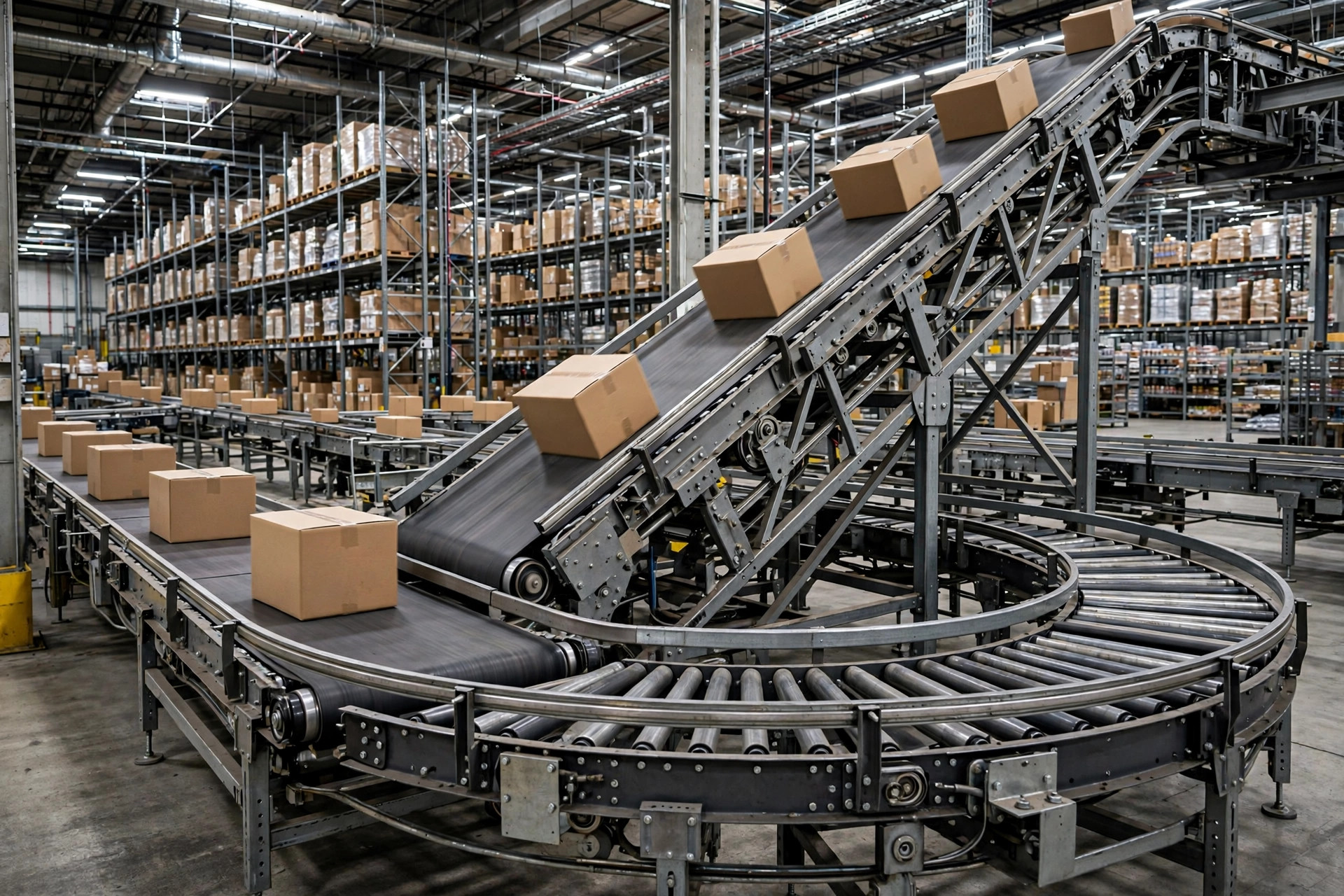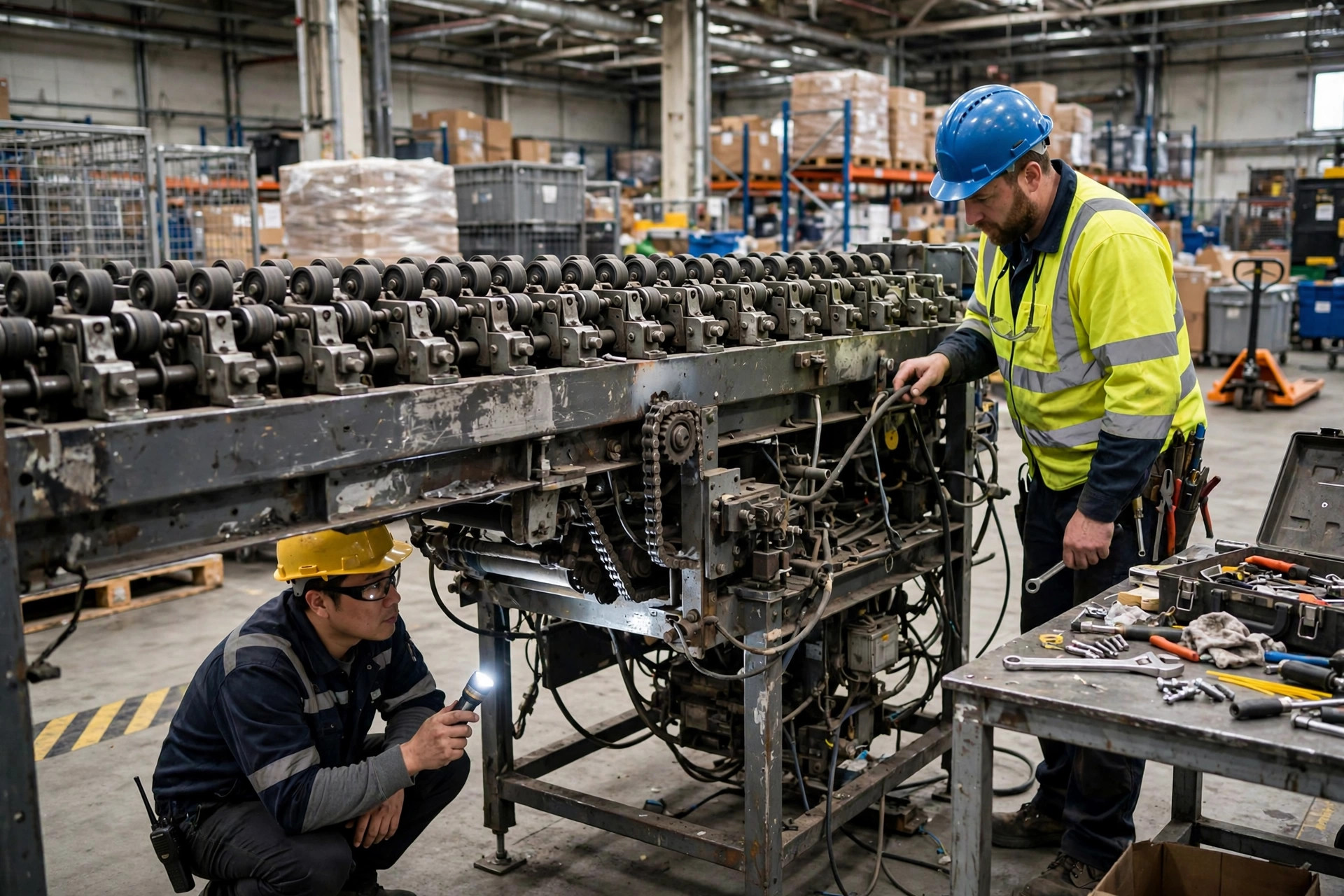

Two winters ago I was walking a 200-foot belt line at an e-commerce warehouse in Fontana. The belt edge was frayed, and the inside of the frame had a shiny groove worn into it. The supervisor told me the line "always drifted a little" and they'd been living with it for half a year. That day the belt climbed clean off the frame and jammed into the head pulley. Four hours of downtime, right in peak season, with a day's worth of orders piling up at pack-out. Since then I've had a habit: whenever I walk into a warehouse, my eyes go to the belts first — any wear marks on the edge, any dust piling up. Belt drift is a "the earlier you fix it, the cheaper it is" problem. Wait too long and you're paying tuition.
The three usual suspects
Suspect number one: misaligned idlers and pulleys. This is the most common. New lines get rushed, idler frames get bolted down before they're squared; or a tech swaps an idler, drops it in by eye, tightens the bolts, and now the idler axis isn't perpendicular to the belt centerline. There's an old field saying that covers it: the belt runs to the tight side, to the high side, and to the lagging side. If one end of the head or tail pulley sits even slightly higher, the belt walks toward the high side; if the take-up screws aren't even, the belt walks toward the tighter side. The signature of this one is consistency — it drifts from startup, always to the same side.
Suspect number two: a skewed splice. Vulcanized or mechanical, if the two ends of a splice differ by even a few millimeters, the splice tugs the belt sideways once per revolution. This drift is periodic: you'll see the belt wander once per belt revolution, and the splice "jumps" a little as it passes over a pulley. Adjusting idlers does almost nothing here — the root cause is the splice, and you'll be chasing your tail.
Suspect number three: off-center loading. Runs fine empty, drifts the moment product hits the belt — nine times out of ten the loading chute is off or the drop point isn't on the belt centerline. In e-commerce warehouses it's usually manual induction: people toss parcels on by hand, everything lands on one side, and months of off-center loading slowly trains the belt to drift while wearing out one side of the idlers. In bulk operations it's a worn chute skirt letting material flood to one side.
A three-minute field diagnosis
I use three moves on site. First: no-load or loaded. Drifts empty, the problem is in the equipment — idlers, pulleys, splice, check them in order. Runs fine empty and drifts under load, the problem is loading — check the chute. Second: where along the line. The whole line drifting to one side points at the head and tail pulleys or uneven take-up; drifting only in one section points at the idler sets in that section, most likely a seized idler — a roller that doesn't turn is just grinding the belt. Third: the rhythm. Steady drift to one side means an installation problem; a once-per-revolution wobble means a splice problem; intermittent drift with no pattern usually means unstable incoming flow or somebody messed with the chute.
The adjustment checklist, in order
Safety first: shut down, lock out and tag out, and confirm the belt is fully stopped before you touch anything. Nearly every conveyor injury I've heard about started with "it's just a quick adjustment, no need to stop." The adjustment can wait five minutes. Your hands can't be reattached.
Work the list in order, don't skip steps:
- Check the idlers first. Walk the line and spin every idler by hand. Seized, noisy, or with a worn-through bearing cap — replace it on the spot. A seized idler is the single most common direct cause of drift, and swapping one takes minutes. Don't economize here.
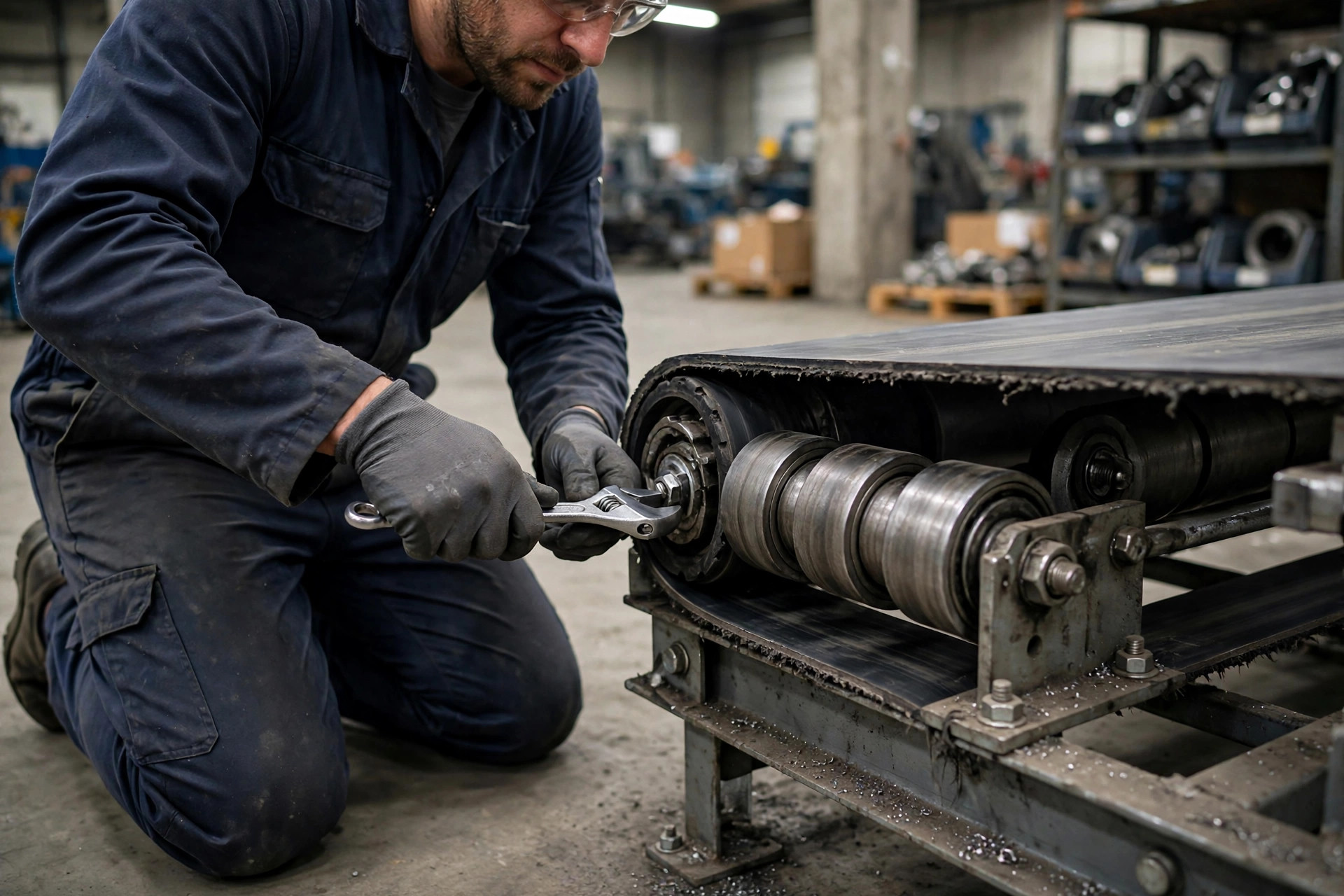
- Then the head and tail pulleys. Mark both take-up screws with chalk lines — the two sides must match. Check that each pulley axis is square to the frame centerline. When adjusting take-up, move both sides together, 2-3 millimeters at a time, then run a full belt revolution before judging the result.
- Nudge the idler sets. Whichever side the belt drifts toward, tap that side's idler frame gently forward in the direction of belt travel — gently being the operative word; a millimeter or two of movement is plenty. Adjust one set at a time, run a full revolution, then decide whether to touch the next one. Adjust five sets in a hurry and you'll end up resetting everything and starting over.
- Check the chute and drop point. The drop point belongs on the belt centerline, with symmetric chute skirts — replace them when worn. On manual induction lines, paint a reference line on the floor so people place parcels in the middle of the belt instead of tossing them wherever is convenient.
- Don't try to fix a bad splice in the field. A skewed splice can only be fixed by re-splicing: bring in a vulcanizing crew for hot splices; for mechanical splices, check for loose or missing fasteners and confirm both sides line up. With a bad splice, the first four steps are wasted effort.
One more thing: self-aligning training idlers are sold everywhere. They can correct small drift, but don't expect them to cure a sick line. My take: training idlers are a supplement. Until the standard idlers are squared up, all the training idlers do is buy the equipment time — they treat the symptom, not the disease.
Stop the line and call the pros when...
Some situations are beyond tapping idlers. Pushing through turns a small problem into a major rebuild:
- The belt edge is frayed and worn away by more than a quarter of its original width;
- The splice is cracking or delaminating, or a mechanical splice is missing more than two fasteners;
- You've worked the checklist twice and the drift keeps coming back;
- Pulley bearings are noisy or hot to the touch, or idlers are seized across a long section;
- The belt is slipping and smoking — that's a fire about to happen. Stop immediately.
When you call maintenance, describe the symptoms precisely: drifts empty or loaded, which side, which section, when it started, any noise. The better the information, the faster they arrive and the shorter the downtime. "The belt's drifting, come quick" tells them nothing.
Drift is, at the end of the day, an "early detection is cheap detection" problem. The one thing I tell every client now: before startup each day, the shift lead walks the line for two minutes — check the belt edges for wear marks, listen for noisy idlers, feel whether the pulleys run hot. Two minutes, against a belt replacement plus downtime that easily runs into five figures. Walk your line tomorrow morning.