
Selling consumer electronics online in the US, there's one name you can't route around: Best Buy. Its Marketplace isn't open to everyone — the review is strict and the rules are many — but once you're in, you hold a brand endorsement that American consumers universally trust.
My verdict up front: Best Buy fits mid-sized sellers that already have a brand and compliance muscle. Newcomers, stay away — the documentation review and systems integration alone can stall you for two months. But if you sell 3C accessories or small appliances, one slot here outperforms ten on Amazon, because buyer trust comes nearly free.
What this platform really is
Best Buy is America's largest consumer-electronics retail chain, and its third-party Marketplace runs on Mirakl with an invite-plus-review model — not open registration. The positioning is explicit: genuine products, brand sellers, categories concentrated in 3C, home appliances, and smart home.
The biggest difference from Amazon is traffic intent: people come to Best Buy ready to buy. Average order values run high, return rates run relatively low — but tolerance for pricing games and service slip-ups is also low. One bad review here hurts more than one on Amazon.
Requirements to sell
Four hard gates, all mandatory. First, a US business entity with an EIN that can sign a real commercial contract — individual sellers need not apply. Second, brand credentials: own brand or formal authorization, with UL, FCC, and other category-appropriate certifications (check per category) — incomplete certifications mean instant rejection. Third, systems integration: orders, inventory, and tracking must flow over EDI or API; if you process orders by hand, don't bother. Fourth, customer-service standards — response times and return policies must meet platform requirements or you get delisted.
The platform also checks your brand's reputation on other channels. A pile of bad Amazon reviews will very likely sink your application.
How to get on
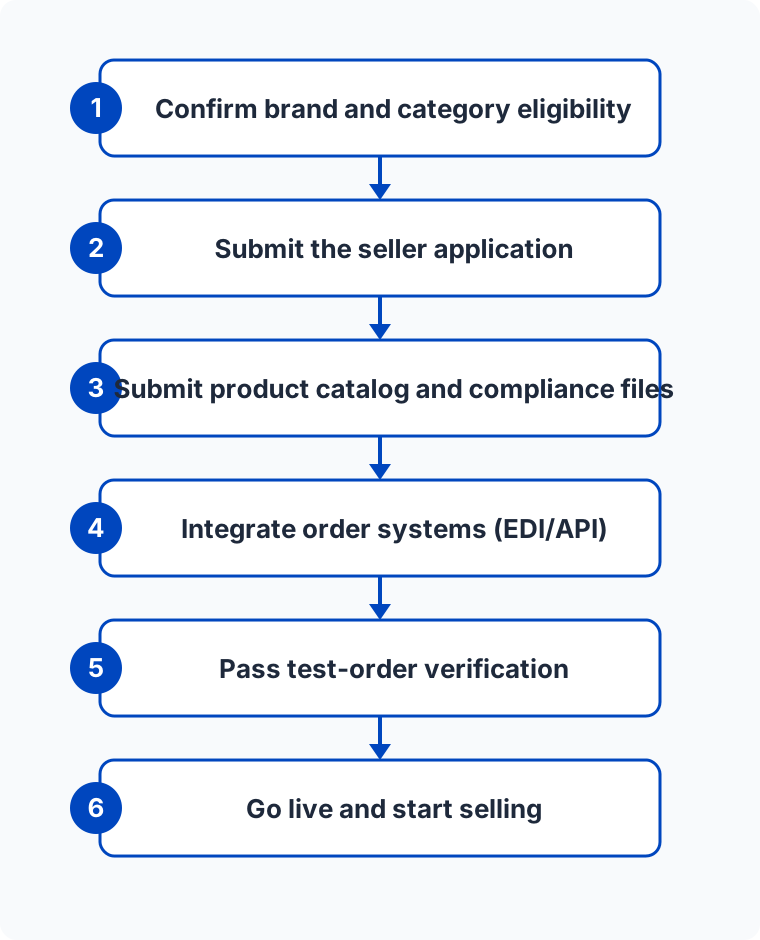
Step one, self-audit against the four gates. Have your certification files, EIN, and brand authorization letters ready before you submit — a rejection followed by re-application moves even slower.
Step two, submit the application. Fill in company info, categories, and expected annual sales in the official onboarding portal. Be honest — getting caught inflating numbers gets you blacklisted.
Step three, submit your product catalog and compliance files. Organize the SKU list, product images, manuals, and certificates per the template. Image standards are demanding — white background, multiple angles — sloppy uploads get bounced for rework.
Step four, integrate systems. Orders, inventory, and shipment tracking go over EDI or API. A provider with Mirakl integration experience can finish in two weeks; building it from scratch yourself, budget two months.
Step five, test orders. The platform places a few test orders and runs the full flow: accept, ship, upload tracking, deliver. Miss the SLA or submit a dead tracking number and you re-test.
Step six, go live. Once tests pass, products go up. The first 30 days are a probation period — on-time shipping rate and cancellation rate are watched closest. Don't stumble here.
Fees: run the numbers
Best Buy charges category commissions — check the official site for current rates — plus possible monthly or annual fees; ask during application. Run the math: a $299 soundbar at an assumed 8% commission means ~$24 to the platform; FCC/UL certification amortized over a first batch of 2,000 units is ~$3 per unit; inbound freight plus warehousing ~$6 per unit; last-mile delivery ~$12. You net ~$254, roughly a 15% gross margin.
Read the P&L this way: per-order operating costs run lower than Amazon (you save on ads), but upfront compliance investment is high. Under 300 units a month, that 15% margin won't cover the sunk cost of certification and integration. My line: enter only if you expect 500+ units a month; otherwise you're working for the platform.
Practical tips
First, pricing discipline. Best Buy is sensitive to cross-channel price comparison — price above Amazon and you get demoted. Sweep the major channels before pricing and stay level or lower.
Second, get content right the first time. Images, spec sheets, manuals — submit at the highest standard on day one, because revision reviews queue slowly.
Third, prep for Black Friday. Q4 traffic runs 3–5x normal — inventory and promo pricing must be locked by September. Booking freight in October means paying peak surcharges.
Fourth, serial-number management. For 3C products, log serial numbers on every inbound and outbound unit. When a customer claims a missing accessory, serial records are your proof of innocence.
Pitfalls
Price wars. Only a handful of brand sellers compete in each category — when someone cuts price, do you follow? My advice: follow the promo calendar, not suicide pricing. Best Buy shoppers barely notice a 5% gap; they notice brand trust.
Return costs. Returned electronics mostly become refurbished units. Reserve 8–10% for returns in your pricing — not a fantasy 3%.
Payment terms. Platform settlement runs on terms, and cash flow hurts most during pre-peak stocking. Negotiate supplier terms ahead; don't carry it all yourself.
Compliance spot-checks. Expired certifications or non-compliant labels trigger sudden delisting. Set calendar reminders and renew certifications 90 days early.

Logistics and warehousing: my home turf
Selling 3C into Best Buy comes with three warehousing special requirements.
First, security. High ticket value, small size, easy to pocket — you need a segregated zone, cameras, and two-person verification on inbound and outbound. One lost $500 headset wipes a month of profit.
Second, serial-number tracking. Your WMS must support serial-level inbound and outbound — complaints, recalls, and warranty claims all depend on it. When evaluating a 3PL, ask about serial-number support first; if they don't have it, pass.
Third, bi-coastal split. Best Buy buyers span the country — one warehouse shipping nationwide looks ugly on both transit time and freight cost. One West Coast node (LA or Phoenix) plus one East Coast node (New Jersey or Atlanta) pushes two-day delivery rates past 90% and can cut freight 15–20%.
Self-fulfill or outsource depends on volume: under 50 orders a day, run your own small warehouse; over 100 a day, find a 3PL with EDI integration experience — a direct system connection beats manual uploads ten times over. My verdict: for Best Buy orders, pay a bit more on warehousing rather than economizing on speed and accuracy. The platform's tolerance on those two is zero.