
Of these five platforms, Newegg is the one I know best — I spent nearly nine years there, watching it grow from a pure 3C e-tailer into the open marketplace it is today. So no beating around the bush: Newegg is must-win territory for 3C and electronics sellers, but it has a temperament completely unlike Amazon's. If you can't play by its rules, the low commission won't save you.
What this platform actually is
Founded in California in 2001, Newegg is the online home of American geek culture. GPUs, motherboards, DIY builds, peripherals — if tech enthusiasts buy it, Newegg has a say in it. The user profile is razor-sharp: mostly male, knowledgeable, spec-driven, fiercely loyal. These shoppers read reviews instead of ads, and once they commit to a platform, they rarely leave.
On the marketplace side, Newegg has been an open platform for years. Sellers apply at newegg.com/sellers, list after approval, and pay category-based commissions. Its differentiator is Shipped by Newegg (SBN): sellers stock Newegg's own fulfillment centers — the Indiana FC, for example — while Newegg handles pick, pack, ship, and customer service. Think of it as the 3C vertical's answer to Fulfillment by Amazon.
One piece of trivia that matters: Newegg's buyers have zero tolerance for gray-market goods or refurbs passed off as new, and the platform's product review is famously strict. In 3C, compliance and authenticity are the ticket in, not bonus points.
Where the bar sits
Category fit comes first. Newegg's gravity centers on 3C, computer hardware, consumer electronics, and gaming peripherals. Non-3C categories (apparel, home) are sellable but can't match 3C traffic and conversion. Selling 3C on Newegg is swimming downstream; selling anything else is swimming upstream.
Credential review runs stricter than on generalist platforms. Brand authorization chains and proof of genuine sourcing are mandatory. Refurbs and used goods have their own dedicated category lanes — don't even think about passing refurb off as new; Newegg's review team has seen every trick.
Operationally, Newegg wants sellers who actually understand tech. Wrong specs or wrong compatibility info is suicide in front of enthusiast buyers. Keep someone on the team who genuinely knows 3C — if support can't answer "does this board support DDR5," bad reviews arrive faster than anywhere else.
Getting in, step by step
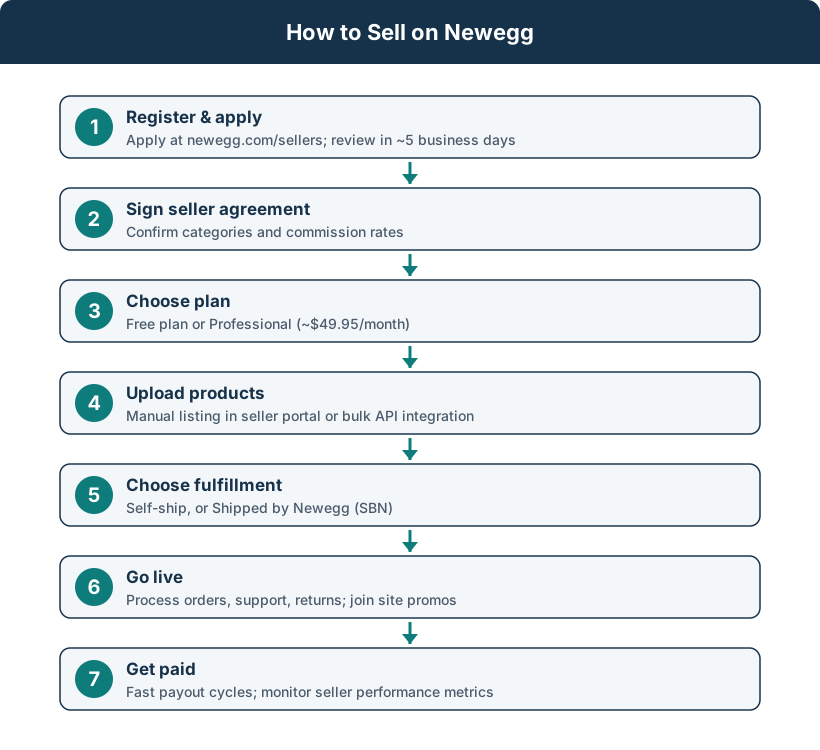
Apply at newegg.com/sellers; the official line is review within five business days. From experience: complete paperwork gets approved in three days; back-and-forth corrections can drag it to two weeks. Have your business license, tax info, brand authorization, and banking details ready upfront.
Two membership tiers: free or Professional (about $49.95 a month, with higher listing limits and advanced tools). New sellers should go Professional from day one — the SellingPilot program frequently includes three months free, which is essentially a subsidized launch.
List via the seller portal manually or bulk-integrate through the API. With 1,000+ SKUs, don't hesitate — go API. Hand-keying a thousand spec sheets will break your operations team.
Fulfillment is a binary choice: self-ship or SBN. Which one wins gets its own section below.
Running the numbers
Newegg's commissions are public — refreshingly transparent next to the department stores. Computer hardware 10%, consumer electronics 9%, cell phone accessories 13%, unlocked phones 8%, game consoles 8%, software 15%; confirm the latest category table on the official site. The site also runs a long-standing "6% commission" promotion (conditions apply, time-limited) — if you catch it as a new seller, that's free money.
Let's model a 3C seller. Mechanical keyboards at $89 average order, 1,200 orders a month, $106,800 in monthly sales. At the 9% consumer-electronics rate, commission is $9,612. Cost lines: Professional membership $49.95 (call it $50), fulfillment (3C needs anti-static, shock-proof packaging — self-ship runs ~$7 per order: $8,400; SBN typically adds $1–2 per order over self-ship but eliminates support headcount), returns (3C at 8%: ~$3,000), onsite ads (Newegg's onsite ads are cheap — 3%: $3,200).
Self-ship contribution: roughly 106,800 − 9,612 − 50 − 8,400 − 3,000 − 3,200 = $82,538 before product cost. With COGS at 55% (hardware runs cost-heavy), true net margin lands near 22%. The 3C math isn't as "sexy" as apparel, but it's stable, low-return, and loyal.
Tactics that work
First, perfect the spec sheet. Newegg shoppers read parameter tables end to end — compatibility, interfaces, power draw, dimensions; not one number can be wrong. Accurate listings can convert 40% better than sloppy ones. That's the iron law of the 3C category.
Second, reviews and unboxings are the traffic code. Enthusiast communities trust creators, not ads. Seed samples to YouTube build channels and tech reviewers — one honest review can outsell a month of ad spend.
Third, SBN solves the trust problem. New sellers with no review history get an instant credibility lift from the SBN badge. Accept thinner margins in the launch phase and use SBN to build your rating.
Fourth, follow hardware launch cycles. GPU and CPU launches create traffic tsunamis in the DIY market. Stock compatible accessories (coolers, PSUs, cases) ahead of time and list on launch day to catch the first upgrade wave.
Fifth, support must be technical. Eighty percent of Newegg buyer inquiries are technical: "will this PSU drive a 4070?" "is this RAM compatible with my board?" If support can't answer, the order dies. Train your team on 3C or outsource to one that knows it.
Pitfalls to avoid
Pitfall one: selling refurb as new. This is the brightest of Newegg's red lines — get caught and you're banned with no appeal. Got refurb inventory? Use the refurb lanes and label honestly.
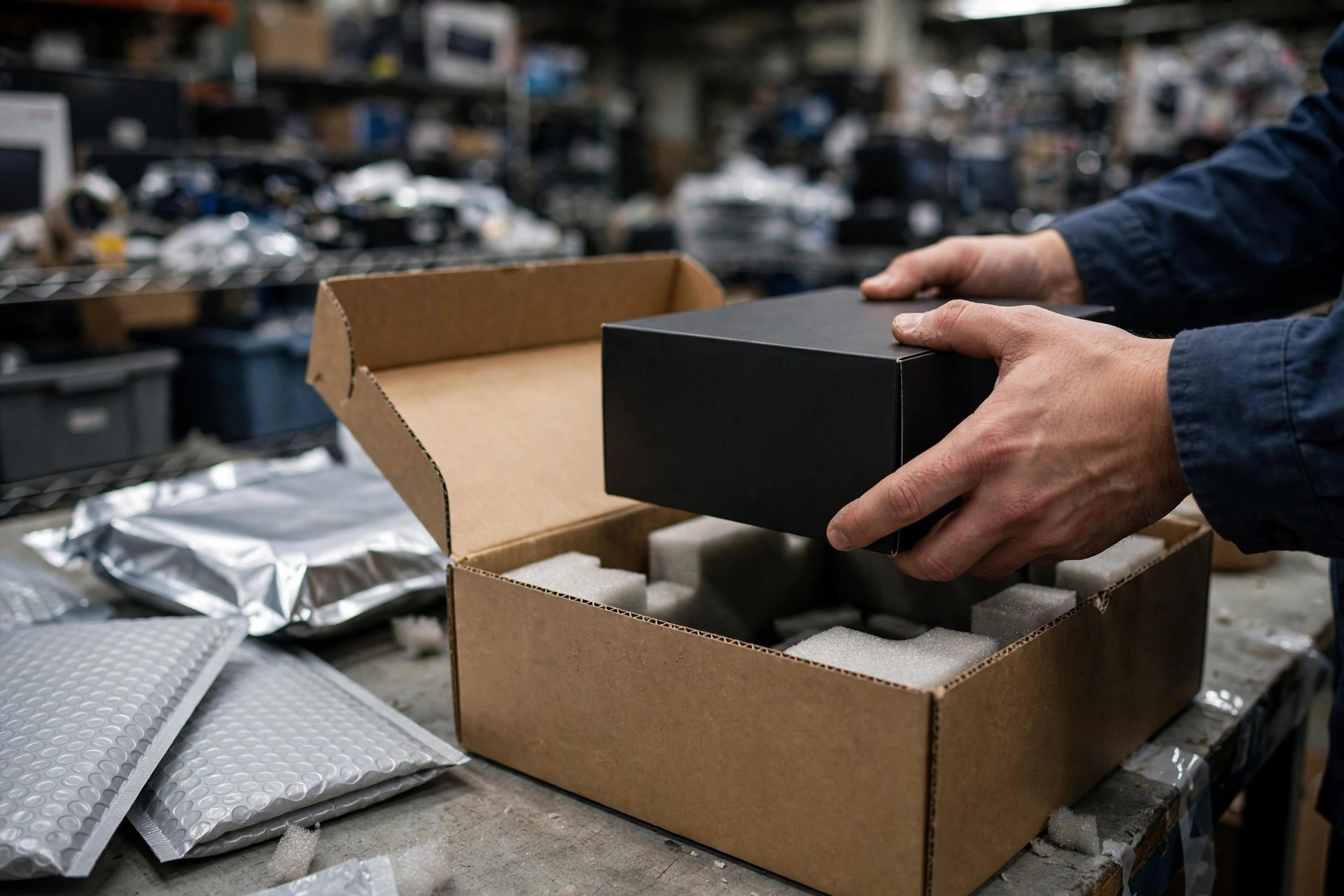
Pitfall two: skipping ESD protection. Motherboards, GPUs, memory — precision parts shipped without anti-static bags can die from a single static discharge in transit, and return rates will bury you. Don't economize on pack materials; it's 3C logistics ABCs.
Pitfall three: chaotic serial-number management. 3C products are high-value — one lost unit is hundreds of dollars. Scan serials at inbound, putaway, pick, and return. Without serial traceability, loss and swap disputes will wreck you.
Pitfall four: ignoring firmware and revision. The same GPU model ships in different batches, firmware, even memory vendors — enthusiast buyers know the difference. Leave revision info off the listing and the "not as described" reviews will chase you.
Fulfillment and warehousing: how to set it up
SBN versus self-ship is the ultimate Newegg seller question, and my verdict is stage-dependent.
Launch phase (under 1,000 orders a month): go SBN, no debate. Newegg's Indiana fulfillment center reaches the whole country in 2–4 days; the SBN badge buys trust; Newegg handles support. You pay $1–2 more per order in fulfillment fees plus tied-up inventory capital. For a new seller, time is worth more than that.
Scale phase (3,000+ orders a month): switch to self-ship with a US 3PL. SBN fees start hurting at volume — a good 3PL saves $1.50–2.50 per order. Hard requirements for the 3PL: 3C experience (ESD pack-out, serial management, precision-part QC), bi-coastal warehouses, and a WMS with serial tracking.
For overseas inventory, 3C products are small and high-value, so air freight's cost share is acceptable. Run "ocean bulk for the base, frequent air top-ups": keyboards and mice by ocean container to LA; GPUs and CPUs by air direct. Plan 45-day replenishment cycles — shorter than apparel, because 3C iterates fast and overstock is dangerous.
Your WMS needs three non-negotiables: end-to-end serial traceability (scan at inbound, associate at putaway, verify at pick, match at return), ESD-compliant pack flows (system-prompted materials), and lot management (firmware revisions, production batches). Without those three, don't do 3C.
One action for tomorrow: search your hero product on newegg.com and grade the spec sheets of the top 20 listings. If more than half have errors or gaps, congratulations — getting the specs right wins you half the battle. Newegg doesn't lack inventory; it lacks knowledgeable sellers. And while you're there, read the fine print on the 6% commission promo — every point saved is a point earned.