For big-and-bulky furniture heading to America, Wayfair is the stop you can't skip — and the one where sellers crash hardest. In 2021 I watched a dining-table seller ship his first 300 tables over; returns plus damage wiped out 40%, and he lost $80,000 in freight without earning a dime.
My verdict up front: Wayfair is the platform where packaging decides life or death. Great product, packaging that can't survive American last-mile handling — everything wasted. Sellers who control packaging and return rates print money here; those who can't are feeding a furnace.
What this platform really is
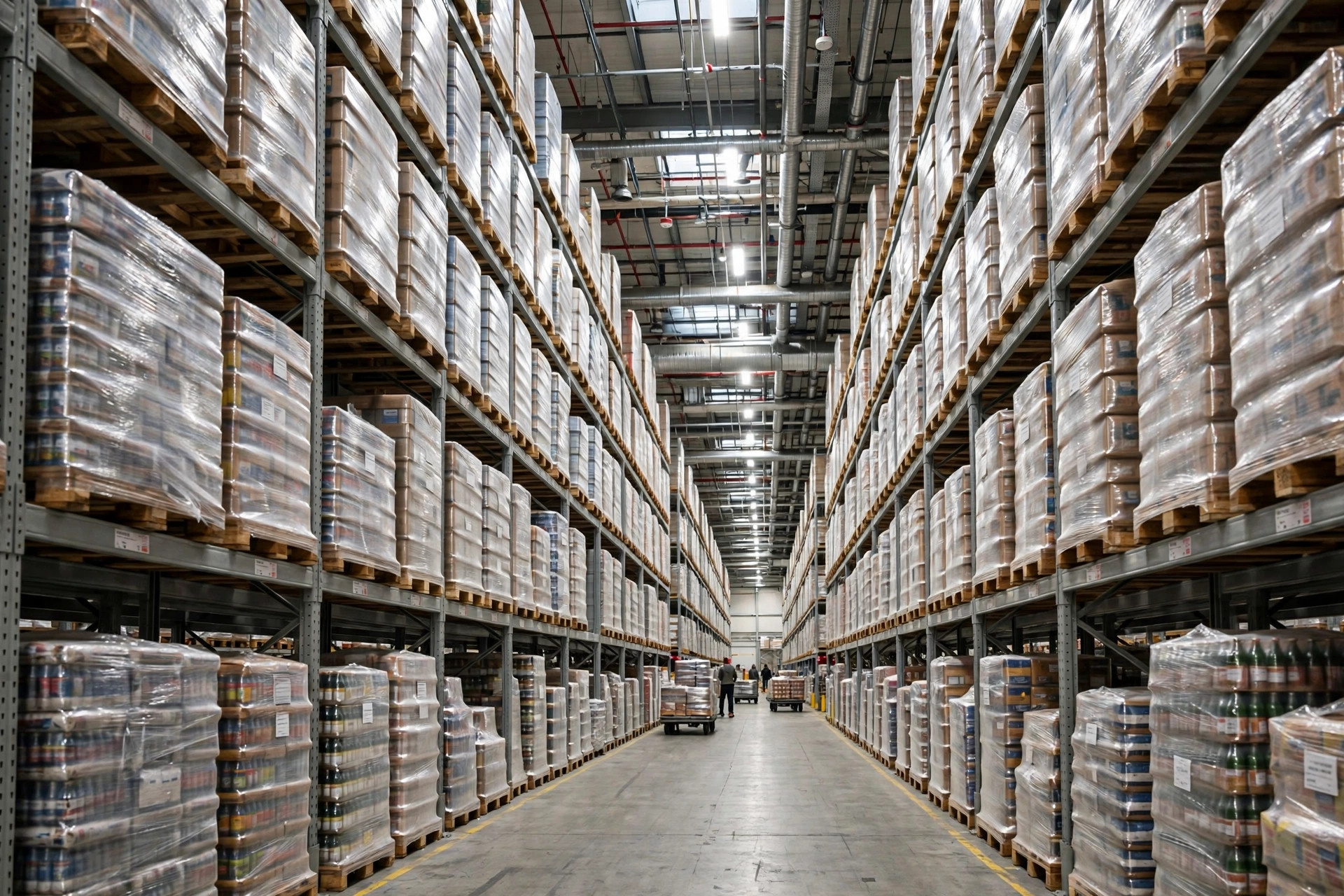
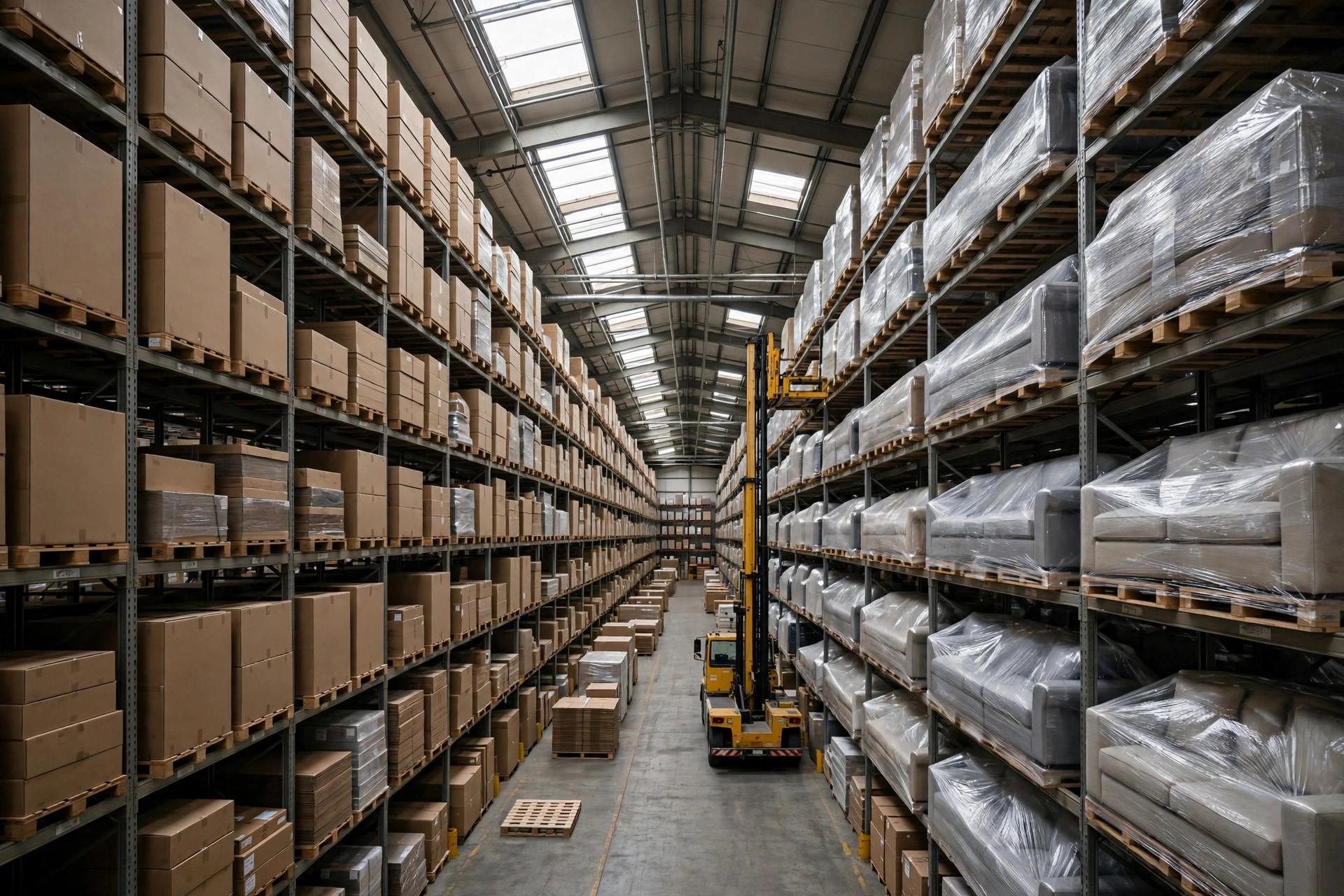
Wayfair is America's largest online home-goods retailer — pure e-commerce, no stores. Its supplier program is called Partner Home and runs on a wholesale-supply model; it also operates its own fulfillment network, CastleGate — think of it as Wayfair's own version of an Amazon-style FC network. Suppliers can forward-stock into it and get platform last-mile delivery and customer service.
The platform's character: enormous SKU counts, price sensitivity, image-driven decisions. Buyers decide almost entirely on photos and reviews, rarely reading long spec sheets. Furniture carries naturally high returns — color differing from the screen, dimensions differing from imagination, both are return reasons. Wayfair's overall return rate ranks among the industry's highest. Accept that before you enter.
Requirements to sell
Four gates. First, a US business entity — cross-border sellers typically go through a US company or a compliant agent. Second, product-data quality: SKU info, dimensions, weight, and materials accurate to the inch and the pound — wrong dimensions are the number-one return driver in furniture. Third, packaging standards — Wayfair has explicit test requirements for bulky packaging; ISTA drop testing is table stakes. Fourth, EDI or API integration — orders and inventory sync must be automated; manual order processing collapses the moment volume arrives.
The platform also probes supply-chain stability — factory-type sellers with shaky lead times get extra scrutiny in review.
How to get on
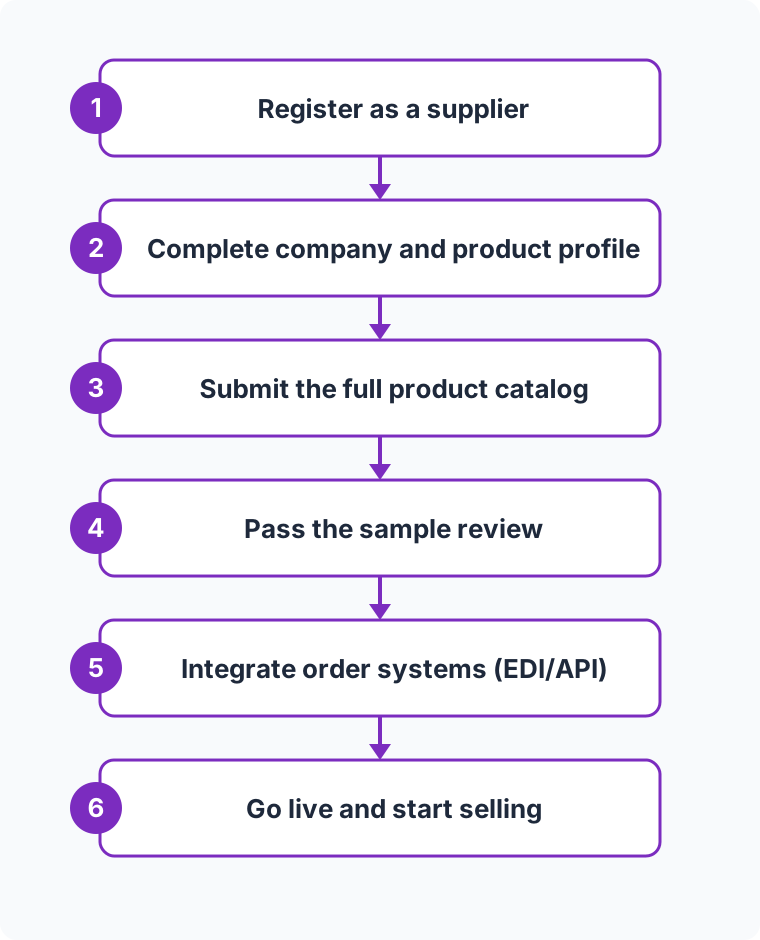
Step one, register as a supplier. Apply through the supplier portal on the official site with basic company info and primary categories.
Step two, complete the company and product profile. Capacity, lead times, QC process — write it straight. Wayfair's merchandising team asks factory-type sellers very detailed questions.
Step three, submit the full product catalog. Organize SKUs, images, dimensions, and weights per the template. Image standards are brutal — white background, lifestyle, and detail shots, all required. Sloppy uploads get bounced.
Step four, pass the sample review. The platform may request physical samples to check craftsmanship and packaging. Sellers who clear the sample stage run return rates roughly 30% lower — don't skimp on sample costs.
Step five, integrate order systems. Connect EDI or API for orders, inventory, and shipping; run it in the test environment before cutting over to production.
Step six, go live. Start with a small first batch to validate packaging and return rates — scale up stocking only when the data says yes.
Fees: run the numbers
Wayfair charges a sales commission — check the official site for the current rate — plus warehousing and delivery fees if you use CastleGate. Run the math: a $699 dining table at an assumed 15% commission means ~$105 to the platform; CastleGate inbound plus storage amortized ~$25 per unit; bulky last-mile delivery ~$80 per unit; packaging (double-wall corrugated plus corner protectors plus foam) ~$18 per unit. You net ~$471, roughly 33% gross margin — looks good.
But don't forget returns: at a 15% furniture return rate, returned tables resell at 30% off at best, and freight isn't refunded. Blended in, true net margin lands around 15–18%. Pricing the return rate in from day one is survival lesson number one on Wayfair.
Practical tips
First, write dimensions three times. Product page, shipping carton, instruction manual — all three must match. The number-one buyer return reason is always "not as described," and most of it is dimension-expectation mismatch.
Second, spend real money on lifestyle photography. One warm, lived-in dining-room scene out-converts a white-background shot by 30%+ — the photographer is the highest-ROI spend in the whole store.
Third, review velocity. Wayfair's algorithm rewards review growth — get past 20 reviews (through compliant means) in the first 30 days and traffic looks completely different.
Fourth, stock CastleGate. Platform fulfillment beats self-shipping on both delivery time and damage rates, especially during peak season.
Fifth, design for "no assembly." Furniture needing complex assembly doubles bad-review rates. Tool-free or 10-minute assembly drops return rates a full tier.
Pitfalls
Faking packaging tests. Buying an ISTA report to check a box while having no idea how your goods actually survive the trip — that was the original sin of the dining-table seller in 2021. Be present for the test.
Going all-in on first stock. Sending 300 units to CastleGate in one shot means transfer and repositioning fees eat you alive if it doesn't sell. Validate small, then scale.
Ignoring color variance. Screen-to-physical color difference is the second-biggest furniture return driver. Add one line — "actual color may vary slightly by display" — and filter out a cohort of perfectionist buyers.
Skipping freight insurance. Losing one bulky unit costs hundreds of dollars; insurance runs about 1%. Don't skip it.
Logistics and warehousing: my home turf
Big-and-bulky furniture warehousing is the most technically demanding part of the Wayfair business.
First, CastleGate vs. self-ship. My verdict: self-ship during new-product validation (flexible, fast price moves to clear stock), switch to CastleGate for the scaling phase (last-mile cost and speed crush self-shipping). Keep one packaging standard across both phases — don't change it.
Second, 150 pounds is the dividing line. Under 150 lbs ships oversize parcel (UPS, FedEx); over goes LTL. Products sitting at 145–155 lbs should lose 10 lbs somehow — freight can differ by 2x across that line.
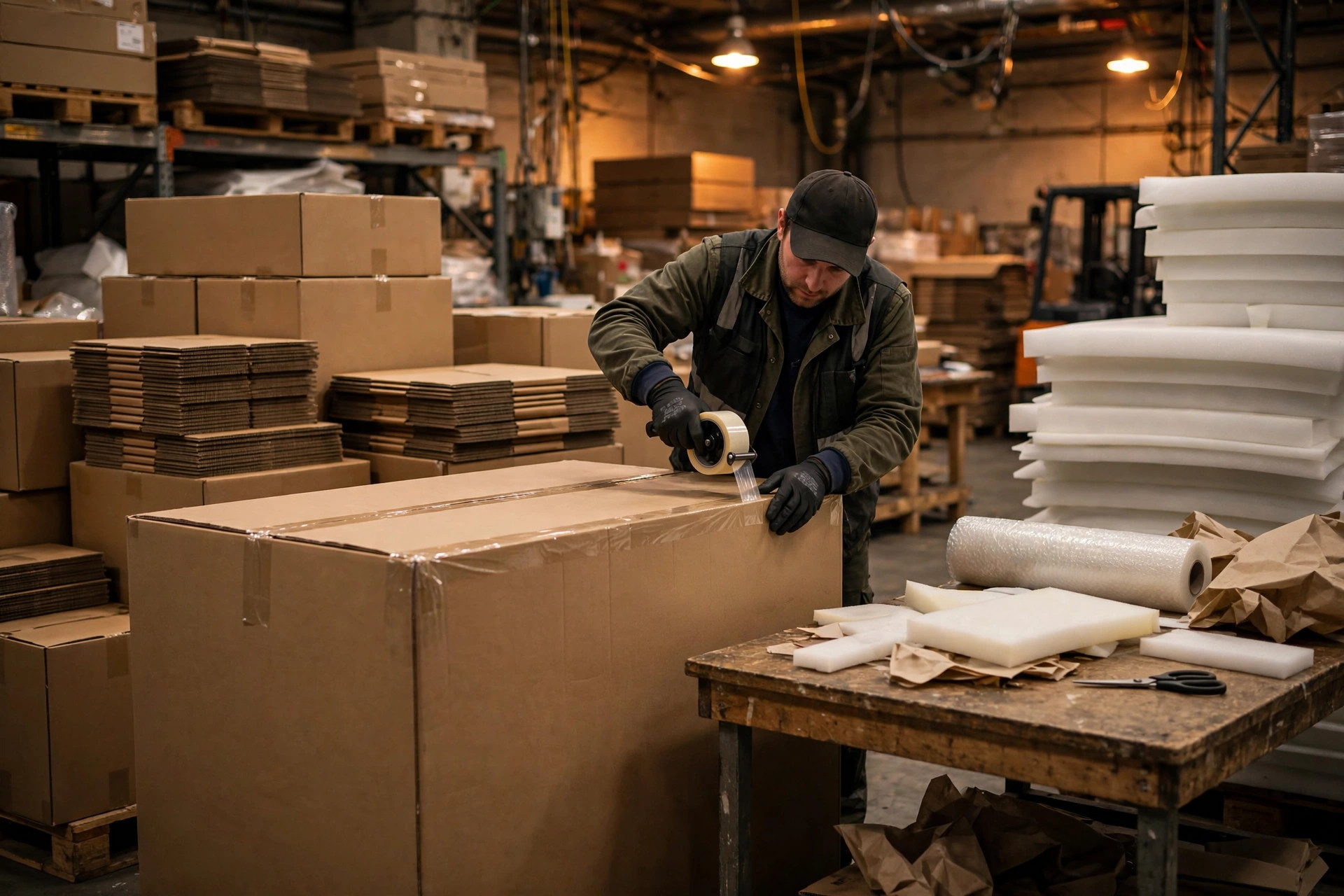
Third, find a 3PL with furniture experience. A generic warehouse panics at a 7-foot carton: forklifts can't reach it, racks can't hold it, no packing bench fits it. Ask directly: maximum handling dimensions, is there a bulky packing zone, how is palletizing charged. Blank stares mean pass.
Fourth, forward-stock logic. A West Coast warehouse (LA) covers the seaboard in 2-day delivery; an East Coast node (New Jersey or Savannah) covers the east; fill the middle with CastleGate. Three nodes gets ~90% of US orders delivered within 5 days.
Say it once more: on Wayfair, the packaging engineer matters more than the operator. Get the box right first, then talk traffic.